





This article discusses the top nine British landmarks in London that history students must visit. It aims to help students complement their studies by visiting the best historical attractions in London that offer both recreation and knowledge.
Are you confused about what iconic places to visit in London as a history-loving student? As any first-timer in this iconic city with 2000 years of history would wonder which sight to awe at first. London is a sightseeing paradise for a casual tourist who wants to experience a blend of history and modernity. But for a student of history, the city transforms into an open-air classroom where they can learn from experience.
Did you know?
According to London Business Matters, London is ranked number one globally for offering great cultural experiences.
Whether you’re fond of world wars or want to study the Industrial Revolution, London offers tangible experiences. This detailed guidebook to London’s most famous landmarks is designed to enhance your experience and make it more educational. Instead of wandering around the iconic London bridges and towers, follow this dedicated guide to make your visit to famous British landmarks in London more beneficial. It moves beyond postcards to provide you with deep educational value and a direct line to the events that shaped the modern world.
Core Ideas of the Article:
● London is an educational hub with multiple top-ranked universities, historic landmarks, and student-friendly perks.
● Many buildings and famous British landmarks in London still bear the scars of the 1940 Blitz, which adds to the historic significance of the city.
● Although London isn’t a small city, many of its attractions are clustered close together, making walking tours of London landmarks easier.
● All of the famous landmarks on this list offer exclusive benefits and student discounts.
● The Tower of London, Westminster Abbey, and Palace of Westminster are UNESCO World Heritage sites.
Why is London a History Hub for Students?
London is one of the few cities worldwide where you can touch a Roman wall, walk a Medieval street, and look up at a futuristic skyscraper all within the same hour.
Historical Importance – A Timeline You Can Walk
The city began as Londinium, a key trading port founded by the Romans around 47 AD. It survived the Viking invasions, became the seat of power for William the Conqueror in 1066, burned down and was rebuilt after the Great Fire of 1666, and remained the nerve centre of the Allied forces during WWII. This density of events means that almost every street corner in the “City of London” holds a monument marking a pivotal moment in British history.
Educational Value
We’re into 2026, and London remains the student capital of the world, as reported by Forbes. Here, you don’t just read about the Magna Carta and the Rosetta Stone, but you can stand inches away from them at the British Library.
Visit the Houses of Parliament if you’re writing an assignment regarding the evolution of modern democracy, or seek guidance from a London-based assignment writing service like The Academic Papers UK to ensure your work is well-researched and structured. Similarly, if you’re researching religious history, the architecture of St. Paul’s Cathedral will teach you about the influence of religion on British culture.
Accessibility for Students
● Student Discounts: Many British landmarks in London, including the Tower of London, Westminster Abbey, and St. Paul’s, offer concession tickets for students with a valid ID.
● Free Access: World-class institutions like the British Museum, the Imperial War Museum, and the Victoria and Albert Museum are entirely free to enter.
● Transport: According to Transport for London, students can also apply for an 18+ Student Oyster photocard to save 30% on travelcards.
9 Must-See Famous British Landmarks in London
The top 9 landmarks listed here aren’t only tourist attractions but also primary educational sources for history students.
The Tower of London
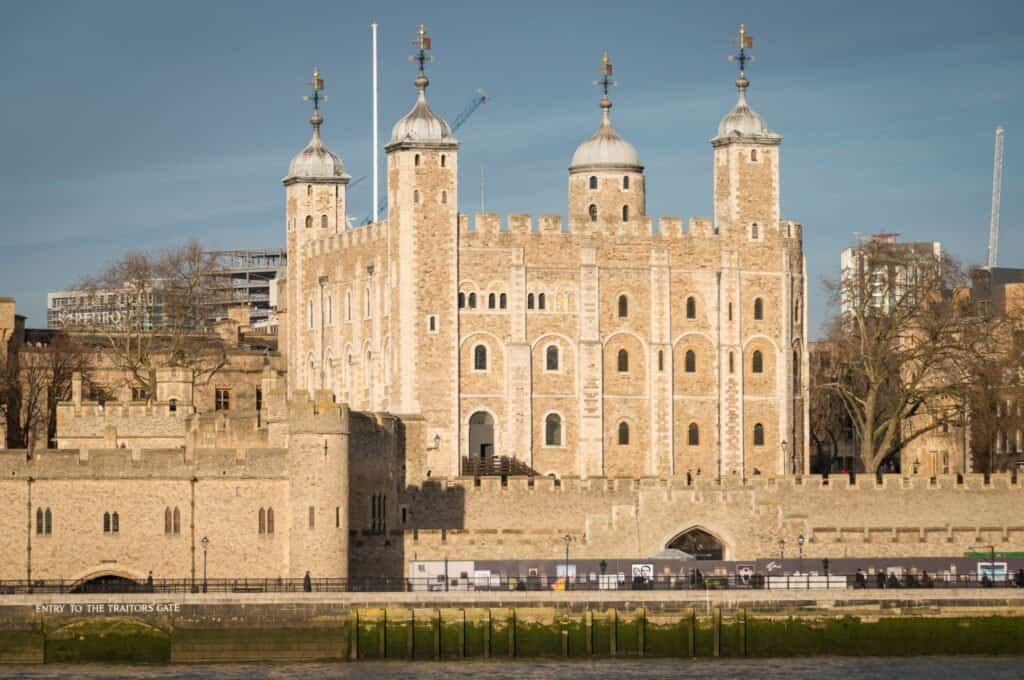
No other site in London commands as much awe and fear as the Tower of London. It was founded by William the Conqueror in 1078 to secure his hold on London, and has since served many purposes. This majestic fortress served as a royal palace, a notorious prison, an armoury, and even as a zoo. Sitting at the North Bank of the River Thames, the Tower of London is the ultimate symbol of Norman power and medieval intrigue.
The current Royal Palace offers a tangible look at the British monarchy’s darker history, including the site of famous executions. The most iconic attraction at the Tower of London is the Crown Jewels, a powerful symbol of the British monarchy and its enduring power and wealth.
Student Tip: Do not miss the Yeoman Warder (Beefeater) tour. These tours are included in the ticket price and are led by the ceremonial guardians of the Tower, who are master storytellers of its bloody and fascinating past.
Westminster Abbey

A masterpiece of Gothic architecture, Westminster Abbey has been the coronation church for British monarchs since the Norman Conquest of 1066. More than a place of worship, it is the final resting place for 17 monarchs and some of the nation’s greatest figures, including Isaac Newton, Charles Dickens, and the Unknown Warrior.
As you walk through the Abbey, you’ll see the graves and memorials of many important people from British history. Students can learn about Gothic architecture and visit Poets’ Corner. You can feel the long history of the British monarchy in the Coronation Chair, which has been used for centuries.
The Abbey offers excellent multimedia guides that let you explore at your own pace, ideal for students who want to linger over specific tombs or architectural details.
The British Museum

Established in 1753, the British Museum is the world’s first public national museum. Its vast collection documents the story of human culture from its beginnings to the present. For students interested in empire, archaeology, and global history, this is arguably the most important building in London. You can stand inches away from the Rosetta Stone, which unlocked the secrets of hieroglyphs, view the controversial Elgin Marbles, and explore the extensive Egyptian mummy collection.
Student Tip: Entry to the permanent collection is completely free. Pick two or three specific galleries to focus on or join a ‘highlights’ tour to get a deeper understanding of the key artefacts.
The Houses of Parliament & Big Ben

There’s an iconic Gothic structure that comes to mind when you think of London. This is the Palace of Westminster, which is home to the Houses of Parliament. The current neo-Gothic structure was built in the 19th century after a fire destroyed the medieval palace, though the ancient Westminster Hall survived.
It is an important sight for history students planning to write detailed essays, as it provides a close look at the mechanics of the British constitutional monarchy. An integral part of the structure is the iconic Elizabeth Tower, which is also home to the famous Big Ben.
Student Tip: Although you can see the structures from the outside, you must book a guided tour from the UK Parliament website in advance to visit the House of Commons and House of Lords chambers. UK residents can contact their MP for free tours, but international students can book tickets for guided or audio tours on Saturdays and during recess.
St. Paul’s Cathedral

Designed by Sir Christopher Wren after the Great Fire of London in 1666, St. Paul’s is a defining feature of the London skyline. It is a triumph of English Baroque architecture and has hosted major national events, including the funerals of Lord Nelson, the Duke of Wellington, and Winston Churchill. It also hosted the famous wedding of Prince Charles and Lady Diana.
St. Paul’s is the mother church of the Diocese of London in the Church of England. St. Paul’s famously survived the Blitz during World War II while the city burned around it. The interior offers a lesson in art and religious history, while the crypt holds the tombs of military heroes.
Student Tip: The dome of St. Paul’s Cathedral is an architectural masterpiece that every student must experience on their visit. Enter the tomb’s Golden Gallery to experience the best panoramic views of London, allowing you to trace the city’s layout from the Roman settlement to the modern skyscrapers.
The Victoria and Albert Museum (V&A)

Named after Queen Victoria and Prince Albert, the V&A was founded in 1852 and has grown into the world’s leading museum of art, design, and performance. It was born out of the Great Exhibition of 1851, intended to educate British manufacturers and the public on good design.
For students of social history, art, or architecture, the V&A is a goldmine of ‘material culture.’ It moves beyond battles and politics to show you how people actually lived, what they wore, the furniture they used, and the art they cherished. The architecture of the building itself is a stunning example of Victorian design.
Student Tip: While general entry is free, the V&A host’s world-class temporary exhibitions (on topics ranging from fashion to revolution). Check for student discounts on these ticketed events, as they often sell out quickly.
The National Gallery

Unlike many royal collections across Europe, this was founded by the British government for the benefit of the people. Dominating Trafalgar Square, the National Gallery houses the British public’s collection of over 2,300 paintings dating from the mid-13th century to 1900.
The gallery serves as a visual textbook of history. Students can trace the evolution of European thought, from medieval religious devotion to Renaissance humanism and 19th-century social realism. You can get valuable context for every era you are studying through works by Van Gogh, Da Vinci, and Turner.
Student Tip: Take advantage of the free daily guided tours or audio guides available on the Gallery’s website. They provide crucial context that turns a pretty picture into a historical document.
The Churchill War Rooms

One of the five branches of the Imperial War Museum, the Churchill War Rooms are a gem for history-loving students. This underground bunker served as the nerve centre for the British government during World War II. It was in these war rooms that Winston Churchill and his cabinet plotted the course of the war while the Blitz raged above.
This is arguably the most immersive World War II experience that students can get in London. The rooms have been left exactly as they were in 1945, from the maps on the walls with pinholes marking troop movements to the sugar cubes left on the tables. Many students visit this site when they work on history projects. Some of them hire UK assignment writing services to organise their research and present their findings with clarity. This support helps you turn what you see inside those rooms into a clear and compelling work that stands out and improves your grades when you submit it.
Student Tip: As it is a popular attraction, book a student ticket online in advance to skip the long queues.
The Natural History Museum

What more does a history student want in London than to have a world-renowned museum housed in a magnificent terracotta building? Often called ‘Cathedral to Nature,’ the Natural History Museum opened in 1881 as a science museum. Richard Owen played a primary role in the creation of this museum, as he sought to store the natural history collections that were overflowing from the British Museum.
The Natural History Museum also provides a rich historical context regarding the Victorian era’s obsession with classification, exploration, and empire. As one of the largest Museums in the world, it is home to approximately 80 million objects within five main collections:
● Botany
● Entomology
● Mineralogy
● Palaeontology
● Zoology.
Student Tip: The Natural History Museum is famous for its interactive zones. Don’t just look at the dinosaur skeletons; engage with the hands-on exhibits in the Human Evolution gallery to understand the timeline of our species.
Quick Comparison Table of the Famous British Landmarks in London
| Landmark | Historical Era | Key Highlights | Student-Friendly Tip |
| Tower of London | Medieval | Crown Jewels, Beefeaters | Join the Yeoman Warder tour |
| Westminster Abbey | Medieval/Gothic | Tombs, Coronations | Audio guides available |
| British Museum | Ancient to Modern | Rosetta Stone, Mummies | Free entry, guided tours |
| Houses of Parliament | 19th Century | Big Ben, Parliament chambers | Book a student tour |
| St. Paul’s Cathedral | Baroque | Dome, ceremonies | Climb the dome for views |
| V&A Museum | 16th–21st Century | Art & design | Student exhibition discounts |
| National Gallery | 13th–19th Century | Paintings | Free audio guides |
| Churchill War Rooms | WWII | War strategy & leadership | Allocate 2–3 hours |
| Natural History Museum | Prehistoric to Modern | Fossils, evolution | Hands-on exhibits |
Conclusion
London has always been in the top ranks, may it be historic, cultural, or educational grounds. The famous landmarks in London, England that we’ve discussed in this article are all examples of tourist attractions that offer a blend of fun and knowledge. Whether you are a resident of the city or an international student, each of these modern London landmarks and skyscrapers offers special discounts for students.
Visit the Houses of Parliament to observe British politics closely, and the Churchill War Rooms to understand the claustrophobic pressures of wartime leadership. The Tower of London and Westminster Abbey are must-visit destinations for students interested in royal history. With multiple UNESCO World Heritage sites in London included in the list, you are sure to get loads of knowledge.
Frequently Asked Questions for Famous British Landmarks
Which London landmarks are a must-visit for first-time tourists?
For first-time tourists, the must-visit landmarks are those that capture London’s rich royal history, its political centre, and its iconic skyline. These include:
● Tower of London: Explore nearly a thousand years of history as a fortress, palace, and infamous prison. A must-see is the Crown Jewels, on display within the Tower.
● Palace of Westminster: No first-time visit is complete without seeing the postcard-perfect Palace of Westminster and its iconic clock tower, officially known as the Elizabeth Tower.
● The National Gallery: Located in Trafalgar Square, this free gallery is home to the national collection of Western European paintings from the 13th to the 19th centuries
Which London bridges and towers are the most iconic?
The historic city of London is home to multiple bridges and towers, each with its own significance and beauty.
● Tower Bridge: Instantly recognisable for its twin towers and bascule design, Tower Bridge is one of London’s most famous landmarks.
● The Tower of London: A historic fortress and former royal palace, the Tower of London is famous for its role in British history.
