




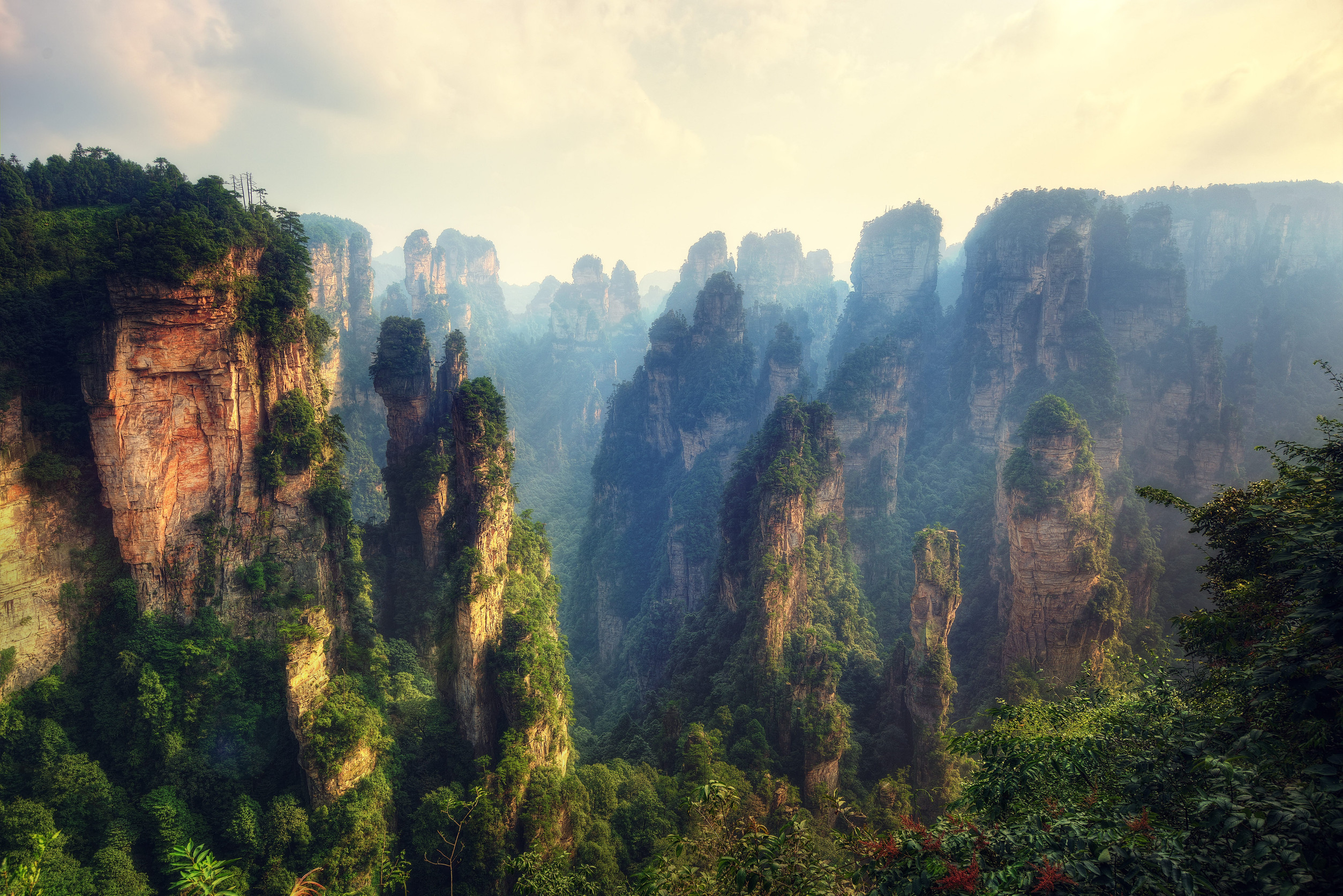

Zhangjiajie National Forest Park – Hunan, China
Overview
Zhangjiajie National Forest Park is one of the most extraordinary natural landscapes on Earth, famous for its towering quartz-sandstone pillars that rise dramatically from mist-filled valleys. Located in Hunan Province, China, the park forms the heart of the larger Wulingyuan Scenic Area, a UNESCO World Heritage Site recognized for its unique geological formations and biodiversity. With more than 3,000 vertical pillars, deep ravines, natural bridges, waterfalls, and dense subtropical forests, Zhangjiajie feels almost otherworldly. Its surreal scenery famously inspired the floating mountains of Pandora in the film Avatar, cementing its status as one of China’s most iconic travel destinations.
Why Visit
- Explore one of the world’s most unique and dramatic natural landscapes
- See the real-life inspiration behind the floating mountains in Avatar
- Ride the world’s tallest outdoor elevator and scenic cable cars
- Walk cliffside trails with breathtaking panoramic views
- Experience a UNESCO World Heritage Site rich in natural beauty and biodiversity
Highlights
- Avatar Hallelujah Mountain: One of the park’s most famous sandstone pillars, renamed after the film’s release
- Bailong Elevator: The world’s tallest outdoor elevator, ascending 326 meters along a sheer cliff face
- Golden Whip Stream: A peaceful walking trail winding through the valley beneath towering peaks
- Tianzi Mountain: A high-altitude viewpoint known for sea-of-clouds vistas and sunrise photography
- Yuanjiajie Scenic Area: Home to narrow ridges, natural stone bridges, and iconic viewpoints
History & Cultural Significance
Zhangjiajie National Forest Park was established in 1982 as China’s first national forest park, marking a major milestone in the country’s conservation efforts. For centuries before that, the area was inhabited by ethnic minority groups such as the Tujia and Miao, whose villages still dot the surrounding countryside. The park’s sandstone pillars were formed over hundreds of millions of years through erosion, uplift, and weathering, creating narrow columns that can reach heights of over 200 meters. Long revered in Chinese folklore and traditional landscape painting, these peaks were once considered sacred and mysterious. Global recognition surged after the release of Avatar in 2009, transforming Zhangjiajie into an international tourism icon while also increasing efforts to balance conservation with sustainable tourism.
Typical Costs & Tickets
Entrance tickets to Zhangjiajie National Forest Park typically cost around RMB 225–248 (approximately USD $30–35) for a multi-day pass valid for up to four consecutive days. This allows visitors to explore different sections of the park at a relaxed pace. Transportation within the park—such as shuttle buses—is included, but attractions like the Bailong Elevator and cable cars require additional fees, usually ranging from RMB 65–72 per ride. Tickets can be purchased online or at official park entrances, and advance booking is recommended during peak seasons.
Best Time to Visit
The best time to visit Zhangjiajie is during spring (April–May) and autumn (September–October), when temperatures are comfortable and visibility is excellent. These seasons often produce the famous misty landscapes that make the pillars appear to float above the clouds. Summer brings lush greenery but also heavier crowds and occasional rain. Winter is quieter and can be magical when snow dusts the peaks, though some trails may close due to icy conditions. Early mornings are ideal for avoiding crowds and catching dramatic fog and sunrise views.
Nearby Experiences
Zhangjiajie National Forest Park is just one part of a broader adventure region. Nearby, the Zhangjiajie Glass Bridge spans the Grand Canyon and offers a thrilling complement to the park’s natural scenery. Tianmen Mountain, with its cliffside glass walkways and natural arch known as Heaven’s Gate, is another must-visit attraction. The city of Zhangjiajie provides convenient access to hotels, restaurants, and transportation hubs, making it easy to base yourself nearby for a multi-day exploration of the area.
Travel Tips
- Plan at least 2–3 days to fully experience the park without rushing
- Wear comfortable hiking shoes—distances are long and terrain varies
- Use elevators and cable cars strategically to save time and energy
- Start early each day to avoid peak crowds at major viewpoints
- Carry water, snacks, and weather-appropriate clothing
Fun Facts & Local Notes
- Zhangjiajie National Forest Park was China’s first officially designated national forest park
- The sandstone pillars can reach heights of over 200 meters
- Some viewpoints offer visibility of hundreds of peaks at once on clear days
- The park’s scenery has inspired centuries of Chinese landscape art and poetry
 Rate it or leave a comment!
 Rate it or leave a comment!

 Own or work here?





Sign Up for FREE!
Take advantage of all the features by signing up. It's completely FREE and we never spam you!
• Create Travel Plans/Trips
• Collect Places You've Been
• Connect with Like-Minded Travelers
• Contribute to the Community by Posting New Recommendations
Already Registered? Login.