




Zhujiajiao Water Town – Shanghai, China
Overview
Zhujiajiao is one of China’s best-preserved ancient water towns, often referred to as the “Venice of Shanghai.” Located about 50 kilometers west of central Shanghai, this charming canal town dates back more than 1,700 years to the Song Dynasty. With stone bridges, narrow waterways, whitewashed houses, and traditional courtyard homes, Zhujiajiao offers a glimpse into pre-modern life in the Yangtze River Delta. Despite its popularity, it remains an authentic living town where residents go about daily life alongside visitors. For travelers looking to escape Shanghai’s skyscrapers and experience historic China in a single day, Zhujiajiao is one of the most rewarding excursions.
Why Visit
- Experience a classic Chinese water town close to Shanghai
- Walk across centuries-old stone bridges and canal-side lanes
- Explore historic residences, temples, and guild halls
- Enjoy boat rides through narrow canals
- Sample traditional Jiangnan snacks and street food
Highlights
- Fangsheng Bridge: The town’s most iconic landmark and the largest stone arch bridge in Shanghai
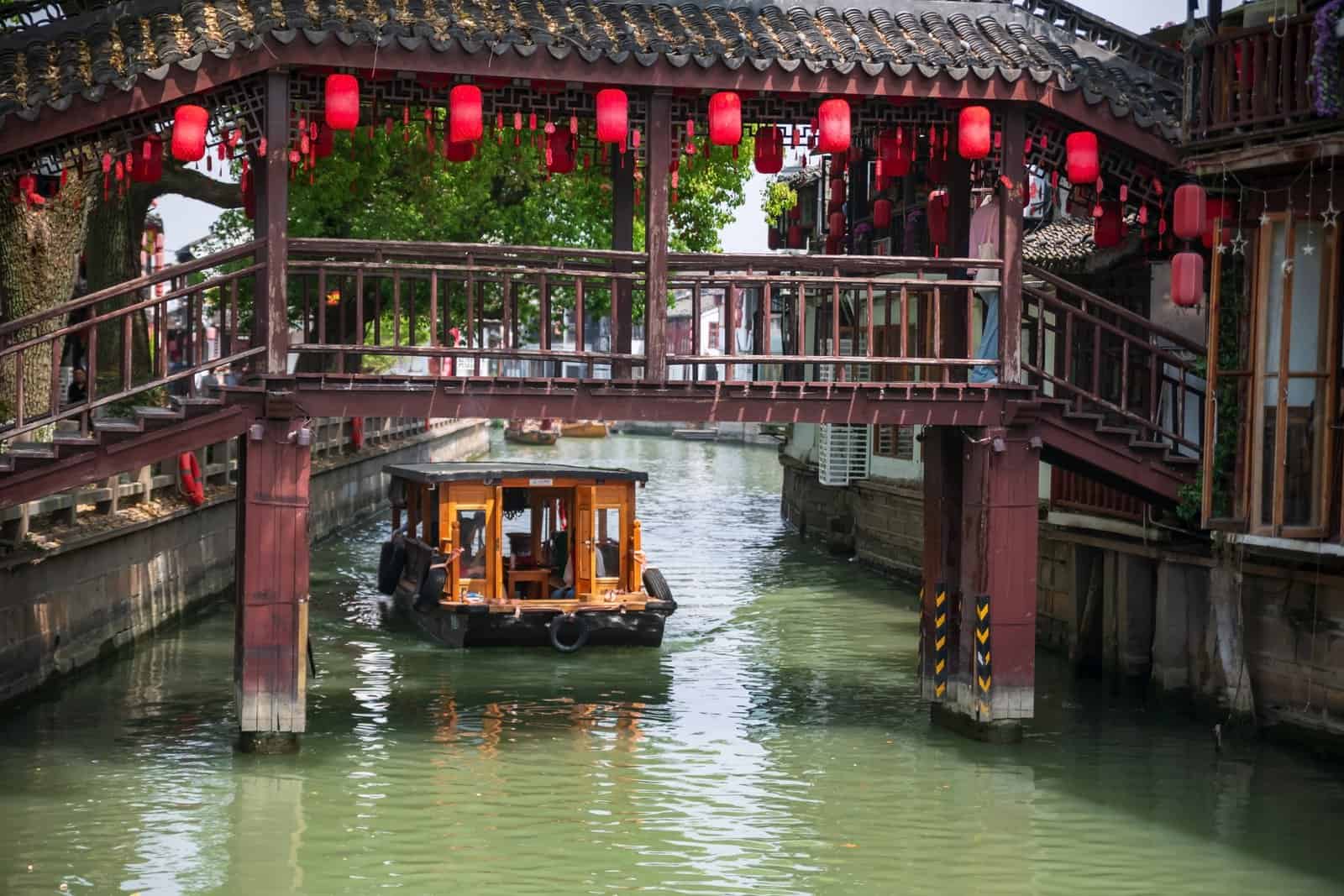
- Canal Boat Rides: Wooden boats glide through narrow waterways beneath stone bridges
- Ke Zhi Garden: A refined Qing Dynasty garden with pavilions, ponds, and rockeries
- North Street: A lively historic street lined with shops, teahouses, and food stalls
- Traditional Residences: Well-preserved Ming and Qing-era homes open to visitors
History & Cultural Significance
Zhujiajiao developed as a prosperous market town during the Song and Yuan dynasties, thriving due to its strategic location along waterways that connected Shanghai to Suzhou and Hangzhou. Merchants transported rice, silk, and handicrafts through its canals, transforming the town into a regional trading hub. Over time, wealthy families built ornate homes, gardens, and temples, many of which survive today. The town’s layout reflects traditional Jiangnan water-town design, with canals serving as main transportation routes and stone bridges connecting neighborhoods. Unlike some reconstructed water towns, Zhujiajiao has remained continuously inhabited, preserving its authentic character. Today, it stands as an important cultural heritage site and a living museum of southern Chinese urban life.
Typical Costs & Tickets
Entry to Zhujiajiao Ancient Town itself is free, but individual attractions inside require tickets. A combined ticket covering major sites such as Ke Zhi Garden, temples, and historic residences typically costs around RMB 60. Canal boat rides cost approximately RMB 80–120 per boat, depending on route and group size. Food and souvenirs are affordable, with snacks usually priced between RMB 5–20. Tickets can be purchased on-site, and advance reservations are generally not required except during major Chinese holidays.
Best Time to Visit
The best time to visit Zhujiajiao is during spring (March–May) and autumn (September–November), when temperatures are mild and the canals are at their most picturesque. Early mornings are ideal for avoiding crowds and seeing local life unfold, while late afternoons offer softer light for photography. Summer can be hot and crowded, especially on weekends, while winter is quieter and atmospheric, with mist often drifting above the canals. Weekdays are strongly recommended for a more relaxed experience.
Nearby Experiences
Zhujiajiao is easily combined with other Shanghai-area attractions. Many visitors pair it with a trip to Shanghai’s French Concession or The Bund on the same day. Other nearby water towns such as Qibao and Nanxiang offer similar historic charm closer to the city. For a deeper cultural experience, travelers can continue west toward Suzhou, famous for its classical gardens, which share architectural and cultural ties with Zhujiajiao.
Travel Tips
- Visit on a weekday to avoid heavy tour groups
- Wear comfortable walking shoes—stone paths can be uneven
- Bring cash for small food stalls and boat rides
- Explore side alleys to escape the busiest streets
- Allow 3–4 hours for a relaxed visit
Fun Facts & Local Notes
- Zhujiajiao has over 36 stone bridges, some dating back to the Ming Dynasty
- Fangsheng Bridge was traditionally used for releasing fish as an act of Buddhist merit
- The town has appeared in numerous Chinese films and TV dramas
- Despite its popularity, thousands of residents still live and work within the old town
 Rate it or leave a comment!
 Rate it or leave a comment!

 Own or work here?
Nearby Places to Eat and Drink See All


Nanxiang Steamed Bun..
- Be the first one to rate!


Jesse Restaurant..
- Be the first one to rate!