



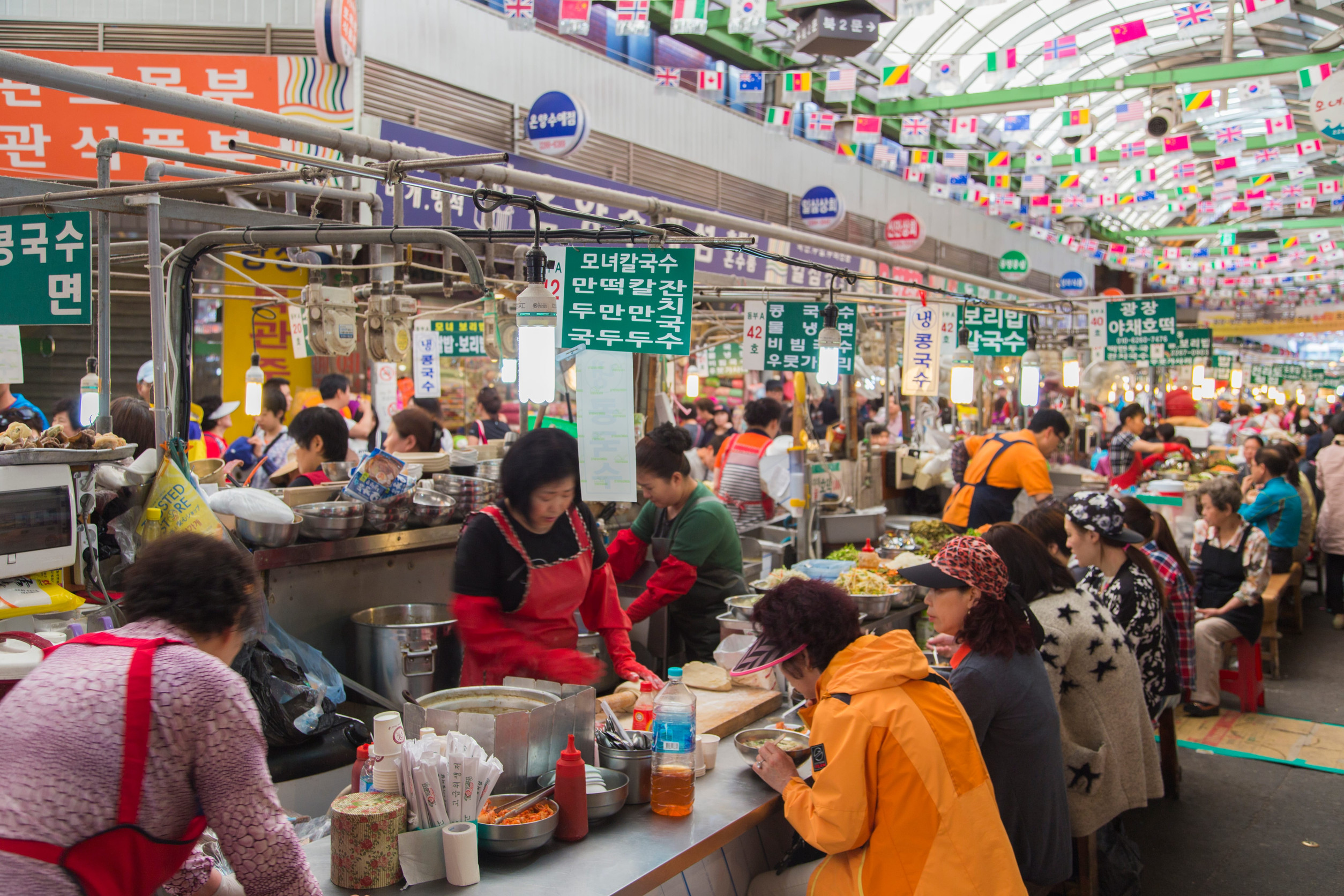

Gwangjang Market in Seoul is a vibrant and bustling destination that offers a genuine taste of Korean culture, cuisine, and tradition. Established over a century ago, this market has grown into one of the city’s most beloved spots for locals and tourists alike. Whether you’re craving authentic street food, unique textiles, or a lively atmosphere, Gwangjang Market has something to captivate every visitor.
Getting There
Located in the Jongno-gu district of Seoul, Gwangjang Market is easily accessible by public transportation. The closest subway station is Jongno 5(o)-ga Station (Line 1 and Line 5). From exit 8 or 9, it’s just a short walk to the market entrance. Alternatively, you can take a taxi or bus, but the subway is often the fastest and most convenient option.
What to Expect
Gwangjang Market impresses visitors with its lively and colorful scenes. The market is divided into sections, including food stalls, fabric vendors, and shops selling traditional Korean products. Unlike some modern shopping centers, the market maintains a raw and authentic atmosphere, full of the sights, sounds, and smells of daily life in Seoul.
Must-Try Foods
Gwangjang Market is renowned as a food lover’s paradise with a rich variety of traditional Korean dishes. Here are some culinary highlights not to miss:
- Bindaetteok (mung bean pancake): A crispy, savory pancake made from ground mung beans mixed with vegetables and sometimes meat. Try it with a splash of soy sauce or paired with makgeolli (traditional Korean rice wine).
- Mayak Gimbap: These “addictive” mini seaweed rice rolls are bite-sized and packed with flavor. They’re often served with a special mustard sauce, making them one of the market’s signature snacks.
- Live octopus (Sannakji): For the adventurous eater, sannakji is a must-try. This dish features small, live octopus tentacles that are usually served chopped and still wriggling. It’s chewy and fresh — a unique Korean delicacy.
- Soondae (Korean blood sausage): Made with pig’s intestines stuffed with noodles, barley, and blood, soondae is a popular street food snack that’s both hearty and flavorful.
- Japchae (stir-fried glass noodles): Sweet potato noodles mixed with colorful vegetables and a soy-based sauce. A great option for those looking for something lighter yet tasty.
Shopping and Souvenirs
Beyond food, Gwangjang Market is famous for its vast textile and fabric section. If you’re interested in fashion or crafting, this part of the market is a treasure trove where you can find:
- Silks and satin fabrics: The market is known as the birthplace of Korea’s textile industry, making it a prime spot for high-quality materials.
- Traditional Korean clothing (Hanbok) accessories: Look for delicate ribbons, traditional buttons, and colorful fabrics perfect for hanbok repairs or custom designs.
- Vintage clothing: Several stalls offer secondhand and retro-inspired apparel that captures Seoul’s trendy, old-meets-new style.
Because the market is popular with tailors and small business owners, bargaining is common and expected in many textile shops—so don’t hesitate to negotiate prices politely!
Tips for Visiting
- Go early: The market is busiest around lunchtime and weekends, so arriving early in the morning can offer a more relaxed experience and the freshest food choices.
- Bring cash: While some vendors may accept card payments, cash is generally preferred, especially for smaller food stalls and bargaining.
- Wear comfortable shoes: The market is large, with many narrow aisles and uneven flooring, so comfortable walking shoes are a must.
- Try a bit of everything: Don’t hesitate to sample multiple foods from different vendors. Sharing plates with travel companions can help you taste a variety of flavors without getting too full.
- Watch your belongings: Like any busy market, keep your bags secure and stay aware of your surroundings.
- Learn a few Korean phrases: A simple “hello” (안녕하세요, annyeonghaseyo) or “thank you” (감사합니다, gamsahamnida) can go a long way in establishing friendly interactions with vendors.
When to Visit
Gwangjang Market is open daily from morning until late evening, with food stalls generally busiest between 11 a.m. and 8 p.m. For the best experience, try to visit on weekdays when the crowd is thinner. Evenings are lively and perfect if you want to enjoy the buzzing street food scene with locals winding down after work.
Nearby Attractions
Gwangjang Market’s central location puts you within easy reach of several notable Seoul landmarks:
- Cheonggyecheon Stream: A scenic urban park perfect for a relaxing stroll before or after your market visit.
- Dongdaemun Design Plaza (DDP): A futuristic cultural hub known for its design exhibitions, shopping, and events, just a short distance away.
- Jongmyo Shrine: A UNESCO World Heritage site dedicated to royal ancestral rituals, offering insight into Korea’s royal history and architecture.
Final Thoughts
Whether you’re a foodie, a fashion enthusiast, or simply a curious traveler, Gwangjang Market offers an immersive glimpse into authentic Seoul life. The market’s vibrant energy, combined with its rich culinary heritage and traditional crafts, makes it a must-visit destination on any Seoul itinerary. Come hungry, bring an open mind, and prepare to make lasting memories in one of Korea’s most iconic markets.
 Rate it or leave a comment!
 Rate it or leave a comment!
  - Closed09:00 AM - 10:30 PM
- Monday09:00 AM - 10:30 PM
- Tuesday09:00 AM - 10:30 PM
- Wednesday09:00 AM - 10:30 PM
- Thursday09:00 AM - 10:30 PM
- Friday09:00 AM - 10:30 PM
- Saturday09:00 AM - 10:30 PM
- Sunday09:00 AM - 10:30 PM


 Own or work here?
Nearby Places to Eat and Drink See All


Nearby Places to See and Do See All