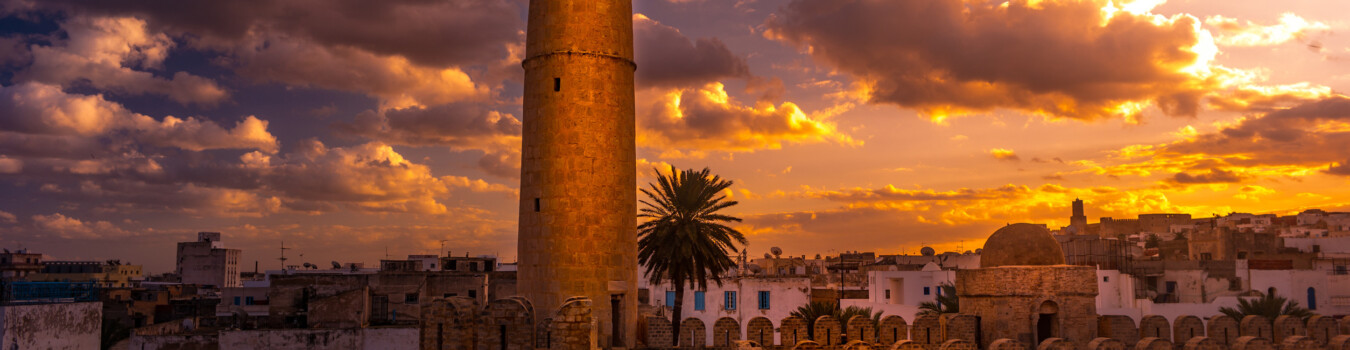






Colosseum of El Jem overview
The Colosseum of El Jem, also known as the Amphitheatre of El Djem, rises unexpectedly from the flat landscape of central Tunisia. You see it from a distance before you reach the town. Massive stone walls dominate the skyline. The structure feels oversized for its surroundings, and that contrast makes it even more striking.
Built in the 3rd century AD, this Roman amphitheatre once held up to 30,000 spectators. It is one of the best preserved Roman amphitheatres in the world and the largest in North Africa. Plan at least 1 to 1.5 hours here. If you explore every level, you may stay longer.
Why El Jem matters
El Jem was known in Roman times as Thysdrus, a wealthy city in the province of Africa Proconsularis. Its prosperity came from olive oil production and trade. The amphitheatre reflects that wealth.
The scale rivals the Colosseum in Rome. While slightly smaller, El Jem remains far more intact than many other Roman amphitheatres. It stands as a powerful example of Roman engineering outside Italy.
The site is also a UNESCO World Heritage Site, recognized for its preservation and historical importance.
Quick facts
- Location: El Jem, Tunisia
- Roman name: Thysdrus
- Built: Early 3rd century AD
- Capacity: Around 30,000 spectators
- Typical visit time: 1 to 1.5 hours
Getting there
El Jem sits between Sousse and Sfax in central Tunisia.
- About 1 hour from Sousse by car
- About 1.5 to 2 hours from Tunis by car
- Train connections available from Tunis and Sousse
The amphitheatre is visible from town and easy to reach on foot once you arrive.
Understanding the structure
The amphitheatre follows the classic Roman elliptical design.
- Three tiers of exterior arcades
- Central arena floor
- Underground chambers beneath the arena
Unlike some ruins where only foundations remain, El Jem preserves large sections of outer walls and seating tiers. You can climb high into the structure and walk through corridors.
The arena floor
Standing in the arena gives you a strong sense of scale. Look up and you see rows of seating rising around you. Imagine the noise of thousands of spectators watching gladiatorial contests and animal hunts.
The arena floor once covered underground passages where animals and fighters waited before events.
Underground chambers
One of the highlights of El Jem is access to the underground corridors. You can walk through the vaulted passages beneath the arena.
These chambers once held cages, equipment, and mechanisms used during spectacles. The engineering remains clear and accessible.
Climbing the upper levels
Stairs lead up through the seating tiers. From the higher levels, you get wide views across the town of El Jem and the surrounding countryside.
The height emphasizes how massive the structure truly is. The stone blocks and arches remain solid after nearly 1,800 years.
Tickets and entry info and typical costs
Tickets are purchased at the entrance.
- Standard adult admission available
- Discounted student tickets with ID
- Cash payment commonly required
The ticket may also include entry to the nearby El Jem Archaeological Museum, depending on current policy.
Best time to visit
Morning and late afternoon offer the best conditions. Midday sun can be intense, especially in summer.
Spring and autumn provide the most comfortable weather for climbing stairs and exploring upper levels.
Photography tips
El Jem is highly photogenic.
- Capture the full exterior from across the plaza
- Stand in the arena and shoot upward
- Photograph arches in repeating patterns
Golden hour light adds warmth to the stone and enhances texture.
Facilities and preparation
Basic facilities are available near the entrance. Shops and cafes sit around the outer plaza.
Wear sturdy shoes. Steps can be steep and uneven. Bring water, especially in warmer months.
How it compares to the Colosseum in Rome
El Jem is slightly smaller than Rome’s Colosseum but often feels more accessible. You can explore more freely without heavy barriers.
It lacks the dense urban backdrop of Rome, but the open surroundings highlight the amphitheatre’s form and scale.
Combining with other stops
El Jem can be visited as a standalone stop or combined with other central Tunisia sites.
- El Jem Archaeological Museum
- Kairouan
- Sousse Medina
Many travelers visit El Jem as part of a day trip from coastal resorts.
Sample visit plan
Half day El Jem visit
- Arrive mid morning
- Explore arena and underground chambers
- Climb to upper seating
- Visit nearby museum
Common questions
Is it well preserved? Yes, especially compared to many Roman amphitheatres.
Is it crowded? Visitor numbers are moderate, often less intense than Rome.
Is it worth the trip? Yes, especially if you are interested in Roman architecture and history.
 Rate it or leave a comment!
 Rate it or leave a comment!
  - Closed07:00 AM - 05:30 PM
- Monday07:00 AM - 05:30 PM
- Tuesday07:00 AM - 05:30 PM
- Wednesday07:00 AM - 05:30 PM
- Thursday07:00 AM - 05:30 PM
- Friday07:00 AM - 05:30 PM
- Saturday07:00 AM - 05:30 PM
- Sunday07:00 AM - 05:30 PM


 Own or work here?
Nearby Places to Eat and Drink See All


Nearby Places to See and Do See All


Monastir Ribat..
- Be the first one to rate!


Monastir Marina..
- Be the first one to rate!