





Yu Garden Shanghai overview
Yu Garden, also known as Yuyuan Garden, is one of the most famous classical gardens in China. It sits in the Old City area of Shanghai, surrounded by busy streets and the lively Yuyuan Bazaar. Once you pass through the entrance, the noise fades and the space opens into a series of quiet courtyards, ponds, and traditional pavilions.
The garden dates back to the Ming Dynasty and was designed as a private retreat. Today, it is one of Shanghai’s top cultural sites. Plan about 1.5 to 2 hours to explore the garden fully.
Why Yu Garden matters
Yu Garden shows the principles of traditional Chinese garden design. Every element has purpose. Rocks, water, plants, and architecture work together to create balance.
The name “Yu” means peace or comfort. The garden was built by a government official for his family as a place to relax away from the city.
Even with modern Shanghai surrounding it, Yu Garden still reflects this idea of calm within a dense urban area.
Quick facts
- Location: Old City, Shanghai
- Built: 16th century, Ming Dynasty
- Type: Classical Chinese garden
- Main features: Pavilions, ponds, rockeries
- Typical visit time: 1.5 to 2 hours
Getting there
Yu Garden is easy to reach using Shanghai’s metro system.
- Nearest station: Yuyuan Garden Station, Line 10
- Short walk through the bazaar area
The entrance can be busy, so arrive early if you want a quieter experience.
The layout of the garden
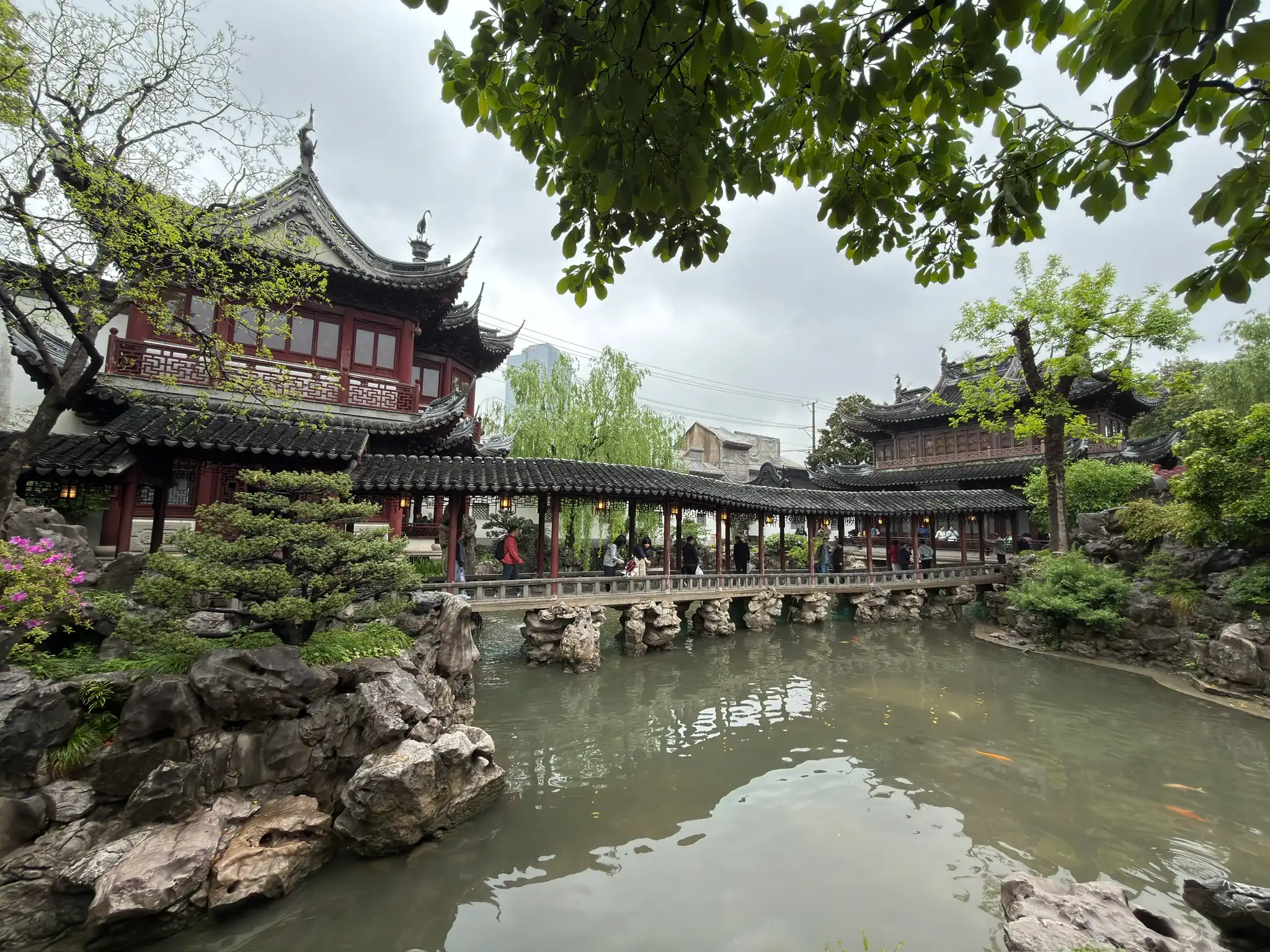
Yu Garden is divided into several sections connected by corridors and doorways. Each section has its own design and perspective.
- Central ponds with koi fish
- Decorative pavilions and halls
- Rock formations shaped to resemble mountains
The layout encourages slow movement. You turn corners, pass through gates, and see new views at each step.
The zigzag bridge
One of the most recognizable features near Yu Garden is the zigzag bridge over the pond. It leads toward the Huxinting teahouse.
The bridge design follows traditional belief. Sharp turns are said to confuse evil spirits, which travel only in straight lines.
This area is often crowded, but it is worth seeing for its classic Shanghai atmosphere.
Rockeries and stone work
Artificial rock formations are a key part of Yu Garden. These rockeries are arranged to resemble natural landscapes in miniature.
Some sections include winding paths and small caves within the rock structures. They add height and depth to the garden.
Pavilions and halls
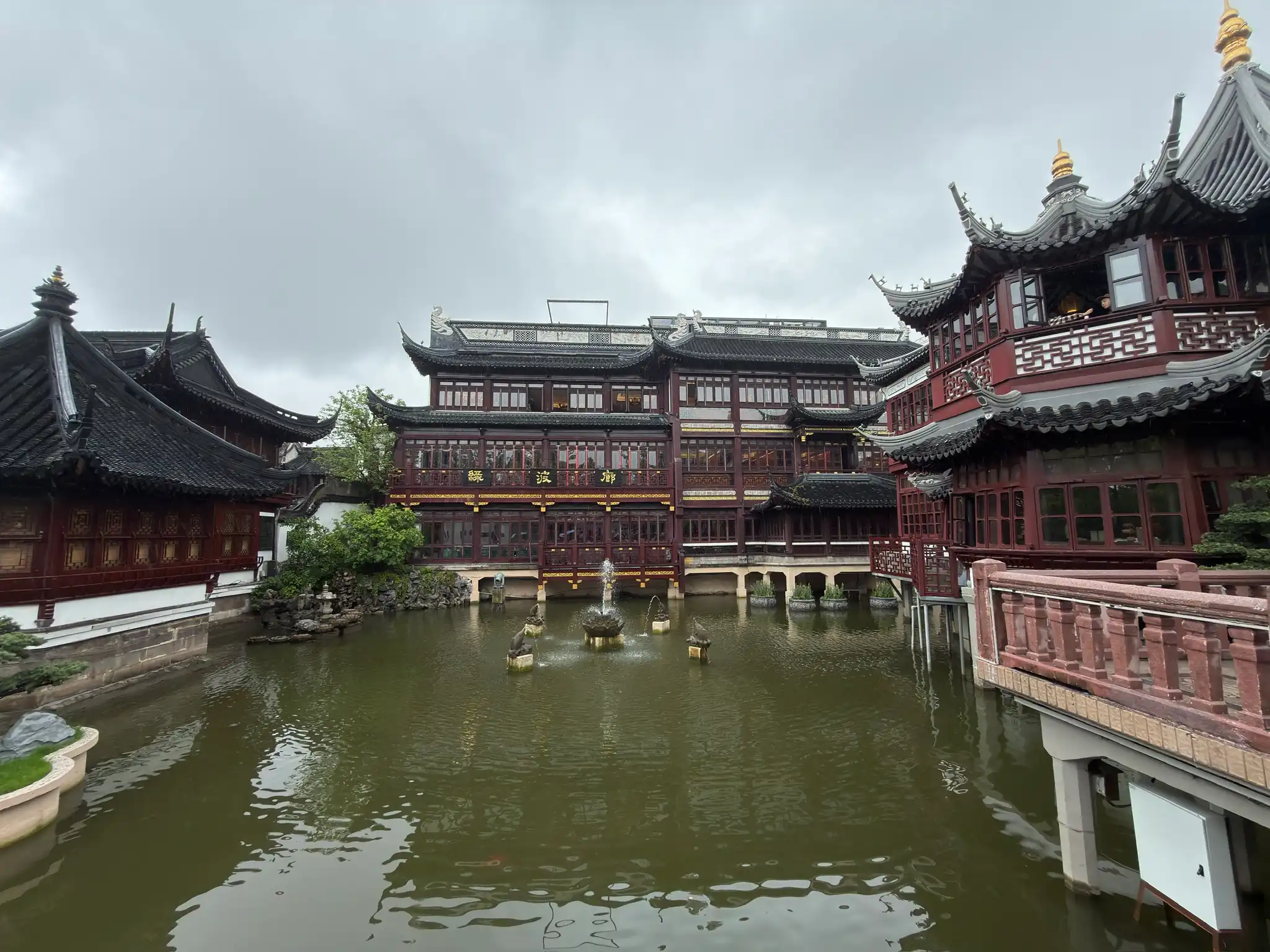
Traditional Chinese pavilions appear throughout the garden. They provide places to sit, rest, and take in the scenery.
Many have curved roofs, carved wood details, and open views over water or courtyards.
Water features
Ponds and small streams run through Yu Garden. Water reflects the surrounding buildings and plants, creating layered views.
Koi fish are common in the ponds, adding movement and color.
Yuyuan Bazaar
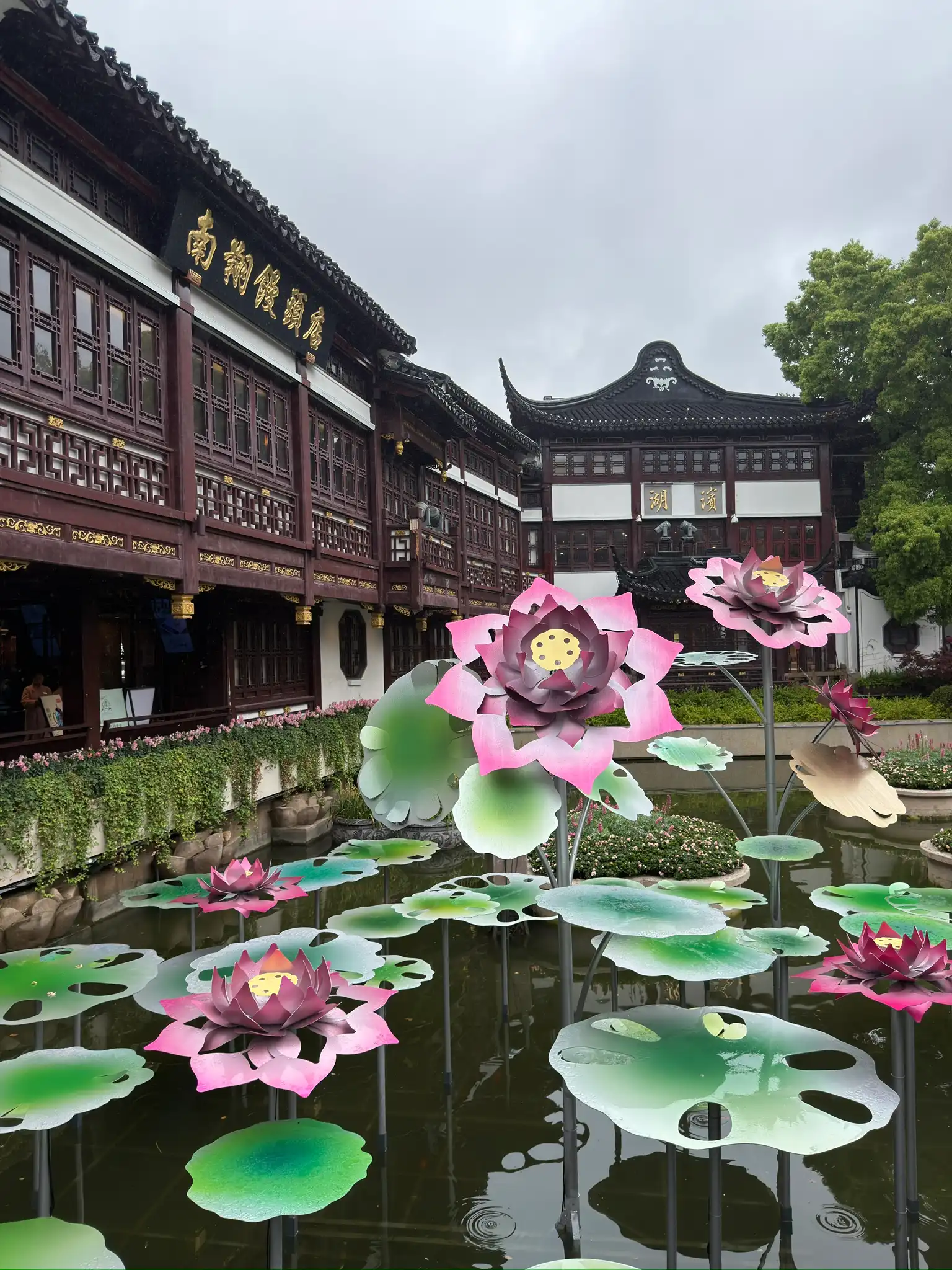
Outside the garden, the Yuyuan Bazaar is busy and commercial. Shops sell souvenirs, snacks, and traditional goods.
The architecture follows a traditional style, even though many buildings are modern reconstructions.
Allow extra time if you want to explore the area before or after the garden.
Tickets and entry info and typical costs
Yu Garden requires a paid ticket for entry.
- Standard adult ticket available
- Discounted tickets for students and seniors
- Seasonal pricing may vary
Lines can build up during peak hours, especially on weekends and holidays.
Best time to visit
Early morning is the best time to avoid crowds. The garden feels more peaceful and easier to move through.
Late afternoon can also be quieter, though closing times vary by season.
Photography tips
Yu Garden offers strong composition opportunities.
- Capture reflections in ponds
- Frame pavilions through doorways
- Use curved bridges for leading lines
Overcast days can reduce glare and help balance light.
Facilities and preparation
Facilities such as restrooms are available inside the garden. The surrounding bazaar area has many food and drink options.
Wear comfortable shoes. Paths are uneven in some sections.
How it compares to other Chinese gardens
Compared to gardens in Suzhou, Yu Garden is smaller and more crowded. Its strength lies in accessibility and location within Shanghai.
It offers a strong introduction to classical Chinese garden design without leaving the city.
Combining with nearby attractions
Yu Garden sits close to several major Shanghai highlights.
- The Bund waterfront
- Shanghai Old City streets
- Lujiazui skyline across the river
You can combine these into a half day or full day route.
Sample visit plan
Shanghai classic route
- Morning visit to Yu Garden
- Explore Yuyuan Bazaar
- Walk to the Bund
- View Pudong skyline
Common questions
Is Yu Garden worth visiting? Yes, especially for first time visitors to Shanghai.
How long should you spend? Around 1.5 to 2 hours.
Is it crowded? Yes, especially during peak times. Early visits are quieter.
 Rate it or leave a comment!
 Rate it or leave a comment!
  - Closed09:00 AM - 04:30 PM
- Tuesday09:00 AM - 04:30 PM
- Wednesday09:00 AM - 04:30 PM
- Thursday09:00 AM - 04:30 PM
- Friday09:00 AM - 04:30 PM
- Saturday09:00 AM - 04:30 PM
- Sunday09:00 AM - 04:30 PM


- Price: $$$$
 Own or work here?
Nearby Places to Eat and Drink See All