
Chiesa di Sant'Ignazio di Loyola
Closed now
Chiesa di Sant'Ignazio di Loyola
Chiesa di Sant'Ignazio di Loyola, Piazza S. Ignazio, 00186 Roma RM, Italy Posted by Brandon B.Admin
Chiesa di Sant’Ignazio di Loyola overview
The Chiesa di Sant’Ignazio di Loyola sits just a short walk from the Pantheon in central Rome. From the outside, the church looks fairly simple. Step inside and everything changes. The ceiling opens into one of the most impressive illusion paintings in the city.
This is a Baroque church known for visual tricks. Artists used perspective to create the appearance of height, depth, and even a dome that does not actually exist. It is one of the best places in Rome to see how art and architecture combine to shape perception.
Plan about 30 to 45 minutes for your visit.
Why Chiesa di Sant’Ignazio di Loyola matters
The church was built for the Jesuit order in the 17th century and dedicated to Ignatius of Loyola, the founder of the Jesuits. It reflects the goals of the Counter Reformation, using art to inspire and engage visitors.
The interior focuses less on structure and more on visual experience. The goal was to create a sense of grandeur without the cost of building a full dome.
Quick facts
- Location: Near the Pantheon, Rome
- Built: 17th century
- Style: Baroque
- Known for: Ceiling illusion and fake dome
- Typical visit time: 30 to 45 minutes
The ceiling fresco
The main highlight is the massive ceiling fresco painted by Andrea Pozzo. It depicts the glorification of Saint Ignatius and the spread of Jesuit missions across the world.
The painting uses perspective to create the illusion that the ceiling opens into the sky. Figures appear to rise upward into light. Columns and architectural elements seem to extend beyond the actual walls.
Stand in the center of the nave and look up. This is the best position to see the full effect.
The illusion dome
Sant’Ignazio does not have a real dome. Instead, Andrea Pozzo painted one on a flat surface. When viewed from a marked spot on the floor, the painting looks like a three dimensional dome.
Move away from that spot and the illusion breaks. This makes it one of the most interesting visual experiences in Rome.
How the illusion works
Pozzo used precise mathematical perspective to align the painting with the viewer’s position. From the correct angle, lines converge in a way that tricks the eye into seeing depth.
This technique was common in Baroque art but rarely executed at this scale.
The interior layout
The church follows a standard nave and side chapel layout. The walls include marble details, statues, and smaller decorative elements.
Compared to some Roman churches, the structure itself feels simple. The emphasis remains on the ceiling and visual effect.
Entry and costs
Entry to the church is free. There is often a small fee to activate lighting for the ceiling fresco, usually through a coin operated system.
Bring small change if you want to see the artwork fully illuminated.
Best time to visit
Early morning or late afternoon offers fewer crowds. Midday can become busy due to its central location near major attractions.
The church is active, so quiet behavior is expected.
Photography tips
Sant’Ignazio is ideal for interior photography.
- Stand at the center marker for ceiling shots
- Shoot directly upward for symmetry
- Use wide angles to capture the full illusion
Avoid flash and respect other visitors.
Facilities and nearby area
The church does not have extensive visitor facilities. Nearby streets offer cafes, restaurants, and restrooms.
Because of its location, it is easy to combine with other central Rome sites.
How it compares to other Rome churches
Rome has many grand churches with real domes and large scale architecture. Sant’Ignazio stands out because it creates that same sense of scale through painting rather than construction.
If you have already visited St. Peter’s Basilica or the Pantheon, this church offers a different kind of experience.
Combining with nearby attractions
The church sits in one of the most walkable parts of Rome.
- Pantheon
- Piazza Navona
- Trevi Fountain
- Via del Corso shopping street
You can include Sant’Ignazio as a short stop between major landmarks.
Sample visit plan
Central Rome walking route
- Start at the Pantheon
- Walk to Sant’Ignazio
- Continue to Piazza Navona
- End at Trevi Fountain
Common questions
Is the dome real? No, it is a painted illusion.
Is it worth visiting? Yes, especially for its unique ceiling artwork.
How long should you spend? Around 30 minutes is enough for most visitors.
Opening hours
Reviews
Sign in and mark this place visited to leave a review.
No reviews yet.
Free Trip Planner
Plan your Italy trip with our free planner
Build a day-by-day itinerary with AI suggestions, hand-picked places, and friends. Free forever — no credit card.
Things to see near Chiesa di Sant'Ignazio di Loyola



Places to eat or drink near Chiesa di Sant'Ignazio di Loyola
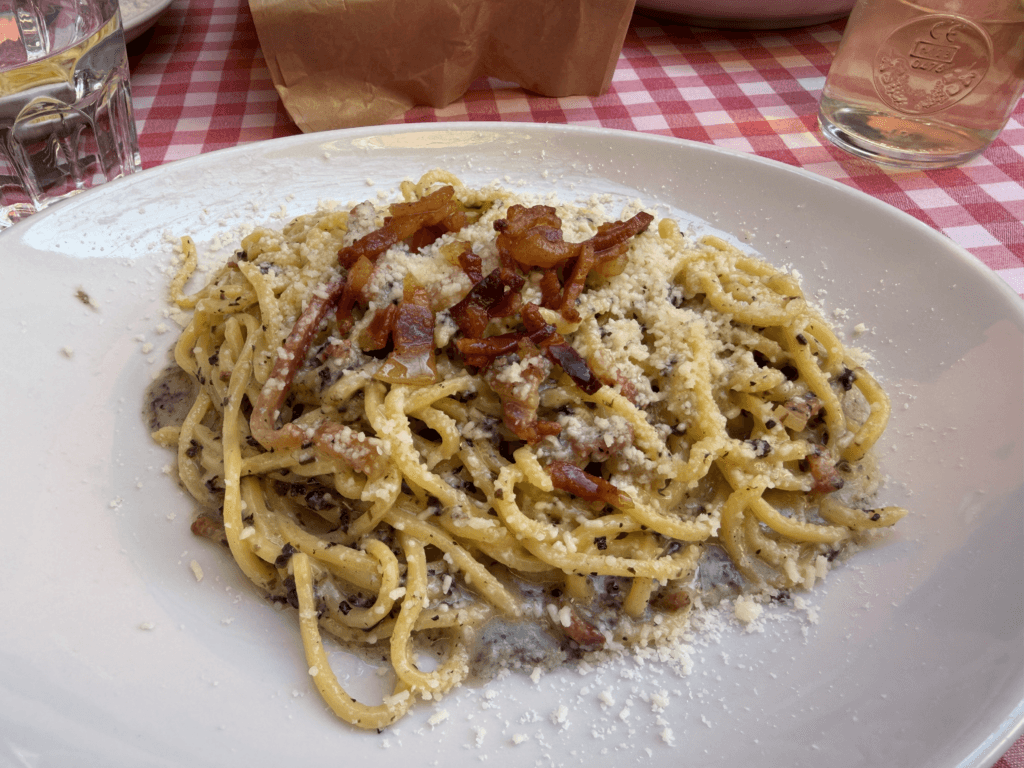
Arianna al Borghetto

La Pietra Scheggiata – Osteria/Pizzeria

Pasticceria Barberini

Trattoria Da Enzo
More places in Rome

Magia a Campo de' Fiori

Museo Storico della Liberazione

The Colosseum
