




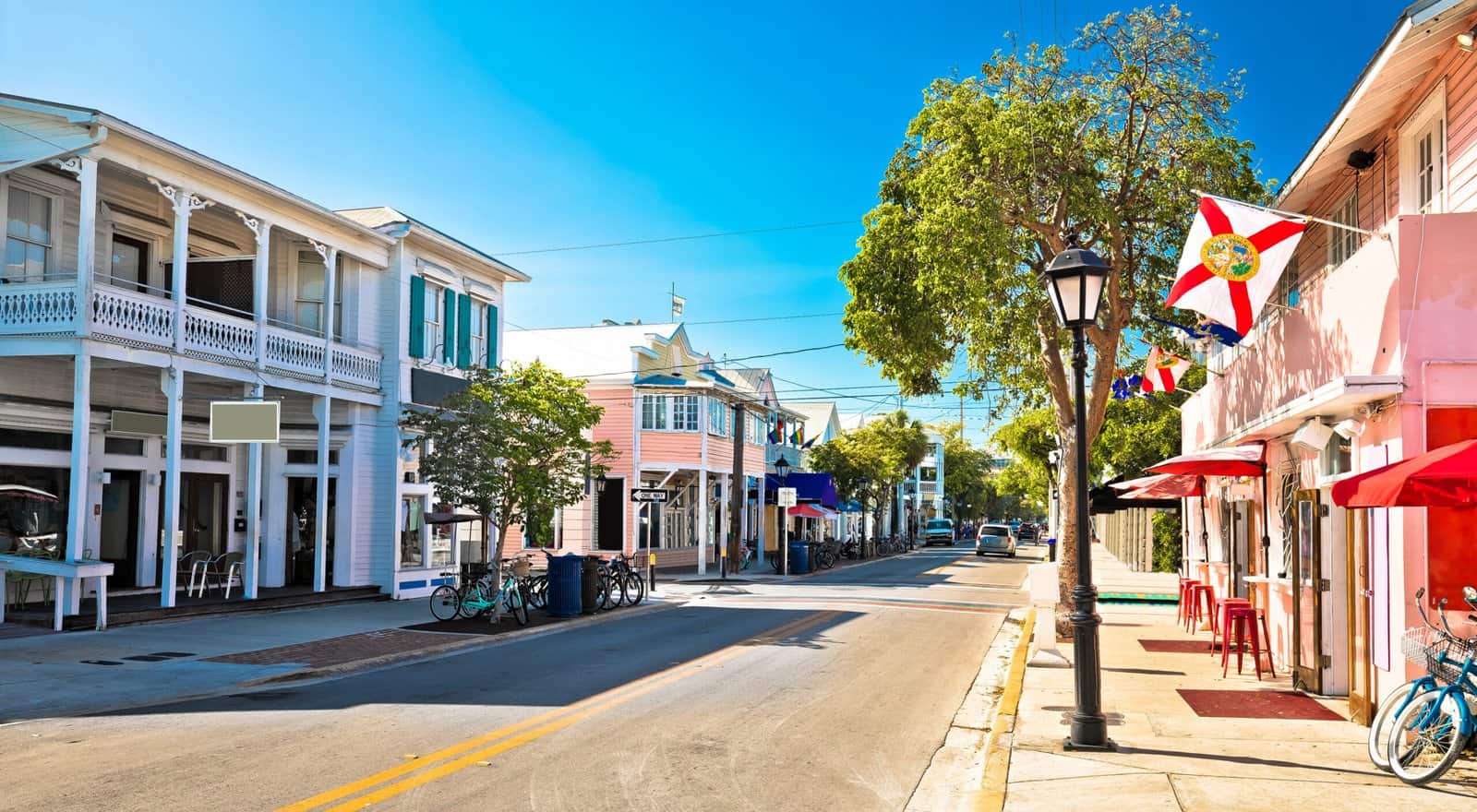

Duval Street overview
Duval Street runs straight through the heart of Key West, stretching from the Gulf of Mexico to the Atlantic Ocean. It is the main artery of the island, lined with bars, restaurants, art galleries, souvenir shops, and historic buildings. If you visit Key West, you will end up on Duval Street whether you plan to or not.
The street is walkable end to end in about 20 minutes without stopping. In reality, you will stop often. Music spills from open doors. Bartenders call out drink specials. Street performers fill the sidewalks. Duval Street is less about sightseeing and more about atmosphere.
Why Duval Street matters
Duval Street defines modern Key West culture. It blends old Florida charm with party energy. The buildings reflect 19th century Caribbean architecture, while the nightlife reflects the island’s laid back reputation.
For many visitors, Duval is where the day transitions into evening. You might start with a coffee, return for lunch, and come back again after sunset.
Quick facts
- Location: Key West, Florida
- Length: About 1.25 miles
- Connects: Gulf of Mexico to Atlantic Ocean
- Best known for: Bars, nightlife, and shops
- Typical visit time: 1 to 3 hours, depending on stops
Walking the full length
The northern end begins near Mallory Square and the harbor. The southern end reaches the Southernmost Point area near the Atlantic. Walking the entire stretch gives you a sense of the island’s compact layout.
You can break the walk into sections. The Mallory Square end feels more tourist heavy. The middle section features some of the most famous bars. The southern end feels slightly quieter during the day.
Nightlife scene
Duval Street is known for its nightlife. Live music plays daily in many venues. Bars range from historic watering holes to loud dance spots.
Some venues lean casual with open air seating and cold beer. Others focus on cocktails and themed decor. You do not need a strict plan. Walk until something catches your attention.
Daytime atmosphere
During the day, Duval feels different. Shops open early. Tourists browse art galleries and clothing stores. Sidewalk cafes fill with brunch crowds.
It is easy to combine Duval Street with visits to nearby attractions like the Ernest Hemingway Home or the Key West Lighthouse.
Food options
Duval Street offers everything from seafood restaurants to quick sandwich counters.
- Fresh seafood and conch dishes
- Key lime pie shops
- Cuban sandwiches
- Casual taco and burger spots
Prices reflect the tourist setting. Walking a block or two off Duval can sometimes lead to quieter dining spots.
Best time to visit
Late afternoon into evening is peak energy. If you prefer calmer exploration, go early in the morning before cruise passengers fill the sidewalks.
Sunset brings a shift in mood. Many visitors start at Mallory Square for sunset celebrations, then move onto Duval Street for dinner and drinks.
Seasonal experience
Winter and spring draw the largest crowds, especially during festivals and events. Summer feels hotter and slightly less busy, though humidity can be intense.
Hurricane season runs from June through November. Always check weather conditions during that period.
Photography tips
Duval Street offers strong color and character.
- Capture historic wooden balconies
- Photograph neon signs at night
- Frame palm trees against pastel buildings
Evening lighting adds vibrancy, but early morning light gives clearer architectural shots.
Getting around
Walking remains the best way to explore Duval. Bicycles and scooters are common in Key West, but sidewalks can get crowded.
Parking along Duval is limited. Public lots fill quickly during peak season.
Safety and awareness
Duval Street is generally safe, but it is busy and alcohol focused at night.
- Stay aware of traffic at intersections
- Watch your belongings in crowded bars
- Drink responsibly in the heat
Police presence remains visible, especially during festivals.
Events and festivals
Duval Street hosts major events throughout the year.
- Fantasy Fest in October
- New Year’s Eve celebrations
- Parades and street parties
During these times, the street transforms into a full scale party zone.
How it compares to other Florida nightlife areas
Duval feels more compact and walkable than South Beach. It has a smaller scale but a stronger sense of local personality.
The Caribbean influence shapes architecture, music, and food in ways that feel distinct from mainland Florida cities.
Sample visit plan
Classic Duval evening
- Watch sunset at Mallory Square
- Walk down Duval Street
- Stop for dinner and live music
- End with late night drinks
Relaxed daytime stroll
- Morning coffee on Duval
- Visit nearby museums
- Lunch on a shaded patio
- Return before sunset crowds
Common questions
Is Duval Street only for partying? No. It works well for shopping and dining during the day.
Is it expensive? It can be, especially for food and drinks.
Is it worth visiting? Yes. It captures the personality of Key West in one walkable stretch.
 Rate it or leave a comment!
 Rate it or leave a comment!
 Own or work here?
Posted By





Sign Up for FREE!
Take advantage of all the features by signing up. It's completely FREE and we never spam you!
• Create Travel Plans/Trips
• Collect Places You've Been
• Connect with Like-Minded Travelers
• Contribute to the Community by Posting New Recommendations
Already Registered? Login.