





Emperor Qinshihuang’s Mausoleum Site Museum – Xi’an, China
Overview
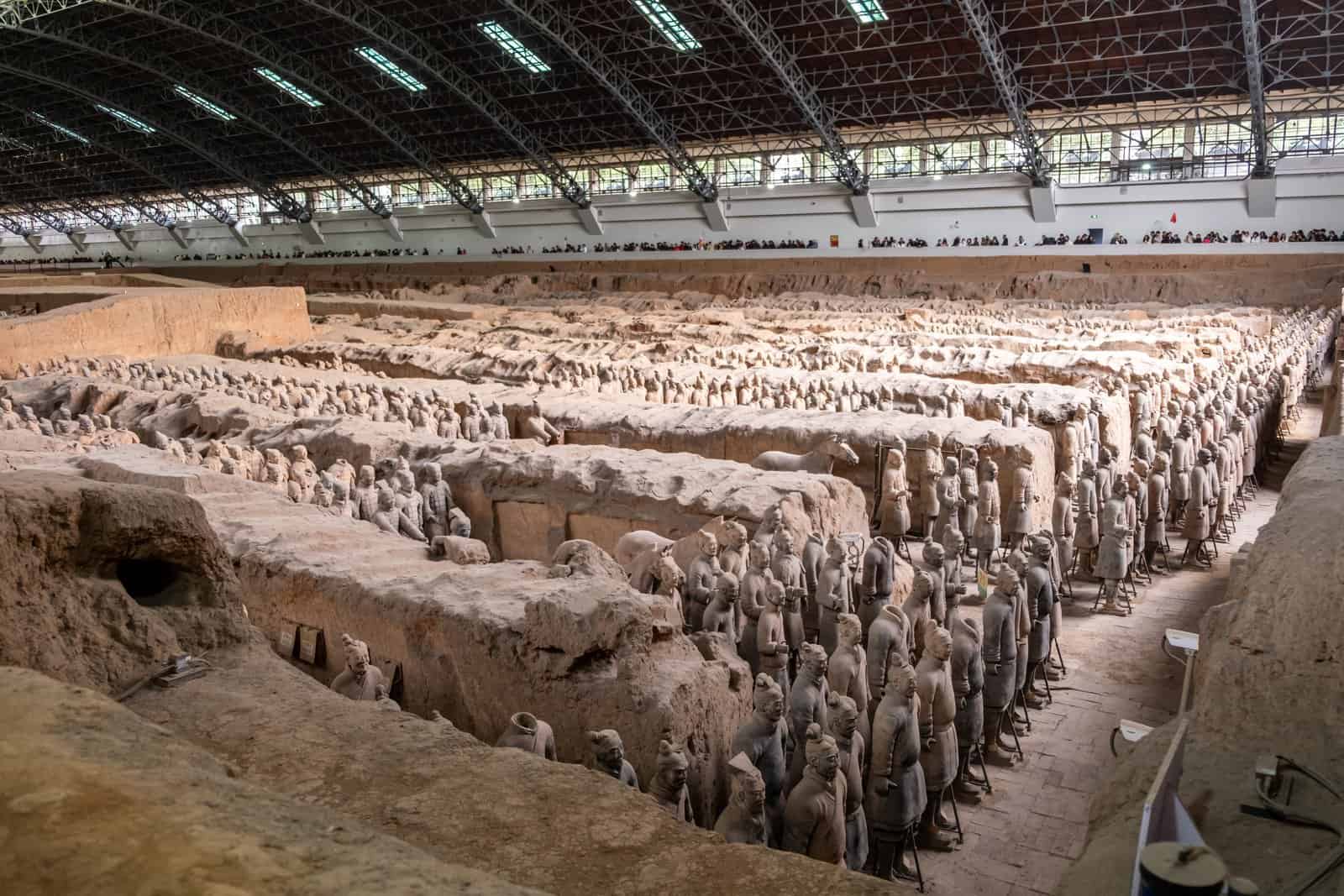
The Emperor Qinshihuang’s Mausoleum Site Museum stands in Lintong, east of Xi’an. It marks the burial complex of Qin Shi Huang, China’s first emperor. Construction began in 246 BC and continued for decades. The site covers a vast area with burial mounds, pits, roads, and walls. The famous Terracotta Army forms part of this complex. The museum explains the tomb system, the pits, and the ruler who unified China in 221 BC. Visits focus on history, scale, and clear facts.
Why Visit
- See the burial complex of China’s first emperor
- Learn how ancient China organized power and labor
- View the Terracotta Army pits at close range
- Understand the layout of an early imperial tomb city
- Visit one of China’s most studied archaeological sites
Main Areas Inside the Museum
- Pit 1: The largest pit with rows of life-size soldiers and chariots
- Pit 2: A mix of cavalry, infantry, and archers in battle order
- Pit 3: A smaller command area with officers
- Mausoleum Mound: The sealed burial hill of the emperor
- Exhibition Halls: Displays of weapons, tools, and construction methods
History and Background
Qin Shi Huang became king of Qin as a teenager. He later conquered rival states and unified China in 221 BC. He ordered a massive tomb to reflect his rule in the afterlife. Workers shaped thousands of clay figures with unique faces and ranks. Bronze weapons were made in large numbers. The army faced east, toward former enemy lands. The main burial chamber sits under the mound and remains unopened. Ancient texts describe rivers of mercury inside the tomb. Modern tests found high mercury levels in the soil around the mound.
Discovery of the Terracotta Army
Local farmers discovered the first pit in 1974 while digging a well. Archaeologists soon realized the scale of the find. Excavation revealed soldiers, horses, and chariots arranged in battle formation. Work continues today. New figures and details still appear. The museum opened to protect the site and explain its meaning. The complex gained UNESCO World Heritage status in 1987.
Typical Costs and Entry Details
Adult tickets usually cost around RMB 120. Prices can change by season. The ticket covers the Terracotta Army pits and the mausoleum area. Students and seniors receive discounts. Children under a set height often enter free. The site opens most days from morning to late afternoon. Entry lines can grow long during holidays. Buying tickets early helps.
Best Time to Visit
Spring and autumn bring mild weather and clearer views inside the halls. Summer brings large crowds and heat. Winter feels cold but quieter. Early morning visits help avoid tour groups. Weekdays feel calmer than weekends. Allow at least 3 hours for a full visit.
Nearby Experiences
The museum sits near Huaqing Palace at the foot of Mount Li. Many visitors pair both sites in one day. The drive from central Xi’an takes about 45 minutes. Guided tours often include transport. Public buses also run from the city. Returning to Xi’an in the afternoon leaves time for museums inside the city walls.
Travel Tips
- Wear comfortable shoes for long indoor walking paths
- Arrive early to avoid peak crowd hours
- Read the wall panels for clear context and dates
- Photography rules vary inside each hall
- Plan breaks between pits to avoid fatigue
Key Facts
- Construction began in 246 BC
- Unification of China occurred in 221 BC
- The Terracotta Army was found in 1974
- The burial mound remains sealed
- The site became a UNESCO property in 1987
 Rate it or leave a comment!
 Rate it or leave a comment!
  - Closed08:30 AM - 05:00 PM
- Monday08:30 AM - 05:00 PM
- Tuesday08:30 AM - 05:00 PM
- Wednesday08:30 AM - 05:00 PM
- Thursday08:30 AM - 05:00 PM
- Friday08:30 AM - 05:00 PM
- Saturday08:30 AM - 05:00 PM
- Sunday08:30 AM - 05:00 PM


 Own or work here?
Posted By





Sign Up for FREE!
Take advantage of all the features by signing up. It's completely FREE and we never spam you!
• Create Travel Plans/Trips
• Collect Places You've Been
• Connect with Like-Minded Travelers
• Contribute to the Community by Posting New Recommendations
Already Registered? Login.