Hot Springs Mountain
Hot Springs Mountain, Hot Springs, AR 71901, USAHot Springs Mountain rises directly behind Bathhouse Row, the strip of Gilded Age bathhouses that most visitors associate with Hot Springs, Arkansas. It is the tallest peak inside Hot Springs National Park, a forested ridge of novaculite and shale that most people photograph from Central Avenue but never actually climb. That's worth correcting. The mountain is where the geology that made this town famous and the history that shaped it both come into focus, and the view from the summit tower gives you a read on the whole park that street level simply can't.
The rock under your feet on this mountain is the same rock responsible for the thermal water downtown. Rainwater soaks into folded layers of novaculite and shale, travels deep underground where it picks up heat, and resurfaces along the base of the mountain as the springs that built this city's reputation as a health resort. Few places let you stand on the source material of a town's entire identity. Hot Springs Mountain does.
Why Hot Springs Mountain Matters
Hot Springs National Park holds a strange distinction among American parks: it's the oldest federally protected land in the country, set aside in 1832, four decades before Yellowstone became the first official national park in 1872. Hot Springs Mountain is the geographic anchor of that reservation. The thermal springs flowing from its base drew Native American peoples long before European settlement, then became a magnet for health seekers, speculators, and eventually gamblers through the 19th and early 20th centuries.
From the summit tower, looking south over the city, you get a vantage point that's hard to replicate anywhere else in Arkansas. The dense Ouachita forest on the slopes gives way abruptly to a compact grid of streets and Victorian rooflines below. Seeing that contrast from above makes the whole logic of the park click into place. You understand immediately why a resort town grew up at the foot of this particular ridge and not somewhere flatter or more convenient.
Quick Facts
- Located inside Hot Springs National Park, administered by the National Park Service
- Elevation approximately 1,050 feet above sea level
- The Hot Springs Mountain Tower at the summit stands roughly 216 feet tall
- Tower views extend up to 140 miles on a clear day, according to the park
- Accessible by car via Hot Springs Mountain Drive or on foot via park trails
- No admission fee to hike the mountain; the tower charges a separate entry fee
- Part of the park's larger trail system, which covers over 26 miles of maintained trails
Getting There
Hot Springs Mountain Drive begins near the Fordyce Bathhouse visitor center on Central Avenue and switchbacks up the ridge to the summit area. The drive is one way and takes roughly 10 to 15 minutes depending on traffic and how often you pull over at the overlooks along the way. Parking at the top is limited, especially on weekends from spring through fall, so arriving before 10am generally gets you a spot without circling.
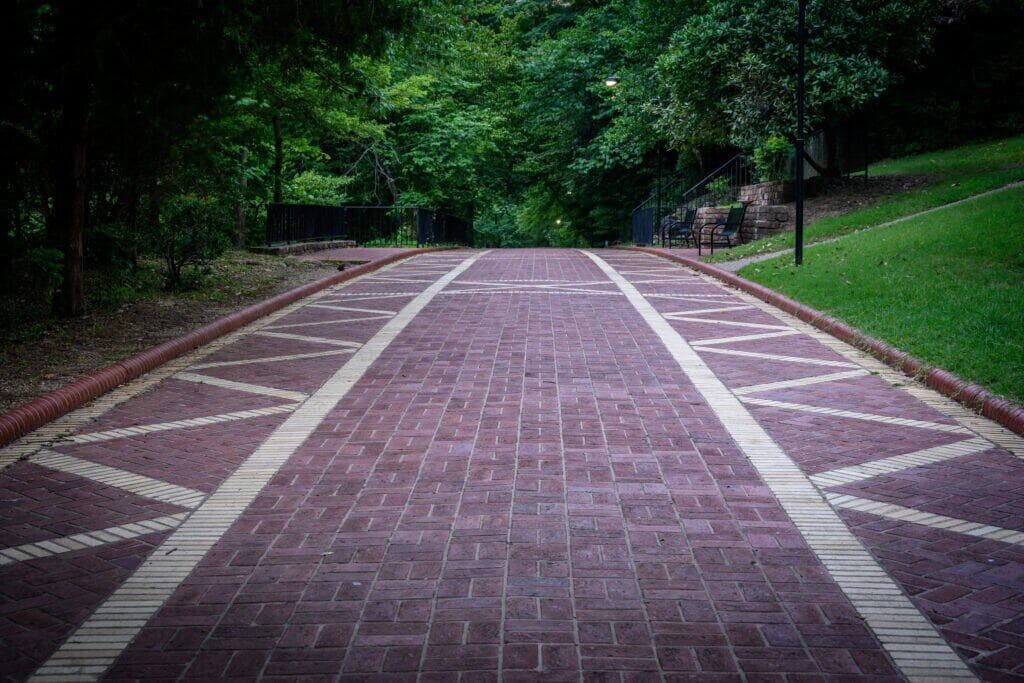
If you'd rather walk, the Grand Promenade behind Bathhouse Row connects to several trails climbing the mountain, and the Hot Springs Mountain Trail is the most direct route from the promenade side. It's a moderate climb rather than a technical one, but it's steady and genuinely uphill the whole way. Most reasonably fit visitors finish it in under an hour. The novaculite surface on parts of the trail gets slick when wet, so shoes with real grip matter more than hiking experience.
The Layout and Experience
The summit itself is small and easy to navigate. There's a parking loop, a modest gift shop at the base of the tower, restrooms, and the tower structure rising out of the trees. Shortleaf pine and mixed hardwoods crowd right up to the clearing, and even in August the shade at the top feels noticeably cooler than Central Avenue below.
The Hot Springs Mountain Tower is an observation structure you climb for a separate fee. It isn't historic architecture in the preserved sense, more a functional mid-century tourist tower, but the views from its upper deck are the entire point. On a clear morning you can see well past the city into the surrounding Ouachita hills in every direction, and the forest spreads out looking essentially unbroken. That unbroken canopy is a useful reminder of just how much protected land wraps around this small urban core.
The trails looping around the summit cut through older forest and occasionally break onto rocky outcrops with partial views of the valley. If you've got an extra half hour after the tower, walking a stretch of the ridge trail is worth it just for the quiet and the tree cover, away from the gift shop crowd.
History and Background
President Andrew Jackson's administration set aside the land around the hot springs in 1832, making this the first parcel of federally protected land in American history, long before the national park system existed as a concept. Hot Springs Mountain was central to that original reservation, and the boundaries were drawn specifically to include the forested slopes rising above the thermal water. The area wasn't formally designated Hot Springs National Park until 1921, nearly ninety years later, but the protective intent dates back to the Jackson era.
The observation tower has drawn visitors for generations, though the current structure isn't the original one. An earlier tower stood on the mountain during the city's heyday as a resort destination, roughly from the late 1800s through the mid-20th century, when Hot Springs built a national reputation as a place to take the waters and, later, to gamble. That era brought a strange mix of clientele, from health tourists chasing relief from arthritis and other ailments to gangsters like Al Capone, who reportedly favored the city's illegal casinos, to future political figures who passed through on the way to careers elsewhere. Many of those visitors made the trip up the mountain as a standard part of their stay, the same way visitors do now, just with a different skyline below them.
Best Time to Visit
October is probably the strongest single month to come up here. Fall color in the Ouachita range tends to peak in mid to late October, and the view from the tower takes on a different character entirely once the hardwoods turn orange and gold. Temperatures are comfortable for the hike and the crowds thin out compared to summer.
Spring, roughly March through May, runs a close second. Wildflowers show up along the trail edges, the air tends to be clearer, and visibility from the tower is often at its best before summer haze settles in over the valley. Summer visits work fine but expect heat, humidity, and a crowded tower deck on weekend afternoons. Winter is quieter than you'd expect, and a cold, clear day can actually open up views through the bare trees that the summer canopy blocks entirely.
Photography Tips
The tower's observation deck faces outward in every direction, so the best light depends on which way you're pointing the camera. The south-facing view toward the city and Bathhouse Row works best in the morning, with the sun behind you. The north and west views into the deeper Ouachita hills tend to look better in late afternoon light.
Along the trails, look for the rocky outcrops that break the tree line. They give you a chance to frame the city through gaps in the forest, a more natural composition than anything you'll get standing at the tower railing. It takes a bit of wandering to find the good ones. A wide lens is useful on the tower deck itself, since the railing keeps you from leaning out far enough to separate foreground from background any other way.
Combining with Nearby Attractions
Hot Springs Mountain pairs naturally with Bathhouse Row directly below it. The Fordyce Bathhouse serves as the main National Park Service visitor center and costs nothing to enter. Walking through it first, before heading up the mountain, gives you the full backstory on the thermal springs and the resort era, which makes the view from the summit tower considerably more meaningful once you're up there.
West Mountain and North Mountain, the other two peaks inside the park, have their own drives and short trail networks worth a look if you have more time. A reasonable morning plan starts on the Grand Promenade, climbs Hot Springs Mountain on foot, and loops back down a ridge trail, covering the essential park experience largely without a car. If you have an afternoon left over, Garvan Woodland Gardens on Lake Hamilton is about a 10-minute drive from the mountain and makes a solid second stop.
Sample Visit Plan
Start at the Fordyce Bathhouse on Central Avenue for the history, then walk or drive up to the summit. If you're driving, budget around 15 minutes for the one-way Hot Springs Mountain Drive plus time at the pullouts. If you're hiking from the Grand Promenade, give yourself a full two hours round trip. At the top, pay the tower fee, spend 20 to 30 minutes at the observation deck, and walk a stretch of the ridge trail before heading back down. The whole loop, done at an unhurried pace with stops at Bathhouse Row before or after, fills a half day comfortably.
Practical Tips
- Hot Springs Mountain Drive is one way, so plan your route before starting to avoid backtracking
- Bring water even for short hikes, since the summit area has no water fountain on the trail network
- The tower fee is separate from park entry and can vary by season, so check the rate at the tower base
- Dogs are allowed on the trails on leash but are not permitted inside the tower
- Cell coverage at the summit is generally reliable, though trail switchbacks lower on the mountain can drop signal
- If hiking up from the Grand Promenade, budget at least two hours round trip including time at the top
- Restrooms are available at the summit parking area but not along the trail itself
FAQ
Is Hot Springs Mountain difficult to hike?
The trails are rated moderate. The climb is steady rather than steep, and footing is reliable on dry days. Most adults in average fitness manage it without trouble. Rocky sections get slippery after rain, so grippy shoes matter more than trail experience.
Do you need a National Park pass to visit?
There's no entry fee for Hot Springs National Park itself, which is unusual among national parks. The observation tower at the summit charges its own admission fee, separate from park entry and not covered by a standard America the Beautiful pass.
Can you drive to the top?
Yes. Hot Springs Mountain Drive runs all the way to the summit parking area. It's paved and one way, and most passenger vehicles handle it without any issues.
How long should you plan for a visit?
Two to three hours covers the drive up, the tower visit, and a short trail walk. If you hike from Bathhouse Row and back, plan for a half day so you have time to explore the promenade before or after climbing Hot Springs Mountain.
Reviews
Sign in and mark this place visited to leave a review.
No reviews yet.
Free Trip Planner
Plan your Hot Springs trip with our free planner
Build a day-by-day itinerary with AI suggestions, hand-picked places, and friends. Free forever — no credit card.