
Marvel At The Works Of Gaudi
Barcelona, Spain Posted by Brandon B.Admin
Antoni Gaudí's Barcelona: A Walking Guide to His Greatest Works
No architect has left a mark on a single city quite like Antoni Gaudí left on Barcelona. Walk almost any direction from the old town and within thirty minutes you'll encounter something unmistakably his: a facade that looks like it melted in the sun, a rooftop covered in broken ceramic shards, a tower that seems to grow rather than be built. Spending a day or two tracing the works of Gaudí across Barcelona is one of the most visually strange and genuinely rewarding things you can do in Spain.
He was born in 1852 in Reus, a small city south of Barcelona, and he spent most of his working life in the Catalan capital. By the time he died in 1926, he had changed what a building could look like, permanently.
Why Gaudí's Work Still Matters
The easy answer is that his buildings are beautiful in a way that photographs can't fully capture. But the more interesting answer is that Gaudí was doing something structurally radical, not just decoratively unusual. He studied natural forms obsessively and used them to solve engineering problems. The branching columns inside the Sagrada Família aren't decorative trees, they're a load-distribution system. The hanging chain models he built to calculate arch geometry were inverted to become the catenary arches you walk under today.
That combination of deep Catholic faith, Catalan nationalist pride, and structural innovation is baked into everything he made. You feel it most at the Sagrada Família, where he spent the last forty-three years of his life working on a single project he knew he'd never finish.
Quick Facts
- Gaudí was born in 1852 and died in 1926, struck by a tram on Gran Via de les Corts Catalanes.
- He has seven UNESCO World Heritage Sites in Barcelona, all listed under "Works of Antoni Gaudí."
- The Sagrada Família has been under continuous construction since 1882.
- Most of his major works are concentrated in the Eixample district and Park Güell, making them walkable or a short metro ride apart.
- Almost all sites require advance booking, especially in summer and during Easter week.
- A full Gaudí circuit across multiple sites takes a minimum of two full days at a comfortable pace.
The Main Sites and What to Expect at Each
Sagrada Família
This is where you start. The basilica sits in the Eixample grid on Carrer de Mallorca and nothing in Barcelona prepares you for how large it is up close. From a distance it looks like a cluster of organic spires. From the pavement directly below, it's overwhelming in a way that most famous buildings aren't.
There are three main facades: the Nativity facade, which Gaudí supervised himself and is covered in naturalistic stone carving; the Passion facade, designed by Josep Maria Subirachs in a more angular, austere style; and the Glory facade, still under construction. Go inside. The interior, completed in the last two decades, floods with colored light from stained glass windows that shift from warm amber in the west to cool blue-green in the east depending on the time of day. Morning is when the eastern light hits best.
Timed entry tickets are required and sell out weeks ahead in peak season. Add the tower access if you can, it gives you a close look at the ceramic finials and a view across the Eixample that no other building provides.
Park Güell
Up on the hill of Carmel in the Gràcia district, Park Güell started as a failed housing development commissioned by industrialist Eusebi Güell. Only two houses were ever built. Gaudí turned the rest into a public park full of mosaic-covered terraces, a gingerbread gatehouse, and a long undulating ceramic bench that wraps around the main terrace like a frozen wave.
The monumental zone, which includes the famous terrace and the hypostyle hall of columns beneath it, requires a timed ticket. The surrounding park is free and worth exploring for the viaducts and stone pathways that wind through the pine trees. If you arrive early, around opening time, you'll have the terrace almost to yourself before the tour groups arrive.
Casa Batlló
On Passeig de Gràcia, the most elegant boulevard in the Eixample, Casa Batlló sits at a stretch of street nicknamed the "Block of Discord" because three rival modernista architects each designed a building there. Gaudí renovated Casa Batlló between 1904 and 1906 for Josep Batlló, a textile industrialist. The facade is covered in iridescent blue and green ceramic discs that shift color in the light, and the roof is shaped like the arched back of a dragon, with a cross rising like a lance from the ridge.
Inside, the central light well is tiled in a gradient from deep cobalt at the bottom to pale sky blue at the top, so every floor gets the same quality of light. It's one of the most quietly clever things in the building. The visit is self-guided with an audio experience that can feel theatrical, but the architecture speaks loudly enough on its own.
Casa Milà (La Pedrera)
A ten-minute walk up Passeig de Gràcia from Casa Batlló, La Pedrera was completed in 1912 and was the last private residence Gaudí ever designed. The facade is all undulating stone, no straight lines anywhere, which is what earned it the nickname "La Pedrera" (the stone quarry) from locals who found it strange when it went up. The rooftop is the main event: a landscape of chimneys and ventilation towers in twisted ceramic and stone that look like warriors or melted chess pieces depending on your imagination.
The building is managed by the Fundació Catalunya La Pedrera and has a permanent exhibition on Gaudí's working methods in the attic space, which follows the catenary arch curves of the roof structure. Evening visits are offered during summer and tend to include a rooftop experience with music. Worth checking the schedule when you book.
Palau Güell
This is the underrated one. Built between 1886 and 1890 in the El Raval neighborhood, just off La Rambla, Palau Güell was Gaudí's first major commission from Eusebi Güell and the building where he started developing his mature style. The parabolic arches in the entrance hall and the rooftop chimneys, each unique and covered in broken tile, show exactly where his ideas were heading.
Because it gets far fewer visitors than the Eixample sites, you can actually spend time in the rooms and look at things closely. The central hall rises through several floors to a perforated dome that lets in pinpricks of natural light. It's easy to spend an hour here without feeling rushed.
Casa Vicens
Often skipped, Casa Vicens in the Gràcia neighborhood was Gaudí's first major residential project, built between 1883 and 1885 for a tile merchant named Manuel Vicens. The Moorish and Orientalist influences are obvious in the geometric tile patterns on the facade, and it's fascinating to see here the seeds of what he'd do later with ceramics at Park Güell and the Sagrada Família. It opened to the public as a museum only in 2017, so it still feels relatively uncrowded.
Getting Between the Sites
The Sagrada Família is on metro lines L2 and L5 at the Sagrada Família stop. Casa Batlló and La Pedrera are both on Passeig de Gràcia, served by the Passeig de Gràcia stop on lines L2, L3, and L4. Park Güell requires a bus or a steep uphill walk from the Lesseps or Vallcarca metro stops on L3. Palau Güell is a five-minute walk from the Liceu stop on L3. Casa Vicens is about fifteen minutes on foot from Park Güell, which makes them a natural pairing.
Best Time to Visit
Spring and early autumn are the most manageable seasons. July and August bring the largest crowds and the hottest midday heat, which matters when you're walking between outdoor sites. If you visit in summer, book everything at least two to three weeks out and plan to be at whichever site opens earliest right when the doors open.
December and January are quieter and the low winter light on the ceramic facades can be genuinely beautiful. The Sagrada Família's eastern windows hit differently on a clear January morning than at any other time of year.
Practical Tips
- Book Sagrada Família and Casa Batlló as far in advance as possible. Both sell out regularly, particularly for weekend slots.
- Wear comfortable shoes. Even a partial Gaudí circuit involves several kilometers of walking and cobbled streets.
- The Gaudí Route is not an official pass, but some combined ticket options exist through individual venue websites. Check before buying separate tickets.
- La Pedrera's rooftop is the best spot for photography at golden hour. Evening tickets are worth it if the schedule aligns.
- At Park Güell, the free areas outside the monumental zone are often more peaceful and give you a better sense of the landscape Gaudí was working with.
- Palau Güell is the only major Gaudí site in the old town, so it pairs well with a morning in El Born or the Gothic Quarter.
Frequently Asked Questions
Do I need to visit all the sites to understand Gaudí's work?
Not necessarily. If time is short, the Sagrada Família and Casa Batlló together give you a strong sense of his range, from the sacred to the domestic. Adding La Pedrera or Palau Güell rounds out the picture considerably, though.
Is the Sagrada Família actually worth the ticket price?
Most people who visit say yes, including skeptics. The interior in particular tends to surprise visitors who expected an unfinished building site. It's a functioning basilica and the completed nave is extraordinary.
Can children enjoy these sites?
Generally yes. The rooftop of La Pedrera and the terrace at Park Güell tend to be the most immediately exciting for kids. The Sagrada Família can feel long if they're not engaged by the audio guide, but the sheer scale usually holds attention for a while.
How much time should I budget for the full Gaudí circuit?
A realistic minimum for the four major sites (Sagrada Família, Casa Batlló, La Pedrera, Park Güell) is two full days. Adding Palau Güell and Casa Vicens comfortably requires a third half-day at least.
Reviews
Sign in and mark this place visited to leave a review.
No reviews yet.
Free Trip Planner
Plan your Barcelona trip with our free planner
Build a day-by-day itinerary with AI suggestions, hand-picked places, and friends. Free forever — no credit card.
Related reading
Things to see near Marvel At The Works Of Gaudi

Colonia Guell Gaudi Crypt
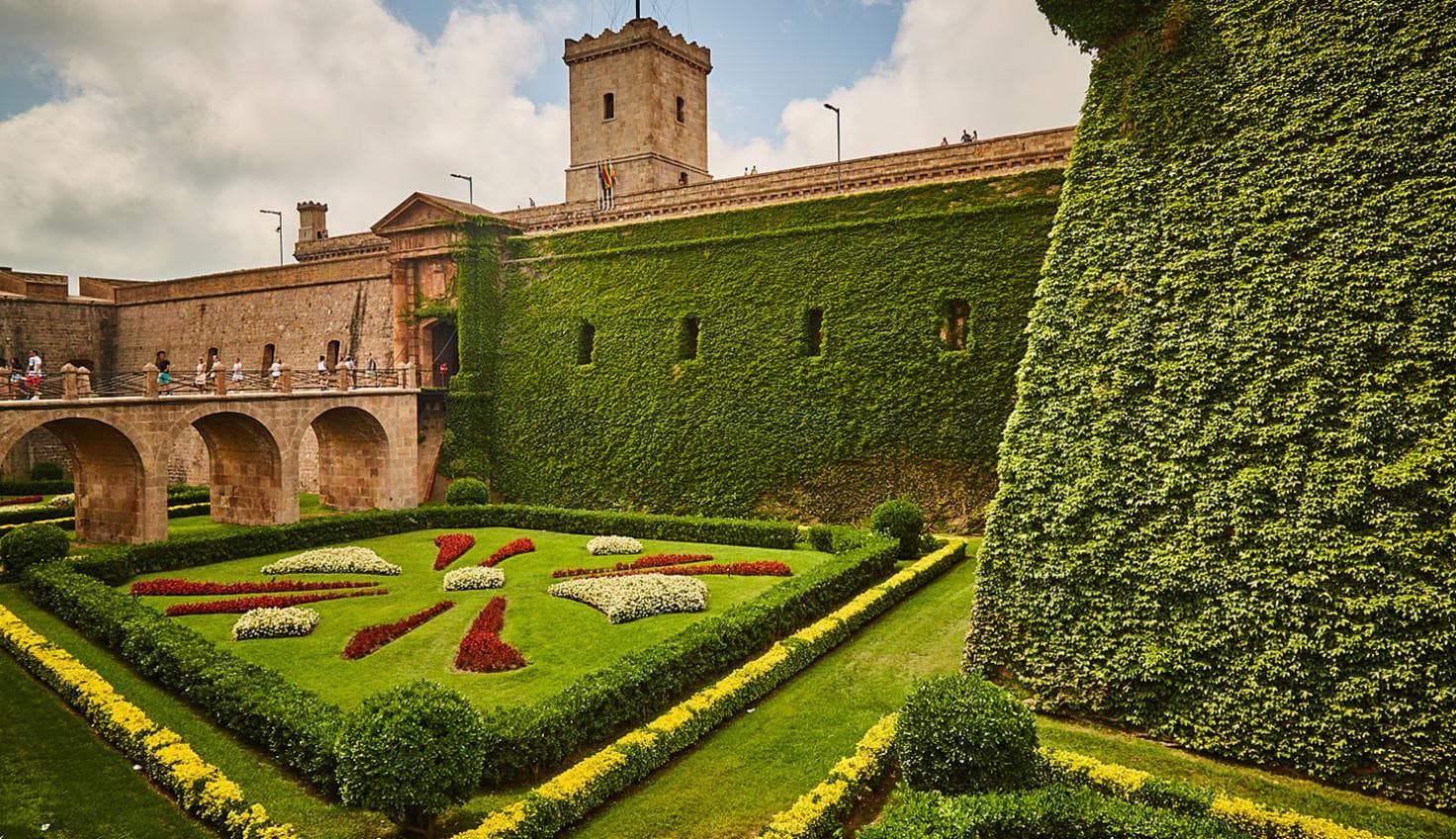
Montjuïc Castle
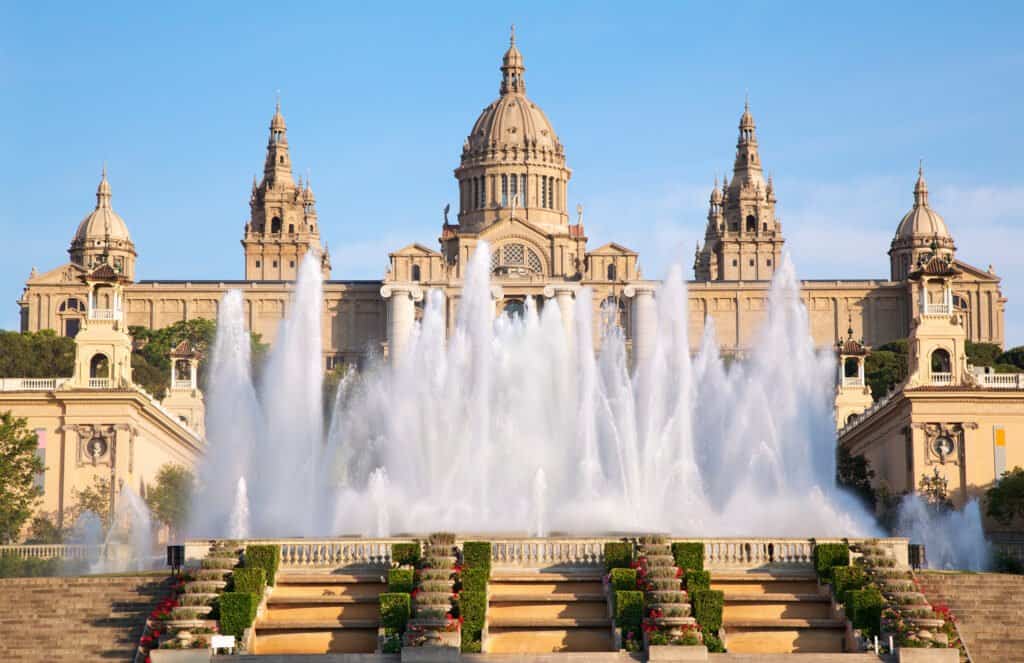
Magic Fountain of Montjuïc
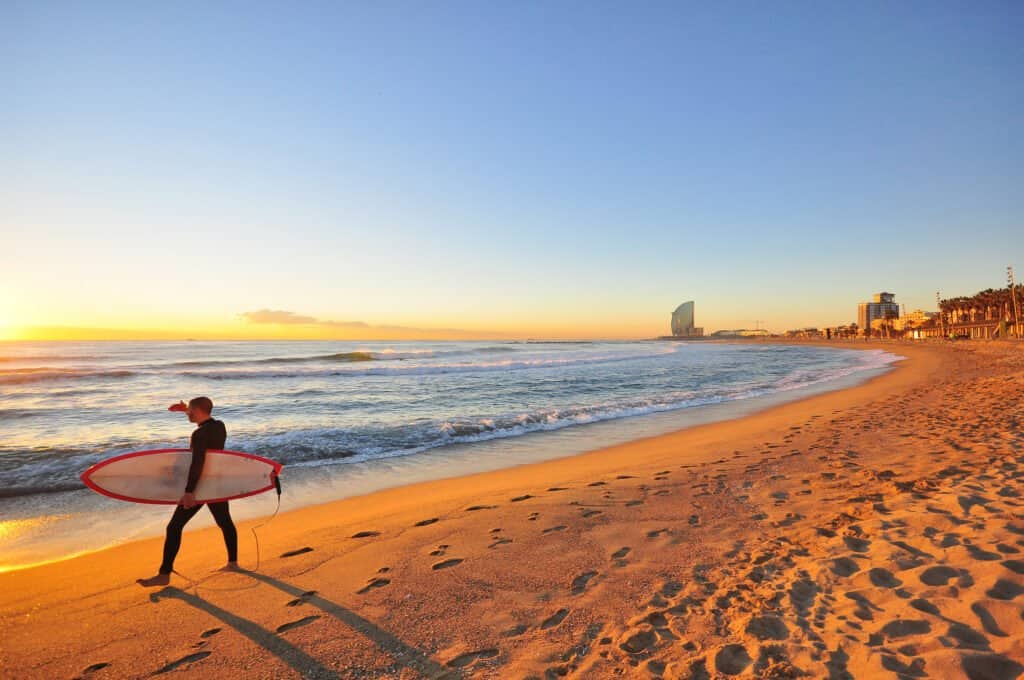
Barceloneta Beach
Places to eat or drink near Marvel At The Works Of Gaudi



More places in Barcelona

Sagardi BCN Centre

Orient Express Cocktail Bar

Xurreria Trebol
