




Neolithic Settlement of Choirokoitia overview
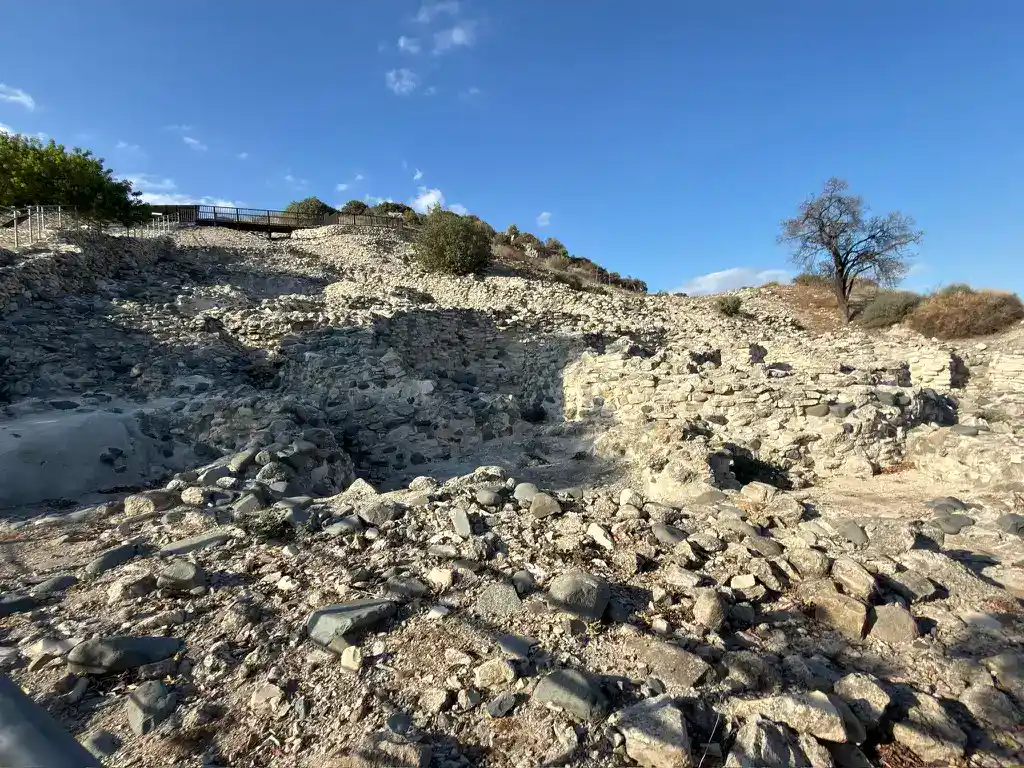
The Neolithic Settlement of Choirokoitia sits on a low hillside in southern Cyprus, between Larnaca and Limassol. At first glance, it looks simple. Stone foundations, circular house outlines, and quiet open land. But this site dates back to around 7000 BC, which makes it one of the most important prehistoric settlements in the eastern Mediterranean.
Choirokoitia is not about monumental architecture. It is about early human life. You walk through the remains of one of the first organized farming communities on the island. Most visitors spend about 1 to 1.5 hours here, moving slowly between house foundations and reconstructed dwellings.
Why Choirokoitia matters
Choirokoitia represents a key stage in human development. The settlement belongs to the Aceramic Neolithic period, meaning people here farmed, built permanent homes, and lived in organized communities long before pottery became common.
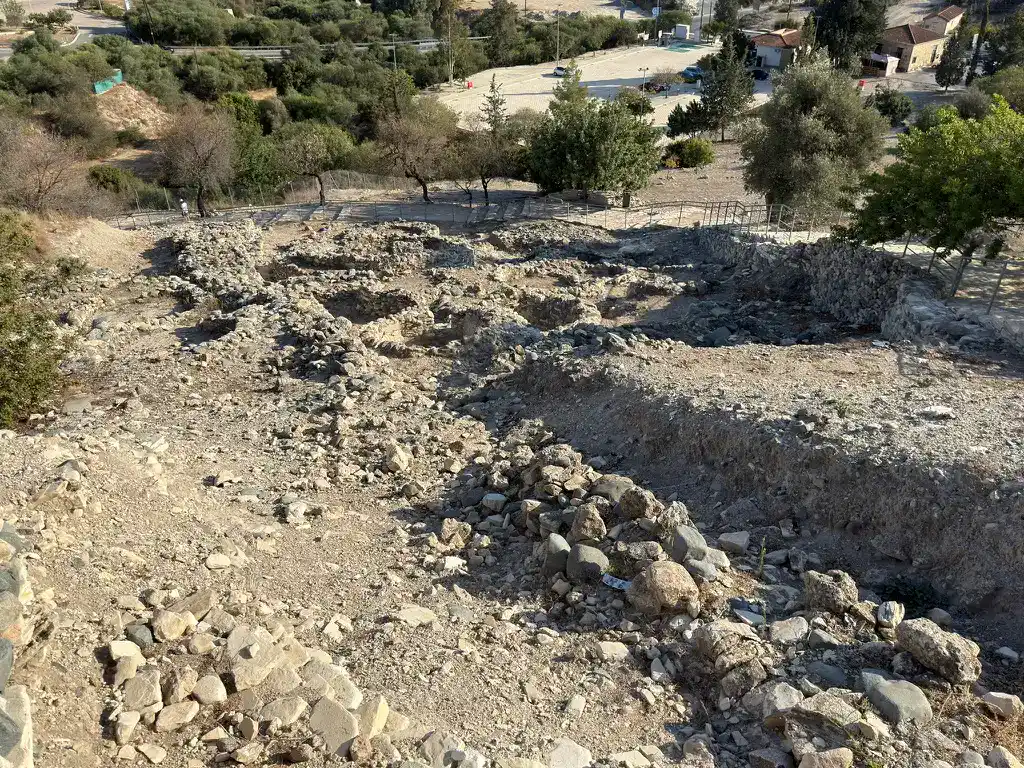
The site shows a transition from mobile hunter gatherer life to structured village living. Houses were circular and tightly packed. Defensive walls surrounded the settlement. Burial practices took place inside homes. These details help archaeologists understand how early societies functioned.
The site is also a UNESCO World Heritage Site, recognized for its outstanding preservation and importance to prehistoric research.
Quick facts
- Location: Southern Cyprus, near the village of Choirokoitia
- Period: Aceramic Neolithic, around 7000 to 5500 BC
- UNESCO World Heritage Site
- Settlement type: early farming village
- Typical visit time: 1 to 1.5 hours
Getting there
The site lies just off the A1 highway between Larnaca and Limassol. It is easiest to reach by car.
- About 30 minutes from Larnaca
- About 35 minutes from Limassol
- Parking available near the entrance
Public transportation options are limited. A rental car gives the most flexibility.
Tickets and entry info and typical costs
Tickets are purchased at the entrance gate.
- Standard adult ticket available
- Reduced rates for students and certain groups
- Free entry for young children
Ticket prices remain modest compared to larger archaeological sites. Cash is recommended.
Hours and best time to visit
Opening hours vary by season, with longer daylight access in summer and shorter hours in winter.
Morning visits work best, especially in warmer months. The hillside offers little shade, and temperatures rise quickly by midday.
Spring and autumn provide the most comfortable walking conditions.
Understanding the layout
The settlement spreads across a hillside overlooking a small valley. A stone wall once enclosed the village, likely for protection.
- Circular stone house foundations
- Narrow pathways between dwellings
- Reconstructed round houses near the entrance
The slope gives you a good view of how tightly packed the homes were. This was a structured community, not scattered huts.
The circular houses
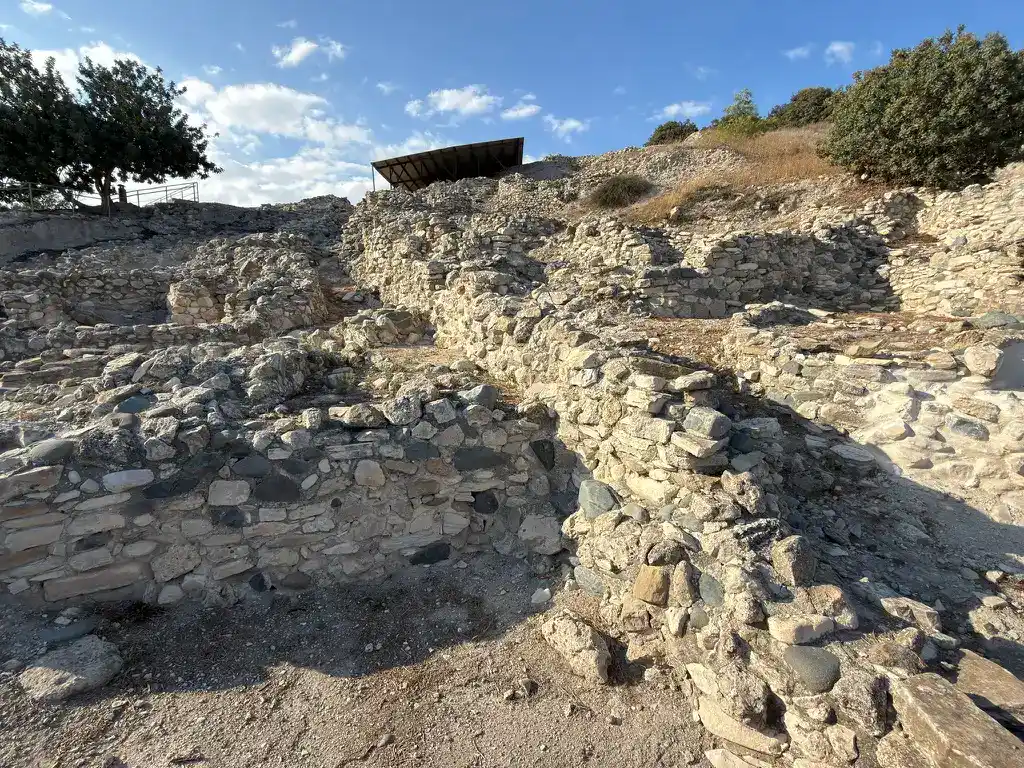
The round house design defines Choirokoitia. Walls were built from stone at the base, with mud brick and organic materials forming upper sections. Roofs were likely flat or slightly domed.
Inside, homes included hearths and storage spaces. Some burials took place beneath the floors. This detail suggests strong connections between family life and ancestor rituals.
The reconstructed dwellings
Near the entrance, reconstructed houses give a clearer sense of scale. You can step inside and see how compact the living space was.
These reconstructions help translate stone foundations into livable spaces. Without them, it is harder to imagine daily life.
Daily life in the settlement
The people of Choirokoitia practiced early agriculture. They cultivated crops and kept animals such as goats and sheep. Tools were made from stone and bone.
Pottery did not yet exist in this period. Storage relied on baskets and other organic materials. This makes the survival of stone architecture even more important for archaeological study.
Defensive wall
A substantial stone wall once surrounded part of the settlement. The wall likely served both defensive and structural purposes, reinforcing the hillside location.
This suggests organized labor and social cooperation. Building such a structure required planning and shared effort.
Walking the site
The path through Choirokoitia climbs gradually uphill. Surfaces include gravel and uneven stone.
Comfortable walking shoes help. The route is not long, but the incline adds effort.
Photography tips
The site works best in angled light.
- Morning light highlights stone textures
- Wide shots show circular house patterns
- Low angles emphasize reconstructed dwellings
Midday sun can flatten detail, especially in summer.
Facilities and preparation
Facilities remain simple. Restrooms are available near the entrance. There is no large cafe or restaurant on site.
Bring water, especially in warmer months. Shade remains limited across most of the hillside.
How it compares to other prehistoric sites
Choirokoitia feels quieter and less dramatic than major ancient cities. There are no temples or monumental columns.
What makes it powerful is its age and clarity. You are standing inside a planned community that predates most well known ancient civilizations.
Combining with other stops
Because of its location, Choirokoitia fits easily into a broader Cyprus road trip.
- Larnaca coastline and salt lake
- Limassol old town and marina
- Troodos Mountains for hiking
It works well as a half day cultural stop between coastal destinations.
Sample visit plan
Morning cultural stop
- Arrive early to avoid heat
- Explore reconstructed houses first
- Climb through main settlement area
- Return downhill and review interpretive panels
Common questions
Is Choirokoitia worth visiting? Yes, especially if you are interested in prehistoric life and early farming societies.
Is it physically demanding? Moderate. The hillside involves some uphill walking.
Is it crowded? No. Visitor numbers remain relatively low compared to coastal resorts.
 Rate it or leave a comment!
 Rate it or leave a comment!
  Open Now08:30 AM - 05:00 PM
- Monday08:30 AM - 05:00 PM
- Tuesday08:30 AM - 05:00 PM
- Wednesday08:30 AM - 05:00 PM
- Thursday08:30 AM - 05:00 PM
- Friday08:30 AM - 05:00 PM
- Saturday08:30 AM - 05:00 PM
- Sunday08:30 AM - 05:00 PM


- Price: $$$$
 Own or work here?
Nearby Places to Eat and Drink See All





Nearby Places to See and Do See All