Posted by Brandon B.Admin
Ouarzazate: Morocco's Gateway to the Sahara
Ouarzazate sits at the crossroads of the High Atlas Mountains and the Sahara Desert, roughly 200 kilometers south of Marrakesh. This city of around 60,000 people has evolved from a French military outpost into one of Morocco's most important transit hubs and film production centers. Whether you arrive as a base for desert exploration, a film location scout, or simply passing through on the way south, Ouarzazate offers a distinctly different pace from the medinas of Marrakesh and Fes.
Why This Place Matters
Ouarzazate earned its nickname "Hollywood of Morocco" honestly. Major productions including Gladiator, Game of Thrones, and The Mummy filmed here, drawn by the dramatic landscape, year-round sunshine, and established studio infrastructure. But beyond cinema, the city functions as the genuine nerve center for desert travel. From here, you can reach Ait Benhaddou, one of North Africa's most photographed kasbahs, in under an hour. The Dades Valley, Todra Gorge, and the Saharan dunes of Merzouga all radiate outward from this point.
The city also marks a cultural transition zone. North of Ouarzazate, Berber mountain culture dominates. South of it, desert Berber traditions and Arabic influences blend. You'll notice the shift in architecture, dress, food, and rhythm of daily life.
Quick Facts
- Located 200 kilometers south of Marrakesh via the High Atlas passes
- Elevation: 1,160 meters above sea level
- Population: approximately 60,000
- Best visited October through April for comfortable temperatures
- Home to two major film studios: Atlas Studios and CLA Studios
- Gateway to Ait Benhaddou (45 minutes), Dades Valley (90 minutes), Todra Gorge (120 minutes)
Getting There
Most travelers approach Ouarzazate from Marrakesh via the N8 road, which climbs through the Tizi n'Tichka Pass at 2,260 meters. The drive takes roughly 4 to 5 hours depending on traffic and road conditions. This route is paved but winding, particularly in the first half. Rental cars are common, though many visitors book guided tours or use grand taxi services (shared minibuses) that depart from Marrakesh's taxi stations.
If you're traveling from the south, the road from Zagora or Merzouga approaches from the desert, arriving at Ouarzazate from the east. This route is slower but offers dramatic Saharan scenery.
Ouarzazate has a small airport that receives flights from Marrakesh and occasionally from Europe, though most visitors drive or use shared transport. Buses run daily between major Moroccan cities and Ouarzazate, with companies like Supratours operating from Marrakesh.
The Layout and Experience
Ouarzazate spreads across a wide valley floor without the dense medina structure of northern Moroccan cities. The main commercial street, Avenue Mohammed V, runs roughly east to west and contains most shops, cafes, and mid-range hotels. The Kasbah Taourirt sits to the south of this avenue, dominating the skyline with its earthen walls and towers. The newer ville nouvelle (French colonial town) fans out from there with wider streets and modern amenities.
The city feels noticeably more relaxed than Marrakesh or Fes. You won't encounter the aggressive vendors or maze-like medina navigation. Instead, you'll find a working town where tourism coexists with daily life rather than dominating it. The pace is slower. Afternoon heat in summer keeps activity muted during midday hours.
Most tourist activity clusters around Avenue Mohammed V and the area near Kasbah Taourirt. If you're staying longer than a day, you'll likely spend it making day trips outward rather than exploring Ouarzazate itself. The city functions best as a base camp.
Main Highlights
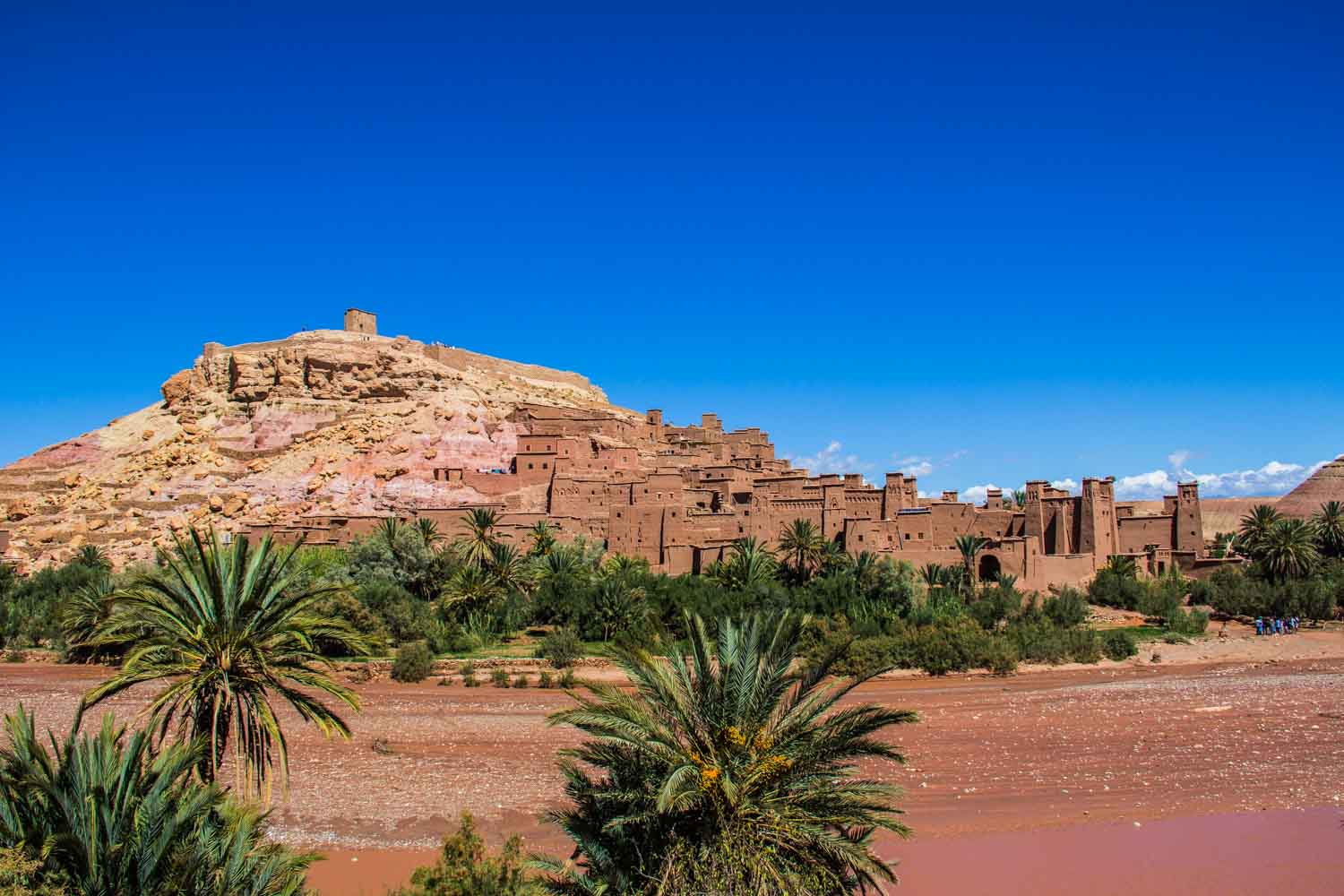
Kasbah Taourirt is the city's most significant historical structure. This fortified residence once belonged to the Glaoui family, powerful Berber lords who controlled southern Morocco until the mid-20th century. The kasbah's thick earthen walls, narrow internal passageways, and decorated rooms give a tangible sense of pre-modern Moroccan architecture. You can walk through restored sections and climb to rooftop views across the valley. The building continues to be partially inhabited and partially under restoration, which adds authenticity but means some areas are off-limits.
Atlas Studios and CLA Studios welcome visitors on scheduled tours. These aren't theme parks but actual working film sets where crews build backdrops for international productions. You'll walk through constructed sets designed to represent ancient Rome, medieval villages, or desert outposts. The tours tend to feel more authentic on days when production is active, though this varies seasonally. Both studios offer guided tours that typically run 1 to 2 hours.
The Ouarzazate Museum, housed in a restored kasbah near the center, displays Berber carpets, jewelry, pottery, and historical photographs documenting the region's past. The collection is modest but well-curated, and the building itself exemplifies traditional southern Moroccan architecture.
For natural scenery, the Draa Valley extends south from Ouarzazate toward Zagora, lined with date palm groves and small villages. A drive through this valley offers a gentle introduction to Saharan landscapes without the full desert experience. Several kasbahs and ksours (fortified villages) dot the route.
History and Background
Ouarzazate's modern history begins in 1928 when the French established a military garrison here to control trade routes and consolidate colonial administration. The name likely derives from the Berber phrase "Tamazirt n'Ouarzazate," meaning "land of the peaceful." The French built the grid-pattern ville nouvelle that still structures the center today.
Before French arrival, the region was controlled by powerful Berber families like the Glaoui, who built the kasbahs that still stand. The Glaoui wielded influence across southern Morocco and maintained relationships with both the French colonial authorities and local tribes. Their decline in the early 1950s coincided with Morocco's independence movement.
The film industry arrived in the 1960s when production companies discovered the region's dramatic landscapes and consistent weather. Studios formalized in the 1990s, and since then Ouarzazate has become one of North Africa's most active production centers. This transformation has modernized infrastructure while keeping the city fundamentally a desert town rather than a manufactured tourist destination.
Tickets and Entry
Kasbah Taourirt charges a small admission fee for entry. No advance booking is typically required, though visiting early in the morning or late afternoon means fewer crowds. Guides are available for hire at the entrance and provide useful context about the building's history and architecture.
Atlas Studios and CLA Studios require guided tour participation. Tours depart at set times throughout the day and accommodate both individual visitors and groups. Pricing is mid-range. Timed entry is generally not enforced, but tours fill during peak season, so arriving early increases your chances of joining the next departure.
The Ouarzazate Museum charges a small entrance fee. No booking required. Opening hours tend to follow standard Moroccan schedules with afternoon closures, though hours can shift seasonally.
Best Time to Visit
October through April offers the most comfortable conditions. Daytime temperatures range from pleasant to warm, and evenings cool significantly. This window also overlaps with the busiest film production season, which means more active studios and more buzz around town.
May through September brings intense heat, often exceeding 35 degrees Celsius. Most travelers avoid this period unless they're specifically pursuing desert experiences. Morning and evening activities become essential, and midday exploration feels genuinely uncomfortable. Tourist infrastructure remains open but operates with reduced energy.
April and October sit at the transition points. Both months offer reasonable weather and slightly lower crowds than peak winter season. Rainfall is rare year-round.
Photography Tips
Kasbah Taourirt photographs best in early morning light when the earthen walls glow warm and shadows define the structure's texture. The rooftop offers panoramic views across the valley, especially striking at sunset. Interior rooms with traditional decor make good detail shots, though light is dim in many passages.
The film studios provide dramatic backdrops if you time your visit when sets are fully constructed and lit. Asking permission before photographing is standard courtesy. The wider Ouarzazate valley offers excellent landscape shots from the surrounding hills, particularly from the road approaching from Marrakesh.
Street photography in the medina-adjacent areas yields authentic moments of daily life, though always ask before photographing people. The light is harsh at midday but softens beautifully in early morning and late afternoon.
Facilities and Preparation
Ouarzazate has adequate mid-range hotels, cafes, and restaurants along Avenue Mohammed V. Medical facilities are present but basic. For serious medical needs, Marrakesh is 4 hours north. Pharmacies are readily available for minor issues. ATMs accept international cards at most banks along the main avenue. French and Arabic are the primary languages; English is spoken in hotels and tourist-focused businesses but far less in local shops.
The city has good mobile phone coverage. Internet connectivity is reliable in hotels and many cafes. Bring sunscreen, sunglasses, and a hat, as the sun intensity at this elevation is significant. If you're sensitive to heat, plan indoor activities (studios, museums, cafes) for midday hours.
Water is safe from taps in hotels and restaurants. Bottled water is inexpensive and widely available. Dress modestly, particularly if visiting religious sites or smaller villages. Casual comfortable clothing works fine for the city itself.
Combining With Nearby Attractions
Ait Benhaddou sits 45 minutes northwest and deserves at least 2 to 3 hours of exploration. This UNESCO-listed kasbah village offers architecture and landscape photography unmatched elsewhere in the region. Many visitors stay overnight in Ouarzazate and take a day trip here.
The Dades Valley extends east of Ouarzazate toward Boumalne Dades, featuring dramatic canyon scenery and small villages. The drive takes roughly 90 minutes to reach the valley's heart. Roads wind through date palm groves before climbing into the canyon itself.
Todra Gorge lies another 30 minutes east of Dades Valley, famous for towering rock walls and an accessible river walk. A combined Dades and Todra day trip is feasible from Ouarzazate, though leaving early and returning late makes for a long day.
Merzouga and the Saharan dunes sit roughly 200 kilometers east. This typically requires an overnight trip, with most visitors booking guided tours that include camping and camel trekking. Ouarzazate is the logical starting point for multi-day Sahara journeys.
Sample Visit Plan
If you have one day in Ouarzazate, spend the morning at Kasbah Taourirt, then visit one film studio in the afternoon. Have lunch at a cafe on Avenue Mohammed V. This gives you a sense of the city without exhaustion.
Two days allows a morning exploring Ouarzazate itself and an afternoon day trip to Ait Benhaddou. Return for dinner and an evening stroll. The second day could include a film studio tour and a drive through the Draa Valley toward Zagora before heading onward.
Three days gives you time for Ouarzazate plus a proper excursion into Dades Valley and Todra Gorge. Depart early, spend the day driving and stopping at viewpoints, and return by evening. This pace feels less rushed and gives you genuine time in each location.
Most visitors, however, pass through Ouarzazate as a one-night stop between Marrakesh and Merzouga or other southern destinations. This is perfectly reasonable. The city's value lies in its location and function as a hub rather than as a destination unto itself.
Practical Tips
- Book hotels and guides in advance during October to March peak season, particularly if traveling as a group
- Hire a guide for Kasbah Taourirt to understand the building's complex history and family connections
- Visit film studios early in the day when natural light is better for photography
- Eat lunch before 1 PM or after 3 PM, as many restaurants close during afternoon hours
- Bring cash in Moroccan dirhams for small purchases and tips, though ATMs are available
- If renting a car, fill your tank before leaving Ouarzazate for longer drives south or east
- Ask your hotel about current road conditions if driving to remote areas, as seasonal weather can affect access
FAQ
How long should I spend in Ouarzazate? One to two nights is typical. This allows time for the city itself plus one day trip outward. Longer stays make sense if you're using Ouarzazate as a base for multi-day explorations of the Dades Valley, Todra Gorge, or Merzouga.
Can I visit Ouarzazate without a guide? Yes. The city is easy to navigate independently, and Kasbah Taourirt and the museums are self-guided. For day trips to more remote areas, a guide or organized tour reduces logistical complexity and provides cultural context.
Is Ouarzazate safe? Yes. The city has a low crime rate and is considered safe for solo travelers and families. Standard travel precautions apply, such as not displaying valuables and being aware of your surroundings at night.
What's the closest major airport? Marrakesh Menara Airport, roughly 200 kilometers north, handles most international flights. Ouarzazate has a smaller airport with limited connections. Driving from Marrakesh takes 4 to 5 hours.
Should I hire a driver for day trips? If you're comfortable with mountain roads and driving on the right side, a rental car works well. If you prefer not to drive, guided tours are readily available through hotels and can be booked same-day. Shared grand taxis are the budget option but require flexibility on departure times.
Reviews
Sign in and mark this place visited to leave a review.
No reviews yet.
Free Trip Planner
Plan your Marrakesh trip with our free planner
Build a day-by-day itinerary with AI suggestions, hand-picked places, and friends. Free forever — no credit card.