
5 Unmissable Things to Do in Gozo in 2026
By
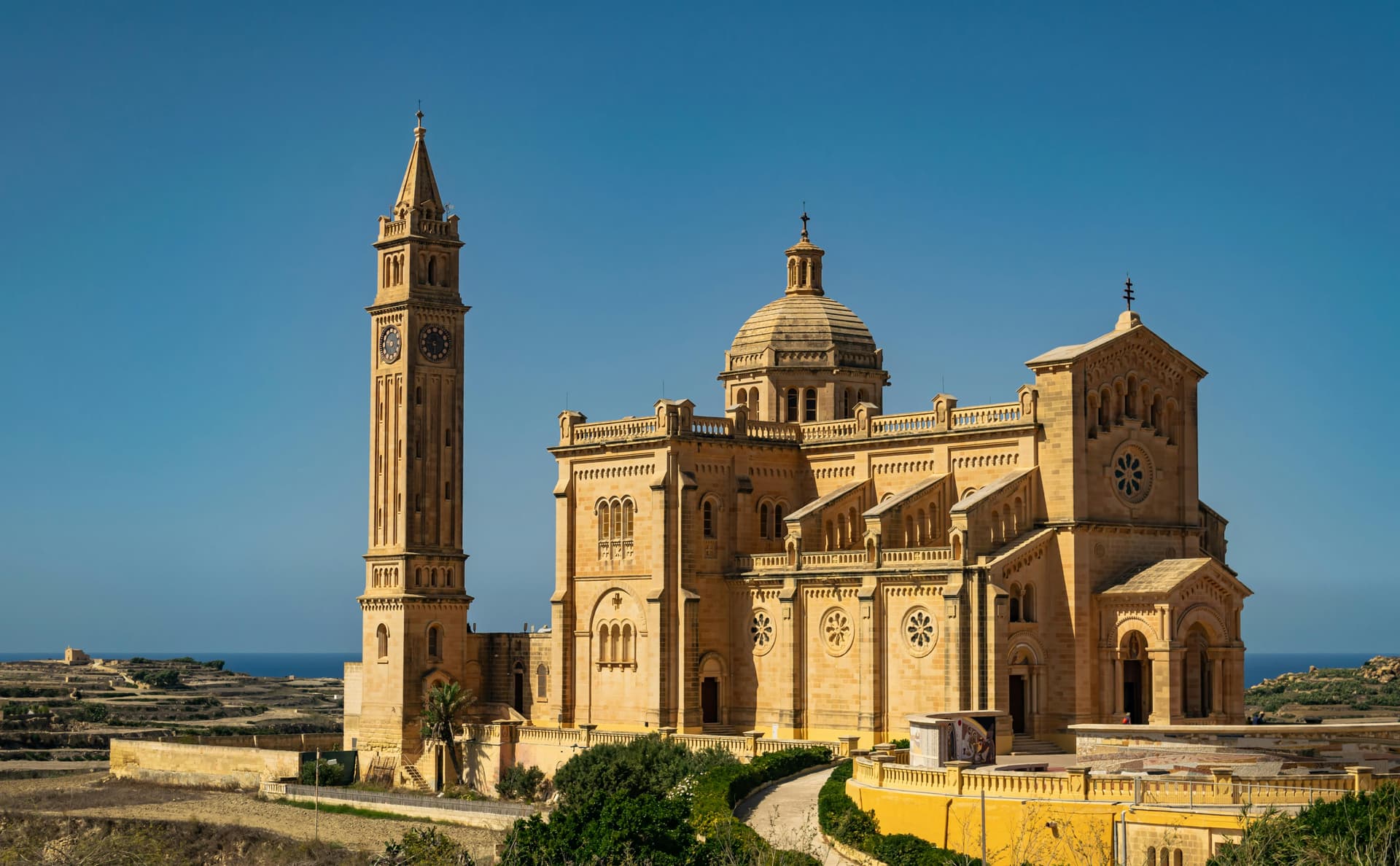
Gozo’s charm has always caught me off guard. I first visited the island while living in Malta, crossed over on the ferry expecting to tick off a day trip and was still there at 10pm eating fresh fish at a table by the water with no particular plan to leave. It’s been a couple of years since that first visit but the dialed-down, more low-key quality that surprised me then is still very much there. Gozo is home to just north of 30,000 people and unlike Malta it really does feel like an island; a place largely free of traffic where prickly pears grow wild along the roadsides and the villages are built almost entirely in honey-colored limestone. Planning a visit to Malta’s sister island? Here’s a rundown of what I’d genuinely recommend. If you can, give yourself at least a couple of nights there to settle into the island’s pace rather than rushing through it on a day trip.
Explore Dwejra Bay and the Inland Sea
Dwejra on the west coast of Gozo is one of those places that earns every bit of its reputation. The Azure Window, the famous natural arch that featured in Game of Thrones, collapsed into the sea during a storm in March 2017. It’s gone and that’s genuinely sad, but the bay itself is still one of the most dramatic spots in the Maltese islands and completely worth the drive out.
The main draw now is the Inland Sea, a saltwater lagoon separated from the open Mediterranean by a tall cliff with a natural tunnel running through it. Local boatmen have been running trips through that tunnel for generations. You just show up, pay around €4 in cash per person and wait until there are enough people to fill the boat (usually six to eight). The trip takes about 20 minutes and takes you through the tunnel, out into the open sea past the cliffs and into a couple of sea caves where the clarity of the water is something else entirely. It sounds like a tourist gimmick. It genuinely isn’t.
While you’re at Dwejra, Fungus Rock is the large outcrop at the entrance to the bay. The Knights of St John considered the plant growing on it so medicinally valuable that landing on it was punishable by death. The ban has since been lifted but the rock is still off-limits as a nature reserve. The Blue Hole nearby is one of the top dive sites in Europe, a natural rock formation with an underwater arch leading out to open water, with visibility that regularly exceeds 30 metres on a clear day. If diving isn’t your thing the area above water is still worth seeing for the rock formations and the wide views out to sea.
Before leaving the area, drive the few minutes to Wied il-Mielaħ, a natural arch that most visitors skip because the Azure Window got all the name recognition for so long. There are steps down to the shoreline and the view of the arch from below is excellent. It’s usually quiet even when Dwejra is busy, which makes it feel like a bit of a find even though it’s no secret.
Do a Gozo quad tour
Here’s the thing about Gozo that catches people off guard: it’s small enough that you’d assume getting around isn’t an issue and then you try to reach the places that are actually worth reaching. Buses cover the basics and a hire car gets you further, but a Gozo quad tour is genuinely the most enjoyable way to access the parts of the island that most visitors go home having missed entirely.
The guided tours take small groups in convoy through back roads and tracks, stopping at places like the Ta’ Cenc cliffs in the south (one of the best sunset spots on the island, more on that below), the Xwejni salt pans carved into the coastal rock and still worked by local families, Dwejra Bay, the Knights’ Wash Houses at Fontana and smaller coastal spots that have no tourist signs and no parking lots. It’s a full day and it covers serious ground. The guides tend to know the island well and take you places you’d struggle to find independently.
If you’d rather set your own pace and route, you can rent a quad independently from a handful of places on the island too. That works well if you have a specific list of sites you want to reach, particularly the prehistoric ones that guided tours don’t tend to include. Either way, a lot of what makes Gozo worth visiting is reached by tracks that don’t appear on general maps and having something low and nimble makes the difference between finding those places and not.
Ramla Bay and what’s above it
Ramla Bay is Gozo’s finest beach and it’s not particularly close. The sand is an unusual reddish-gold colour (Ramla il-Ħamra translates as “the red sandy beach”) and the bay is wide, Blue Flag certified and backed by dunes and green valley rather than development. It’s classified as a Natura 2000 protected site and has a rare intact sand dune, the only one remaining on the Maltese islands, though most visitors don’t know that and just come for the swimming.
Go early if you’re visiting in summer. By late morning it fills up considerably, though the beach is large enough that even on busy days you can find a quieter corner if you walk to the eastern end. The entry into the water is sandy and gradual, which makes it one of the more comfortable beaches on the island for swimming. Behind the beach there are a couple of small kiosks and cafes but it remains refreshingly undeveloped by Mediterranean standards.
What most people don’t do is walk up to Tal-Mixta Cave above the bay. It’s a short hike up the headland and the view from inside the cave looking down over the red sand and out to sea is one of the better vantage points on Gozo. Bring water and go early before it gets hot.
While you’re in this part of the island, Calypso’s Cave above Xagħra is just a few minutes away. It’s rumored to be the cave where the nymph Calypso kept Odysseus for seven years in Homer’s Odyssey. Full transparency: the cave itself is not the most dramatic thing you’ll see on Gozo. But the lookout point over Ramla Bay from that height is genuinely lovely and usually quiet, and combining it with the beach and Tal-Mixta makes for a solid half-day in this corner of the island.
The Blue Lagoon, Comino
Comino is a tiny island sitting between Malta and Gozo with a permanent population of around four people and one of the most photographed stretches of water in the Mediterranean. The Blue Lagoon really is that colour. Shallow, crystal clear and turquoise in a way that looks edited even when you’re actually standing in it. I’m not going to oversell it: in July and August it gets genuinely, uncomfortably crowded, with boats stacked several deep along the shore and hundreds of people in the water at any given moment. Knowing that in advance is more useful than pretending otherwise.
The best approach from Gozo is the ferry from Mġarr harbour, which runs from 8am with departures roughly every hour until late afternoon. Roundtrip tickets cost around €10 and the journey takes about 15 minutes. Going on the first or second ferry of the morning makes a significant difference to the experience. The water is the same colour at 8am as it is at noon but the number of boats stacked at the shore is not.
For a better version of the Comino experience, consider booking a day trip that includes a cruise around the island’s sea caves rather than just a ferry to the lagoon. The caves on the western side of Comino are striking and only accessible by boat, and the combination of cave cruise plus lagoon time gives you a much fuller picture of the island than the lagoon alone. May, June, September and October are considerably more pleasant than the peak summer months if you have any flexibility on timing.
Victoria, the Citadella and the Ġgantija Temples
Victoria (you’ll hear it called Rabat in Maltese, both names get used and both appear on signage) is Gozo’s small capital and sits in the centre of the island. The Citadella is the old fortified city sitting just above it and the most obvious starting point for any visit. Allow a couple of hours to wander properly because it includes more than it initially suggests: a baroque cathedral, several small museums, an old prison and some of the best panoramic views across Gozo from the bastions. Entry to the Citadella itself is free, though the individual museums charge separately.
Let’s clear up the naming situation early: Victoria and Rabat are the same place. The name Victoria was bestowed in the late 1800s to mark Queen Victoria’s Diamond Jubilee but the old name Rabat is still widely used locally. Whatever you call it, the town is worth a proper wander. For lunch, the area around St George’s Square has a good range of options. For a rooftop with a view, the Roof at Il-Ħaġar (a cultural museum in the centre of town) has a terrace looking out over the square that’s worth seeking out. For dinner, Maldonado has a good reputation for creative Maltese cuisine and beautiful setting at genuinely reasonable prices.
While you’re in this part of Gozo, the Ġgantija Temples in Xagħra are just a few kilometres away and should not be skipped. The south temple dates to around 3600 BC, which makes it older than the Egyptian pyramids by several centuries and one of the oldest freestanding structures on Earth. Some of those limestone blocks weigh over 50 tons and were moved by builders who had no metal tools and no wheel, which takes a while to properly absorb when you’re standing in front of the outer wall. Entry is €10 per person and includes the interpretation centre, which has some remarkable finds from the excavations including limestone heads and decorated pottery. Go in the morning before the tour groups arrive and allow ninety minutes for the whole visit.
A few practical things
The ferry from Ċirkewwa on Malta’s north coast takes about 25 minutes and runs around the clock, so there’s no need to plan around a schedule. The crossing from Malta to Gozo costs a few euros; the return to Malta is free, which always feels like a small bonus. Summers are hot, July and August regularly hit over 33 degrees, so May, June, September and October are considerably more comfortable for anything that involves being outside for long stretches. If you can give yourself a night or two on the island rather than rushing through on a day trip, do it. Gozo has a pace that takes a little settling into and the island genuinely feels different once the day visitors have gone back on the evening ferry.