



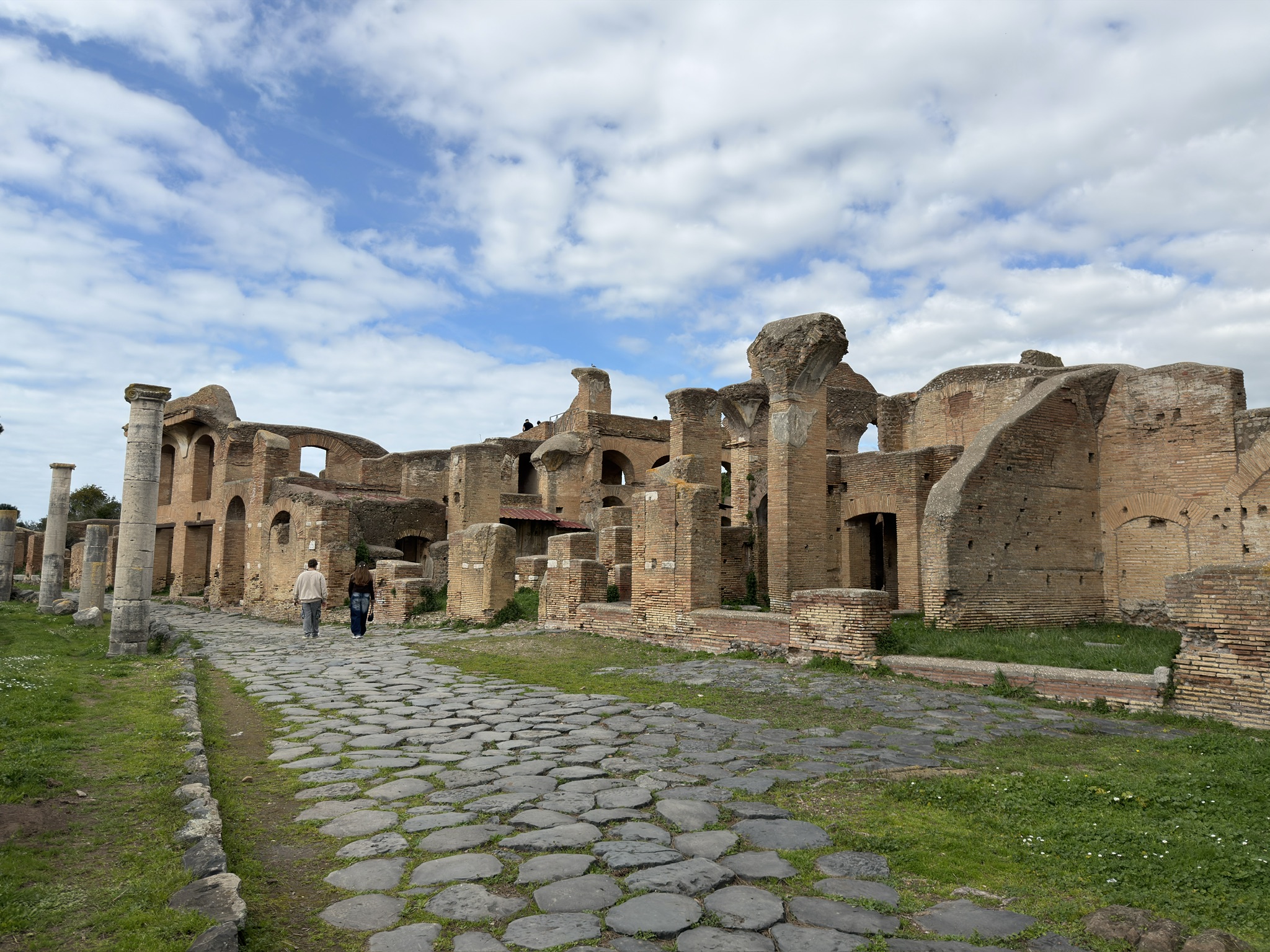

Borgo di Gregoriopoli (Ostia Antica), Italy: A Chill Day Trip With Big History
If you’re into history with vibes that are old-school cool, then Borgo di Gregoriopoli — the historic borgo of Ostia Antica — is one of those places that makes you go, “Okay yeah… this is why Italy is elite.” It’s small, walkable, and packed with stories. You get medieval lanes, a serious-looking castle, and Roman ruins right next door. And the best part? It’s an easy ride from Rome, so you can do it as a day trip without stressing.
Most visitors come for the famous archaeological park, but the borgo has its own magic. It’s got that quiet, timeless feel where you can hear your footsteps on the cobblestones and smell espresso drifting out of a café. It’s also way less chaotic than central Rome, which is honestly a win.
Where Is Borgo di Gregoriopoli?
Borgo di Gregoriopoli sits in Ostia Antica, about 30 km (around 18 miles) west of Rome, near the Tiber River. This whole area used to be tied to Rome’s ancient port, when ships moved goods up the river and into the city. Over time, the coastline shifted, and the old port area got left inland. But the history stayed.
Today, it’s one of the easiest “feels-like-a-secret” day trips you can do from Rome. You get ancient Roman streets, medieval walls, and Renaissance architecture all in one zone. Not bad for a quick escape. However, it was recently featured in Emily in Paris, so let’s see how long it stays that way.
Why You Should Visit
This place is worth your time for a few simple reasons:
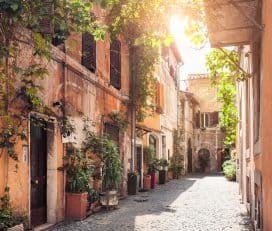
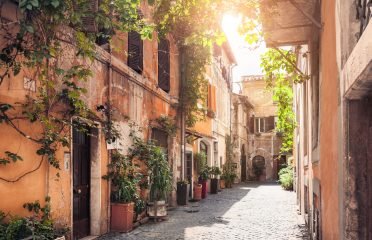
- It’s ridiculously photogenic. Narrow alleys, old stone, vines, and that warm Italian light.
- It has real history. The borgo was fortified in the 9th century under Pope Gregory IV, which is where the name “Gregoriopoli” comes from.
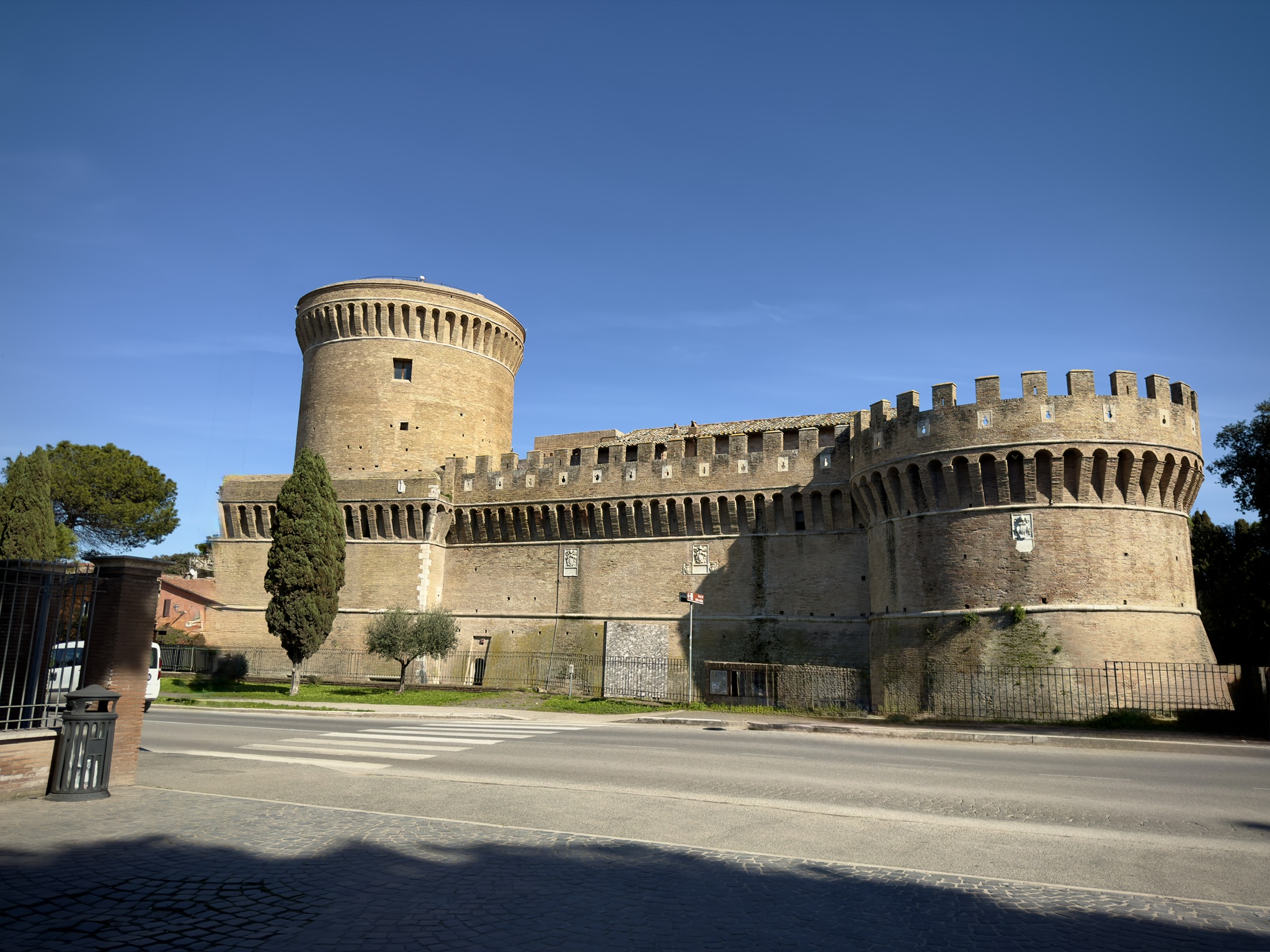
- The castle is legit. The Castello di Giulio II looks like it belongs in a movie.
- You can pair it with Ostia Antica’s ruins. The archaeological park next door is one of the best in Italy.
- It’s calm. Less crowd noise, more “take your time” energy.
The Main Sights in the Borgo
Castello di Giulio II
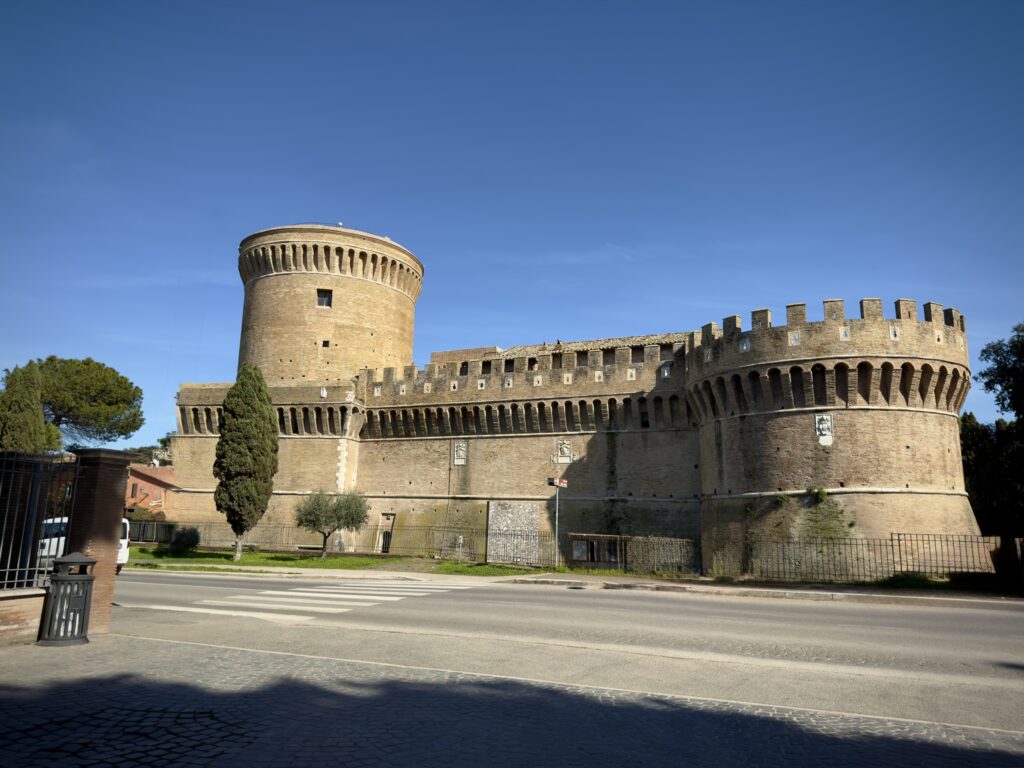
This is the main event in the borgo. The Castello di Giulio II dominates the area and sets the whole mood. It was built in the late 1400s by Cardinal Giuliano della Rovere, who later became Pope Julius II. The fortress was designed to control and protect access along the river and defend the surrounding area.
Expect thick walls, towers, and that classic “don’t mess with us” fortress look. It originally included a moat and defensive features because this area was a strategic zone. Later on, a major flood in 1557 changed the course of the Tiber River, which made the castle less useful for its original purpose. Still, it stayed standing and became part of the historical identity of the borgo.
Today, the castle is part of the Archaeological Park of Ostia Antica. Visiting schedules can vary, so it’s smart to check current opening times before you go.
Piazza della Rocca
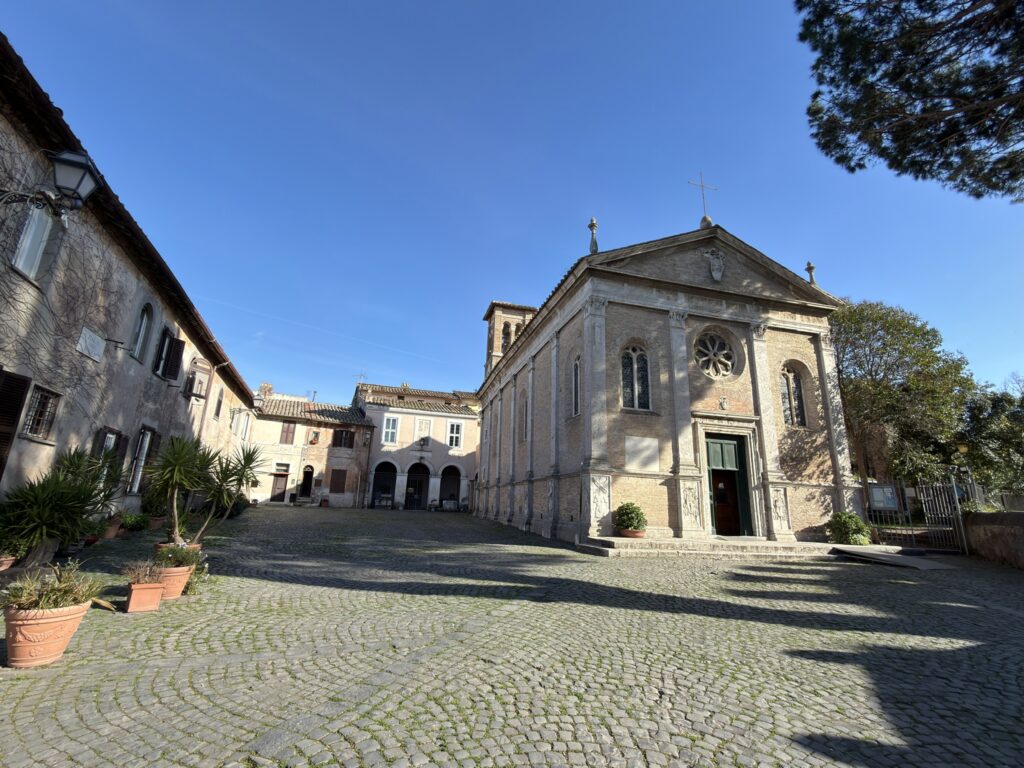
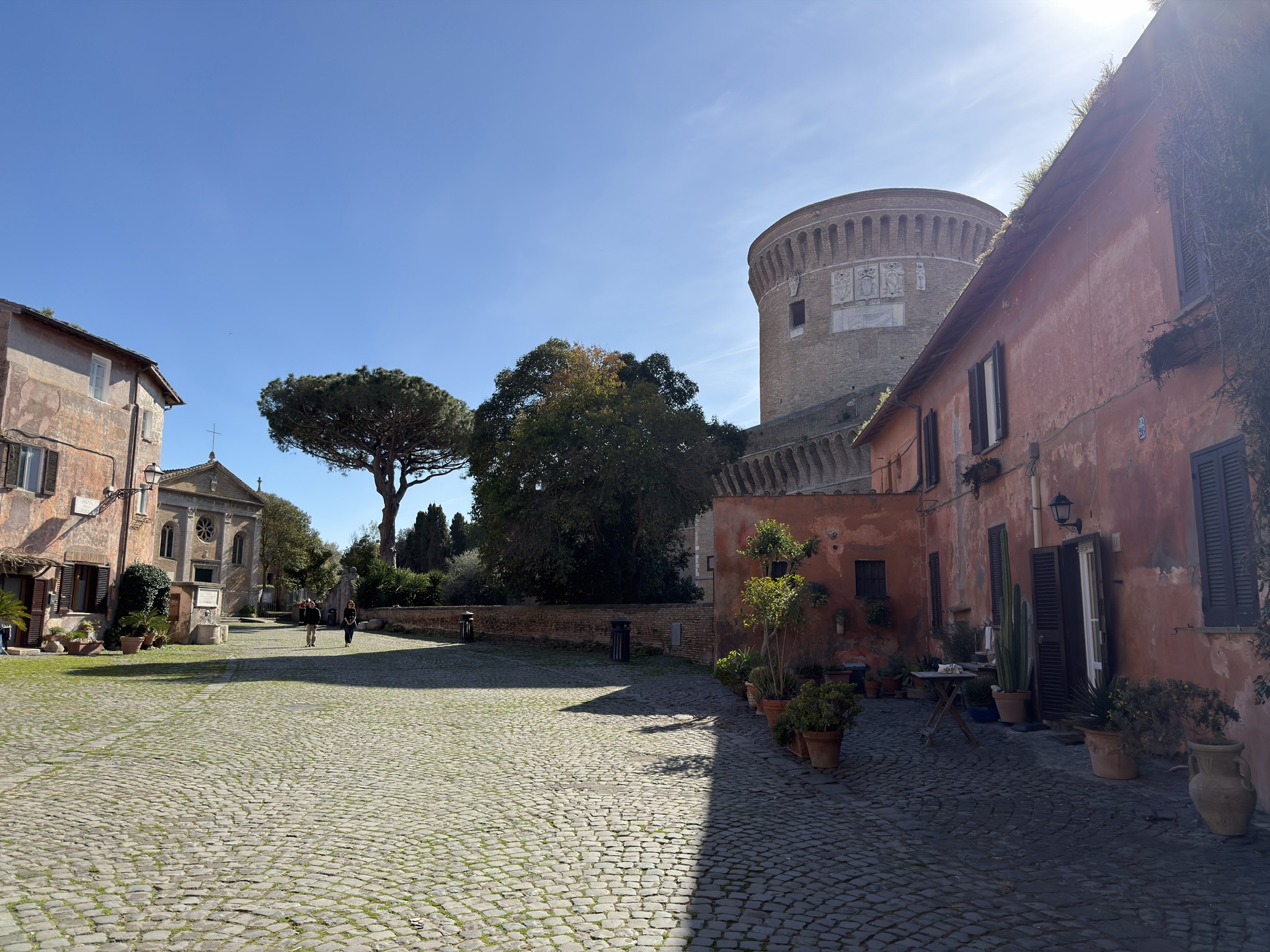
Once you enter the borgo, you’ll end up near Piazza della Rocca, the small square in front of the castle. This is where the borgo feels most alive. People hang out, chat, and take it slow. You’ll probably spot a cat acting like it owns the place, because that’s basically the law in Italy.
This is the perfect place to take a break, sip something, and just vibe. No rush. Just enjoy the moment.
Old Lanes and Medieval Walls
The borgo itself is tiny, so part of the fun is just walking around without a plan. The streets are narrow, the buildings have that weathered look, and there are little details everywhere. Flowers on windowsills. Doors that look older than your entire family tree. Quiet corners where the light hits just right. It’s a slow stroll kind of place, not a checklist kind of place.
Don’t Skip the Ostia Antica Archaeological Park
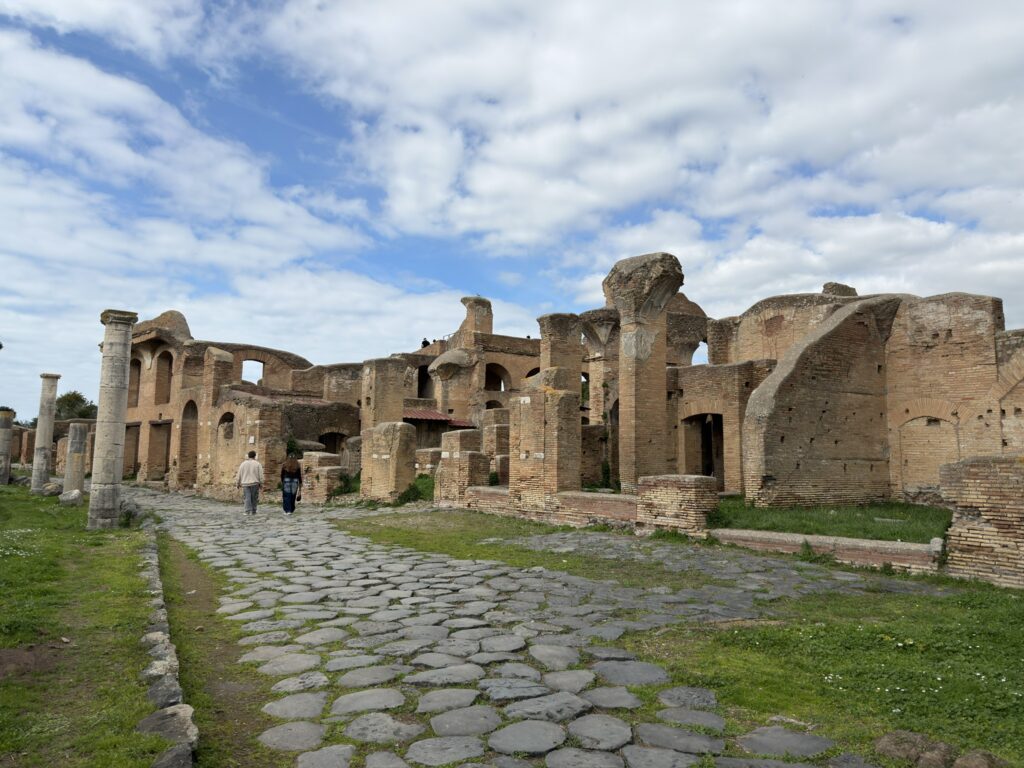
Real talk: if you’re here, you should absolutely visit the Ostia Antica Archaeological Park. It’s one of the most impressive Roman sites in Italy, and it’s way less crowded than places like Pompeii.
This used to be Rome’s port city, and you can still see how people lived, worked, and moved through daily life. The layout feels like a real city, not just a pile of ruins. You’ll walk along ancient streets and see the remains of homes, shops, bathhouses, temples, and public buildings.
Some highlights you’ll likely see:
- Ancient roads and stone sidewalks
- Roman apartment buildings
- Bath complexes
- A theater that still looks recognizable
- Mosaic floors and old wall fragments
- Market areas and public spaces
The site is big, so plan for a few hours if you want to do it right. Bring water, wear solid walking shoes, and don’t forget sunscreen if it’s warm out.
A Perfect One-Day Itinerary (Easy and Chill)
This is what we did and it worked out for a perfect day trip from Rome. It truly is a nice peaceful getaway from the city.
Morning: Roman Ruins First
- Take the train from Rome to Ostia Antica.
- Start at the archaeological park while it’s still cooler and less busy.
- Take your time wandering the ruins. Don’t speed-run it.
- Grab an espresso or quick snack when you need a break.
Midday: Lunch and Borgo Wandering
- Walk over to the borgo (it’s close).
- Pick a nearby trattoria and order something classic.
- Go for Roman pasta if you want the full Lazio experience.
Afternoon: Castle and Piazza Time
- Visit the castle if it’s open.
- Hang out in Piazza della Rocca and slow things down.
- Wander the alleys and grab photos while the light is nice.
Evening: Golden Hour, Then Back to Rome
- Stick around for sunset if you can. The light hits the castle and walls perfectly.
- Have a drink, maybe a spritz, then head back to Rome.
What to Eat (And What to Order)
The borgo is small, but the area around Ostia Antica has plenty of places to eat. You’ll find trattorias, cafés, and casual spots where locals actually go. Since you’re in Lazio, you’ll see the famous Roman classics, plus seafood thanks to the nearby coast.
Things worth ordering:
- Cacio e pepe (simple, peppery, and addictive)
- Amatriciana (tomato, guanciale, and pure comfort)
- Carbonara (if it’s on the menu, do it)
- Seafood pasta (especially if you head closer to the coast after)
- Espresso (because obviously)
- Aperitivo drinks like a spritz or a glass of local wine
Best Photo Spots
If you like photography, this place is a snack. A few easy wins:
- The castle entrance at golden hour
- The view across Piazza della Rocca
- Narrow lanes with flowers and old stone walls
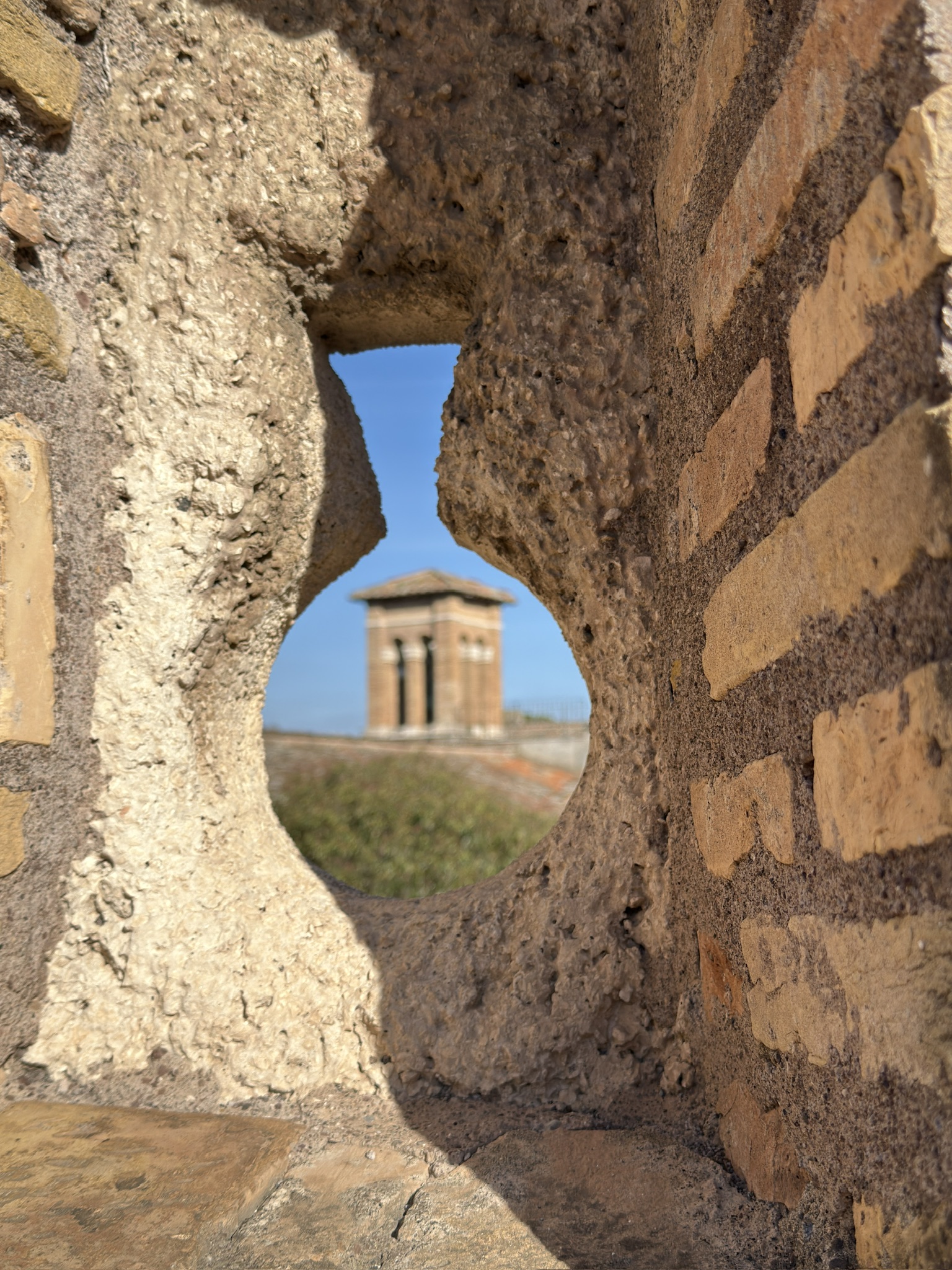
- Shadows and textures on the brickwork
- Random cats living their best life
Local Tips (So You Don’t Get Played)
- Wear comfy shoes. The ruins and cobblestones will humble you fast.
- Bring water. The archaeological park is big and sunny.
- Go early or late. Midday heat can be no joke in warmer months.
- Plan to do both. The ruins plus the borgo is the best combo.
- Check opening times. The castle schedule can change depending on the season.
Who This Trip Is Perfect For
- History lovers who want something less crowded than Rome’s main sights
- Photographers chasing medieval streets and moody walls
- Slow travelers who like small places with real atmosphere
- Anyone who’s already “done Rome” and wants a cooler side quest
Final Thoughts
If Rome is the legend, then Borgo di Gregoriopoli (Ostia Antica) is the underrated side story you’ll brag about later. You’ve got a tiny medieval borgo with a Renaissance fortress, sitting right next to one of Italy’s most impressive Roman archaeological sites. It’s packed with atmosphere, easy to reach, and feels like a totally different world from central Rome.
Go for the ruins, stay for the borgo, and don’t rush it. This place rewards the slow stroll. And yeah, you’re gonna leave with way too many photos.
 Rate it or leave a comment!
 Rate it or leave a comment!
- Tuesday24 hours open
- Wednesday24 hours open
- Thursday24 hours open
- Friday24 hours open
- Saturday24 hours open
- Sunday24 hours open


 Own or work here?
Nearby Places to Eat and Drink See All



Nearby Places to See and Do See All