Galerie des Carrosses
1 avenue Rockefeller Musee Du Carrosse, 78000, Versailles France Posted by Brandon B.Admin
Galerie des Carrosses: Inside the Royal Stables of Versailles
The Galerie des Carrosses sits within the grounds of the Palace of Versailles, occupying the historic Royal Stables. This museum houses one of Europe's most significant collections of ceremonial carriages and coaches, spanning from the 17th century to the early 20th century. If you've walked the halls of the palace itself, you've seen where the kings and queens lived. This gallery shows how they traveled. The collection reveals as much about court life, craftsmanship, and royal power as any portrait or throne room.
Why This Place Matters
Carriages were the ultimate status symbol of the ancien régime. A king's carriage announced his wealth, his taste, and his authority before he even arrived. The vehicles here are not simple transportation. They are gilded, painted, carved, and upholstered with the finest materials available. Each one tells a story about royal ceremony, diplomatic protocol, or a specific moment in French history.
The collection also documents the technical evolution of carriage-making. You can trace how wheels, suspension systems, and body construction improved over centuries. This is not a dry technical display. The craftsmanship is stunning enough that visitors without any interest in vehicles find themselves captivated by the sheer beauty of the work.
Quick Facts
- Located at 1 avenue Rockefeller within the Versailles estate
- Housed in the former Royal Stables building
- Contains over 50 carriages and related objects
- Covers roughly 600 square meters of exhibition space
- Open year-round with seasonal hours
- General admission required; separate ticket from palace admission
- Guided tours available in multiple languages
Getting There
The Galerie des Carrosses is within walking distance of the main Palace of Versailles, but the walk takes about 10 to 15 minutes depending on your pace and the crowds. From the palace's front courtyard, head toward the south wing and follow signs toward the Royal Stables. If you're arriving by train, Versailles Rive Gauche station is roughly 20 minutes' walk to the gallery entrance.
Alternatively, if you're already exploring the broader Versailles estate, the gallery is accessible via the Avenue Rockefeller entrance on the southern side of the grounds. This entrance tends to be quieter than the main palace entrance, which means shorter queues and a more relaxed arrival experience.
The building itself is easy to spot once you're in the right area. It's a large, classical structure with cream-colored stone and symmetrical proportions typical of 18th-century institutional buildings. There is a dedicated ticket booth and entrance area.
The Layout and Experience
The gallery is arranged chronologically across multiple rooms. You enter through a ground-floor space that immediately presents you with some of the most elaborate carriages in the collection. The layout doesn't force you through a rigid path. You can move between rooms at your own pace, and it's easy to spend 45 minutes or two hours depending on how closely you examine each piece.
The first section typically focuses on the 17th and early 18th centuries, when French carriage design was becoming the envy of Europe. The second section covers the height of the rococo and neoclassical periods. The final rooms show 19th-century carriages, including some used during the reign of Louis-Philippe.
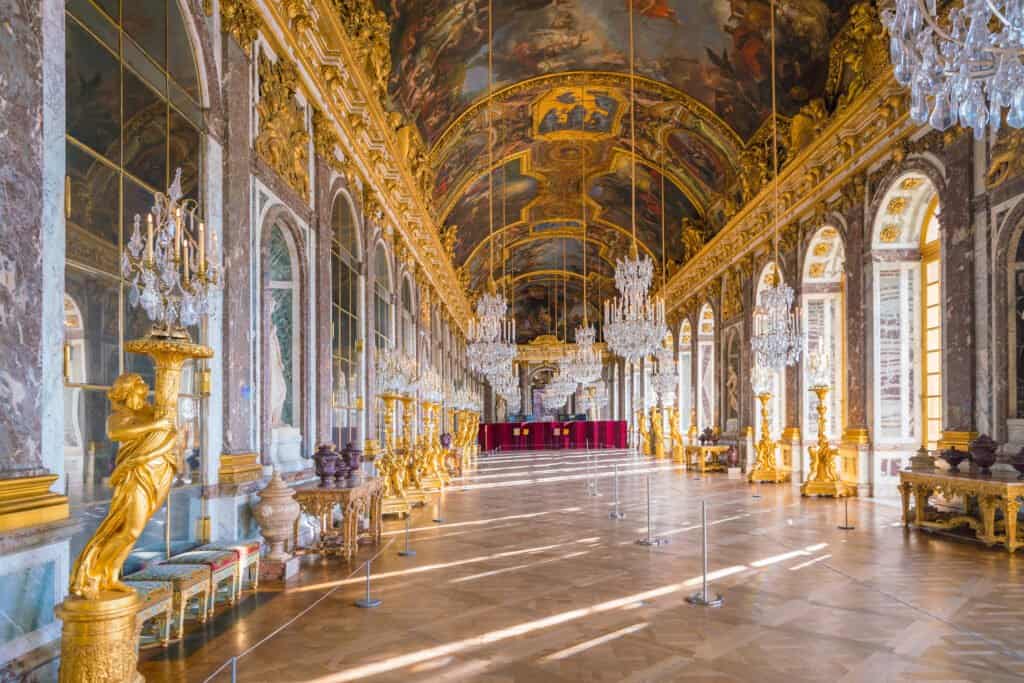
The ceilings are high, which helps you get a full sense of the scale and decoration on the larger carriages. Many have intricate paintings on their panels, gilded wooden details, and upholstery that has been conserved to show original colors and patterns. Some vehicles are displayed in near-complete form. Others are shown as components, allowing you to study the engineering underneath the decoration.
Lighting is natural where possible, supplemented by focused spotlights. The effect is elegant without being theatrical. You're looking at real objects in a museum setting, not at a theme park recreation.
Main Highlights
Among the standout pieces is the coronation carriage of Louis XIV, an extraordinarily ornate vehicle with sculptural elements and gilt work that dominates one of the main rooms. Another significant piece is a state carriage from the reign of Louis XVI, which shows the shift in taste toward more refined simplicity compared to the baroque excess of earlier centuries.
The collection also includes sleighs, a reminder that Versailles courtiers traveled in winter and that the royal collection had to accommodate all seasons. There are also hunting carriages, lighter and more practical than ceremonial vehicles, which reveal the working side of royal life.
Pay attention to the smaller details if you have time. The upholstery samples, the hardware, the wheels themselves, and the mechanisms for opening and closing doors show the level of craft involved. Some carriages have tiny decorative elements painted so finely you'll need to step close to see them properly.
History and Background
The Royal Stables of Versailles were built during the expansion of the palace grounds in the late 17th century. They housed hundreds of horses and dozens of staff members whose sole job was to maintain and operate the royal carriages. The building you visit today has been preserved and adapted to serve as a museum, but its original purpose is evident in the scale and structure.
The collection itself grew over centuries as monarchs commissioned new vehicles and preserved older ones. Some pieces survived the French Revolution and subsequent upheavals because they were stored away or hidden. Others were acquired in the 19th and 20th centuries by collectors or museums. The current Galerie des Carrosses was formally established in the 1980s to bring these scattered pieces together and present them to the public in a dedicated space.
The carriages on display represent the work of the most skilled craftsmen in Europe. Royal carriage makers competed for commissions, and the quality of their work directly reflected the prestige of their patron. A carriage made for a French king was expected to outshine one made for any other European ruler.
Tickets and Entry
Admission to the Galerie des Carrosses requires a separate ticket from the main Palace of Versailles. You can purchase a general admission ticket for the gallery alone, or combine it with palace access if you're planning a full day at Versailles. Pricing is in the mid-range for Versailles attractions, making it an accessible addition to a palace visit without requiring a major additional expense.
Timed-entry slots may be required during peak summer months, though this is less rigid than the palace ticketing system. Off-season visits often allow walk-up entry without advance booking. It's worth checking the official Versailles website before you go to confirm current entry requirements.
Guided tours are offered in French and English, with occasional additional languages depending on demand. A guided tour typically lasts 60 to 90 minutes and provides context about individual vehicles, the craftspeople who built them, and their role in court ceremony. The guides are knowledgeable and can answer detailed questions about restoration, historical accuracy, and the daily use of these carriages.
Best Time to Visit
The gallery is less crowded than the palace itself, which is one of its advantages. Even during peak tourist season in July and August, you'll rarely encounter the overwhelming crowds that pack the Hall of Mirrors. If you prefer a quieter experience, visit early in the morning when the gallery first opens, or in the late afternoon after tour groups have moved on.
Spring and autumn offer ideal conditions. The weather is pleasant, the gardens are either in bloom or showing beautiful foliage, and the museum itself is comfortable to move through without the summer heat. Winter can be lovely too if you don't mind cooler temperatures, and the indoor museum is climate-controlled.
Avoid visiting on a Monday if possible, as the gallery is closed that day. This is standard for many museums in the Versailles area, so plan your week accordingly.
Photography Tips
Photography is generally permitted without flash, which is standard for museum conservation. The lighting is well-designed for viewing but can be challenging for handheld cameras in some rooms. If you want sharp images, bring a tripod or use a phone with good low-light capability.
The most photogenic carriages are often the ones displayed in the central rooms with good overhead lighting. Shoot from multiple angles to capture the three-dimensional detail of the carved and painted elements. The gilt work and upholstery patterns photograph well with side lighting, which is why late afternoon can be particularly good for photography.
Avoid standing directly in front of the spotlights. Instead, position yourself to the side to catch the light as it hits the surface of the carriage. This reveals texture and craftsmanship that straight-on shots often miss.
Facilities and Preparation
The gallery has a small entrance area with a cloakroom where you can leave coats and bags. Restrooms are available and are clean and well-maintained. There is no cafe or snack bar within the gallery itself, though there are restaurants and cafes throughout the Versailles grounds and in the town of Versailles nearby.
The museum is accessible to visitors with reduced mobility. There are elevators between floors, and most of the main collection can be viewed without climbing stairs. If you have questions about specific accessibility needs, the staff at the entrance can advise you.
Wear comfortable shoes. You'll be standing and walking at a moderate pace for at least 45 minutes, and the floors are polished stone, which can be hard on your feet if you're not prepared. The building is not overly large, so you won't be exhausted by the distance, but comfort matters.
Combining with Nearby Attractions
The Galerie des Carrosses fits naturally into a broader Versailles visit. If you're already at the palace, adding the gallery takes only an extra hour or two. The two experiences complement each other. The palace shows you the interior life of the court. The gallery shows you how members of that court moved through the world.
You can combine a visit to the gallery with a walk through the Trianon estates if you have a full day. The Petit Trianon and Grand Trianon are separate areas within the Versailles grounds that require their own admission but are worth visiting if you're interested in royal life beyond the main palace.
The town of Versailles itself has museums, restaurants, and gardens worth exploring if you want to extend your stay. The Lambinet Museum, housed in an 18th-century mansion, offers a different perspective on life in Versailles during the same historical period.
Sample Visit Plan
Arrive at the gallery entrance by 10 a.m. to avoid afternoon crowds. Spend 10 minutes purchasing your ticket and storing your belongings. Allocate 60 to 90 minutes for viewing the collection at a comfortable pace, stopping to read descriptions and examine details. If you're taking a guided tour, add an additional 60 to 90 minutes.
Plan a 15-minute break midway through to rest and process what you've seen. Use this time to sit on one of the benches and review the highlights you don't want to miss on a second pass through a room.
After the gallery, walk back toward the main palace grounds if you haven't already visited, or explore the nearby gardens. Budget 10 to 15 minutes for the walk between the gallery and the palace entrance.
Practical Tips
- Bring a small notebook if you want to jot down details about specific carriages that interest you
- Use the official Versailles app or website to check opening hours before you visit, as they change seasonally
- If you're visiting in summer, arrive early or late in the day to avoid heat and crowds
- Combine your visit with the palace or Trianons for a full-day Versailles experience
- English-language information is available, but French labels are more detailed on some pieces
- The gallery is indoors and climate-controlled, making it a good backup plan if weather turns poor
- Consider a guided tour if you want deeper historical context and anecdotes about specific vehicles
FAQ
Do I need to visit the palace to see the Galerie des Carrosses?
No. The gallery has its own separate entrance and ticket. You can visit just the gallery without seeing the main palace. However, many visitors combine the two since they're in the same location.
How long should I spend in the gallery?
Plan for 45 minutes to two hours depending on your interest level and whether you take a guided tour. A self-guided visit with moderate attention to detail takes about an hour.
Is the gallery suitable for children?
Yes, though it depends on the child's age and interests. Children who enjoy vehicles, history, or decorative arts will find it engaging. Young children may lose interest quickly since there's no interactive elements. The gallery is quiet and orderly, which some children find peaceful and others find boring.
Can I take photos?
Photography without flash is permitted. Tripods may be restricted during busy periods, so ask at the entrance if you plan to use one.
What's the nearest place to eat?
There are restaurants and cafes throughout the Versailles grounds and in the nearby town. The gallery itself has no food service, so plan to eat before or after your visit.
Reviews
Sign in and mark this place visited to leave a review.
No reviews yet.
Free Trip Planner
Plan your France trip with our free planner
Build a day-by-day itinerary with AI suggestions, hand-picked places, and friends. Free forever — no credit card.
Things to see near Galerie des Carrosses

The Trianons & The Hamlet

The Royal Chapel – Versailles

Palace of Versailles