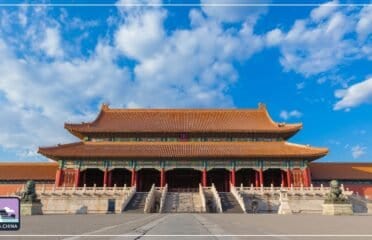






Jingshan Park in Beijing
Jingshan Park is an imperial park located just north of the Forbidden City, renowned for its 45-meter-high artificial hill, known as Jingshan or “”Prospect Hill.”” It was created during the Ming dynasty in the 15th century using earth excavated for the construction of the Forbidden City’s moats and nearby canals. Today, it is a public park that blends history, traditional architecture, and panoramic views of Beijing.
History
The origins of Jingshan Park trace back to the Liao and Jin dynasties, but its current form was established during the reign of Emperor Yongle of the Ming dynasty (15th century). The artificial hill and its five peaks topped with pavilions were constructed to protect the city according to feng shui principles. The park is also the site where the last Ming emperor, Chongzhen, took his own life in 1644. During the Ming and Qing dynasties, the park served as an imperial garden with temples like the Shouhuang Hall for ancestral sacrifices.
How to Get There
Located in the Xicheng district, just north of the Forbidden City in central Beijing, it is easily accessible by metro (Jingshan or Beihai North stations) or by bus from various parts of the city.
What to See
- Five peaks with decorated pavilions, especially the Wanchun Pavilion, the highest point offering 360-degree views including the Forbidden City to the south, the business area to the east, and Beihai Park to the west.
- Shouhuang Hall, a restored site of imperial worship.
- The area where Emperor Chongzhen hanged himself, marked by a symbolic acacia tree.
- Tree-lined paths, ponds, and resting areas that maintain a traditional atmosphere.
Ticket Information
Entry is affordable and the park is open daily. Advance booking is generally not required.
Visitor Tips
- Arrive early to avoid crowds and enjoy the sunrise or sunset views.
- Wear comfortable shoes for climbing the hill and walking around the park.
- Visit the five peaks in order to appreciate all the pavilions.
- Take the opportunity to observe local life, as the park is popular for dancing and socializing.
- Don’t forget your camera to capture the unique view of the Imperial Palace from above.
Jingshan Park is perfect for history enthusiasts, lovers of traditional Chinese culture, and those seeking an unparalleled view of Beijing in a natural setting within the city.
 Rate it or leave a comment!
 Rate it or leave a comment!

 Own or work here?
Nearby Places to Eat and Drink See All


Nearby Places to See and Do See All