




Gallerie degli Uffizi: The Ultimate Guide to Florence’s Most Famous Museum
The Gallerie degli Uffizi in Florence is not just another art museum. This place holds some of the most important Renaissance art on Earth. Botticelli, Leonardo da Vinci, Michelangelo, Raphael, Caravaggio — they’re all here. It’s basically a greatest-hits collection of Western art history, all packed into one historic building overlooking the Arno River.
Even if you are not an art obsessive, the Uffizi still delivers. The architecture is stunning, the views over Florence are legit beautiful, and the vibe inside feels like walking through the cultural glow-up that shaped modern Europe. It can be busy, overwhelming, and occasionally exhausting — but it’s absolutely worth it.
This guide breaks down everything you need to know before you go: tickets, opening hours, what to see, how long to spend, smart visiting tips, major masterpieces, routes through the museum, and how to enjoy it without museum burnout.
What the Uffizi Actually Is
The Uffizi started in the 1500s as government offices for Florence. The name “Uffizi” literally means “offices” in Italian. The powerful Medici family commissioned the building, and over time they filled it with their private art collection. That collection eventually became one of the first public art museums in Europe.
Today, it’s one of the most visited museums in Italy. The focus is mainly Renaissance art, but you’ll see works from medieval times through the Baroque period. If you want to understand how Western painting evolved, this is ground zero.
Where It Is Located
The Uffizi Gallery sits right in Florence’s historic center between:
- Piazza della Signoria — Florence’s political heart
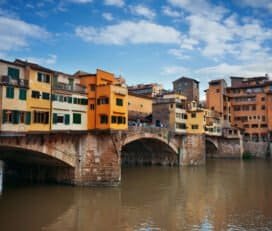
- The Arno River — with postcard views toward Ponte Vecchio
You can easily combine it with nearby highlights like Palazzo Vecchio, the Duomo, Ponte Vecchio, and the Boboli Gardens. Everything is walkable.
Tickets and Entry Prices
Ticket prices vary slightly by season, but here’s the typical range:
- €25 high season (March–November)
- €12 low season (December–February)
- €2 reduced ticket for EU citizens aged 18–25
- Free entry for visitors under 18
There is usually a small reservation fee when booking online. Pay it. Lines without reservations can easily run one to two hours, especially spring through fall.
Free admission often happens the first Sunday of each month, but crowds get intense. If you value space and sanity, go on a regular paid day.
I recommend doing a skip the line with an audio guide. You can book it here with our partner Viator and support the Bazar Travels site!
Opening Hours
The Uffizi Gallery is generally open:
- Tuesday to Sunday: 8:15 am to 6:30 pm
- Closed Mondays
Last entry is usually about one hour before closing.
The museum is also typically closed on:
- January 1
- December 25
Hours sometimes change for holidays or special events, so it’s always smart to double-check before your visit.
How Much Time You Need
This is where people either rush too much or overcommit. Here’s a realistic breakdown:
- Quick highlights visit: 2 hours
- Comfortable visit: 3 to 4 hours
- Art lover deep dive: 5+ hours
If you try to see everything quickly, you’ll burn out fast. Focus on highlights and take breaks. Trust me.
How the Museum Is Organized
The Uffizi is laid out mostly chronologically. You move from earlier medieval works into the full Renaissance bloom, then toward later artistic developments.
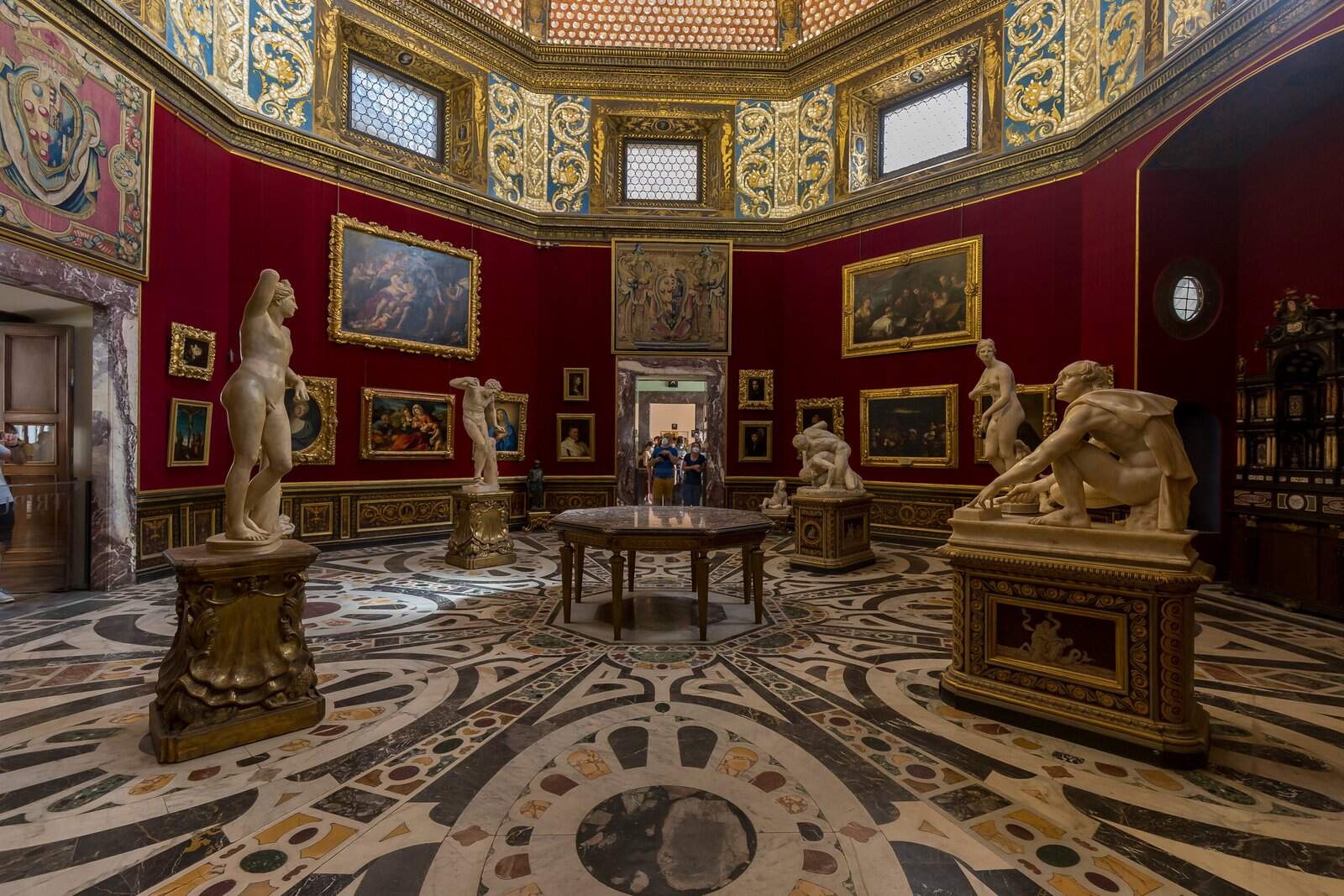
The main exhibition spaces are on the upper floors. Expect long corridors lined with sculptures, rooms dedicated to specific artists, and windows that occasionally open to gorgeous Florence views.
Use those windows. They’re mental reset buttons.
Absolute Must-See Masterpieces
Botticelli — The Birth of Venus
This is the painting most people come for. Venus standing on a shell, flowing hair, dreamy colors. It’s iconic Renaissance imagery and surprisingly large in person.
Botticelli — Primavera
Another Botticelli masterpiece packed with symbolism, mythology, and detail. Even if you don’t know the story, the elegance and movement pull you in.
Leonardo da Vinci Works
You won’t see the Mona Lisa here, but Leonardo’s early paintings and sketches give insight into how his style developed. It’s fascinating to see genius in progress.
Michelangelo — Doni Tondo
This circular painting shows the Holy Family and stands out for its bold colors and sculptural figures. It feels very Michelangelo even though it’s a painting.
Caravaggio — Medusa
This one stops people in their tracks. Dramatic, intense, almost cinematic. Caravaggio always hits different.
Raphael Portraits
Elegant, balanced, and calm. Raphael had a gift for capturing personality with subtlety.
Don’t Miss These Details
- The ceilings themselves are artworks
- Classical statues line the corridors
- Views over the Arno River are fantastic
- Historic architecture adds atmosphere
This museum isn’t just paintings on walls. It’s an environment.
Best Visiting Strategy
Morning Visit Strategy
- Book early entry
- Head straight to Botticelli rooms first
- Then loop back slowly
Afternoon Visit Strategy
- Crowds thin slightly later in the day
- Better light through windows
- Plan energy breaks
Either way, pace yourself. Museum fatigue is real.
Photography Rules
Photography is generally allowed without flash. No tripods. No touching artwork obviously.
That said, don’t spend the whole visit behind your phone. Some pieces deserve real attention.
Dress Code and Comfort Tips
No strict religious dress code here, but comfort matters:
- Wear comfortable shoes
- Layers help with indoor climate changes
- Bring water if allowed
Standing and walking for hours is the norm.
Guided Tour or Self-Guided?
Depends on your interest level.
- Self-guided: Great for flexible pacing
- Audio guide: Strong middle ground
- Guided tour: Best for deeper art context
If Renaissance art feels confusing, a guide makes everything click.
Common Mistakes Visitors Make
- Not booking tickets ahead
- Trying to see everything too fast
- Skipping breaks
- Ignoring smaller works while chasing big names
- Visiting midday peak hours
Plan smart and you’ll enjoy it way more.
Best Time of Year to Visit
Spring
Beautiful weather, heavy crowds. Book early.
Summer
Very busy, sometimes hot. Morning visits help.
Fall
Excellent balance of weather and crowd size.
Winter
Quietest season. Great time for art lovers.
Nearby Stops Worth Pairing
- Ponte Vecchio for classic Florence views
- Piazza della Signoria for history and statues
- Florence Cathedral (Duomo)
- Boboli Gardens for outdoor balance
Mix indoor and outdoor sights so your day stays enjoyable.
Final Thoughts
The Uffizi is not just a museum visit. It’s a crash course in Renaissance genius. It can be crowded, intense, and occasionally overwhelming, but it delivers something special if you give it time.
Book ahead, go early if possible, take breaks, and don’t rush. Let the art breathe a little. Florence has plenty of highlights, but the Uffizi sits near the top for a reason.
When you walk out onto the Florence streets afterward, you’ll probably see the city differently. And yeah, that’s kind of the point.
 Rate it or leave a comment!
 Rate it or leave a comment!


 Own or work here?
Nearby Places to Eat and Drink See All


Nearby Places to See and Do See All