
Museo Galileo – Institute and Museum of the History of Science
Museo Galileo – Institute and Museum of the History of Science
Piazza De' Giudici 1, 50122, Florence Italy Posted by Brandon B.Admin
One of Florence's Most Overlooked Museums
Tucked along the Arno between the Uffizi and Ponte Vecchio, Museo Galileo sits at Piazza De' Giudici 1 in a medieval palazzo that most visitors walk straight past on their way to something more famous. That's a mistake. This is one of the finest collections of scientific instruments in the world, and it rewards slow, curious visitors far more than a rushed lap through a crowded gallery ever could.
The museum holds the historical scientific collections of the Medici family and the House of Lorraine, accumulated over several centuries and now displayed across two floors with enough original lenses, armillary spheres, astrolabes, and navigational tools to fill an afternoon easily. Galileo Galilei's own instruments are here too, including two of his original telescopes and, in a display case that tends to stop people mid-step, a preserved relic of his middle finger.
Why Museo Galileo Matters
Florence gets most of its cultural credit for the Renaissance in paint and marble. What often goes unmentioned is that the city was equally central to the scientific revolution. The Medici funded astronomers and mathematicians the way they funded Botticelli and Michelangelo. Galileo spent significant time under Medici patronage, and the objects gathered here document that relationship in a way that no painting can.
The instruments aren't decorations. They were used. You're looking at the actual tools that changed how humans understood the solar system, navigation, time, and the natural world. That's a harder thing to absorb than a famous portrait, but it's at least as significant.
Quick Facts
- Address: Piazza De' Giudici 1, 50122 Florence
- Closest landmark: roughly 5 minutes on foot from the Uffizi Gallery
- Two floors of permanent collection, no temporary exhibition space to speak of
- Audio guides and printed room guides available at entry
- Fully accessible ground floor; upper floor accessible by lift
- Museum shop on site with books, replicas, and prints
- Photography generally permitted without flash
Getting There
The museum sits directly on the north bank of the Arno, a short walk east of Ponte Vecchio. If you're coming from Piazza della Signoria, head south toward the river and turn left along Lungarno delle Grazie. The entrance on Piazza De' Giudici is easy to miss because the building facade is understated compared to the grander civic architecture nearby. Look for the signage on the corner.
There's no convenient parking directly adjacent, so if you're arriving by car, the Oltrarno or Santa Croce area car parks are your best options and involve a short walk across one of the bridges. Most visitors come on foot from the historic center, which is the easiest approach by some distance.
The Layout and Experience
The collection is spread across two floors organized roughly by theme and historical period. The ground floor tends to cover earlier instruments, cosmological models, and the Medici collection. The upper floor moves into Galileo's instruments specifically, along with rooms dedicated to mathematics, time measurement, and natural philosophy.
Rooms are numbered and the suggested route is clearly marked, which helps. But the museum is compact enough that you won't feel lost if you wander. Most of the labels are in Italian and English. The level of detail is serious, written for genuinely curious visitors rather than casual tourists looking for a quick photo opportunity.
Expect to spend somewhere between 90 minutes and two and a half hours depending on how deeply you read. Visitors who rush through in under an hour tend to miss the smaller display cases where some of the most remarkable objects are kept.
Main Highlights
Galileo's Telescopes
The museum holds two telescopes that Galileo himself built and used. These are the instruments he used to observe Jupiter's moons in 1610, an observation that fundamentally disrupted the accepted model of the cosmos. Seeing them in person is a different experience from reading about them. They're smaller than most people expect.
The Armillary Spheres
Several large armillary spheres dominate the early rooms. These mechanical models of the heavens were prestige objects as much as scientific tools, and the craftsmanship involved in the Medici examples is extraordinary. Some are over a meter across and made with gilded brass rings and engraved celestial maps.
Galileo's Finger
In 1737, when Galileo's remains were moved to a new tomb in Santa Croce, admirers removed several fingers and a tooth as relics. One of those fingers, the middle one of his right hand, is displayed here in an ornate glass egg mounted on a marble base. It's a strange object, historically real, and genuinely thought-provoking in a museum about rational inquiry.
The Medici Lens Collection
The museum holds a significant collection of lenses from the Medici period, including objective lenses from early telescopes. For anyone interested in the history of optics, this section alone justifies the visit.
History and Background
The building itself, the Palazzo Castellani, dates to the 11th century, though it was substantially rebuilt in the 14th. The museum in its current form opened in 1930 as the Museo di Storia della Scienza, then underwent a major renovation and reopened in 2010 under its current name, Museo Galileo.
The scientific instruments on display were collected over centuries by the Medici grand dukes starting in the 1500s, then continued by the House of Lorraine when they took control of Tuscany in the 18th century. The collection includes objects from across Europe, many commissioned directly from the finest instrument makers of their time in places like London, Paris, and Nuremberg.
Galileo's own connection to Florence was deep. He served as mathematician and philosopher to Grand Duke Cosimo II de' Medici from 1610 onward, and it was in this role that many of his most significant instruments passed into Medici hands.
Tickets and Entry
The museum charges general admission, with reduced rates available for students, children, and EU citizens in specific age ranges. There are also combined ticket options with other Florentine institutions depending on the season and current partnerships. Tickets can be purchased at the door or online in advance, though the museum rarely sells out the way the Uffizi does, so booking ahead is a convenience rather than a necessity on most days.
Guided tours in English are available and worth considering if you want context for the more technical instruments. The audio guide covers the main rooms and is a solid alternative if you prefer to move at your own pace.
Best Time to Visit
The museum is significantly quieter than the Uffizi or the Accademia at almost any time of year. Summer mornings between 9am and 11am are the calmest window if you want the rooms to yourself. Midday in July and August can bring school groups and tour parties, but even then the crowd levels are modest compared to Florence's major sites.
Rainy days are particularly good for a visit here. When the outdoor queues at the Uffizi stretch around the corner and the city feels overwhelmed, Museo Galileo tends to be calm and unhurried.
Combining with Nearby Attractions
The museum sits almost exactly between the Uffizi to the west and the Santa Croce neighborhood to the east. A logical half-day pairs Museo Galileo with a visit to the Biblioteca Nazionale or a walk through the Santa Croce area, where Galileo is in fact buried in the basilica alongside Michelangelo and Machiavelli. That combination, the museum in the morning and Santa Croce in the afternoon, gives you a coherent thread through Florentine intellectual history that feels genuinely satisfying rather than just box-ticking.
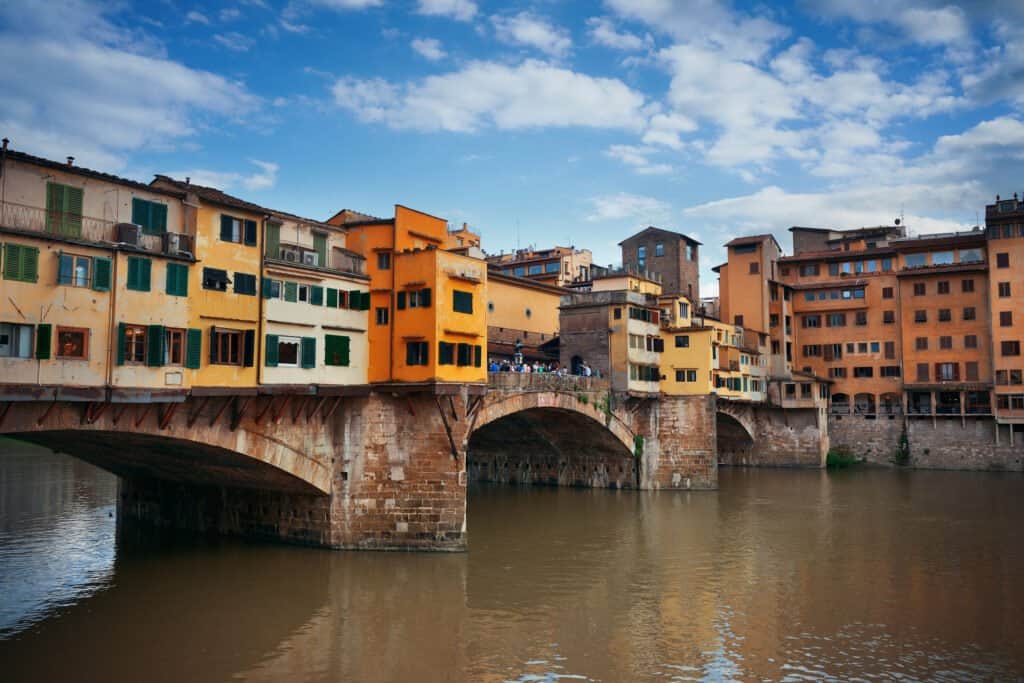
Ponte Vecchio is also a 5-minute walk west, and the Oltrarno neighborhood is directly across the river if you want lunch on the south bank after your visit.
Practical Tips
- Arrive within the first hour of opening for the quietest experience
- The museum shop has unusually good books on the history of science, including titles not easily found elsewhere in Florence
- Wear comfortable shoes; the stone floors are uneven in some older rooms
- Labels are in Italian and English throughout, but the audio guide adds depth for the major pieces
- Photography without flash is generally fine; check posted signs in individual rooms
- If you're visiting with children, the mechanical models and large instruments tend to hold attention well for kids aged 8 and up
- The nearest public toilets are inside the museum itself, so use them before you leave
FAQ
How long does a visit to Museo Galileo take?
Most visitors spend between 90 minutes and two and a half hours. If you're reading every label and lingering over the instruments, you could easily fill three hours without backtracking.
Is Museo Galileo suitable for children?
It works well for curious older children and teenagers, particularly those with an interest in science or history. The large mechanical models and armillary spheres tend to be visually engaging. Very young children may find the pace and detail challenging.
Do I need to book tickets in advance?
Unlike the Uffizi, advance booking isn't usually essential. On most days you can walk in without a reservation, though booking online ahead of time is always the safer option during peak summer months.
Is the museum accessible?
Yes. The ground floor is accessible, and there is a lift to the upper floor. Some areas in the older parts of the building have uneven flooring, so it's worth checking current accessibility details with the museum directly if mobility is a concern.
Where exactly is Galileo buried?
Galileo is buried at the Basilica di Santa Croce, roughly a 10-minute walk east of Museo Galileo. His tomb is in the main nave alongside monuments to Michelangelo and Machiavelli, and is well signposted inside the church.
Reviews
Sign in and mark this place visited to leave a review.
No reviews yet.
Free Trip Planner
Plan your Florence trip with our free planner
Build a day-by-day itinerary with AI suggestions, hand-picked places, and friends. Free forever — no credit card.
Things to see near Museo Galileo – Institute and Museum of the History of Science


Places to eat or drink near Museo Galileo – Institute and Museum of the History of Science

Antica Osteria da Divo

Enoteca I Terzi

Pasticceria Nannini

Osteria La Chiacchera
More places in Florence

Basilica San Miniato al Monte

Babae
Ponte Vecchio
