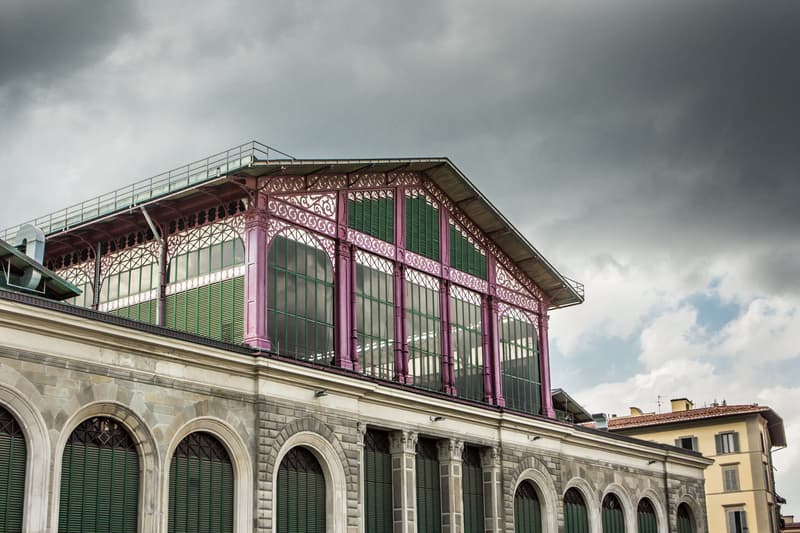
Museo Nazionale del Bargello
Via del Proconsolo 4, 50122, Florence Italy Posted by Brandon B.
Florence's Most Overlooked Great Museum
The Museo Nazionale del Bargello sits on Via del Proconsolo, less than a five-minute walk from the Duomo, yet most visitors sail past it on their way to the Uffizi or the Accademia. That is a serious mistake. The Bargello holds one of the finest collections of Renaissance sculpture anywhere in the world, and on most days you can stand alone in front of Donatello's David without a single tour group in sight.
The building itself dates to 1255, making it one of the oldest public buildings in Florence. It served as the seat of the city's chief magistrate, then as a prison, before becoming a national museum in 1865. The stone courtyard at its center, open to the sky and lined with carved coats of arms, sets the mood before you've even reached the first gallery.
Why the Bargello Matters
If you care about sculpture at all, this is the place. Donatello's bronze David, cast sometime in the 1440s, was the first free-standing nude male sculpture made in Europe since antiquity. It stands in the first-floor hall named after him, and the scale surprises people every time. It is smaller than you expect, and more alive.
The museum also holds two competing bronze panels that Brunelleschi and Ghiberti each submitted for the 1401 competition to design the Baptistery doors. Both panels, depicting the Sacrifice of Isaac, are displayed together. You can look at them side by side and trace the exact moment the Renaissance began to pull away from the Gothic. That kind of direct comparison is almost impossible to find anywhere else.
Michelangelo's early work is here too, including his Bacchus, carved around 1497 when he was in his early twenties. The figure sways slightly, visibly drunk, with a quality of movement that feels almost unsettling in marble.
Quick Facts
- Address: Via del Proconsolo 4, Florence
- Building constructed: 1255
- Became a museum: 1865
- Walking distance from the Duomo: roughly 4 minutes on foot
- Walking distance from Piazza della Signoria: roughly 3 minutes on foot
- Managed by the Musei del Bargello foundation
- Closed on certain Mondays and Sundays depending on the week, and on major Italian public holidays
- Timed entry tickets are available and recommended in high season
Getting There
The Bargello is genuinely central. From Santa Maria del Fiore (the Duomo), walk south along Via del Proconsolo and the museum entrance appears on your left within a few minutes. From Piazza della Signoria, head north along Via dei Gondi or Via della Vigna Vecchia and you'll reach the same street. There is no dedicated parking nearby, and the surrounding streets are largely pedestrianized or restricted, so arriving on foot or by taxi is the practical approach for most visitors.
The nearest bus stops along Via dei Servi and Via dell'Oriuolo put you within a short walk if you're coming from further out in the city.
The Layout and Experience
The museum occupies three floors built around the open courtyard. The ground floor rooms hold Michelangelo's early sculptures alongside work by Benvenuto Cellini and Giambologna, whose Mercury, balanced on a single toe, is one of the more astonishing things you'll see in any museum. The courtyard walls are covered with the stone emblems of the magistrates who governed Florence across the centuries, and the well in the center is original.
The first floor is the Donatello hall, the largest and most visited room in the building. Alongside the bronze David you'll find his earlier marble David (often overshadowed by its bronze sibling), Saint George, originally made for the guild of armourers at Orsanmichele, and the relief panel known as Saint George and the Dragon, which shows some of the earliest use of perspective in relief sculpture.
The upper floors move into decorative arts: ivories, enamels, medals, arms and armour, and an extraordinary collection of small bronzes. These rooms tend to be quieter, and they reward slow looking. The collection of portrait busts on the second floor includes work by Mino da Fiesole and Antonio Rossellino that shows how Florentine sculptors understood the human face with a specificity that painting couldn't yet match.
Tickets and Entry
Entry requires a general admission ticket. Timed entry slots are available through the official Musei del Bargello booking system, and during spring and summer it's worth reserving in advance, especially for weekend visits. Reduced rates apply for EU citizens between 18 and 25, and free entry is available for children under 18 from EU countries as well as certain professional categories. The museum participates in free-entry days organized by the Italian Ministry of Culture, typically on the first Sunday of each month.
Combined tickets with other Florence museums in the Musei del Bargello group are sometimes available and can offer good value if you're planning to visit more than one site.
Best Time to Visit
The Bargello is busy in April, May, and October, but nowhere near as congested as the Uffizi or Accademia. Arriving when the museum opens tends to give you the Donatello hall almost to yourself for the first half hour. Midweek mornings in January or February are about as peaceful as a Florence museum gets.
Summer afternoons can be warm inside since the building has limited climate control in some areas. Light layers are worth bringing if you plan to spend more than an hour.
Photography Tips
Photography without flash is generally permitted. The courtyard photographs well in the morning when light comes over the top of the building and catches the stone details. The Donatello hall can be tricky because of the high windows and mixed light sources, so shoot in RAW if you're using a camera rather than a phone. The Giambologna Mercury on the ground floor sits on a relatively low plinth, which means you can photograph it at close range without fighting a crowd or a barrier. That is rarer than it sounds.
Combining with Nearby Attractions
The Bargello sits in a dense cluster of major sites. Orsanmichele, the grain market turned church whose exterior niches hold copies of sculptures originally made by Donatello, Ghiberti, and Verrocchio, is about three minutes west on foot. The originals of several of those works are in the Bargello, which makes the pairing particularly satisfying. Walking from one to the other gives you a sense of how Renaissance Florence treated public space as an extension of the studio.
Piazza della Signoria and the Palazzo Vecchio are equally close to the south. The Uffizi is five minutes further. A half-day that starts at the Bargello, crosses to Orsanmichele, and ends at the Uffizi covers a significant sweep of Florentine art without requiring much walking at all.
Practical Tips
- Book timed entry tickets online before you arrive, particularly between March and October
- The audio guide, available at the entrance, is worth taking for the Donatello hall and the Michelangelo room
- Allow at least 90 minutes; the upper floor decorative arts collections are easy to rush and shouldn't be
- The museum shop near the exit stocks serious art history publications, not just postcards
- Bag storage is available at the entrance for larger items
- The building is partially accessible by lift, though the historic structure means some areas have limited access for visitors with mobility needs
- Check the Musei del Bargello website for current opening days before you go, as Monday and Sunday closures rotate by week
FAQ
How long does a visit to the Bargello take?
Most people spend between 90 minutes and two and a half hours. If you want to cover the decorative arts floors properly, lean toward the longer end.
Is the Bargello worth visiting if I've already been to the Uffizi?
Completely different experience. The Uffizi is primarily painting. The Bargello is sculpture, and it covers a period and a medium that the Uffizi barely touches. The two complement each other rather than overlap.
Do I need to speak Italian to enjoy the museum?
Labels are in both Italian and English throughout the main galleries. The audio guide is available in multiple languages.
Is there a café inside the museum?
The Bargello does not have a café inside the building. Via del Proconsolo and the surrounding streets have several bars where you can stop before or after your visit.
Can children visit the Bargello?
Yes, and the courtyard and the larger sculptures tend to hold children's attention reasonably well. It's a smaller and less overwhelming museum than the Uffizi, which some families find easier to manage with younger visitors.
Reviews
Sign in and mark this place visited to leave a review.
No reviews yet.
Free Trip Planner
Plan your Florence trip with our free planner
Build a day-by-day itinerary with AI suggestions, hand-picked places, and friends. Free forever — no credit card.
Things to see near Museo Nazionale del Bargello

Chiostro di San Francesco

Fortezza Medicea

La Lizza Market

Museo dell’Acqua
Places to eat or drink near Museo Nazionale del Bargello



More places in Florence

Giardino Bardini

Museo Galileo – Institute and Museum of the History of Science

Campanile di Giotto