
Beyond Lake Bled: Slovenia's Hidden Alpine Escapes
By
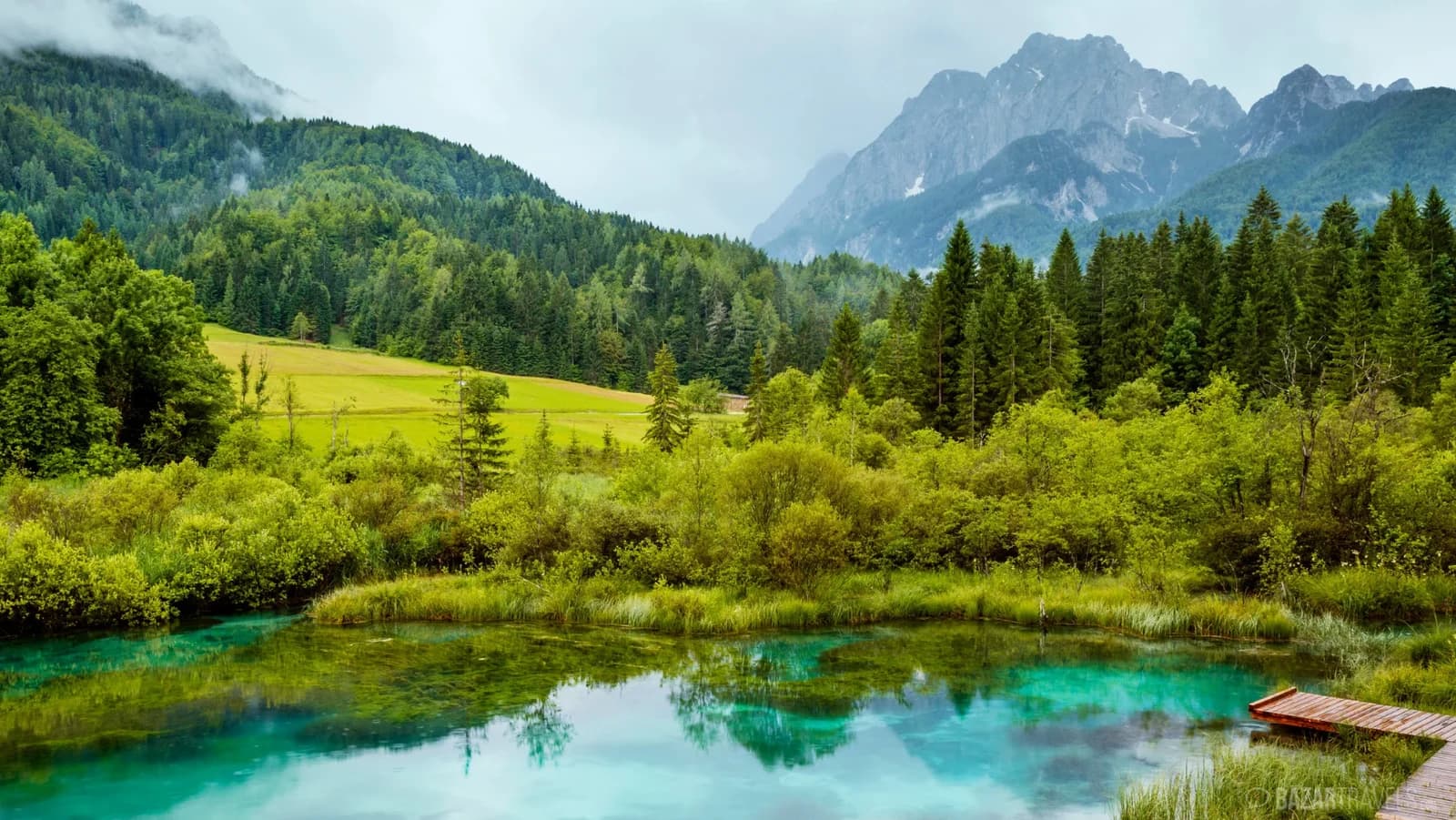
Lake Bled shows up on almost every list of Europe's most photographed lakes, and for most first-time visitors to Slovenia, it becomes the entire trip. The island church, the cliffside castle, the rowboats — it's a beautiful stop, no argument there. But stay within an hour of Bled and you're only seeing a sliver of what the Julian and Kamnik-Savinja Alps have to offer.
Here are four alpine regions that stay quiet year-round, and what you need to know to get to them.
Lake Bohinj: The Lake Before Bled Got Famous
Locals half-joke that Bohinj is what Bled looked like before the tour buses found it. It's bigger, the mountains around it are steeper, and there's no island pulling every boat toward the same spot on the water.
Thirty minutes past Bled by car, inside Triglav National Park, you can swim off the shingle beach at Ukanc, rent a kayak without a wait, or take the Vogel cable car up for a view over the whole lake. The real draw, though, is the Seven Lakes Valley — a chain of glacial tarns reached by a trail above the water, each pool a slightly different shade of green. Call it a full day out, or an overnight if you'd rather stay at one of the mountain huts. Either way it makes the rest of your Slovenia photos look like a warm-up act.
June through September gets you full trail access. Snow can linger at higher elevations well into late spring, so anything earlier and you're gambling.
Pokljuka Plateau: Where the Locals Actually Go
Above both lakes, a switchbacking road climbs to the Pokljuka Plateau — alpine meadow, pine forest, grazing land that most international itineraries skip entirely. There's no single landmark drawing anyone up here, which is more or less the reason it stays so quiet.
The Viševnik sunrise hike is the local favorite: a moderate climb rewarded with a view over the whole Bohinj basin at first light. Then winter comes and the plateau turns into something almost nobody expects — a serious cross-country skiing hub, with groomed trails and biathlon facilities that have hosted World Cup events. Driving up here in July, you'd never guess a competition venue is waiting at the top come January.
Bring your own car. There's no bus route up.
Logar Valley: A Different Mountain Range Entirely
This is where "beyond Bled" stops meaning "a bit further down the road" and starts meaning something else. Logar Valley (Logarska Dolina) sits in the Kamnik-Savinja Alps — not the same range that holds Bled, Bohinj, or Triglav. It's a different corner of the country, and most Bled-based trips never touch it.
The valley itself is a textbook U-shaped glacial cut, walled in by peaks over 2,000 meters, with one narrow road running its length. At the far end, the Rinka Waterfall drops 90 meters, and the walk there is flat enough for almost anyone. From there, the Solčava Panoramic Road loops through two smaller valleys, Robanov Kot and Matkov Kot, both quieter than Logar even at its busiest — a good backup if the parking lot fills up.
It's a two-to-three-hour drive from Bled, so forget about squeezing it into a day trip. Plan on staying the night, and don't count on public transport getting you there. It won't.
Vršič Pass and the Soča Valley
Slovenia's highest mountain pass links Kranjska Gora to the Soča Valley by way of 50 numbered hairpin turns, topping out at 1,611 meters. The pass has gotten popular enough with European road-trippers that calling it "hidden" would be a stretch. What's still quiet, outside of July and August anyway, is the valley waiting on the other side of it.
Built as a military supply route in the First World War, the road climbs past fortifications and cemeteries easy to miss if you're focused on counting switchbacks. Then you come down into the Soča Valley, and the river itself is the payoff — a shade of green-blue that looks photoshopped until you're standing right next to it. Bovec and Kobarid, the valley's two main towns, are built around gettingg outside rather than sightseeing: rafting and kayaking on some of the best river water in Europe, hikes into the Trenta Valley, gorge walks at Velika Korita.
One thing to plan around — the pass usually closes from November through March depending on snowfall, so this is a spring-through-autumn trip and nothing else. Check road conditions if you're going in shoulder season.
What to Eat Along the Way
The food changes as much as the scenery. Around Bohinj and Pokljuka it's Alpine staples — štruklji (rolled dumplings, sweet or savory), jota, a bean and sauerkraut stew, and farmhouse cheese sold straight off small mountain dairies. In the Solčavsko valleys, look for Zgornjesavinjski želodec, a regional cured meat, plus honey and dried fruit at roadside stands with an honesty box instead of anyone minding the till. The Soča Valley leans Italian in places, a hangover from its closeness to Friuli, so grilled or smoked trout from the river shows up on menus in Bovec and Kobarid right alongside the more classic Slovenian dishes.
Do You Need a 4x4?
No, not for most of the year. The road into Logar Valley and the Solčava Panoramic Road are both paved and manageable in a standard rental from late spring through autumn. Vršič Pass is paved too, all 50 switchbacks of it, though winter tires are legally required from mid-November through March and the pass closes outright once the snow gets heavy enough. Pokljuka's access road is steep in places but it's still just tarmac.
A 4x4 matters if you're heading onto unpaved forestry tracks past the main valleys — not something this guide gets into.
Is Any of This Family-Friendly?
Depends which part. Bohinj is the easy yes — flat lakeside paths, a cable car for anyone who'd rather not hike, safe swimming for kids. Pokljuka works for families up for some moderate walking, though the Viševnik hike itself suits older kids and adults better. Logar Valley holds up too, since the walk to Rinka Waterfall is short and flat even though the trails branching off it climb fast. Vršič Pass and the Soča Valley are the odd one out: the switchback drive can be rough on kids prone to motion sickness, and most of the valley's signature activities — rafting, kayaking, gorge hikes — come with minimum age requirements.
Putting a Route Together
You'll want a rental car. Only Bohinj and the Vršič corridor have any real public transport, and even that's limited. Ljubljana's airport makes pickup simple, and nothing on this list sits more than three hours from the capital.
Building a week around all four? Two nights near Bohinj covers both the lake and Pokljuka. Two nights in the Solčavsko region handles Logar Valley. Then two or three nights in the Soča Valley, reached over Vršič Pass, closes it out. June through September opens everything up. May and late September trade a bit of weather risk for thinner crowds, and by October the Solčavsko valleys turn a color of gold that's hard to describe without sounding like you're exaggerating.
The Slovenia Worth Building a Trip Around
None of this is an argument for skipping Bled — it earns its spot on every itinerary. But the country's best alpine scenery — a quieter lake, a plateau nobody stumbles onto by accident, a glacial valley in a different mountain range, a pass you have to earn with fifty hairpin turns before the view opens up — sits just a few hours further down the road. Give it the extra days. Bled stops being the whole trip and starts being the opening chapter.