
Driving to Geneva Airport vs Taking Public Transport: Which Makes More Sense?
By
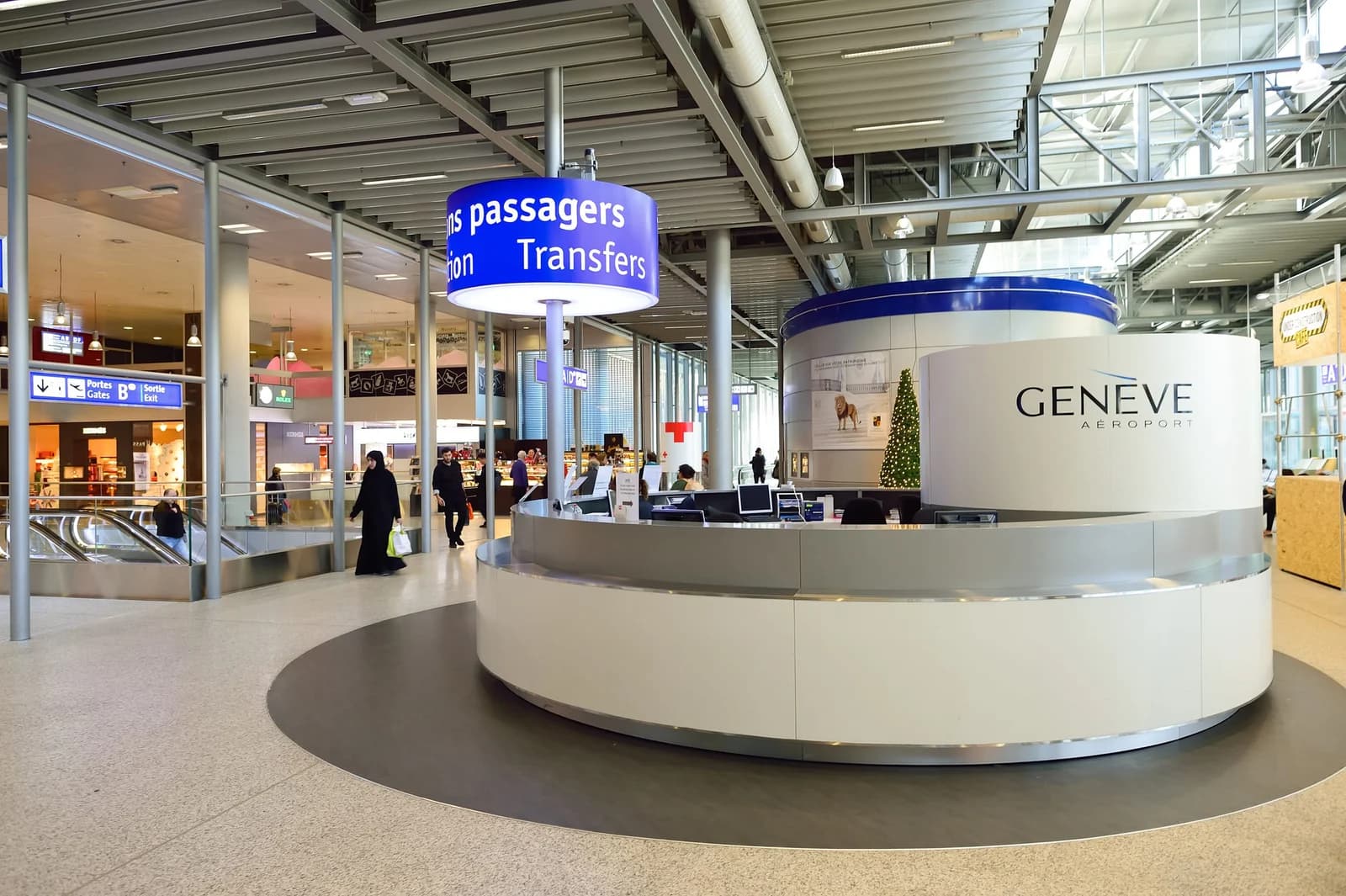
Getting to the airport may seem like a minor part of travel planning, but choosing the wrong option can add unnecessary cost, time, and stress to your journey. Geneva Airport is particularly interesting because travelers have two strong choices: excellent public transport connections or the flexibility of driving.
There is no single best option. A solo traveler leaving from central Geneva with one suitcase has very different needs from a family carrying several bags and ski equipment. Departure time, trip length, group size, and where you are traveling from can all change the equation.
So, should you drive to Geneva Airport or take public transport? Here is how the two options compare.
Getting to Geneva Airport by Public Transport
Geneva Airport is exceptionally well connected to the city's public transport network. The airport railway station is directly connected to the terminal, and trains between Geneva-Cornavin and the airport take only around seven minutes.
Local buses also serve the airport, making public transport particularly convenient for travelers staying in Geneva or living near a direct connection.
For solo travelers, public transport has several obvious advantages. There is no need to find or pay for parking, fuel costs are eliminated, and taking the train avoids road congestion. Once at the airport station, passengers can walk directly into the terminal.
The disadvantages become more noticeable when the journey involves several connections. Carrying multiple suitcases between buses and trains can be inconvenient, particularly when traveling with children. Travelers coming from rural areas or locations across the French border may also need to combine several forms of transport.
Public transport works best when the entire journey is straightforward — not simply when one part of it is fast.
Driving to Geneva Airport
Driving provides something public transport cannot always offer: complete control over when you leave and a door-to-door journey from home to the airport area.
This can be particularly valuable for families, groups, and passengers traveling with several suitcases. Instead of carrying luggage through stations and changing trains or buses, everything can remain in the vehicle until you reach your parking facility.
Driving can also be practical when traveling with skis, snowboards, strollers, or other bulky equipment. Geneva is an important gateway to the Alps, so this can be a significant consideration during winter.
There are disadvantages, of course. You need to consider fuel, parking costs, possible traffic, and the additional time required to park and reach the terminal.
Parking should therefore be part of the travel plan rather than a decision made when approaching the airport.
Cost: Which Option Is Cheaper?
There is no simple answer because the calculation changes depending on the number of travelers and the duration of the trip.
For one person traveling from central Geneva, public transport will often be financially attractive. For a family or group, however, the comparison changes because the cost of driving and parking is shared between several passengers.
Trip duration matters too. Leaving a vehicle for three days is very different from paying for several weeks of parking.
Instead of comparing one train ticket with one parking rate, calculate the complete journey.
For driving, consider fuel, parking, and any applicable road costs. For public transport, calculate tickets for every passenger plus any additional connections or taxi journeys required to reach the station.
The cheapest solution on paper may also not be the most convenient one.
Travel Time and Reliability
If you're starting in central Geneva, public transport is difficult to beat. The short train journey from Geneva-Cornavin to the airport makes it one of the easiest ways to reach the terminal.
But travelers should compare door-to-door time, not just train time.
A journey advertised as seven minutes by train could also involve walking to a station, waiting for the train, or taking another bus beforehand. Similarly, driving time should include possible congestion, parking, unloading luggage, and reaching the terminal.
Both options can also experience disruption. Drivers need to allow for traffic, while public transport users should leave enough time for delays or missed connections.
Whichever method you choose, building a reasonable buffer into the journey is more important than finding the theoretically fastest route.
What If You're Traveling with Luggage?
Luggage is one of the factors that can quickly change the balance.
With a backpack or carry-on suitcase, trains and buses are usually straightforward. Even a large suitcase may not be a problem if you have a direct train.
The situation becomes different with four passengers, several large bags, a stroller, and children's belongings. Every connection means unloading, carrying, and loading everything again.
Sports equipment adds another complication. Skis and snowboards can be transported on public transport, but driving often makes the logistics easier because equipment can stay in the vehicle for most of the journey.
The question isn't whether public transport can handle your luggage. It is whether you want to handle that luggage throughout the journey.
Traveling with Children
Both options have advantages for families.
On public transport, parents don't need to concentrate on driving and can focus on their children. A direct train connection can therefore be surprisingly convenient.
Driving provides different benefits. Families can use their own child seats, choose when to leave, stop when necessary, and keep luggage together.
The number of connections is particularly important. One direct train with two children may be easy. Two buses and a train with children, suitcases, and a stroller can be considerably less appealing.
For families, convenience often matters as much as the ticket price.
Early-Morning and Late-Night Flights
Flight time should always be considered before deciding how to reach the airport.
Geneva has public transport options for early travelers, including dedicated early-morning bus services on selected routes. However, availability depends on where your journey begins.
Check the complete timetable rather than assuming public transport will or won't be available.
Driving offers more freedom because departure isn't tied to a schedule. This can make it attractive for very early flights, late arrivals, or travelers coming from areas with limited public transport.
If your flight leaves early in the morning, work backwards from the recommended airport arrival time and compare your realistic options.
Where Are You Traveling From?
Your starting point may be the biggest factor of all.
Central Geneva: Public transport is an excellent option thanks to frequent and fast connections.
Other Swiss cities: Rail can still be highly convenient because Geneva Airport is connected to Switzerland's wider railway network.
Rural areas: Driving may eliminate multiple connections and provide a simpler door-to-door journey.
Nearby France: There is no universal winner. Some towns have convenient coach or bus connections, while others are much easier to reach by car.
Always compare the complete route from your home or accommodation rather than looking only at the final few kilometers to the airport.
When Driving Makes More Sense
Driving is worth considering when several people are traveling together, you have substantial luggage, you're carrying sports equipment, or your home has no convenient public transport connection.
It can also make sense for families and travelers who want complete control over their departure time.
If driving is the more practical option for your trip, reserving Parking Aéroport Genève in advance can make the departure process easier, particularly during busy holiday and ski-travel periods. Booking parking beforehand also means you know where you're going before departure day and can include the transfer to the terminal in your schedule.
When Public Transport Makes More Sense
Public transport is particularly attractive if you're traveling alone, staying in central Geneva, traveling light, or living near a direct rail or bus connection.
It also removes the need to think about parking or traffic and allows you to relax during the journey.
For a traveler with one suitcase staying near Geneva-Cornavin, driving would often add unnecessary complexity. This is exactly why the decision should depend on the individual journey rather than a general rule.
Driving vs Public Transport: Quick Comparison
Factor | Driving | Public Transport |
|---|---|---|
Door-to-door flexibility | Excellent | Depends on location |
Heavy luggage | Very convenient | Less convenient |
Solo traveler | Can be costly | Often attractive |
Families/groups | Very convenient | Depends on connections |
Early flights | Flexible | Timetable dependent |
Central Geneva | Convenient | Excellent |
Rural locations | Often easier | May require transfers |
Long trips | Parking cost increases | No parking cost |
Ski equipment | Very convenient | Possible, but less convenient |
Traffic | Possible delays | Trains avoid road traffic |
So, Which Should You Choose?
Choose public transport if you have a convenient connection, are traveling relatively light, and your departure time fits comfortably within the timetable.
Consider driving if you're traveling as a family or group, carrying significant luggage or sports equipment, leaving at an inconvenient time, or starting somewhere without a good public transport connection.
Geneva Airport's strong transport infrastructure means both options can work extremely well. The important thing is to compare the total cost, door-to-door travel time, luggage, group size, and convenience rather than focusing on a single factor.
Plan your journey to the airport with the same care as your flight, and the right choice usually becomes obvious.