
Easter Island Itinerary: How Many Days You Need + What to See and Do
By
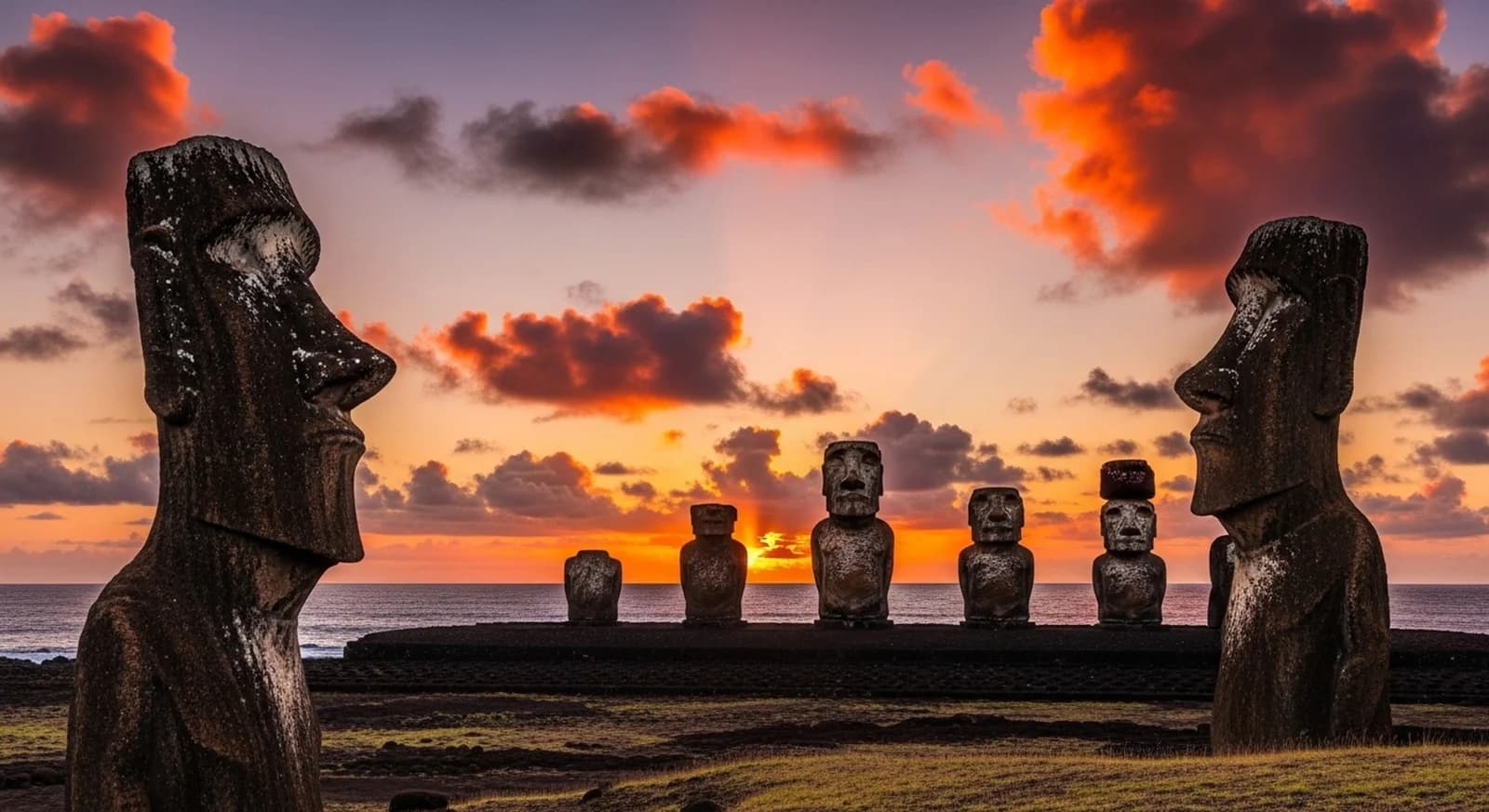
Few places earn the word "remote" like Easter Island. Marooned in the South Pacific more than 2,000 miles from the nearest mainland, this tiny Chilean territory — known to its people as Rapa Nui — is home to nearly 900 enormous stone figures called moai, carved and raised by a civilization that thrived here in near-total isolation.
The good news for travelers: the island is small, the highlights are unforgettable, and you don't need a long trip to experience it well. This guide breaks down exactly how many days to budget, a practical day-by-day itinerary, and everything worth seeing once you arrive.
How many days do you need on Easter Island?
Three full days is the sweet spot. That gives you enough time to see every major site at a relaxed pace, catch both a sunrise and a sunset at different ceremonial platforms, and keep a buffer day in case the weather turns.
Here's how the options shake out:
2 days: Doable if you're efficient and lucky with weather, but rushed. You'll see the icons and little else.
3 days: The ideal balance. Complete coverage without backtracking, plus a flexible day.
4–5 days: Worth it if you want a slower trip, beach time, hiking, or a built-in cushion for cloudy mornings.
Because flights are limited and arrive midday, a "3 full days" trip usually means 4 nights on the island once you account for arrival and departure timing.
How to get to Easter Island
Easter Island has exactly one commercial airport, Mataveri (IPC), and almost all flights come from Santiago, Chile, operated by LATAM. The flight runs roughly 5.5 hours each way over open ocean. A small number of routes also connect through Tahiti (Pape'ete), which is handy if you're stitching together a wider Pacific itinerary.
A few booking tips:
Flights fill up in high season (December–February) and around the Tapati festival in early February. Book well ahead.
Fares fluctuate a lot. Flexibility on dates pays off.
Confirm your return seat carefully — there are only a handful of departures per week.
The Rapa Nui National Park ticket (read this before you go)
Most of the island's sites sit inside Rapa Nui National Park, and you'll need a park ticket to enter them. You can buy it at the airport on arrival or in Hanga Roa.
The one rule that shapes your entire itinerary: Rano Raraku and Orongo can each be visited only once with your ticket. Both are weather-sensitive, so don't burn those entries on a cloudy, low-visibility day. Plan to hit them when the forecast is clear.
Getting around the island
Rapa Nui is compact — about 63 square miles — but the sites are spread out, so you'll want wheels:
Rental car or 4x4: The most flexible option. Roads are paved to the main sites and rough elsewhere.
Guided tours: Great for context. A knowledgeable guide turns a row of statues into a story, and some sites are best understood with one.
Bike or scooter: Fun for shorter loops near Hanga Roa, but distances and wind make this tiring for the full island.
A common approach is to mix a guided tour for the big archaeological sites with a self-drive day for the coast and beaches.
Best time to visit Easter Island
The island is mild year-round, but conditions vary:
Summer (Dec–Mar): Warmest and driest, but the busiest and priciest. February brings the colorful Tapati Rapa Nui cultural festival.
Shoulder (Apr–Jun, Sep–Nov): Pleasant, quieter, and better value. A strong all-around choice.
Winter (Jul–Aug): Cooler and wetter, with fewer crowds. Pack a rain layer.
Whenever you go, mornings and evenings are when the light makes the moai glow — plan your photography around them.
Easter Island itinerary: 3 days, day by day
This plan is built around geography so you're not crisscrossing the island, with the two weather-sensitive sites placed where you can stay flexible.
Arrival day
Flights typically land around midday. Collect your car or confirm your tour, settle into Hanga Roa, and ease in with a short walk to Ahu Tahai for sunset — five minutes from town and a gentle first encounter with the moai. Buy your park ticket if you haven't already.
Day 1 — The eastern circuit
Save this for a clear morning.
Ahu Tongariki at sunrise. Fifteen restored moai on the island's largest ceremonial platform, lit by the rising sun. Leave Hanga Roa about 45 minutes before dawn.
Rano Raraku, the quarry next door, once it opens. This is where the moai were carved — around 400 statues stand frozen mid-production, many half-buried on the grassy slopes. Give it at least two hours; remember, it's your one entry.
Te Pito Kura, home to a famous magnetic stone and the largest moai ever successfully raised.
Anakena Beach in the afternoon — white sand, swaying palms, and the moai of Ahu Nau Nau. Swim, relax, then head back for dinner.
Day 2 — Crater, ceremonial village, and inland sites
Also weather-sensitive — the crater clouds over later in the day, so go early.
Rano Kau crater, a vast volcanic caldera cradling a reed-filled lake.
Orongo, the stone village on the crater's rim and the heart of the birdman (Tangata Manu) cult. Your single Orongo entry.
Ahu Akivi, seven inland moai that famously face the sea — a rare orientation.
Puna Pau, the small quarry where the red pukao (topknots) were cut.
Ana Te Pahu lava-tube caves for a short underground adventure.
Optional: the Museo Antropológico Sebastián Englert in Hanga Roa for deeper context.
Day 3 — Flex day
Use this for whatever the weather forced you to skip, a repeat Tongariki sunrise, a coastal hike from Tahai toward the caves, Vinapu with its remarkably Inca-like stonework, or simply a slow afternoon on the beach. End with one last sunset at Tahai.
Departure
Flights usually leave in the afternoon or evening, so you typically get a relaxed final morning before heading to the airport.
The golden rule: keep Day 1 and Day 2 interchangeable, and run whichever one has the clearer forecast first. Both depend on good light and visibility.
Top things to see and do on Easter Island
If you'd rather build your own route, here are the sites worth prioritizing:
Ahu Tongariki — the iconic fifteen-moai platform and the best sunrise on the island.
Rano Raraku — the moai "nursery," the most atmospheric site of all.
Rano Kau & Orongo — dramatic crater views and the birdman ceremonial village.
Ahu Tahai — the easiest sunset, right beside town, with one moai's coral-and-obsidian eyes restored.
Anakena Beach — the island's only true swimming beach, backed by moai.
Ahu Akivi — seven seaward-facing statues set inland.
Puna Pau — where the statues' red topknots were quarried.
Lava tube caves (Ana Te Pahu, Ana Kakenga) — natural tunnels with ocean-window views.
Hanga Roa — the only town, with the archaeology museum, restaurants, and harbor.
Where to stay
Almost all accommodation is in or just around Hanga Roa, the island's only town. Options range from family-run guesthouses (residenciales) and mid-range hotels to a handful of high-end lodges on the outskirts. Staying central keeps you close to restaurants, the harbor, and the Tahai sunset spot.
What to eat
Seafood is the star here — expect fresh tuna and other local fish, often served ceviche-style or grilled. Look for tunu ahi (fish cooked over hot stones) and the traditional umu, an underground earth oven used for special meals. Hanga Roa has a cluster of restaurants and cafés near the waterfront, though prices run high given everything (beyond the catch) has to be flown in.
Practical tips for visiting Rapa Nui
Bring cash. Cards work in town, but smaller spots and some sites prefer cash.
Pack layers. Weather shifts fast; a windproof, water-resistant layer is essential even in summer.
Respect the sites. Never walk on the ahu platforms or touch the moai — these are sacred and protected.
Sun and wind are strong. Sunscreen, a hat, and water are non-negotiable for full days outdoors.
Stock up before flying out. Goods are limited and pricey; bring any specialty items you'll need.
Frequently asked questions
How many days do you need on Easter Island?
Three full days is ideal — enough to see every major site without rushing, catch a sunrise and sunset, and keep a buffer for weather. Two days is possible but tight.
Is Easter Island worth visiting?
Yes. Despite the long, expensive journey, the scale and mystery of the moai, the volcanic landscapes, and the living Rapa Nui culture make it a genuinely unique destination with no real substitute.
How do you get to Easter Island?
Fly with LATAM from Santiago, Chile — about a 5.5-hour flight. Some routes also connect via Tahiti. There is no ferry service for tourists.
Do you need a guide on Easter Island?
Not for everything, but a guide adds enormous context at the archaeological sites, and certain areas are best experienced with one. Many travelers combine a guided day with self-driving.
What is the best time to visit Easter Island?
The shoulder seasons (April–June and September–November) offer pleasant weather, thinner crowds, and better value. Summer is warmest but busiest; February hosts the Tapati festival.
How much does it cost to enter Rapa Nui National Park?
A national park ticket is required for most sites and is sold at the airport and in Hanga Roa. Note that Rano Raraku and Orongo can each be entered only once per ticket.
Final thoughts
Easter Island rewards the effort it takes to reach it. Give yourself three unhurried days, stay flexible with the weather, and let the moai reveal themselves at sunrise and sunset — the moments when this strange, beautiful place feels most alive. However you build your route, you'll leave understanding why a handful of stone giants on a speck of Pacific rock continue to captivate the world.