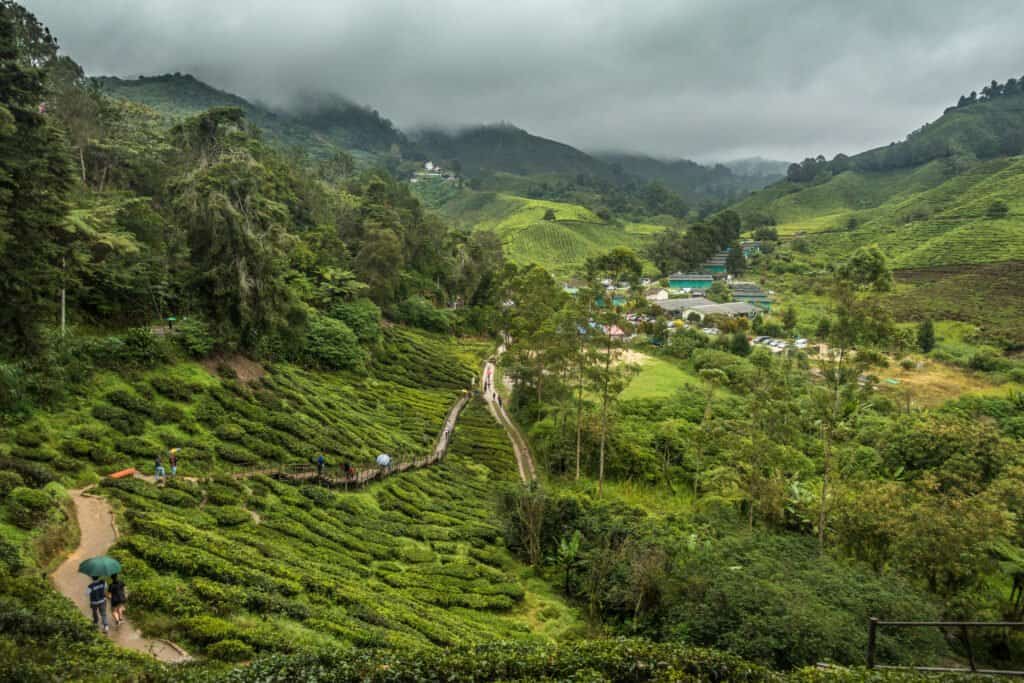
Cameron Bharat Tea Estate
4 Km South of Tanah Rata, Tanah Rata Malaysia Posted by Brandon B.Admin
Cameron Bharat Tea Estate Overview
Cameron Bharat Tea Estate sits 4 kilometers south of Tanah Rata in the Cameron Highlands, one of Malaysia's oldest and most productive tea-growing regions. The estate spans rolling hills covered in precisely manicured tea bushes, offering visitors a rare chance to see how tea is cultivated, harvested, and processed at scale in Southeast Asia. Unlike tea estates that feel purely commercial, this one welcomes walkers through the rows and into its working factory, making it one of the few places where you can move from the field directly into the production process.
Why This Place Matters
Tea production in the Cameron Highlands began in the late 19th century when British planters recognized that the elevation and climate here mirrored Assam and Darjeeling. Cameron Bharat remains one of the largest employers in the region and a living example of colonial-era agricultural infrastructure adapted for modern use. The estate's tea is sold domestically and exported, but the real draw for visitors is access to the working landscape itself, not just a museum version of it.
Quick Facts
- Distance from Tanah Rata town center: 4 kilometers south
- Best visited in the morning when light is clearest and the factory is most active
- Bring layers; elevation means temperature drops significantly from nearby towns
- The factory floor can be loud and warm; closed shoes are essential
- Tea plants are harvested year-round, but the plucking rhythm changes with seasons
Getting There
From Tanah Rata town, head south on the main road toward the estate. The journey takes roughly 15 to 20 minutes by car or taxi depending on traffic. If you're relying on public transport, ask at your accommodation in Tanah Rata about shared minivan services that run to the estate; many guesthouses can arrange pickup. The road winds upward, and you'll see tea-covered hillsides appear gradually as you climb. There's no direct bus service, so a taxi or arranged transport is your most reliable option.
The Layout and Experience
The estate is split into two main zones: the outdoor tea fields and the processing factory. Most visitors arrive at the visitor center near the entrance, where you can get oriented and buy tea products. From there, a network of walking paths lets you move through the tea bushes on your own. The paths are well-maintained but steep in places, so wear shoes with good grip.
The real centerpiece is the factory building itself. If you time your visit correctly, you'll walk through rooms where freshly picked leaves are dried, rolled, sorted by size, and packaged. The process unfolds across multiple floors, and the smell of drying tea becomes stronger as you ascend. Workers operate machinery that's been updated over decades but still follows the same basic sequence that was established over a century ago. You're allowed to watch and photograph, though the factory floor itself can be uncomfortably warm and noisy.
Depending on the season and time of day, you may encounter tea pickers working in the fields. The most intensive plucking happens during the main growing seasons, but activity continues year-round.
Main Highlights
The tea fields themselves are the primary draw. Walking among the rows gives you an intimate sense of scale; individual bushes are clipped to waist height, and the sight of hundreds of these plants rolling across hillsides is genuinely striking. The morning light here is particularly good, with mist often clinging to the lower valleys.
The factory tour is self-directed but straightforward to follow. You'll see withering troughs where leaves lose moisture, rolling machines that shape the tea, and sorting tables where workers grade by leaf size and quality. The final packaging room is the most polished part of the operation.
The estate's shop stocks tea in various grades and packaging. If you're curious about what different processing styles taste like, buying a small packet and trying it later gives the experience more resonance.
History and Background
The Cameron Highlands were developed as a hill station by British planters in the 1880s and 1890s, chosen for their elevation, rainfall, and cool nights. Tea planting followed naturally once the infrastructure was in place. Cameron Bharat emerged as one of the largest operations, and it has remained in continuous production for over a century. The estate transitioned from purely British ownership and management to Malaysian operation, but the fundamental process and much of the physical infrastructure reflect that colonial period.
The region's tea industry shaped the entire character of Tanah Rata and the surrounding towns. Without it, the highlands would likely have remained sparsely populated. Today, while tourism has grown, tea remains the economic anchor for many families in the area.
Best Time to Visit
Early morning, ideally between 8 and 10 a.m., gives you the clearest light and the most active factory floor. Afternoon visits tend to be warmer and the light becomes harsher. The fields are green and active year-round, though the rhythm of harvesting and processing shifts with the seasons. If you visit during the main growing season (typically the first half of the year), you'll see more activity in the fields. Rain is common in the afternoons, so starting early helps you avoid downpours.
Photography Tips
The rolling tea hills are photogenic from almost any angle, but the best vantage points are from the higher paths where you can see multiple hillsides at once. Shoot early when the light is soft and mist is still present in the valleys. Inside the factory, the best light comes through the windows on the withering and rolling floors. Be mindful of machinery and workers; ask before photographing people on the factory floor. The shop area and packaging room tend to be dimmer, so bring a phone or camera that handles indoor light reasonably well.
Facilities and Preparation
The estate has a visitor center with a small shop and restroom facilities. There is no formal cafe, though some versions of the estate may offer tea and light snacks; ask when you arrive. Water is available, but bring your own bottle to be safe. The walking paths have no shade beyond what the tea bushes provide, so sun protection is important. The factory can be slippery in places due to moisture from the production process, so closed shoes with good traction are non-negotiable. If you have mobility issues, stick to the lower paths and skip the factory floor, which involves stairs and narrow passages.
Combining with Nearby Attractions
Tanah Rata town is just 4 kilometers away and offers restaurants, accommodations, and other attractions like the Strawberry Farm and Mossy Forest. The BOH Tea Estate, another major tea operation, is also accessible from Tanah Rata if you want to compare operations. Many visitors spend a morning at Cameron Bharat and the afternoon exploring Tanah Rata or taking a guided walk to nearby natural sites. The Cameron Highlands Butterfly Garden and various waterfall hikes are within 20 to 30 minutes of the estate by car.
Sample Visit Plan
Arrive at Cameron Bharat by 8:30 a.m. Spend 20 to 30 minutes at the visitor center and shop to get your bearings. Walk through the tea fields for 45 minutes to an hour, moving at your own pace and pausing to absorb the landscape. By 10 a.m., head into the factory and spend 30 to 45 minutes moving through the floors and watching the production process. If you're interested in buying tea, spend another 15 to 20 minutes in the shop comparing options and asking questions. Plan to leave by 11:30 a.m. to avoid the afternoon heat and crowds. Return to Tanah Rata for lunch, and use the afternoon for other activities in the highlands.
Practical Tips
- Bring a light rain jacket even if the forecast looks clear; afternoon showers are frequent
- Wear layers; the temperature at elevation is noticeably cooler than Tanah Rata town
- Sunscreen and a hat are essential, especially on the open hillsides
- The factory floor is warm and can feel overwhelming; take breaks and step outside if needed
- If you dislike heights or steep terrain, stick to the lower and flatter walking paths
- Ask staff which sections of the factory are currently operational; some areas may be closed for maintenance
- Small bills are useful if you plan to buy tea; change-making can be slow
FAQ
Do I need a guide to visit Cameron Bharat Tea Estate? No, the paths through the fields and the factory floor are accessible on your own. Signage is basic, but the layout is logical. If you want deeper context about the tea-making process or the estate's history, ask at the visitor center about arranging a guide.
How long does a typical visit take? Plan for 2 to 3 hours if you walk the fields and tour the factory. You can do it faster if you skip either section, but the experience is richer if you see both.
Is the factory tour suitable for children? Yes, though the noise, heat, and machinery can be overwhelming for very young children. The outdoor paths are more child-friendly and less intimidating.
Can I buy tea directly from the estate? Yes, the visitor center and shop sell tea in various grades and package sizes. Prices are generally lower than you'd pay in tourist shops in Tanah Rata.
What if I'm allergic to tea dust or have respiratory sensitivities? The factory floor does have airborne dust and can trigger sensitivities. If you're concerned, skip the factory tour and enjoy the outdoor fields instead, or visit on a day when you're feeling resilient.
Opening hours
Reviews
Sign in and mark this place visited to leave a review.
No reviews yet.
Free Trip Planner
Plan your Malaysia trip with our free planner
Build a day-by-day itinerary with AI suggestions, hand-picked places, and friends. Free forever — no credit card.