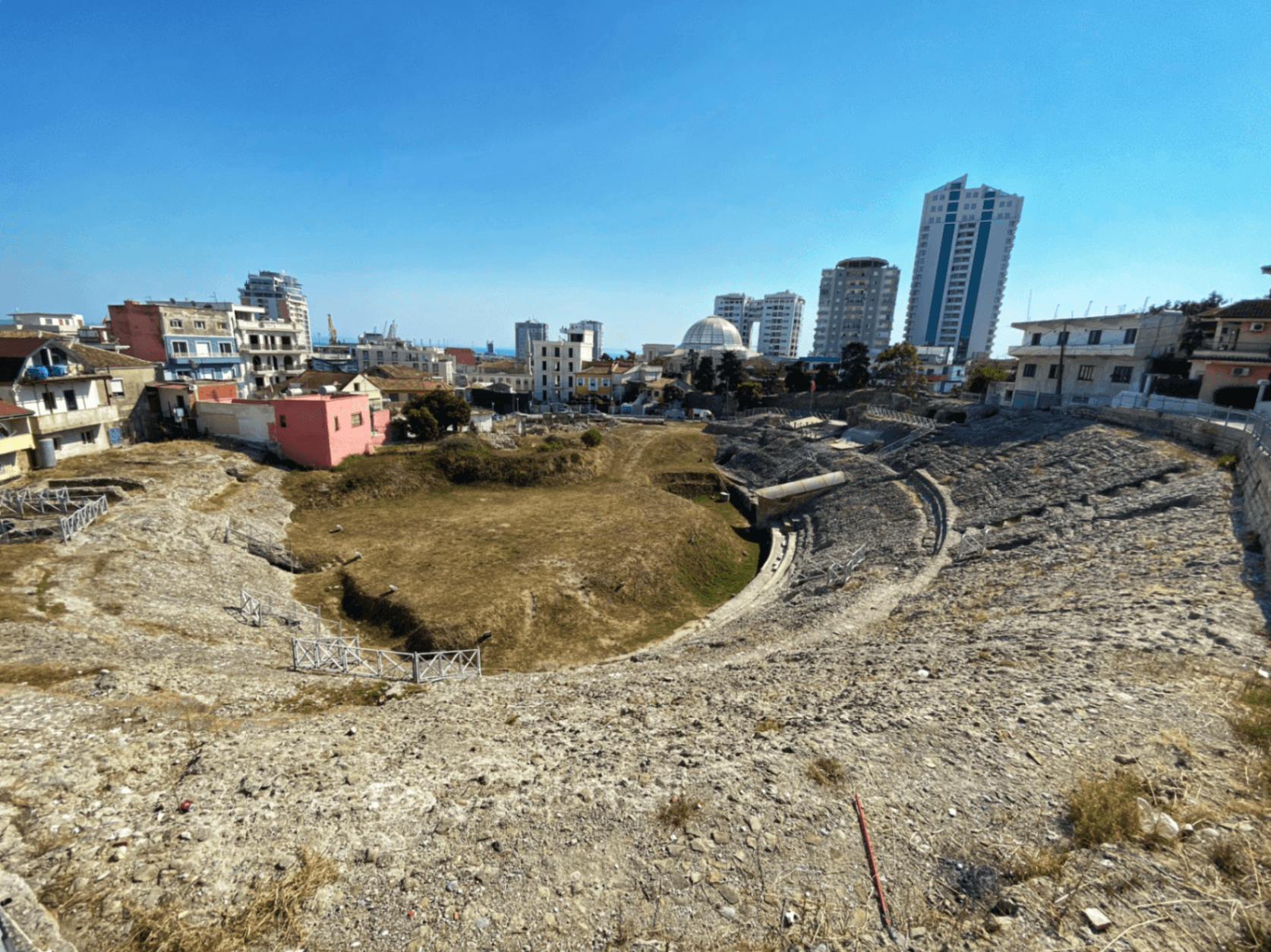
Cape of Rodon
Cape of Rodon, AlbaniaCape of Rodon: Albania's Dramatic Coastal Headland
Cape of Rodon rises from the Adriatic coast just north of Durrës, Albania, as a rugged limestone promontory that juts into the sea with stark, weathered cliffs. The cape marks a notable geographical feature along Albania's western shoreline, where the landscape shifts from sandy beaches to dramatic rocky outcrops. If you're exploring Durrës, the country's main port city and second-largest settlement, Cape of Rodon sits within easy reach and offers one of the region's most striking natural views. The cape's exposed position means it catches both sunrise and the afternoon light in ways that make the stone formations glow, especially in golden hour.
Why This Place Matters
Cape of Rodon represents the kind of undeveloped natural feature that gives Albania's coastline its raw character. Unlike the heavily built-up stretches of the southern Riviera, this headland has remained largely free of resort development, preserving its geological and ecological identity. The cape sits at an important point where the Adriatic's currents shift, making it ecologically significant for marine life. Local fishermen have worked these waters for generations, and the site carries quiet historical weight as a landmark that mariners have recognized for centuries.
Quick Facts
- Location: North of Durrës, about 10 kilometers from the city center
- Composition: Limestone cliffs and rocky formations
- Best approach: By car or taxi from Durrës
- Entry: Free, no tickets required
- Facilities: Minimal; bring water and sun protection
- Season: Spring through autumn offer the most reliable weather
Getting There
From central Durrës, the easiest route is by car or taxi heading north along the coastal road. The drive takes roughly 20 to 30 minutes depending on traffic and road conditions. If you're using local transport, minibuses that travel the Durrës-Rrashbull route pass near the area, though schedules are irregular and service is infrequent. You'll know you're close when the landscape opens up and the coastline becomes rockier. The final approach to the cape itself may require walking the last few hundred meters, depending on where you leave your vehicle.
Parking is informal. You'll find small pullouts and cleared areas near the cape where locals and visitors leave cars. In summer months, these spots fill early, so arriving in the morning or late afternoon gives you better options. The paths down to the water's edge are unmarked and can be slippery after rain, so wear sturdy shoes with good grip.
The Layout and Experience
Cape of Rodon is not a developed site with trails, signage, or infrastructure. You arrive at the top of the headland and navigate the landscape as you wish. The cape's highest points offer sweeping views across the Adriatic toward Italy on clear days. Descending toward the water requires careful footing over loose stone and rocky terrain. The cliffs themselves are unstable in places, so staying back from the very edge is prudent.
The rocks at the base of the cape are popular with local fishermen, who cast lines into deeper water. Small coves and rocky beaches lie to either side of the main headland. If you're comfortable on steep, rocky ground, you can work your way down to explore these pockets, though the going is slow and potentially hazardous. The water is deep and cold year-round, making swimming safe only if you're an experienced swimmer and the sea conditions are calm.
Main Highlights
The primary draw is the panoramic view from the cape's ridge. On clear days, you can see across the Adriatic toward the Italian coast, a perspective that underscores the sea's scale and the cape's isolation. The geological formations themselves are worth studying if you have any interest in limestone karst landscapes. The stone shows layering and erosion patterns shaped by centuries of wave action and weather.
Sunrise and sunset are the times when the cape transforms visually. The cliffs take on warm tones that shift through the hour, and the light catches the stone in ways that reveal texture and depth invisible in harsh midday sun. If you're photographing, these are the windows that yield the most striking images.
The site's quiet human presence is part of its appeal. You'll likely encounter only fishermen, the occasional local family, or fellow travelers who've ventured off the main tourist routes. This solitude is increasingly rare along Europe's developed coastlines.
History and Background
The cape itself is a product of geological forces that shaped the Adriatic basin over millions of years. The limestone composition matches the broader geology of Albania's Dinaric Alps, which run inland from the coast. As a navigational landmark, Cape of Rodon has appeared on nautical charts for centuries. Durrës, the nearby city, was founded in antiquity as a Greek colony in the 7th century BCE, and maritime activity in these waters dates back at least that far. The cape would have been a visible reference point for ancient mariners navigating the Adriatic.
During the Ottoman period, when Albania was under Ottoman rule for nearly five centuries, Durrës remained a significant port, and the cape would have been a familiar feature to traders and fishermen. The modern Albanian state, established in 1912, inherited this coast, and Cape of Rodon has remained a quiet natural feature largely untouched by 20th and 21st century development pressures that reshaped much of Albania's shoreline.
Best Time to Visit
Spring (April through May) and autumn (September through October) offer the most comfortable conditions. The air is warm, the sun is strong enough for dramatic light, but not so intense that midday exposure becomes punishing. Summer brings crowds to nearby beaches and occasional heat that can make rocky terrain uncomfortable. Winter storms churn the Adriatic, and cloud cover often obscures the views that make the cape worth visiting.
If you're interested in seeing the cape in rough seas, winter and early spring can deliver dramatic wave action against the rocks. This requires caution, as spray and surge can be violent, but the visual spectacle is considerable. Most days outside these stormy windows offer calmer conditions suitable for exploration.
Photography Tips
The cape's north-facing orientation means it doesn't receive direct sunrise, but the light that comes across the water in early morning is soft and revealing. Late afternoon light from the west is warmer and more dramatic, casting shadows that emphasize the cliff's texture. If you're there in golden hour (the hour before sunset), position yourself on the western side of the headland to catch the warm light on the stone.
Wide-angle shots that capture the cape's expanse work well, but don't neglect close detail. The weathered limestone surface, tide pools, and water-smoothed rocks offer compelling abstract compositions. A polarizing filter helps cut glare off the water and deepens the sky. The sea's color varies dramatically depending on light and weather, so revisiting the same spot at different times yields very different images.
Facilities and Preparation
Cape of Rodon has no amenities. There are no bathrooms, cafes, shops, or shade structures. Bring drinking water, especially in warmer months. Sun protection (hat, sunscreen, sunglasses) is essential, as the stone reflects heat and light intensely. If you plan to spend more than an hour, pack snacks. The nearest facilities are in Durrës, so plan accordingly.
Wear sturdy shoes with ankle support. The terrain is rocky and uneven, and a turned ankle far from help is a genuine risk. Avoid visiting alone if possible, particularly if you're descending toward the water. Mobile phone coverage tends to be good in the area, but don't count on it as your primary safety net.
Combining With Nearby Attractions
Durrës itself, just 10 kilometers south, is worth a day of exploration. The city's Venetian Castle, built in the 15th century, overlooks the harbor. The Archaeological Museum of Durrës houses artifacts from the city's long history, including mosaics and sculptures from the Roman period. The city beach extends along much of Durrës's waterfront and offers a very different experience from the cape's rocky terrain.
If you're driving north along the coast, the town of Rrashbull lies beyond the cape and is known for its pebble beaches and seafood restaurants. The coastal road itself is scenic, winding through small settlements and offering frequent views of the Adriatic. Spending a day moving between Cape of Rodon, Durrës, and the beaches and villages to the north gives a fuller picture of Albania's northern coast.
Sample Visit Plan
Arrive at Cape of Rodon in late afternoon, around 4 or 5 PM, depending on the season. Spend an hour exploring the headland, working your way down to the rocks if conditions feel safe. Position yourself for sunset, which in summer occurs around 8 PM and in winter around 5 PM. As light fades, the view across the Adriatic becomes increasingly striking. Allow your eyes to adjust to the changing colors and the way the stone responds to the shifting angle of the sun.
If you're staying in Durrës, drive back to the city for dinner. Several restaurants along the waterfront serve fresh fish and traditional Albanian dishes. If you're combining the cape with other coastal exploration, consider visiting Durrës's archaeological museum in the morning, then driving to the cape in late afternoon.
Practical Tips
- Visit in late afternoon or early morning to avoid the harsh midday sun and to catch better light for photography
- Bring at least one liter of water per person, even if you plan a short visit
- Wear closed-toe hiking shoes or sturdy sneakers, not sandals
- Avoid the cape in heavy rain or immediately after, when rocks are slick and dangerous
- If you're driving, fill your gas tank in Durrës before heading north
- Check local weather forecasts; sudden storms can blow in quickly along the coast
- Bring a light jacket or windbreaker; the wind at the cape can be surprisingly strong and cooling
FAQ
Can you swim at Cape of Rodon? The water is deep and cold year-round. Swimming is possible in calm conditions if you're a strong swimmer, but it's not a beach for casual swimming. The rocks make entry and exit difficult, and there are no lifeguards or rescue services.
Is there a specific trail or marked path? No. The cape is undeveloped, with no official trails, signage, or maintained paths. You navigate the landscape on your own, which requires good judgment about where it's safe to walk.
How long should I plan to spend there? Most visitors spend 1 to 2 hours. This allows time to explore the headland, descend toward the water if you choose, and experience the light at different angles. Photographers might stay longer for multiple light conditions.
Is Cape of Rodon crowded? It's rarely crowded. You're much more likely to encounter local fishermen than other tourists. Even in peak summer, the cape remains relatively quiet compared to nearby beaches.
What's the best season to visit? Spring and autumn offer the most comfortable weather and the clearest views. Summer is warm but can be hazy. Winter storms create dramatic but dangerous conditions.
Reviews
Sign in and mark this place visited to leave a review.
No reviews yet.
Free Trip Planner
Plan your Durrës trip with our free planner
Build a day-by-day itinerary with AI suggestions, hand-picked places, and friends. Free forever — no credit card.