
 Posted by Brandon B.Admin
Inside Castello Sforzesco, Milan's Most Commanding Monument
Castello Sforzesco sits at the northern edge of Milan's historic center, a few minutes' walk from Piazza del Duomo along Via Dante, and it dominates everything around it. The sheer scale of the place stops people mid-stride. You round a corner, and suddenly there it is: a vast terracotta fortress with a cylindrical tower rising above the main gate, framed on either side by walls that stretch further than you expect. For a city that packages itself around fashion and design, this is the counterargument. Milan has been doing monumental for a very long time.
The castello is not just a fortress. It houses a cluster of civic museums that together hold one of the most quietly remarkable collections in northern Italy, including Michelangelo's final sculpture. Most visitors come for the exterior and leave having seen far more than they planned.
Quick Facts
- Located at Piazza Castello, adjacent to the Parco Sempione
- The main tower, Torre del Filarete, was reconstructed in 1905 after the original collapsed in the 16th century
- The castle complex covers roughly 185,000 square meters
- Home to multiple civic museums, including the Museum of Ancient Art, the Egyptian Museum, and the Furniture and Wooden Sculpture collection
- Michelangelo's Rondanini Pietà has been displayed here since the 1950s
- The courtyard (Piazza d'Armi) is free to enter during daylight hours
- Nearest metro: Cairoli (Line 1) or Lanza (Line 2), both about a 5-minute walk
History and Background
The site has held a fortification since the 14th century, when the Visconti family first built a defensive structure here. The castello as it largely stands today dates from the mid-1400s, when Francesco Sforza, the first Sforza Duke of Milan, began rebuilding and expanding it into a proper ducal residence. The Sforza court at its height was one of the most sophisticated in Renaissance Italy. Leonardo da Vinci worked here for nearly two decades, designing stage machinery, painting rooms, and advising on engineering projects. Bramante also contributed to the complex. The place was, for a stretch of the late 15th century, genuinely at the center of Italian artistic life.
Then came the French invasions, Spanish rule, and a long period of military use that left the interior in poor condition. Napoleon used the courtyards as a parade ground. The 19th century brought serious decay, and there was real debate about whether to demolish the whole thing. Instead, the city of Milan commissioned architect Luca Beltrami to restore it, a project that ran from the 1880s into the early 1900s. Beltrami's work was not without controversy among architectural historians, since he made interpretive choices that went beyond pure restoration. But the result is what you see today: a legible, functioning monument that actually holds its collections rather than crumbling around them.
The Layout and Experience
You enter through the Torre del Filarete into the Piazza d'Armi, a massive open courtyard that once served as a military drilling ground. It gives you a sense of the castle's scale before you've seen anything else. From there, you can access the inner Corte Ducale, the more refined residential section, and the Rocchetta, the innermost defensive zone that served as a last refuge in times of siege.
The museums are spread across both the ground floor and the upper levels of the Corte Ducale and Rocchetta. Navigation can feel slightly labyrinthine on a first visit, and the signage is better in some sections than others. Picking up a floor plan at the ticket desk is genuinely useful here, not just a suggestion.
The Sala delle Asse, a room in the northeast tower, contains a ceiling painted with an interlocking design of trees and branches attributed to Leonardo. It was heavily restored in the early 20th century and has been under further study and conservation work in recent years. Whether the room is accessible on your visit depends on the current state of that work, so it's worth checking before you make it the centerpiece of your trip.
Main Highlights
The Rondanini Pietà
This is the reason many people come, and it earns the journey. Michelangelo was working on this sculpture in the last days of his life, and it shows a completely different sensibility from his earlier work: elongated, almost abstract figures, the stone barely separated from the rough block in places. It was moved into a dedicated space in the former hospital wing in 2015, where the lighting and the room's proportions give you genuine space to stand back and look. Most days you can get close enough to see the chisel marks. It's one of those objects that resists photography and rewards standing quietly in front of it for longer than feels socially normal.
Museum of Ancient Art
This is one of the stronger permanent collections in Milan and tends to be overlooked because it shares a building with something as famous as the Pietà. Roman sculpture, medieval armor, decorative arts from the Lombard period, and a selection of early Renaissance paintings fill rooms that still carry traces of their ducal decoration. The armor collection in particular is substantial and well-displayed.
Parco Sempione
The castle's back gate opens directly into Parco Sempione, Milan's largest central park. It's not technically part of the castello, but treating the two as one visit makes obvious sense. The park was laid out in the English landscape style in the late 19th century on land that was formerly used for castle exercises and hunting. On a weekday morning it's quiet and genuinely pleasant. The Arco della Pace is about a 15-minute walk through the park if you want to continue northwest.
Tickets and Entry
The courtyards and grounds are free to walk through, and you can get a strong sense of the exterior architecture without buying anything. The museums require a ticket, and a combined ticket covers most of the civic collections within the complex. There are reduced rates for EU residents under a certain age, and free entry on the first Sunday of each month, which does mean larger crowds. Timed entry is not typically required, but weekend afternoons in summer can get congested. Arriving before noon on weekdays is usually more comfortable.
Best Time to Visit
Spring and early autumn are the most pleasant seasons to visit, both for the outdoor spaces and for the lighter tourist pressure compared to July and August. The courtyard in particular is worth lingering in when the weather cooperates. If you want the museums to yourself, a Tuesday or Wednesday morning in March or October is about as good as it gets in Milan.
Winter visits have their own appeal. The castle looks striking in low light, the museums are uncrowded, and you can move through the galleries at your own pace without the ambient pressure of queues behind you.
Photography Tips
The exterior is best photographed in the hour before sunset, when the terracotta walls pick up warm light and the tower casts long shadows across the moat. The main facade shot from the Foro Buonaparte side gives you the classic view with room to include the full tower. Inside the museums, photography is generally permitted without flash, but check at the entrance since rules can vary by room and have changed in the past for the Rondanini Pietà space specifically.
Combining with Nearby Attractions
Via Dante, the pedestrian street connecting the castello to the Duomo, is a natural corridor for a half-day itinerary. It takes about 10 minutes to walk end to end. The Pinacoteca di Brera is about 15 minutes on foot from the castle, northeast through the Brera neighborhood, and makes a logical pairing for anyone focused on art. If you're interested in Leonardo specifically, the Santa Maria delle Grazie church housing The Last Supper is about 15 minutes southwest by foot, though that requires a separate advance booking.
Practical Tips
- Wear comfortable shoes. The castle involves a lot of stone floors, stairs, and courtyard walking.
- The museums can feel chilly even in summer due to thick stone walls. A light layer is useful.
- The first Sunday of each month offers free museum entry but draws noticeably larger crowds.
- Audio guides are available for rent at the ticket desk and add real context to the Museum of Ancient Art.
- The castle café is in the courtyard area and is a reasonable spot for a break mid-visit.
- If the Sala delle Asse is on your list, check the official Castello Sforzesco website before your visit to confirm current access.
- There is no dedicated parking within the complex. Public transit or walking from the city center is the practical approach for most visitors.
FAQ
How long should I plan for a visit to Castello Sforzesco?
The courtyards alone can take 30 to 45 minutes if you take your time. Add two to three hours if you plan to visit the museums properly, or longer if the Rondanini Pietà and the art collections are your main interest.
Do I need to book tickets in advance?
For the castle museums, advance booking is not usually required outside of peak summer weekends. The Last Supper at Santa Maria delle Grazie, if you plan to combine visits, absolutely requires advance booking months ahead.
Is Castello Sforzesco accessible for visitors with mobility needs?
The main courtyards are accessible, though some areas of the older sections involve uneven stone surfaces and stairs. The Rondanini Pietà's dedicated space in the former hospital wing was designed with accessibility in mind when it was renovated in 2015.
Is the castle worth visiting if I only have one day in Milan?
Yes, particularly if you combine it with a walk along Via Dante toward the Duomo. Even a 90-minute visit covering the exterior, the Piazza d'Armi, and the Rondanini Pietà gives you a strong impression of the place without overwhelming your day.
Opening hours
Reviews
Sign in and mark this place visited to leave a review.
No reviews yet.
Free Trip Planner
Plan your Italy trip with our free planner
Build a day-by-day itinerary with AI suggestions, hand-picked places, and friends. Free forever — no credit card.
Things to see near Castello Sforzesco
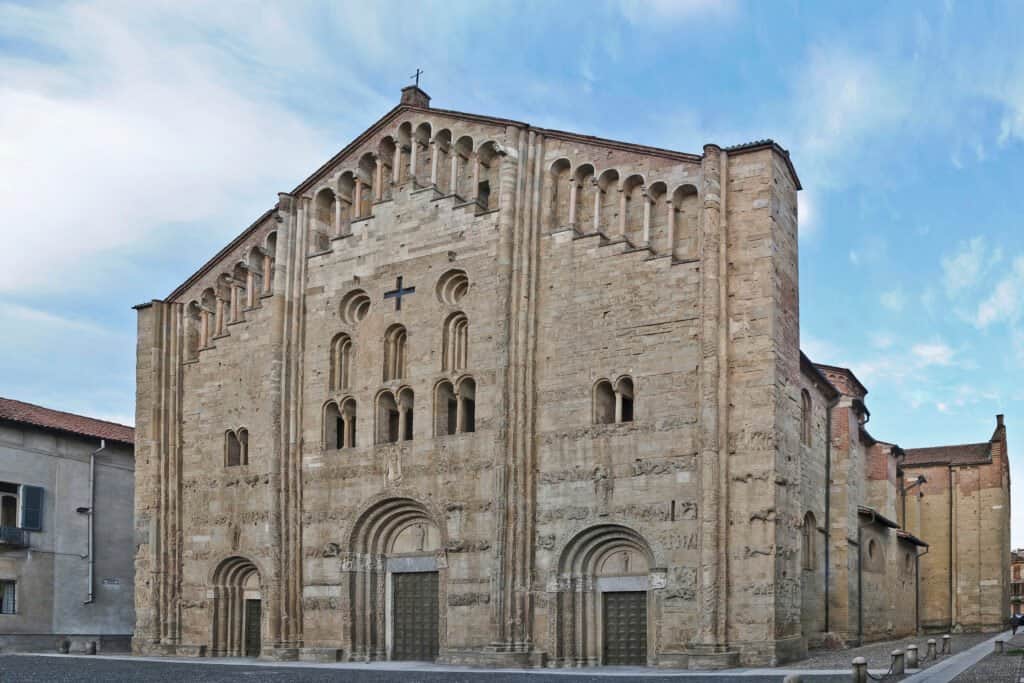
San Michele Maggiore Church
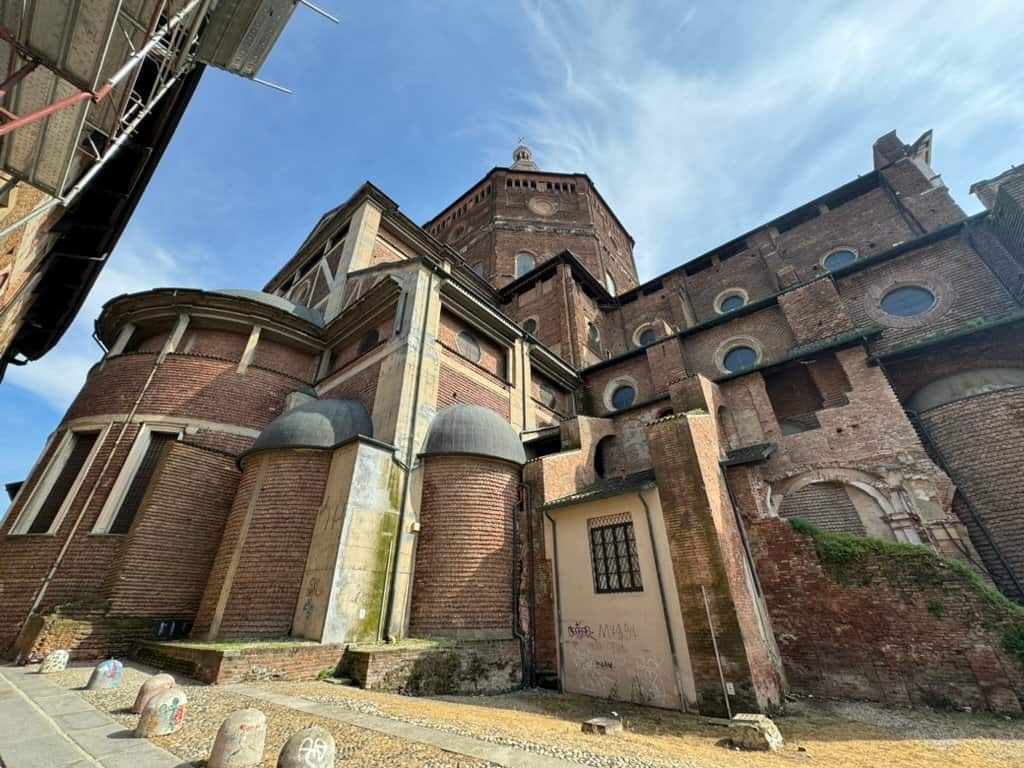
Cathedral of Pavia
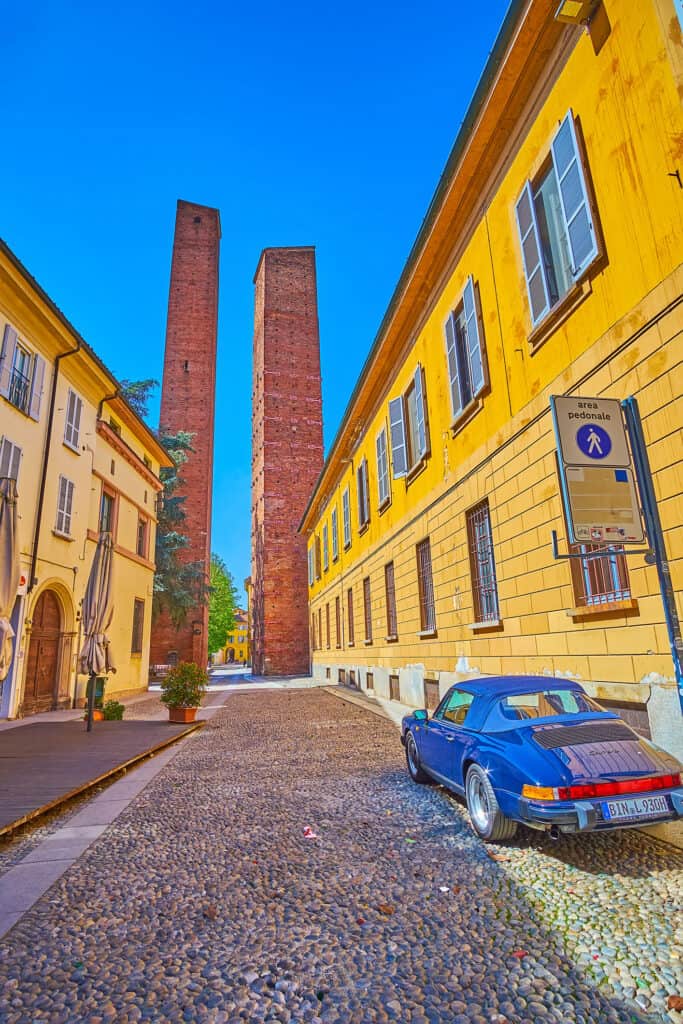
Towers of Pavia (Torri di Pavia)
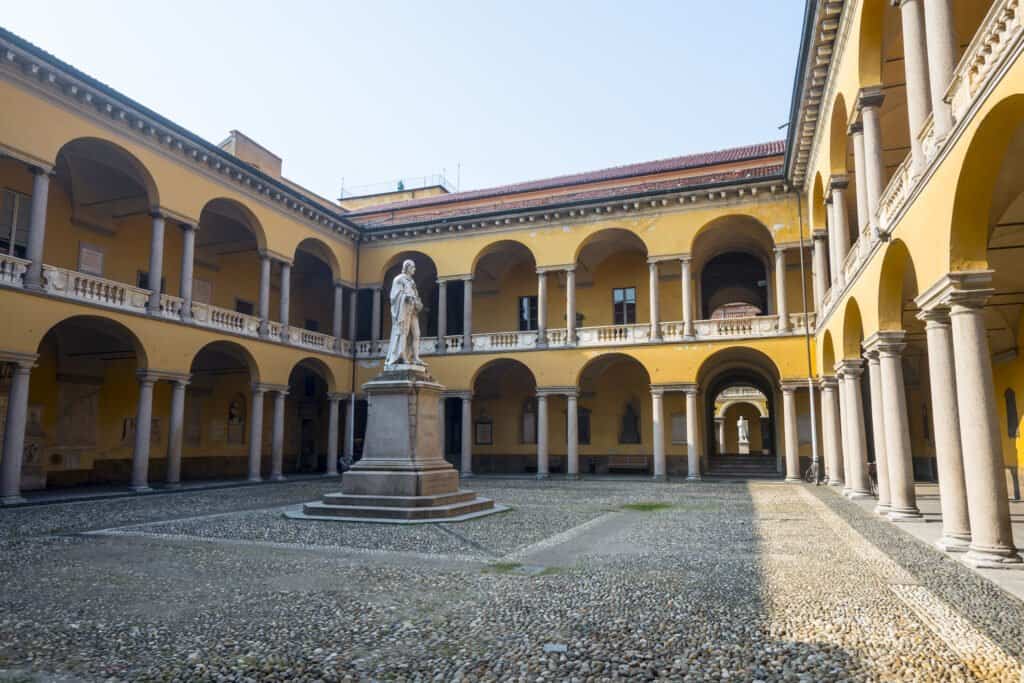
The University of Pavia
Places to eat or drink near Castello Sforzesco

Pasticceria Vigoni

Pizza e Mozzarella
![[LA] Gelateria della Musica](https://lh3.googleusercontent.com/grass-cs/AABkmLezQ1aahZ3Sj4IKvguuB34dH27jVTId85hNXzYEv9WG7GfBYHmI1cwHUPQVisLeNLAKCNmd1glh0QlkPrqj2oRaVJ7D4jkdmWOq7BbYLzAtEceYr8t1MxXkfmk96U5ezHE2vYUBkvyeVynx=s4800-w1600-h1600)
[LA] Gelateria della Musica

Officina Milano
More places in Milan

miscusi Milano Centrale

Brera District
Reminisce The Good Ol’ Days At La Scala
