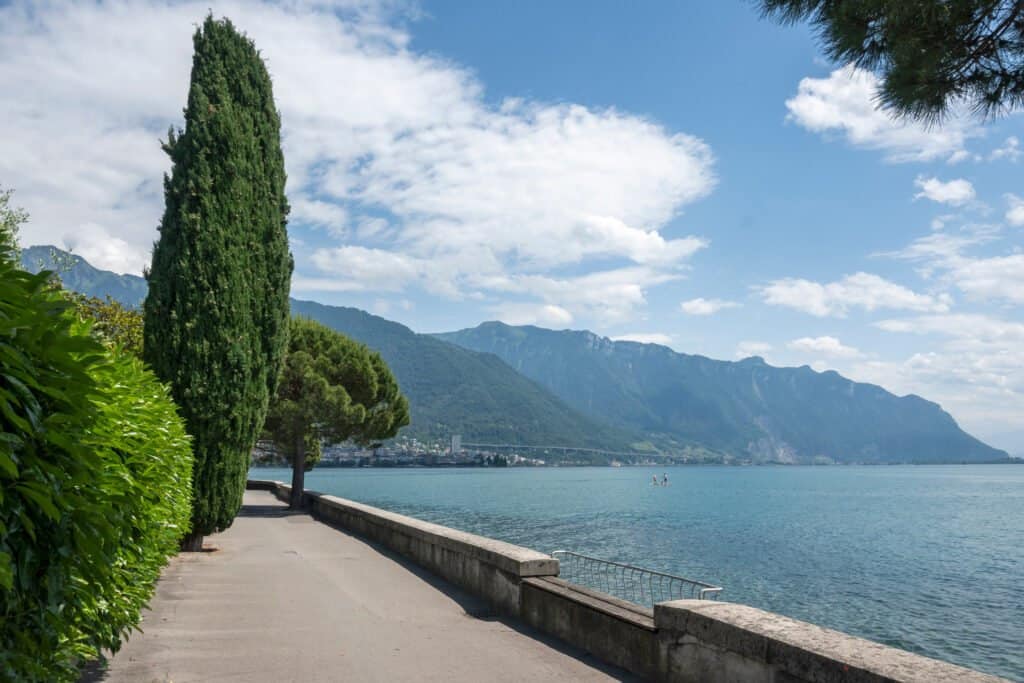
Château de Gruyères
Rue du Château 8, 1663 Gruyères, SwitzerlandOverview
You climb the narrow, cobblestone Rue du Château and the castle emerges above the roofline, its towers catching the afternoon light. Château de Gruyères dominates the medieval village that spirals below it, a 12th-century stronghold that has watched over the Fribourg region for nearly nine centuries. The fortress sits on a rocky outcrop with views across rolling dairy farmland to the Alpine foothills, and stepping through its gates means stepping into a space that has hosted nobility, wars, and restoration movements without losing its essential character.
This is not a reconstructed fantasy. The castle breathes authenticity. Stone walls are thick and unadorned in places, ornate and Gothic in others. Courtyards retain their working scale. Rooms contain period furnishings, weapons, tapestries, and the kind of objects that reveal how medieval and early modern aristocrats actually lived, not how filmmakers imagine they did.
Why this place matters
Château de Gruyères stands as one of the most intact medieval castles in the Fribourg region, representative of how Alpine fortified seats evolved over five centuries. The castle passed through the hands of powerful regional families, most notably the Counts of Gruyères, whose lineage shaped the political landscape of western Switzerland from the 12th century onward. What makes this particular site significant is that it was never completely dismantled or radically rebuilt. Subsequent owners preserved rather than erased its history, so you can read the castle's biography in its architecture.
The castle also anchors the village of Gruyères itself, which retains one of the most photographed medieval streetscapes in Switzerland. The two are inseparable. You cannot understand one without the other.
Quick facts
- Construction began in the 12th century; major additions and modifications continued through the 18th century
- General admission includes access to the courtyard, main rooms, and towers
- Guided tours are available in French and German; English-language audio guides can be arranged in advance
- The castle sits at approximately 820 meters elevation on a hilltop above the village center
- Visiting takes most visitors between 1.5 and 2.5 hours for a thorough look
Getting there
Gruyères sits in the canton of Fribourg, roughly 30 kilometers south of the city of Fribourg itself. If you are traveling by train, the Gruyères railway station is the closest major transport hub. From there, the village lies about 15 minutes walk uphill, or you can take a bus or taxi for the steep final approach. Parking is available in the lower village near the main entrance to the old town. From the parking area, walking uphill through the village streets to the castle entrance takes about 10 to 15 minutes depending on your pace and how many shop windows distract you.
The path is steep and uneven in places. Wearing sturdy shoes is practical, not optional.
The layout and experience
The castle layout follows a logic shaped by medieval defensive needs and aristocratic comfort. You enter through a narrow gatehouse designed to control who and what came inside. The main courtyard opens before you, ringed by residential and administrative buildings. From here, separate paths lead to the tower rooms, the chapel, the great hall, and the residential quarters.
Most visitors begin by exploring the courtyard itself, which gives you an immediate sense of the castle's scale and the practical organization of medieval life. The well at the center supplied water. Outbuildings once housed stables, kitchens, and storage. The towers rise at strategic points, offering views and defensive positions.
The interior rooms are modest by the standards of grand European palaces, but that authenticity is part of their appeal. Fireplaces, wooden beams, stone walls, and narrow windows create spaces that feel lived-in rather than staged. Furniture, weapons, and household objects are displayed in context. The chapel contains original stonework and religious artifacts. The main residential rooms show how nobility organized domestic space in the medieval and Renaissance periods.
Spiral staircases lead up the towers. They are tight, uneven, and unforgiving if you have mobility challenges. The views from the top are substantial, especially on clear days when you can see across the patchwork farmland to distant mountains.
Main highlights
The Courtyard is the emotional center of the castle. Standing here, you can see the entire structure of the fortress at once. The proportions feel right, neither overwhelming nor cramped.
The Tower Rooms contain the bulk of the castle's collections. Suits of armor, crossbows, and other weapons line the walls. Furniture from different centuries shows how tastes and living standards changed. Tapestries and religious objects speak to the spiritual and cultural concerns of the residents. The rooms are small enough that you can observe details without feeling like you are in a museum; instead it feels like you have stepped into someone's quarters and they have stepped out for a moment.
The Chapel preserves original Gothic stone vaulting and contains an altar and religious furnishings from the 15th and 16th centuries. The space has genuine spiritual quietness despite its tourist function.
The Views from the upper towers encompass the entire village below and the Fribourg countryside spreading outward. On clear mornings, the light is particularly strong.
History and background
The castle's history mirrors the political shifts of the region. It was built in the 12th century by the Counts of Gruyères, a powerful family that controlled trade routes and agricultural wealth in the area. The castle served as their main seat and symbol of authority for centuries.
In 1554, financial pressures and changing political circumstances forced the Count to sell the castle to the canton of Fribourg. From that point forward it served various functions: military barracks, administrative headquarters, and eventually a symbol of historical preservation. In the 19th century, romantic-era interest in medieval architecture led to restoration efforts that stabilized the structure without erasing its history.
The castle changed hands several more times through the 20th century before becoming the publicly accessible site it is today. Each owner left traces: architectural modifications, new furnishings, restoration choices. That layering of ownership is part of what makes the castle legible as a real place rather than a museum recreation.
Tickets and entry
General admission provides access to all major rooms, courtyards, and towers. Tickets are purchased at the entrance. Guided tours operate on a scheduled basis and are typically available in French and German. If you require an English-language tour or audio guide, contact the castle directly in advance to arrange this.
Children's tickets are available at a reduced rate. Family packages may apply depending on the season.
Best time to visit
Summer months (June through September) bring the largest crowds, particularly on weekends. If you prefer fewer people, visit on weekday mornings between late April and early June, or in September and early October when the weather remains pleasant but school holidays are over.
Winter months are quieter but the castle closes during certain periods for maintenance. Check opening hours before planning a winter visit.
Weather matters more here than at lower elevations. Clear days offer panoramic views from the towers. Overcast or rainy days make the interior exploration still worthwhile but limit the appeal of the upper tower rooms.
Photography tips
The castle's exterior is photogenic from multiple angles around the village. The best exterior shots come from the lower village streets looking up at the fortress against the sky, particularly in late afternoon light. The narrow cobblestone streets leading upward, framed by the castle above, are highly photographed for good reason.
Interior photography is permitted in most rooms. Stone walls and narrow windows create dramatic light and shadow. The courtyard at midday offers strong compositional opportunities. The tower views are wide and expansive but require clear weather to be truly striking.
Facilities and preparation
The castle contains basic facilities including a small café in the courtyard serving coffee, tea, and light snacks. Restroom facilities are available. The castle is not equipped with elevators or wheelchair accessibility to the upper tower rooms due to the spiral staircases and medieval layout.
Bring water, especially if visiting on a warm day. The cobblestone streets and castle stairs make sturdy footwear essential. Allow extra time if you move slowly or have mobility concerns, as the approach involves significant elevation gain.
Combining with nearby attractions
The village of Gruyères itself warrants at least an hour of exploration separate from the castle. The main street contains shops, cafés, and galleries in medieval buildings. Several restaurants serve traditional Fribourg cuisine, particularly fondue and raclette made with Gruyère cheese.
The Cheese Factory (Fromagerie d'Alpage) operates in the village and offers tours and tastings. The alpine dairy landscape surrounding Gruyères is stunning for walks if you have time.
Other castles exist in the region, though Gruyères is the most accessible and best preserved. The city of Fribourg itself, about 30 kilometers north, contains a cathedral and medieval old town worth a full day if you are exploring the broader region.
Sample visit plan
A typical visit unfolds like this: Arrive by mid-morning to avoid peak crowds. Park in the lower village and walk uphill through the main street to reach the castle entrance. Budget 15 minutes for the walk. Enter the castle and spend 20 to 30 minutes in the courtyard and ground-level rooms to orient yourself. Climb to the tower rooms and spend another 30 to 45 minutes exploring the collections and the tower views. The chapel and residential rooms add another 20 to 30 minutes. Return to the courtyard for a final overview, then descend back through the village. Stop for lunch at one of the village restaurants or cafés. If you have remaining time, explore the village shops or visit the cheese factory.
A thorough visit including the village takes 3 to 4 hours total.
Practical tips
- Arrive before 10 a.m. or after 3 p.m. to avoid the peak tour group crush, particularly in summer
- Wear comfortable walking shoes with good grip; the cobblestones and stone stairs are unforgiving when damp
- The castle is quite cold inside even in summer due to thick stone walls and small windows; bring a light layer
- If you are sensitive to crowds or photography, avoid weekends in July and August
- The village has limited parking; arrive early in the day or use public transport
- English-language information is less abundant than French or German; download a translation app if helpful
- The castle courtyard café offers the only food and drink inside the fortress; bring snacks if you want to picnic
FAQ
How long does a typical visit take? Most visitors spend 1.5 to 2.5 hours exploring the castle itself. If you also explore the village of Gruyères, plan for 3 to 4 hours total.
Is the castle accessible for people with mobility challenges? The courtyard and ground-floor rooms are accessible, but the tower rooms require climbing narrow spiral staircases with no elevator alternative. The approach to the castle from the village involves steep cobblestone streets.
Can I bring children? Yes. The castle is popular with families. Children often find the towers and weapons displays engaging. The narrow staircases and uneven floors require supervision for young children.
What is the best time of day to visit? Early morning (before 10 a.m.) or late afternoon (after 3 p.m.) offer the fewest crowds. Morning light is generally preferable for photography.
Can I visit just the village without entering the castle? Yes. The village itself is free to explore and contains shops, restaurants, and galleries. The castle is a separate ticketed attraction.
Opening hours
Reviews
Sign in and mark this place visited to leave a review.
No reviews yet.
Free Trip Planner
Plan your Gruyères trip with our free planner
Build a day-by-day itinerary with AI suggestions, hand-picked places, and friends. Free forever — no credit card.
Related reading
Things to see near Château de Gruyères

Glacier 3000
Chillon Castle
Statue de Freddie Mercury