
Chiesa di San Maurizio al Monastero Maggiore
Corso Magenta 15, 20123 Milan Italy Posted by Brandon B.Admin
Milan's Best-Kept Secret on Corso Magenta
Chiesa di San Maurizio al Monastero Maggiore sits on Corso Magenta in the heart of Milan's historic center, and yet most first-time visitors walk straight past it. From the outside it's a relatively plain Renaissance facade. Step through the door and you're standing inside what many art historians consider the most beautifully frescoed church in all of Lombardy. That contrast never gets old.
Built as part of a Benedictine convent, the church dates to the early 16th century. The frescoes covering almost every surface were painted by Bernardino Luini and his workshop, with some panels attributed to his sons. If you know anything about Leonardo da Vinci's Milanese circle, Luini is the name that comes up most often after Leonardo himself. Seeing his work here, floor to ceiling, room after room, is one of those experiences that genuinely reframes what you thought you knew about the Italian Renaissance.
Why Chiesa di San Maurizio al Monastero Maggiore Matters
Milan gets plenty of attention for the Last Supper, the Duomo, and the Pinacoteca di Brera. This church tends to be overlooked, which is genuinely strange given what's inside. The frescoes begin in the public nave and continue into the nuns' choir, a second enclosed space that was historically separated from the congregation by a dividing wall. That wall still stands, and passing through it feels like crossing into a different world entirely.
Luini painted the public hall between roughly 1522 and 1529. The color palette is soft, almost pastel in places, and the compositions have a calm, narrative quality that draws you in rather than overwhelming you. Look up, look sideways, look at the pilasters and lunettes. There is barely a blank surface anywhere.
Quick Facts
- Address: Corso Magenta 15, Milan
- Neighborhood: Magenta, close to the Castello Sforzesco and Santa Maria delle Grazie
- Church dates to the early 16th century, with frescoes painted primarily between 1522 and 1529
- Free entry on most visiting days
- Managed by the Comune di Milano
- Two distinct spaces: the public nave and the enclosed nuns' choir
- Photography generally permitted without flash
- Typically closed on Mondays
Getting There
The church is about a 10-minute walk from Cadorna station, which is served by Metro lines M1 and M2 as well as the Malpensa Express train. From the Duomo, the walk along Via Torino and then west toward Corso Magenta takes around 20 minutes on foot, or you can take the M1 line one stop from Cairoli to Cadorna and walk from there.
Trams run along Corso Magenta itself, so if you're coming from further west or from the Navigli area, that's often the most direct option. The church entrance is at number 15, on the north side of the street.
The Layout and Experience
The building is divided into two main sections, and understanding that division before you arrive makes the visit much richer. The front hall, the public nave, is where the congregation would have attended Mass. This is the space you enter first, and it's already extraordinary. The walls are covered with scenes from the life of Christ and various saints, painted with the kind of detail that rewards slow looking.
The dividing wall separates the public nave from the nuns' choir, which was the private devotional space of the Benedictine community. This second room tends to feel quieter and more intimate. The frescoes here are, if anything, even more concentrated. The abbess who commissioned much of this work, Alessandra Bentivoglio, is believed to have had considerable influence over the iconographic program. Her family's heraldic imagery appears in a few of the panels if you know to look for it.
The church also connects to the Monastero Maggiore complex, parts of which are now occupied by the Civic Archaeological Museum of Milan, just next door. That's worth noting if you're planning your time, since the two sites share a wall and a history.
History and Background
The convent of Monastero Maggiore was one of the most powerful and prestigious religious institutions in medieval and Renaissance Milan. Founded much earlier than the current building, the site has been occupied continuously since at least the early medieval period. Roman ruins, including towers from the ancient city walls, are incorporated into the museum complex next door.
The current church was constructed starting around 1503. The Benedictine nuns who lived here came from some of Milan's most prominent noble families, which explains the extraordinary investment in the decoration. Luini, already closely connected to Leonardo's circle, was a natural choice. He had the technical skill, the local reputation, and an ability to render figures with warmth and psychological presence that suited the devotional purpose of the space.
Napoleon's suppression of religious orders in the late 18th and early 19th centuries brought an end to the convent's life as a functioning monastery. The building passed through various uses before coming under civic protection.
Tickets and Entry
Entry to the church is generally free, which makes it one of the more remarkable free cultural experiences in Milan. Hours can vary by season and for occasional special events, so checking the Comune di Milano's official site before you go is worth a few minutes of your time. The church is typically closed on Mondays, and opening times in the afternoon can be shorter than morning hours depending on the time of year.
Best Time to Visit
Midweek mornings are the quietest. On weekends, especially in spring and early autumn when Milan draws the most visitors, the church can fill up quickly and the nuns' choir in particular feels crowded with more than a dozen people inside at once.
Natural light plays a significant role in how the frescoes read, so a bright morning visit tends to be more visually rewarding than arriving on an overcast afternoon. That said, the colors are vivid enough that even flat light doesn't diminish them dramatically.
Photography Tips
Flash photography is not permitted, and honestly the frescoes are better captured without it anyway. Flash flattens the color and creates harsh reflections on the painted surfaces. A wide-angle lens or a phone with a decent low-light mode will serve you better here. The nuns' choir is small, so getting a full wall in frame requires standing in the far corner and accepting some distortion.
The most photographed single element is probably the large painted altarpiece wall at the far end of the nuns' choir, where Luini's figures are largest and most immediately legible. But the lunettes along the side walls of the public nave are where some of the most detailed narrative scenes live, and they're often overlooked by photographers focused on the obvious focal points.
Combining with Nearby Attractions
The Civic Archaeological Museum of Milan shares the former convent complex and is accessible from just outside the church. It houses Roman and early medieval finds from the city, including a significant section of Milan's ancient walls. Admission is separate but the two visits complement each other well, and together they take up a good half-day.
Santa Maria delle Grazie, where you'll find Leonardo's Last Supper, is about an 8-minute walk west along Corso Magenta. If you've booked a Last Supper ticket, pairing it with a visit to San Maurizio makes obvious sense. The two sites between them give you a concentrated picture of Milanese Renaissance art that no single museum can quite match.
The Castello Sforzesco is roughly 10 minutes on foot to the northeast, and the Pinacoteca Ambrosiana is about 15 minutes southeast on foot. The Magenta neighborhood also has good cafes and a few reliable lunch spots along and just off Corso Magenta itself, so building a half-day loop around this part of the city is easy to do without much planning.
Practical Tips
- Verify opening hours before visiting, as they change seasonally and the church occasionally closes for events or restoration work
- The church is typically closed on Mondays
- Dress modestly: shoulders and knees should be covered, as in most Italian churches
- Bring a small pair of binoculars if you have them; the upper lunettes and ceiling details reward a closer look
- Arrive early in the morning or just after opening to avoid school groups, which visit frequently
- The space is not large, so plan for 30 to 45 minutes if you're looking carefully rather than passing through
- Audio guides or printed information are not always available on-site, so reading about Luini's work beforehand adds a lot to the visit
FAQ
Is Chiesa di San Maurizio al Monastero Maggiore really free?
Yes, entry is generally free. It's one of the genuinely surprising things about it given the quality of what's inside. Occasional special exhibitions may have a separate charge, but the permanent frescoes are accessible without a ticket on normal visiting days.
How long should I plan to spend there?
Most visitors who are paying attention spend between 30 and 45 minutes. If you're an art history enthusiast or want to photograph carefully, an hour is more realistic. It's not a large building, but the density of detail means it rewards a slower pace than most people give it.
Do I need to book in advance?
Generally no, unlike the Last Supper nearby which requires advance booking. San Maurizio operates on a first-come basis. That said, if you're visiting during a major event like Milan Design Week or Fashion Week, arriving early in the day is sensible since the whole city gets busier.
Is it accessible for visitors with mobility limitations?
The main floor of the church is largely flat and accessible. Contact the Comune di Milano directly if you have specific accessibility requirements, as conditions in historic buildings can vary.
What's the connection to Leonardo da Vinci?
Bernardino Luini, who painted the frescoes, was part of Leonardo's extended Milanese circle and was significantly influenced by his style and technique. Leonardo himself is not believed to have worked here, but the visual connection is clear enough that the church is often described as showing what Leonardo's influence looked like in practice across an entire building.
Reviews
Sign in and mark this place visited to leave a review.
No reviews yet.
Free Trip Planner
Plan your Italy trip with our free planner
Build a day-by-day itinerary with AI suggestions, hand-picked places, and friends. Free forever — no credit card.
Things to see near Chiesa di San Maurizio al Monastero Maggiore
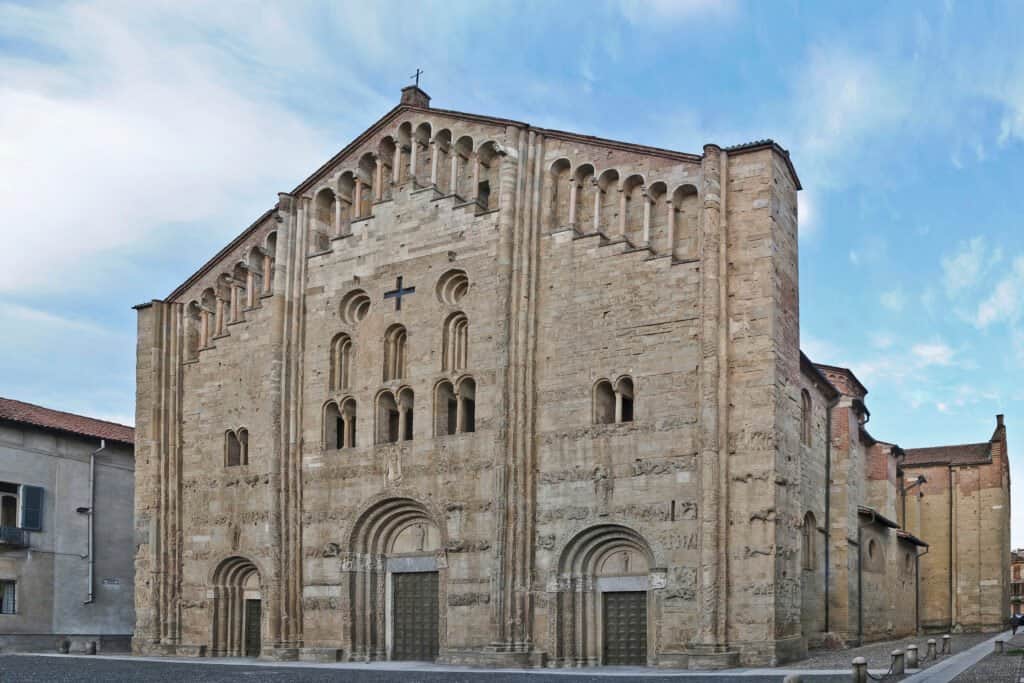
San Michele Maggiore Church
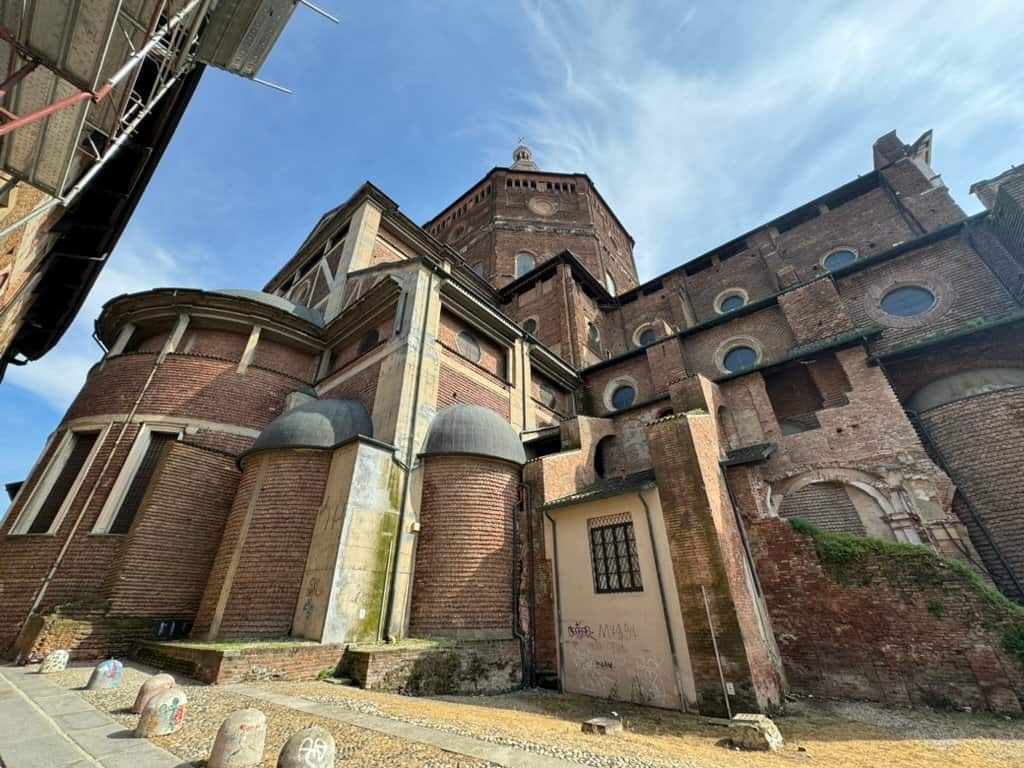
Cathedral of Pavia
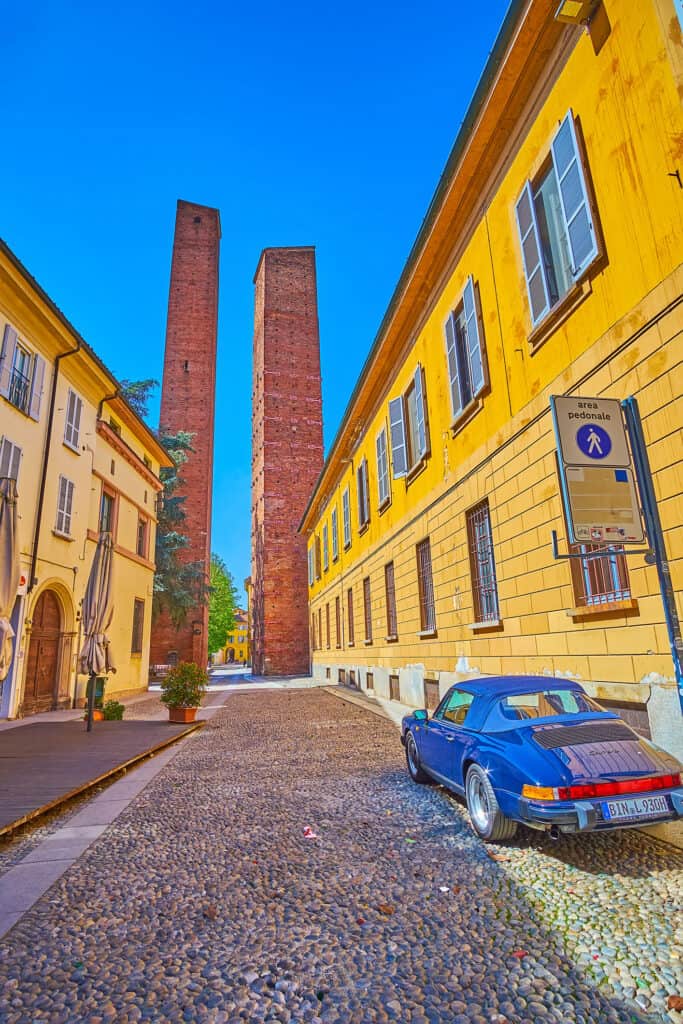
Towers of Pavia (Torri di Pavia)
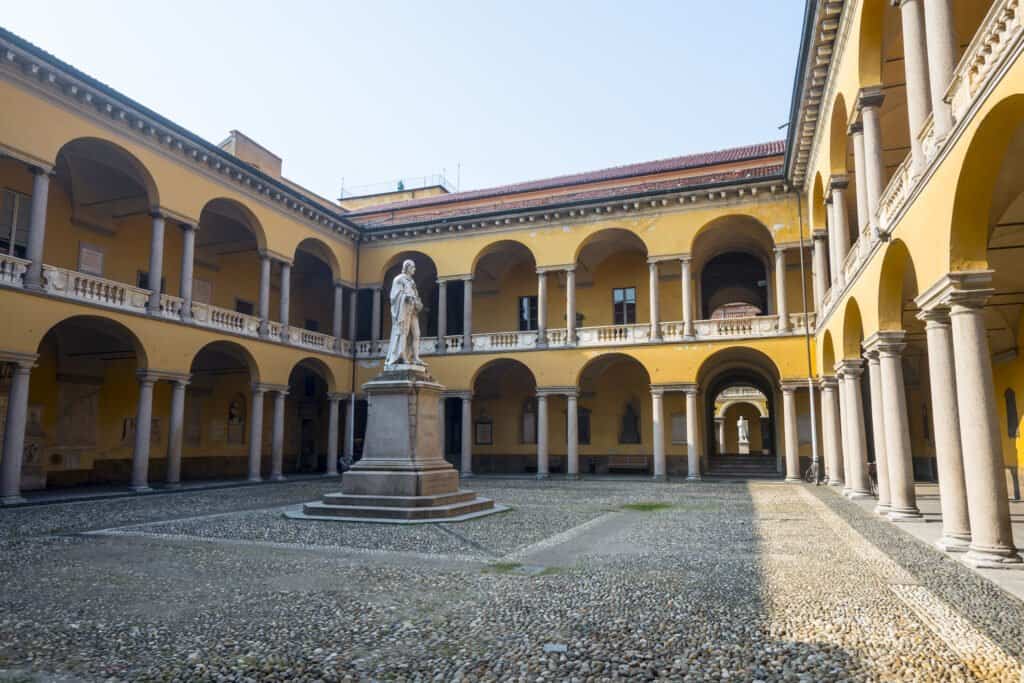
The University of Pavia
Places to eat or drink near Chiesa di San Maurizio al Monastero Maggiore

Pasticceria Vigoni

Pizza e Mozzarella
![[LA] Gelateria della Musica](https://lh3.googleusercontent.com/grass-cs/AABkmLezQ1aahZ3Sj4IKvguuB34dH27jVTId85hNXzYEv9WG7GfBYHmI1cwHUPQVisLeNLAKCNmd1glh0QlkPrqj2oRaVJ7D4jkdmWOq7BbYLzAtEceYr8t1MxXkfmk96U5ezHE2vYUBkvyeVynx=s4800-w1600-h1600)
[LA] Gelateria della Musica

Officina Milano
More places in Milan

miscusi Milano Centrale

Brera District
Reminisce The Good Ol’ Days At La Scala
