
Ciudad Colonial
Ciudad Colonial, Santo Domingo, Dominican RepublicCiudad Colonial is the old heart of Santo Domingo, a roughly 12-block grid on the western bank of the Ozama River where the history of European settlement in the Americas effectively begins. Founded in 1496 by Bartolomeo Colón, brother of Christopher Columbus, it is the oldest continuously inhabited European settlement in the hemisphere. UNESCO added the district to its World Heritage list in 1990, and walking its streets today still feels closer to the 1500s than to the modern capital surrounding it. What sets Ciudad Colonial apart from other restored colonial quarters is that it never stopped being a neighborhood. People live here, run shops out of 400-year-old storefronts, and hang laundry between balconies a block from a cathedral older than most nations.
The buildings tell two stories at once. Some facades have been carefully restored into galleries, boutique hotels, and restaurants. Others are left rougher, paint peeling, stone exposed, which gives the whole district a texture that feels lived-in rather than staged for visitors. If you've been to colonial-era centers elsewhere in the Caribbean or Latin America, this is often the one historians point to as the original template.
Why Ciudad Colonial matters
This neighborhood is where European colonization of the Western Hemisphere physically started. The grid pattern laid out here in the early 1500s became a model later used across Spanish colonial cities in the Caribbean and Latin America. Several institutions trace their origin to this exact ground: the first cathedral in the Americas, the first fortress, the first university, and the first hospital all stood within these dozen blocks.
For anyone with a serious interest in colonial history, this isn't optional sightseeing, it's foundational. The architecture mixes Spanish design with African and indigenous influence, and enough original 1500s and 1600s structures survive that you're not looking at reconstructions dressed up as history. You're looking, in several cases, at the real thing.
Quick facts
- Founded in 1496 by Bartolomeo Colón
- UNESCO World Heritage site since 1990
- Covers approximately 12 city blocks in the historic core
- Sits on the western bank of the Ozama River
- Most sites are free or charge modest admission
- Architecture dates primarily to the 16th and 17th centuries
- Restored buildings now house museums, galleries, restaurants, and shops
Getting there
Ciudad Colonial sits centrally in Santo Domingo, reachable by taxi, ride-share, or on foot depending on where you're based. From Las Américas International Airport, roughly 30 kilometers east of the city, expect a 45-minute to one-hour taxi ride or arranged transfer, depending on traffic. The route cuts toward the Ozama River waterfront before entering the colonial grid.
Public transit exists in Santo Domingo but isn't the easiest system for visitors unfamiliar with the city's routes. Taxis are plentiful and inexpensive by international standards, and ride-share apps work reliably in the capital. If your hotel sits inside or near the colonial quarter, you can likely reach most major sites on foot within 10 to 15 minutes.
Driving yourself means dealing with limited street parking. Look for marked lots near the edges of the historic district, or ask your hotel or a restaurant host where locals leave their cars.
The layout and experience
The colonial grid is compact enough to navigate without a map after an hour of walking. Streets run in predictable east-west and north-south lines, a layout that was unusual for its time and later influenced city planning across the region. Calle Isabel la Católica runs roughly north-south through the district. Calle El Conde, the old commercial spine of the colony, cuts east-west and still functions as a pedestrian thoroughfare lined with shops and cafes.
The Ozama River marks the eastern edge of the neighborhood, and a waterfront promenade, Malecón 30 de Marzo, runs along the bank with views of the water and access to some of the oldest surviving structures. Parque Colón, anchored by a statue of Columbus, works as the informal center of the district, where streets converge and visitors tend to gather.
Walk a few blocks in any direction and the character shifts. Some streets carry restored mansion facades in whites and pastels, clearly maintained for foot traffic and photographs. Others are quieter and more residential, with small grocery shops, barbershops, and groups of neighbors talking in doorways rather than tour groups. Those quieter blocks tend to reveal more of what daily life here actually looks like.
Pace changes the visit entirely. Hit the major sites briskly and you'll be done in 3 to 4 hours. Linger over lunch, step into a gallery or two, sit in a plaza and watch the street for a while, and a full day disappears without you noticing.
Main highlights
The Cathedral of Santa María la Menor is the oldest cathedral in the Americas, with construction beginning in 1514 and finishing by 1540. Its limestone facade faces a small plaza, and inside you'll find soaring arches and colonial-era decoration that has survived nearly five centuries of hurricanes, earthquakes, and neglect. Entry is typically free, with donations welcomed rather than required.
The Alcázar de Colón, known as Columbus Palace, is attributed to Diego Colón, son of Christopher Columbus. The current structure dates mostly from a 1960s reconstruction after the original fell into ruin, but it remains a useful window into how the colonial elite lived, with period furnishings and arched courtyards that photograph well from almost any angle.
Fortaleza Ozama, built between 1502 and 1508, is the oldest military fortress in the Americas and was constructed to defend the settlement against pirates and rival colonial powers. Its stone walls and towers sit prominently on the riverbank and are visible from a distance along the Malecón. You can walk the grounds and climb to points overlooking the Ozama River and the modern city beyond it.
The Museo de las Casas Reales occupies two former administrative buildings and houses weaponry, documents, and household items from the colonial period, offering a clearer picture of how Spanish colonial governance actually functioned day to day. Smaller sites round out the district: the Museo Duarte, set in a modest residence, tells the story of Juan Pablo Duarte, a key figure in Dominican independence, and the Convento de los Dominicos, dating to the 1500s, gives a sense of religious life under colonial rule.
History and background
The original settlement was established by Bartolomeo Colón in 1496 on the eastern bank of the Ozama River. Flooding forced a relocation to the western bank by 1502, which created the Ciudad Colonial that stands today. The early decades were unstable. The city served as the Spanish administrative center for the entire Caribbean, but it also faced constant pressure from pirates, competing colonial powers, and indigenous resistance to Spanish rule.
By the 1520s, a street grid had taken shape and the city was pulling in merchants, soldiers, and clergy from across the Spanish empire. Construction of the cathedral, the fortress, and the administrative buildings unfolded over several decades rather than all at once. Sugar production brought wealth to the colony, and with it came the forced importation of enslaved Africans, a brutal practice that shaped the demographic and cultural makeup of the city for generations. Spanish colonial attention began drifting westward toward Mexico and South America after the 1500s, and Santo Domingo's importance declined with it. By the 1700s the colonial quarter was no longer the hub it had once been, and many buildings sat abandoned or were repurposed for humbler uses. Oddly, that decline is part of why so much original architecture survives. There was little money around to tear it down and rebuild in newer styles, so the old structures simply stayed standing, used or not.
The Dominican Republic gained independence from Haiti in 1844, and the modern city of Santo Domingo grew up around and beyond the colonial core over the following century. For much of the 1900s, Ciudad Colonial remained a largely residential, working-class neighborhood rather than a tourist draw. Restoration efforts picked up pace in the later decades of the century, leading to the UNESCO designation in 1990 that formally recognized the district's architectural and historical value.
Tickets and entry
Most major sites in Ciudad Colonial charge modest admission, including the Alcázar de Colón, Fortaleza Ozama, and the larger museums. The cathedral is typically free to enter, with donations accepted rather than expected. Some local tour operators and hotels offer combination passes bundling several sites together, though availability varies.
Sites generally open in the morning and close by late afternoon or early evening, with hours shifting somewhat by season and day of the week. Guided tours, both group and private, can be arranged through hotels or directly with guides who work near the main plazas. A good guide tends to add context you'd miss walking through alone, and sometimes gets you into corners of a site that aren't obvious from the main path.
Best time to visit
Santo Domingo stays warm year-round, but the period from November through March is the most comfortable for walking the narrow streets, with temperatures generally in the upper 70s to mid-80s Fahrenheit and humidity lower than the rest of the year by Caribbean standards. April through October brings heavier heat and humidity, along with the start of hurricane season, which officially runs June through November. Direct hits on Santo Domingo itself are relatively uncommon, but afternoon downpours during the wetter months are frequent and usually pass quickly.
Tourism peaks from December through March, so if you'd rather avoid crowds, aim for April, May, September, or October. Within any season, weekday mornings tend to be noticeably quieter than weekend afternoons.
Photography tips
Morning light coming from the east throws long shadows across the stone streets and brings out the texture of the older facades. The Malecón riverfront opens up wider views and photographs well in the late afternoon as the sun drops to the west over the water. The Alcázar's courtyard and arches work from multiple angles, and the cathedral facade reads best from the plaza directly in front of it, ideally when the light is soft rather than harsh.
Fortaleza Ozama's stone walls and towers stand out dramatically against the sky when shot from the riverfront promenade. Beyond the obvious landmarks, pay attention to detail: worn wooden doors, wrought-iron balconies, stone steps smoothed down by centuries of foot traffic. The quieter residential blocks, away from the main tourist routes, tend to produce the least staged and most interesting shots.
Facilities and preparation
You won't go hungry or thirsty here. Restaurants, cafes, and small shops are scattered throughout the district. Water quality in restaurants and hotels is generally considered safe, though some travelers prefer bottled water out of habit. Pharmacies and basic medical services are available in and near the neighborhood.
The streets themselves are uneven stone, and heels or unsturdy shoes will fight you the whole way. Comfortable walking shoes with decent grip make a real difference. The Caribbean sun is intense even under cloud cover, so sunscreen and a hat earn their keep. ATMs and currency exchange are available locally, but it's smart to carry some Dominican pesos for small purchases and tips, since credit cards aren't universally accepted outside larger restaurants and shops.
Combining with nearby attractions
The Malecón waterfront continues beyond the colonial district, offering parks, restaurants, and open views of the Ozama River where it meets the Caribbean Sea. Modern downtown Santo Domingo is a short taxi ride away, with shopping centers, contemporary museums, and neighborhoods that feel entirely different from the colonial core.
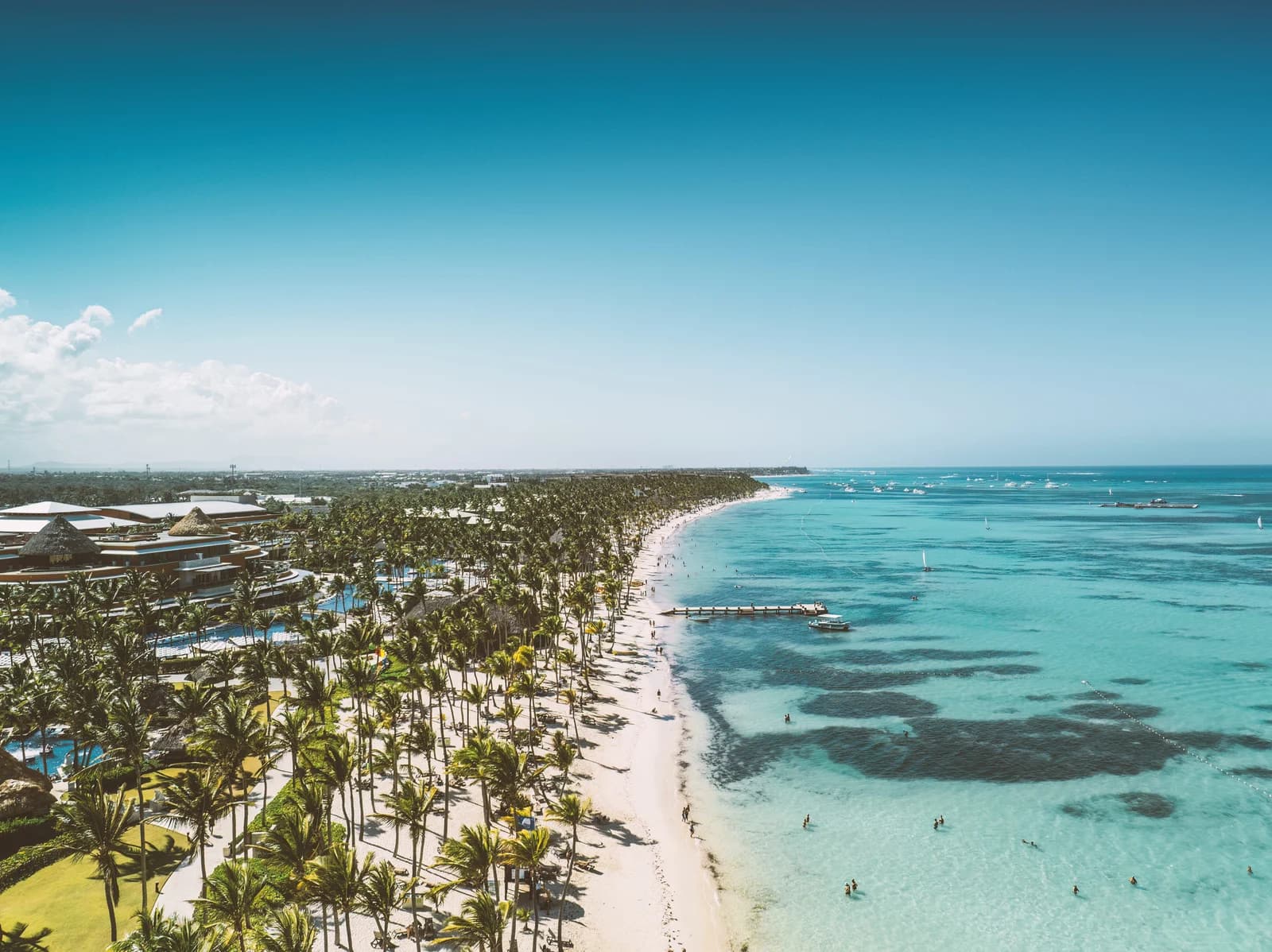
Further afield, the Dominican Republic's interior and coastline open up plenty of day-trip options. Constanza, in the mountainous interior, sits roughly 90 minutes inland and offers a cooler climate and a very different landscape from the capital. The beach towns of Juan Dolio and Punta Cana make for easy day trips if you want to pair colonial history with sand and water.
Sample visit plan
A morning arrival works well. Start at Parque Colón to get your bearings and understand the grid before you start walking. From there, head to the Cathedral of Santa María la Menor and give yourself about 30 minutes inside and around the plaza. Walk east toward Fortaleza Ozama next, allowing roughly an hour for the fortress grounds and the river views.
Break for lunch somewhere overlooking the Malecón, or duck into one of the smaller side-street restaurants for something more local. In the afternoon, choose between the Alcázar de Colón and the Museo de las Casas Reales depending on whether you're more drawn to how colonial elites lived or how the colonial government actually operated. As the sun starts to drop, wander the quieter residential blocks, where the light and atmosphere tend to be at their best. Close the day with an early dinner and a walk along the Malecón as the light fades. If you're staying the night, the district changes character after dark, once the day-trippers clear out and the neighborhood settles back into itself.
Practical tips
- Wear comfortable walking shoes and sunscreen. The stone streets are uneven and the sun doesn't let up.
- Carry water and stay hydrated, especially if you're walking for several hours.
- Keep small bills and coins on hand. Not every vendor takes cards.
- Visit museums and major sites in the morning or early afternoon, since many close by 5 or 6pm.
- Use official taxis or a ride-share app rather than flagging down unmarked cabs on the street.
- Basic Spanish or a translation app helps. English is less common here than in resort areas.
- Stay aware of your surroundings on quieter streets after dark, and keep valuables out of sight.
- A local guide is worth hiring if you want deeper historical context or lesser-known stories.
FAQ
How long should I spend in Ciudad Colonial?
A thorough visit takes a full day. If you're pressed for time, 3 to 4 hours covers the main sites. Staying overnight lets you see the neighborhood outside peak tourist hours, which is a different experience entirely.
Is Ciudad Colonial safe for tourists?
The main streets and major sites are generally safe during daylight hours. Avoid walking alone late at night, keep to well-lit areas, and use the same caution you would in any unfamiliar city. A guided tour is a reasonable option if you'd rather not navigate solo.
Do I need a guide?
Not strictly, since the grid layout is easy to follow on your own. But a guide adds historical depth and can point you toward details or smaller sites you'd otherwise miss. Guides are typically available near Parque Colón and the major landmarks.
What's the best meal option in the neighborhood?
Options range from casual to upscale, with many restaurants set inside restored colonial buildings. Dominican staples like rice, beans, plantains, and fresh fish are widely available alongside more international menus.
Can I see all the major sites in one day?
Yes, if you move efficiently. That said, you'll likely get more out of Ciudad Colonial by being selective about which sites you prioritize and spending real time just absorbing the streets themselves rather than rushing between checkpoints.
Reviews
Sign in and mark this place visited to leave a review.
No reviews yet.
Free Trip Planner
Plan your Santo Domingo trip with our free planner
Build a day-by-day itinerary with AI suggestions, hand-picked places, and friends. Free forever — no credit card.
Related reading
Things to see near Ciudad Colonial

Plaza de la Bandera Republica Dominicana

Malecón Santo Domingo

Calle El Conde

Fortaleza Ozama
Places to eat or drink near Ciudad Colonial


More places in Santo Domingo

La Isabela

The Three Eyes

Museum of the Royal Houses
