Galápagos Ecological Airport
Galápagos Ecological Airport
Aeropuerto Seymour de Baltra, Isla Baltra Baltra, HP4J+4C3, Seymour, EcuadorOverview
Galápagos Ecological Airport, officially Aeropuerto Seymour de Baltra, sits on Isla Baltra in the Galápagos Islands and serves as the primary entry point for visitors exploring this extraordinary ecosystem. The airport connects the remote archipelago to Ecuador's mainland and international destinations, making it the gateway through which most travelers pass when arriving to see the islands' famous wildlife and volcanic landscapes.
The airport itself reflects the environmental values of the Galápagos. It operates with ecological considerations built into its infrastructure and processes, from water management to waste handling. This is not a sprawling hub but a functional, relatively modest facility designed to minimize impact on the fragile island environment.
Why this place matters
Isla Baltra exists as a protected island within a protected archipelago. The airport's location here, rather than on populated Santa Cruz, was a deliberate choice to keep visitor impact concentrated on one island. Understanding this context shapes your entire Galápagos experience.
The airport handles roughly 200,000 to 300,000 passengers annually. That volume, concentrated through a single facility, means the Galápagos has strict environmental protocols that begin the moment you land. Your arrival at this airport triggers a series of checks and regulations designed to protect the islands' isolation.
Quick facts
- Located on Isla Baltra, approximately 42 kilometers northeast of Puerto Ayora on Santa Cruz
- Elevation approximately 6 meters above sea level
- Opened in 1963
- Serves as the primary airport for the Galápagos Islands
- Operates under strict environmental regulations set by Ecuador's Ministry of Environment
- International flights typically route through Quito or Guayaquil on the mainland
Getting there
You cannot reach Galápagos Ecological Airport except by air. Most travelers fly from Ecuador's mainland, either from Quito's Mariscal Sucre International Airport or Guayaquil's José Joaquín de Olmedo International Airport. Flight time from the mainland runs approximately two to three hours depending on your departure city.
Once you land on Isla Baltra, you'll need to arrange onward transportation. A short ferry ride (about five minutes) connects Isla Baltra to Santa Cruz, where Puerto Ayora serves as the main tourist hub. The ferry operates throughout the day, and the cost is modest. From there, you can reach your hotel, join a cruise, or arrange island tours.
Some visitors arrive on cruise ships that bypass the airport entirely, anchoring offshore. If you're taking a cruise-based tour, your ship handles all transportation logistics, and you may not interact with the airport at all.
The layout and experience
The terminal building is compact and straightforward. You won't find the shopping, dining, or lounge spaces typical of larger international airports. The design is intentionally minimal, reflecting the islands' environmental philosophy.
Upon arrival, you'll pass through immigration and customs. Ecuador requires a valid passport, and visitors from most countries receive a tourist card on entry. The process usually moves smoothly, though during peak travel times (school holidays, summer months) queues can form.
After collecting baggage, you'll encounter a biosecurity control point. This is mandatory and non-negotiable. Officials inspect luggage to prevent the introduction of plants, seeds, animals, or soil that could disrupt the islands' ecology. Pack carefully and declare anything that might trigger inspection. The process typically takes 15 to 30 minutes depending on how many passengers are processing simultaneously.
The airport has a small departure lounge and basic facilities. If you have a layover between arriving at the airport and catching a ferry or cruise, expect limited dining and shopping options. The outdoor area provides views of the arid volcanic landscape characteristic of Baltra Island.
History and background
Aeropuerto Seymour opened in 1963 to serve the growing number of scientists and tourists drawn to the Galápagos. Before its construction, access to the islands was far more limited and difficult. The airport transformed the archipelago from a remote outpost into a destination accessible to international travelers.
Isla Baltra itself has a distinct history. During World War II, the United States military established an airbase on the island to defend the Panama Canal. The base operated from 1942 to 1946 and left behind some infrastructure that influenced later development. After the war, the island transitioned to civilian use, and the airbase eventually became the foundation for the modern airport.
The ecological airport designation reflects decades of environmental management. The Galápagos Islands were declared a national park in 1959, and the airport's operations have been continuously refined to align with conservation principles. This includes strict quarantine procedures, controlled visitor numbers, and infrastructure designed to minimize resource consumption.
Tickets and entry
You don't purchase an airport ticket. Instead, you'll need a Transit Control Card (TCC), which you receive upon arrival as part of immigration processing. This is included in your entry and requires no separate purchase.
Entry to the Galápagos Islands itself requires a visitor fee, collected by Ecuador's Ministry of Environment. This fee varies by nationality and is payable in cash (US dollars) at the airport after you clear biosecurity. The funds support national park management and conservation efforts.
If you're traveling as part of an organized tour or cruise, your operator may handle this fee in advance. Confirm with your booking details to avoid surprises.
Best time to visit
The airport operates year-round, but flight availability and conditions vary seasonally. The dry season (June to November) brings cooler temperatures and calmer seas, making for more comfortable ferry crossings and generally better wildlife viewing. The wet season (December to May) brings warmer water, occasional rain, and sometimes rougher seas.
Peak travel months are June through August and December through January. During these periods, flights fill quickly, accommodation prices rise across the islands, and you'll encounter more visitors at major sites. If you prefer fewer crowds, travel during shoulder months like April, May, September, or October.
Flight delays due to weather are rare but possible during the wetter months. Volcanic fog can occasionally reduce visibility. These disruptions typically resolve within hours rather than days.
Facilities and preparation
The airport terminal has basic services. You'll find a small café, restrooms, and a few shops selling snacks and souvenirs. ATMs are available, though it's wise to carry cash from the mainland as a backup. The airport accepts US dollars (the official currency of Ecuador).
Prepare for biosecurity screening by packing thoughtfully. Avoid bringing fresh produce, seeds, soil-covered items, or any plants. Hiking boots and outdoor gear should be clean. If you have questions about specific items, ask at the biosecurity desk before unpacking your bag.
The airport sits in a hot, arid climate. Bring sunscreen, a hat, and water. If you have a long layover, the outdoor viewing area offers some shade structures, but amenities are minimal.
Mobile phone service works but can be spotty depending on your provider. Plan to purchase a local SIM card in Puerto Ayora if you'll be staying multiple days. Airport WiFi is available but slow.
Combining with nearby attractions
Isla Baltra itself has no tourist attractions. It's a protected conservation zone where visitor access is restricted. Your time here will be brief: arriving, clearing biosecurity, and departing via ferry to Santa Cruz.
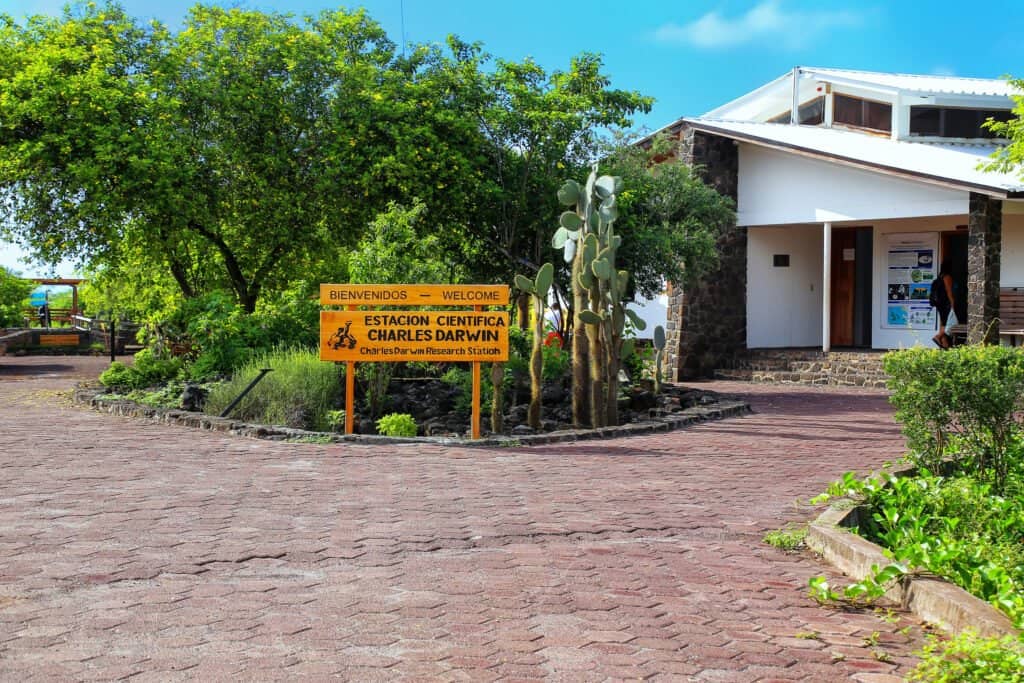
Santa Cruz, just across the short ferry ride, is where most Galápagos tourism activity happens. Puerto Ayora offers restaurants, shops, hotels, and tour operators. The Charles Darwin Research Station sits on Santa Cruz and is worth a visit if you have time before joining a cruise or island tour.
Many visitors use the airport as a quick transfer point between their cruise ship or hotel. If you're staying on Santa Cruz, allow 90 minutes from landing to reaching your accommodation in Puerto Ayora (including ferry and taxi time).
Sample visit plan
If you're arriving and departing the same day (rare but possible for connections), expect this timeline: land, clear immigration and biosecurity (30 to 60 minutes), collect luggage, pay park fee, head to ferry (total time from landing to ferry departure usually 60 to 90 minutes). The ferry to Santa Cruz takes about five minutes, then taxi to your destination.
If you're staying overnight before a cruise or island tour, plan to arrive, clear the airport, take the ferry to Santa Cruz, and settle into your hotel. Spend the afternoon exploring Puerto Ayora or resting before an early departure the next day.
Most visitors don't spend time at the airport itself beyond the necessary processes. Your first full day of Galápagos experience typically begins once you reach Santa Cruz.
Practical tips
- Arrive at the airport with ample time before departure, especially during peak season when queues are longer
- Bring cash (US dollars) for the park entry fee, ferry, and airport purchases
- Keep your Transit Control Card (TCC) safe; you'll need it to leave the islands
- Pack a small day bag with essentials in your carry-on in case your checked luggage is delayed
- Wear comfortable, breathable clothing and bring a light layer for air-conditioned spaces
- Charge your phone before arrival if possible; airport charging outlets are limited
- If you're prone to motion sickness, take medication before the ferry crossing to Santa Cruz
- Book your onward ferry or cruise transport in advance during high season
FAQ
Do I need a visa to enter Ecuador to fly to the Galápagos? Visa requirements depend on your nationality. Most visitors from North America, Europe, and Australia don't need a visa for Ecuador. Check with your nearest Ecuador embassy before booking.
Can I stay overnight on Isla Baltra? No. The island is a protected conservation zone with no hotels or tourism facilities. You must transfer to Santa Cruz or board a cruise the same day you arrive.
What happens if my flight is delayed and I miss my connection? Airlines typically rebook you on the next available flight at no charge. The airport is small, so staff can usually assist with same-day rebooking. Have your booking confirmation and ID ready.
Is the ferry crossing rough? The crossing is usually brief and calm since the distance is short. Rough seas are uncommon but possible during the wet season. Motion sickness medication can help if you're sensitive.
Can I hire a taxi at the airport? Taxis aren't stationed at the airport terminal. You'll arrange transport through your hotel, tour operator, or by asking at the ferry terminal on Santa Cruz. Prearranging a pickup is more reliable than expecting taxis on arrival.
Reviews
Sign in and mark this place visited to leave a review.
No reviews yet.
Free Trip Planner
Plan your Seymour trip with our free planner
Build a day-by-day itinerary with AI suggestions, hand-picked places, and friends. Free forever — no credit card.
Things to see near Galápagos Ecological Airport
Charles Darwin Research Station
Galapagos Turtle Bay

Playa El Garrapatero