Galleria Dell’accademia
Via Ricasoli, Firenze, Florence 50122, Italy Posted by Brandon B.Admin
Overview
Galleria dell'Accademia sits on Via Ricasoli in Florence, a short walk from the Duomo. This museum holds one of the world's most recognizable sculptures: Michelangelo's David. The gallery opened to the public in 1784 and remains one of Italy's most visited art museums, drawing nearly two million visitors annually. Beyond the David, the collection spans Florentine paintings and sculptures from the 13th to 16th centuries, offering insight into the artistic dominance of the Renaissance.
Why this place matters
Michelangelo's David alone justifies the visit. Carved between 1501 and 1504, the marble figure stands over 17 feet tall and represents a technical and artistic achievement that still astounds. Seeing it in person reveals details no photograph captures: the tension in the muscles, the concentration in the face, the scale that photographs compress into insignificance.
The museum also houses Michelangelo's unfinished sculptures, including four Slaves that show the artist's working method. These rough blocks offer a rare window into the creative process of the Renaissance's greatest artist. The Accademia's collection of panel paintings by Botticelli, Orcagna, and other Florentine masters provides essential context for understanding the period.
Quick facts
- Founded as an art school in 1563, opened as a public museum in 1784
- Houses Michelangelo's David, carved 1501 to 1504
- Located on Via Ricasoli, approximately 5 minutes on foot from Florence's Duomo
- General admission includes all galleries; timed-entry tickets recommended to avoid long queues
- Closed Mondays and on major Italian holidays
- Approximately 2 hours needed for a thorough visit
Getting there
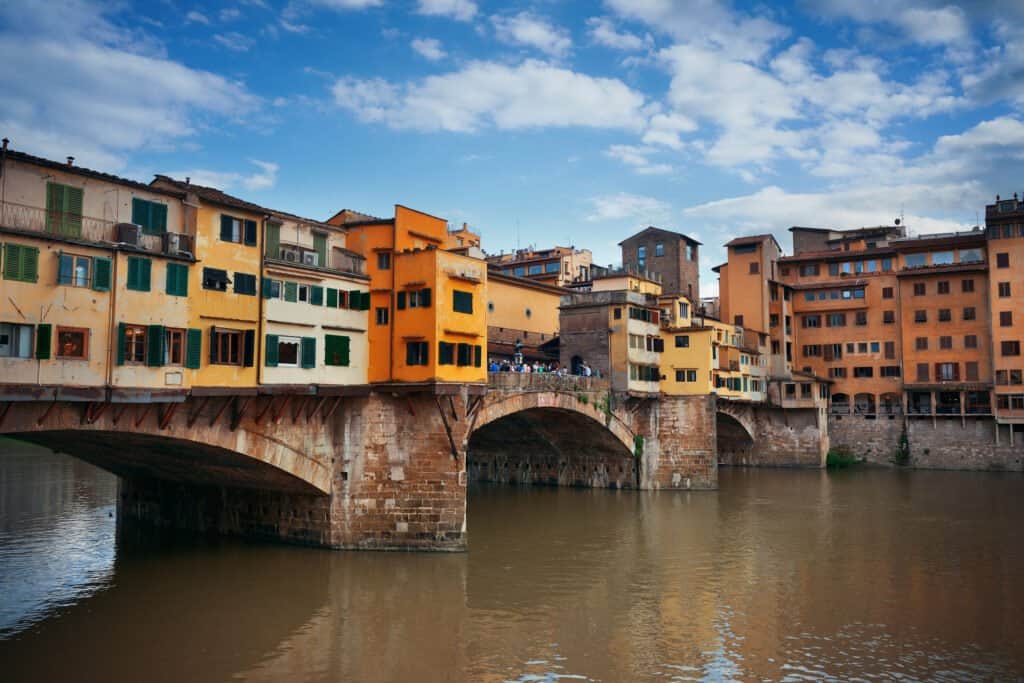
The museum sits in central Florence, accessible by foot from most major landmarks. If you're near the Duomo, walk north on Via Ricasoli for about five minutes. The entrance is on the right side of the street. From the Ponte Vecchio, head northeast through the city center for roughly 15 minutes.
Florence's public transport network reaches the area easily. Buses stop near Piazza San Marco, a short walk away. If you arrive by train at Santa Maria Novella station, it's a 20-minute walk or a brief bus ride to the museum. Parking in the historic center is restricted and difficult; use a parking garage outside the old city walls and walk in.
The layout and experience
You enter through a modest doorway that opens into the main gallery space. The David dominates the far end of a long corridor, positioned to draw your eye the moment you step inside. The museum's layout guides you toward it naturally.
The corridor leading to David is lined with paintings and sculptures. On the left and right walls hang works by Florentine masters, many from the 15th and 16th centuries. This progression builds context before you reach the sculpture itself. The paintings show the artistic tradition from which Michelangelo emerged.
David stands in a climate-controlled room at the corridor's end, visible from several angles. You can walk around it, though the museum uses barriers to maintain viewing distance. The scale becomes clear only in person. Photographs compress it into something manageable; the actual marble figure occupies the space like a presence.
Beyond the David corridor, the museum branches into several galleries. A room dedicated to Michelangelo's unfinished Slaves shows four partial figures emerging from raw marble blocks. Another gallery contains paintings on wooden panels, many with gold leaf and elaborate frames. The collection emphasizes Florentine art from the 1200s onward, with particularly strong holdings from the 15th and 16th centuries.
Main highlights
The David is the obvious centerpiece. Standing before it, you notice the anatomical precision, the weight distribution, the intense focus in the face. Michelangelo carved it from a single block of marble that other sculptors had rejected as flawed. The figure captures a moment of psychological tension, not just physical beauty.
The four Slaves (also called Prisoners) occupy a separate room. These unfinished works show figures struggling to emerge from stone. Michelangelo may have intended them for the tomb of Pope Julius II. Whether unfinished by choice or circumstance remains debated, but they reveal his sculptural thinking in a way completed works cannot.
Botticelli's panels deserve attention. The gallery holds several examples of his work, showing the linear grace and mythological subject matter that defined his approach. Orcagna's paintings demonstrate the more rigid style of an earlier period, making the stylistic evolution across centuries visible in a single visit.
The Accademia also displays a collection of musical instruments from various periods. This lesser-known section appeals to those interested in Renaissance craftsmanship beyond painting and sculpture.
History and background
The Accademia was established in 1563 as an art school by the Grand Duke Cosimo I, operating alongside the Uffizi Gallery as part of Florence's cultural infrastructure. It functioned primarily as a teaching institution for centuries. The decision to exhibit the David here came in 1873, when the sculpture was moved from its original location on the Piazza della Signoria to protect it from weather and damage.
That move transformed the Accademia from a school gallery into a major museum. The David had stood outdoors for nearly 370 years before the transfer. The move sparked debate about preservation versus public access, questions that museums still grapple with today. A copy replaced the original on the Piazza della Signoria in 1910.
Michelangelo created the David as a symbol of Florentine republican virtue. The young hero was seen as representing the city's ability to stand against larger powers. The sculpture became so identified with Florence that it functioned as both artwork and civic monument. Moving it indoors was a practical decision driven by conservation, but it carried symbolic weight in a city where the image had become synonymous with Renaissance achievement.
Tickets and entry
General admission grants access to all galleries. Timed-entry tickets are strongly recommended, especially during peak season (April through October). Without a reservation, you may wait 30 minutes to several hours, depending on the time of day and season. First-time visitors often underestimate how crowded the museum becomes.
Tickets can be purchased online in advance through the museum's official website or at the door, though online purchase guarantees entry at your chosen time. Guided tours are available and provide context that enriches the experience, particularly regarding Michelangelo's techniques and the historical significance of the works.
The museum offers free entry on the first Sunday of each month, though this draws significantly larger crowds. Discounts are available for students and EU residents under 25. Children under 18 typically receive free admission.
Best time to visit
Early morning, shortly after opening, offers the best experience with smaller crowds. Arriving at 8:30 or 9 am means you'll spend less time waiting and more time actually looking at the art. Weekdays in winter (November through February) are far less crowded than summer months.
Avoid late afternoon in summer. By 4 pm on a July day, the museum is at maximum capacity, with barely enough room to move through the corridors. Lunchtime (roughly 1 to 3 pm) sees a temporary dip in visitors as people eat, making this a reasonable alternative to early morning if you can't start your day early.
December and January are the quietest months. The trade-off is shorter daylight hours and colder weather, but the museum experience itself is vastly more pleasant. Spring (April and May) offers reasonable crowds and pleasant weather, making it a middle-ground choice.
Photography tips
Flash photography is not permitted inside the museum. Bring a camera or phone capable of shooting at higher ISO settings to capture images in the available light. The David room is well-lit, but other galleries rely on ambient lighting that can challenge cameras with smaller sensors.
Positioning yourself to capture the David without crowds requires patience or an early visit. The sculpture is visible from multiple angles, so experiment with different vantage points. The unfinished Slaves photograph well because fewer visitors linger in that room, giving you more freedom to find compelling angles.
The painted panels often feature intricate details that reward close-up photography. Macro or zoom capabilities help capture the gold leaf, fine brushwork, and decorative elements that define these works. Step back to show the full composition, then move closer to reveal the craftsmanship.
Facilities and preparation
The museum has a small bookstore selling catalogs, postcards, and books about Michelangelo and Renaissance art. A cafe operates in the courtyard area, offering basic refreshments. Restrooms are available near the entrance. The building itself is several centuries old, so expect narrow corridors and stairs that reflect historical architecture rather than modern accessibility standards.
Visitors with mobility challenges should contact the museum in advance. Elevators serve some areas, but not all galleries are equally accessible. The building's layout means some sections require climbing stairs or navigating tight spaces. Staff can advise on the best route through the museum given specific needs.
Bring comfortable shoes. The museum involves standing and walking, often while looking up at wall-mounted paintings or around sculptures. The marble floors can be slippery when wet, particularly near the entrance on rainy days.
How it compares to similar places
The Uffizi Gallery, Florence's other major museum, is larger and houses an even broader range of Italian art. It requires more time to explore thoroughly and draws even larger crowds. The Accademia is more focused, making it manageable in a half-day visit. If you're choosing between the two, the Accademia justifies the trip for the David alone; the Uffizi offers a deeper survey of Renaissance painting.
Rome's Capitoline Museums contain important Roman sculpture and Renaissance paintings but lack the singular draw of Michelangelo's most famous work. Venice's Accademia Gallery emphasizes Venetian painters and operates on a similar scale. Florence's Bargello specializes in sculpture and decorative arts, offering another perspective on Renaissance craftsmanship. Each serves a different purpose; the Galleria dell'Accademia is the must-see for anyone interested in Michelangelo and Florentine sculpture.
Combining with nearby attractions
The museum's location on Via Ricasoli places it near several important sites. The Duomo and its dome are a five-minute walk south. The Basilica of San Marco lies north of the museum, housing works by Fra Angelico. Piazza della Signoria, home to the copy of David and the Palazzo Vecchio, is a 10-minute walk southeast.
The Medici Chapel and Basilica of San Lorenzo are a 15-minute walk northwest. The Botanical Garden of Florence lies northeast, offering a quiet contrast to the crowded museums. You can easily build a half-day itinerary combining the Accademia with one or two other sites without excessive walking.
Sample visit plan
Arrive with a timed-entry ticket for 8:30 am. Spend 20 minutes in the corridor of paintings leading to the David, reading about the works or simply absorbing the visual progression. Allow 20 to 30 minutes for the David itself, viewing it from different angles and letting the scale sink in.
Move to the room with Michelangelo's unfinished Slaves, spending 15 minutes examining how the figures emerge from the marble. Explore the remaining galleries containing paintings and sculptures at whatever pace suits you, typically another 30 to 45 minutes. If crowds begin to build, you'll have experienced the highlights before the museum reaches peak capacity.
Exit by mid-morning and walk to the Duomo for the exterior views and interior decoration, then lunch near the Piazza della Signoria. This leaves your afternoon free for the Uffizi Gallery if you wish, or for wandering the streets and smaller churches that make Florence rewarding beyond the major attractions.
Practical tips
- Book timed-entry tickets online at least several days in advance, especially April through October
- Visit early morning or on a weekday in winter for the best experience with fewest crowds
- Wear comfortable shoes and prepare for standing and walking on marble floors
- Bring a camera with good low-light performance; flash is prohibited
- Allow 90 minutes minimum for a meaningful visit; 2 to 2.5 hours is more comfortable
- The museum is small enough to feel crowded even when moderately busy, so arrive early if possible
- Check the museum's website for current hours and any temporary closures before your visit
- Consider a guided tour if you want detailed context about Michelangelo's techniques and historical significance
FAQ
Do I need advance tickets? Not technically, but you'll wait significantly longer without them. Online advance booking is strongly recommended during peak season and worth doing even in winter.
How long does a visit take? Most visitors spend 90 minutes to 2.5 hours. This varies based on interest level and crowd conditions. The David alone takes 20 to 30 minutes to fully appreciate.
Can I see the David without visiting the rest of the museum? No. The entire collection requires a single admission ticket. There's no option to see only the sculpture.
Is the museum accessible for people with mobility challenges? Partially. Contact the museum before your visit to discuss your specific needs. Some galleries are more accessible than others, and staff can help plan your route.
What's the difference between this museum and the Uffizi? The Accademia is smaller and focuses on Florentine art, with Michelangelo's David as its centerpiece. The Uffizi is larger and offers a broader survey of Italian painting. Both are worth visiting if you have time.
Opening hours
Reviews
Sign in and mark this place visited to leave a review.
No reviews yet.
Free Trip Planner
Plan your Florence trip with our free planner
Build a day-by-day itinerary with AI suggestions, hand-picked places, and friends. Free forever — no credit card.
Related reading
Things to see near Galleria Dell’accademia

Museo dell’Acqua

Porta Camollia

Basilica dell’Osservanza