
Get Lost In A Medieval Maze
Rodos, South Aegean, Greece Posted by Brandon B.Admin
Getting Lost in a Medieval Maze: Rhodes Old Town
Rhodes Old Town is one of the best-preserved medieval walled cities in Europe, and walking into it for the first time feels genuinely disorienting in the best possible way. The streets don't follow a grid. They curve, fork unexpectedly, and occasionally dead-end at a doorway that looks like it hasn't opened since the 14th century. If you're visiting Rhodes, the Old Town is the reason to come.
Built and fortified by the Knights of St. John after they took control of the island in 1309, the city has been layered over by Ottoman rule, Italian administration, and modern Greek life. What you're walking through today is all of that at once, stacked and compressed into roughly 2.5 square kilometers of cobblestone.
Why Rhodes Old Town Matters
UNESCO designated the medieval city a World Heritage Site in 1988, recognizing it as an outstanding example of a fortified medieval town. That recognition isn't just bureaucratic. The walls, which stretch for about 4 kilometers around the city, are largely intact. The moat is dry but still imposing. The towers still stand.
Most medieval cities in Europe were demolished, absorbed, or bombed into fragments. Rhodes survived relatively intact because of its relative isolation as an island, and because successive rulers found it useful rather than inconvenient. The Ottomans ruled here for over three centuries after 1522 and left mosques and hammams that still stand. The Italians, who controlled the island from 1912 to 1943, did significant restoration work that, depending on who you ask, either saved the city or over-tidied it.
The result is a place with genuine archaeological and architectural depth, not a reconstruction.
Quick Facts
- Location: Rhodes Town, Rhodes island, South Aegean, Greece
- UNESCO World Heritage Site since 1988
- Walls extend approximately 4 kilometers around the city
- The Knights of St. John controlled the city from 1309 until 1522
- The Old Town divides broadly into the Collachium (Knights' quarter) to the north and the Chora (the lower town) to the south
- Entry to the Old Town itself is free and open at all times
- Several individual monuments have separate ticketed entry
Getting There
Rhodes Town sits at the northern tip of the island. If you're arriving at Rhodes International Airport, the Old Town is roughly 45 minutes by taxi or bus depending on traffic. The main bus terminal in the new town is a short walk from the Old Town walls, and most accommodations in the new town are within 10 to 15 minutes on foot from one of the gates.
The most dramatic entrance is through the Gate of Freedom (Pyli Eleftherias) near Mandraki Harbor, which puts you directly onto the Street of the Knights. If you're coming from the southern new town, the Koskinou Gate or St. Athanasios Gate are your more likely entry points. There are eleven gates in total, each with a different character.
Driving into the Old Town is restricted. If you're renting a car, park outside the walls in the designated areas near the harbor.
The Layout and Experience
The Old Town is divided into two broad zones. The northern section, historically called the Collachium, was the administrative quarter of the Knights. This is where you'll find the Palace of the Grand Master, the Street of the Knights (Ippoton Street), and the Archaeological Museum. The streets here are wider and more formal.
The southern section, the Chora or Burgo, is where the actual maze lives. This is the residential and commercial quarter that developed under the Knights and expanded dramatically during Ottoman rule. The streets here are narrow enough that two people walking side by side will brush the walls. Many have no official names, or names that don't appear on any map you'll find in a tourist shop. Minarets from Ottoman-era mosques rise above rooftops without warning. A Byzantine church will appear between a souvenir stall and a restaurant terrace.
Plan to get lost here deliberately. The Chora rewards wandering more than any itinerary can capture. Most days you'll stumble into a courtyard with a fig tree, or a fountain that still works, or a doorway where someone has planted jasmine that fills the entire alley with scent. That's the point.
Main Highlights
The Palace of the Grand Master
The most prominent building in the Old Town, the Palace of the Grand Master sits at the northwest corner of the Collachium and dominates the skyline from several streets away. The original structure dates to the 14th century, though what you see today is partly an Italian reconstruction completed in the 1930s. It houses two permanent exhibitions: one on the history of Rhodes from prehistoric times through the medieval period, and one of ancient and medieval decorative arts. Entry requires a separate ticket.
Street of the Knights
Ippoton Street runs east to west through the Collachium and is probably the most photographed street in Rhodes. The "Inns" lining it, each representing a different national tongue of the Knights Hospitaller, are among the finest Gothic civic architecture still standing anywhere. The street is paved with worn cobblestones and tends to be quieter in the early morning before tour groups arrive.
The Archaeological Museum
Housed in the 15th-century Hospital of the Knights, the Archaeological Museum contains finds from across the Dodecanese, including the famous "Aphrodite of Rhodes" sculpture. The building itself, with its colonnaded courtyard, is worth the entrance fee alone.
Suleiman Mosque and the Ottoman Quarter
The pink-facade Mosque of Suleiman at the top of Socratous Street is one of the most visible landmarks in the Chora. Built after the Ottoman conquest of 1522, it marks the beginning of the lower town's denser Ottoman layer. The streets around it, particularly heading south and east, contain hammams, Ottoman fountains, and residential architecture that has no real equivalent on the Greek mainland.
Best Time to Visit
Rhodes Old Town is open year-round, but the experience shifts considerably with the season. July and August bring heavy tourist traffic, particularly between 10am and 5pm when cruise ship passengers flood the main arteries. If you're visiting in high summer, the early morning hours are genuinely different. Before 8am, the Street of the Knights belongs to you and the occasional cat.
April through June and September through October offer the best combination of weather and manageable crowds. October is particularly good: the light is lower and warmer, many restaurants are still open, and the maze-like quality of the Chora becomes more apparent when you're not dodging tour groups on Socratous Street.
Winter is quiet to the point of solitude in some areas. Some restaurants and shops close from November through March, but the Old Town never fully empties, and locals reclaim the streets in a way that gives you a more honest read of daily life there.
Photography Tips
The best light in the Collachium falls in the morning, when the sun hits the stone facades of the Inns on Ippoton Street from the east. The Chora is better in the late afternoon, when the shadows in the narrow alleys soften and the warm stone takes on color.
Avoid trying to photograph the Palace of the Grand Master from directly in front. The square in front of it is wide and flat and produces uninteresting images. Instead, walk around to the northeast and shoot through one of the archways along the walls. The minarets photograph well from the rooftop terraces of the few cafes that have them, particularly around Argyrokastrou Square.
Practical Tips
- Wear shoes with grip. The cobblestones are polished smooth in high-traffic areas and become slippery when wet or after morning cleaning.
- Carry water. Fountains are atmospheric but not always potable. Shops in the Chora sell water at reasonable prices.
- The combined ticket for the Palace of the Grand Master and the Archaeological Museum tends to offer better value than buying separately.
- If you're staying inside the walls, confirm with your accommodation about vehicle access and luggage logistics before arrival.
- Most of the main tourist streets run north-south. If you want to get off the tourist path, head east or west and follow whichever alley looks least obvious.
- Some areas of the walls are walkable. Check current access at the Palace entrance, as sections open and close for maintenance.
- The Old Town has no shortage of restaurants, but quality varies sharply on Socratous Street. The better kitchens tend to be one or two streets removed from the main drag.
Combining with Nearby Attractions
Mandraki Harbor, just outside the Gate of Freedom, is where the three windmills and the bronze deer statues mark the supposed location of the Colossus of Rhodes. It's a five-minute walk from the northern walls and worth seeing at dusk when the harbor lights up.
The Acropolis of Rhodes at Monte Smith is about 3 kilometers west of the Old Town and involves a climb, but offers a view over the city and coastline that puts the walls in context. The new town between the Old Town and the acropolis is unremarkable but has good practical infrastructure: pharmacies, ATMs, and supermarkets that the Old Town largely lacks.
Reviews
Sign in and mark this place visited to leave a review.
No reviews yet.
Free Trip Planner
Plan your Greece trip with our free planner
Build a day-by-day itinerary with AI suggestions, hand-picked places, and friends. Free forever — no credit card.
Things to see near Get Lost In A Medieval Maze
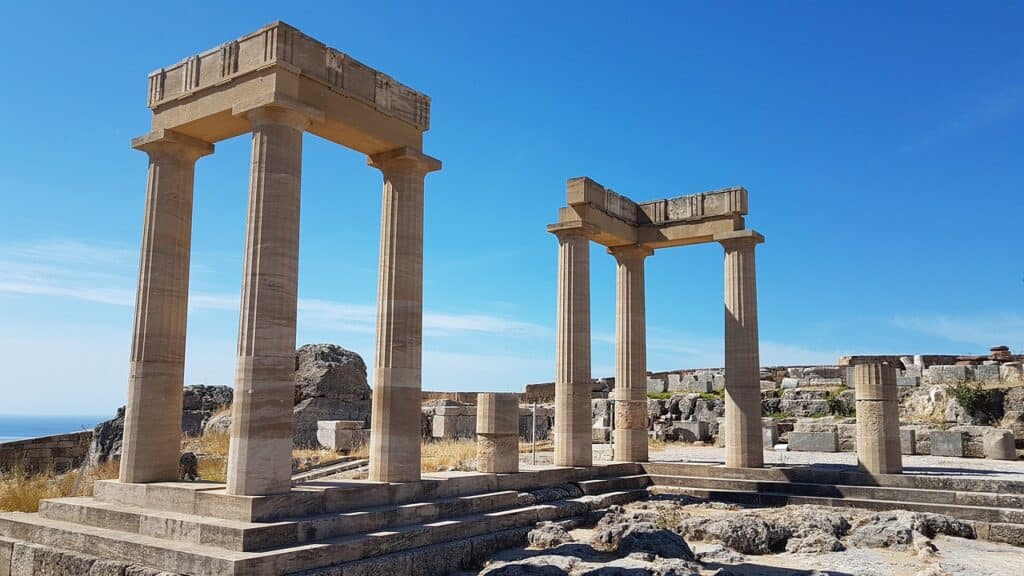
Lindos Acropolis
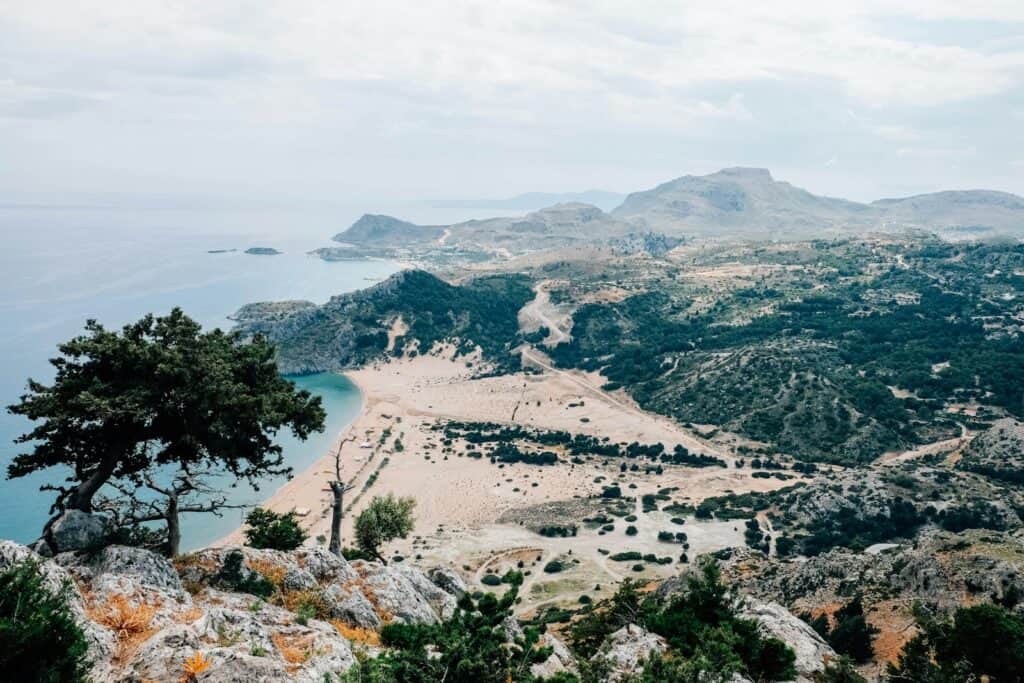
Tsambika Beach

Palace of the Grand Master of the Knights of Rhodes
