
Great Smoky Mountains National Park
Gatlinburg, Tennessee, United States Posted by Brandon B.Admin
Overview of Great Smoky Mountains National Park
Great Smoky Mountains National Park sits on the Tennessee-North Carolina border, straddling the spine of the southern Appalachians in a way that makes it feel genuinely enormous the moment you arrive. It is the most visited national park in the United States, drawing well over ten million visitors most years. That number is not a boast or a warning. It is just context for planning your trip well.
The park covers more than 500,000 acres. Inside that space you get old-growth forests, a chain of peaks over 6,000 feet, fog-draped ridgelines, and roughly 2,900 miles of streams. The town of Gatlinburg, Tennessee serves as the main northern gateway, and most first-time visitors start there before heading up Newfound Gap Road, the main artery that bisects the park from north to south.
There is no entrance fee here. The Smokies are one of only a handful of major national parks that remain free to enter, which partly explains the crowds. Plan accordingly.
Why Great Smoky Mountains National Park Matters
The park was designated a UNESCO World Heritage Site in 1983, recognized specifically for its biodiversity. More tree species grow here than in all of northern Europe combined. That is not hyperbole. Botanists have counted over 1,500 flowering plant species within the park boundaries, which is why researchers still refer to the Smokies as one of the most biologically rich temperate forests on the planet.
Beyond ecology, the park preserves the largest collection of historic log structures in the eastern United States. Cades Cove, a broad valley in the western section, holds mills, churches, and cabins dating from the 1820s through the early 20th century, most of them still standing in their original locations.
The synchronous fireflies are worth mentioning on their own. Every June, a species called Photinus carolinus puts on a coordinated light display in the Elkmont area that draws visitors from across the country. Access during the firefly event requires a lottery-based shuttle system, so if that is on your list, check the park's official site well in advance.
Quick Facts
- Location: Straddles the Tennessee-North Carolina border; main visitor center near Gatlinburg, TN
- Size: Over 500,000 acres
- Established: 1934
- Entrance fee: None
- Open: Year-round, though some roads and facilities close seasonally
- Primary entrance towns: Gatlinburg, TN (north) and Cherokee, NC (south)
- Highest point: Clingmans Dome at 6,643 feet
- Miles of maintained trails: Over 800
Getting There
If you are flying in, Knoxville's McGhee Tyson Airport is the closest major airport, roughly 45 minutes from Gatlinburg under normal traffic conditions. Asheville Regional Airport in North Carolina offers another option if you plan to enter from the Cherokee side.
There is no public transit into the park itself, so a car is essentially required. From Gatlinburg, the Sugarlands Visitor Center is about two miles south on US-441, which becomes Newfound Gap Road as it climbs into the park. That road is the one most visitors use, and on peak fall weekends it can back up for miles near the Gatlinburg entrance. If you arrive before 9am, you will generally find parking and movement far easier than if you roll in at midday.
Parking inside the park has become a managed system in recent years. Several popular trailheads, including Laurel Falls and Alum Cave Trail, now require a timed-entry vehicle reservation during peak season. Check the park's reservation system before you go rather than assuming you can show up and park anywhere.
The Layout and Experience
Think of the park in rough thirds. The northern Tennessee side around Gatlinburg and Sugarlands is the most accessible and the most trafficked. Cades Cove is in the western Tennessee section, reached via a separate road from Townsend. The southern North Carolina side, around Cherokee and the Oconaluftee Visitor Center, tends to be quieter and is where you pick up access to the Blue Ridge Parkway.
Clingmans Dome Road branches off Newfound Gap Road and climbs to a parking area about half a mile below the summit observation tower. The road is closed from December through March depending on conditions. The half-mile walk to the tower is paved but steep enough that many visitors underestimate it, especially at elevation where the air genuinely feels thinner.
Cades Cove operates on a one-way loop road of about 11 miles. On Wednesday and Saturday mornings in summer, the loop opens early for cyclists and pedestrians before cars are allowed in. It is one of the better ways to experience that valley without the stop-and-go traffic that forms whenever someone spots a bear.
Main Highlights
Alum Cave Trail
One of the park's most popular day hikes leads up to Alum Cave Bluffs, a concave cliff face with overhanging rock that shelters hikers from rain. The round trip to the bluffs is about 4.4 miles with steady elevation gain. Strong hikers continue past the bluffs to the summit of Mount LeConte, one of the highest peaks in the eastern United States.
Cades Cove
The valley is the park's single most visited destination. White-tailed deer are visible here most mornings and evenings. Black bears appear regularly enough that the loop road sometimes comes to an informal standstill. The preserved structures, including the John Oliver Cabin, the Methodist Church, and Mingus Mill's counterpart Grist Mill, give the place a layered quality that purely natural areas lack.
Laurel Falls
The most visited waterfall in the park sits at the end of a paved 1.3-mile trail. It is genuinely beautiful and genuinely crowded. Going early in the morning or on a weekday in the off-season makes a real difference.
Newfound Gap Overlook
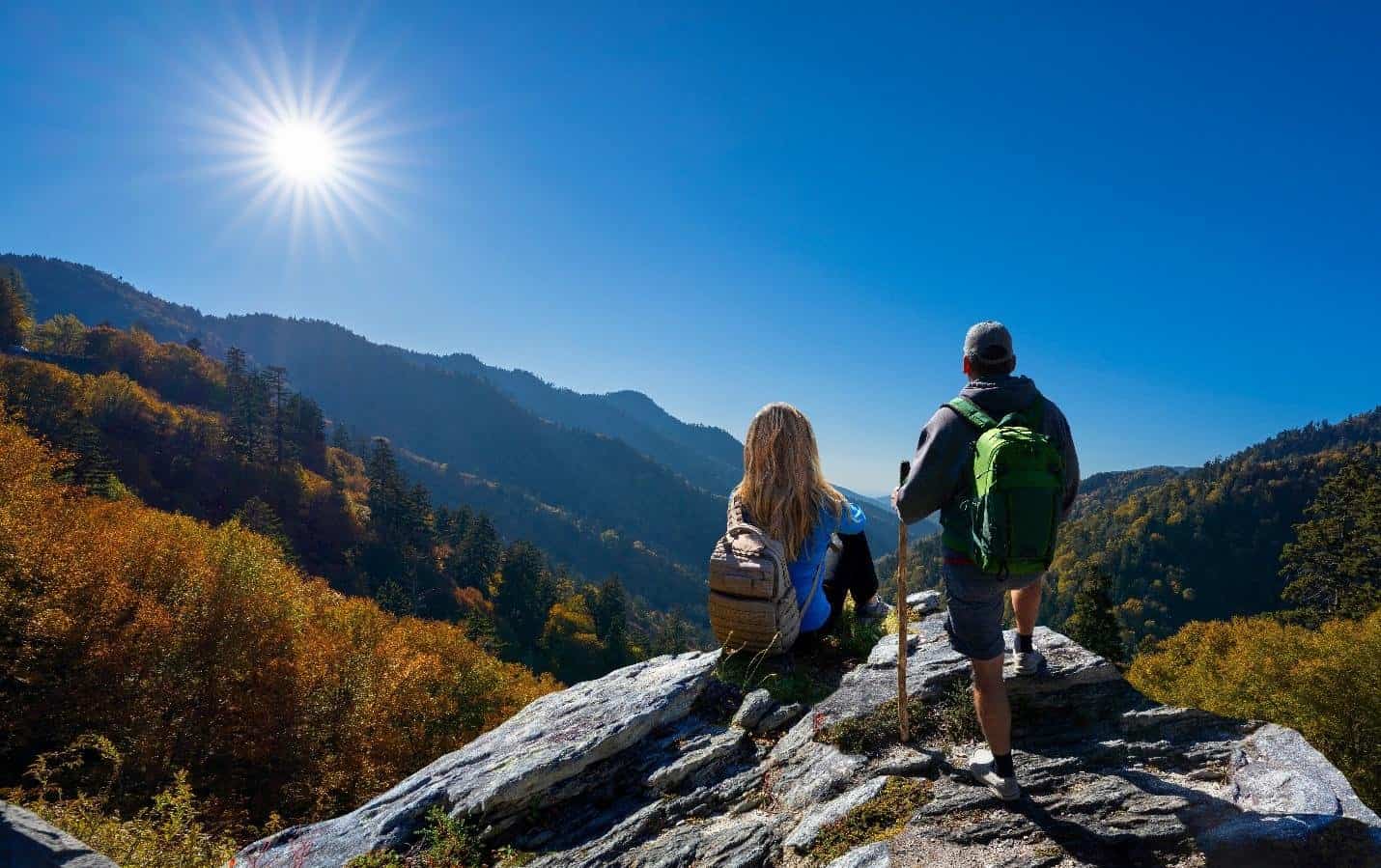
At 5,046 feet, this is where the Appalachian Trail crosses US-441. The views into both Tennessee and North Carolina on a clear day are broad and open. Franklin D. Roosevelt dedicated the park here in 1940, and a stone platform commemorates that ceremony.
Best Time to Visit
October is the most popular month by far, when the hardwood forest ignites with color across the ridgelines. Peak color in the high elevations often arrives in mid-October, while lower valleys hold color into early November. Expect heavy traffic throughout the entire month.
Spring, particularly late April through mid-May, brings wildflower blooms that botanists and photographers plan trips around. Trillium, wild geranium, and dozens of other species carpet the forest floor during this window. Crowds are significant but generally lighter than fall.
Summer is hot and humid at lower elevations but noticeably cooler on the high ridges. Afternoon thunderstorms are common from June through August. The park is busy but manageable if you start early and avoid midday at popular trailheads.
Winter is the overlooked season. Snow occasionally dusts the peaks, Cades Cove is quiet enough to feel like a different park, and the bare trees open up long views that the leafy canopy hides the rest of the year. Some roads and facilities close, so check conditions before visiting.
Photography Tips
The blue haze that gives the Smokies their name is actually volatile organic compounds released by the trees, and it photographs best in the early morning when low-angle light hits the layered ridgelines from the east. Newfound Gap Overlook and the Morton Overlook pullout along Newfound Gap Road are both good spots for this.
For wildlife, Cades Cove at dawn is reliably productive. Bring a longer lens if you have one. Bears tend to keep their distance, and the meadows are wide, so anything shorter than 200mm will leave you with a small subject in a large frame.
Waterfalls photograph well under overcast skies when the light is even and contrast is low. Bright midday sun creates blown-out highlights on white water that are difficult to manage in post-processing.
Practical Tips
- Check the park's timed-entry reservation system before your visit. Several trailheads require advance parking reservations during peak season.
- Cell service is unreliable or nonexistent in most of the park. Download offline maps before you leave your accommodation.
- Black bears are common. Carry bear spray if you are hiking remote trails, and never approach or feed wildlife.
- Layers matter even in summer. Temperatures at Clingmans Dome can be 10 to 20 degrees cooler than in Gatlinburg.
- The Sugarlands and Oconaluftee Visitor Centers are your best stops for updated trail conditions, ranger programs, and free park maps.
- Cades Cove Loop is closed to vehicles Wednesday and Saturday mornings until 10am in summer for cyclists and walkers.
- Leave No Trace rules apply. The park's popularity has put real pressure on its ecosystems, and rangers enforce regulations actively.
Combining with Nearby Attractions
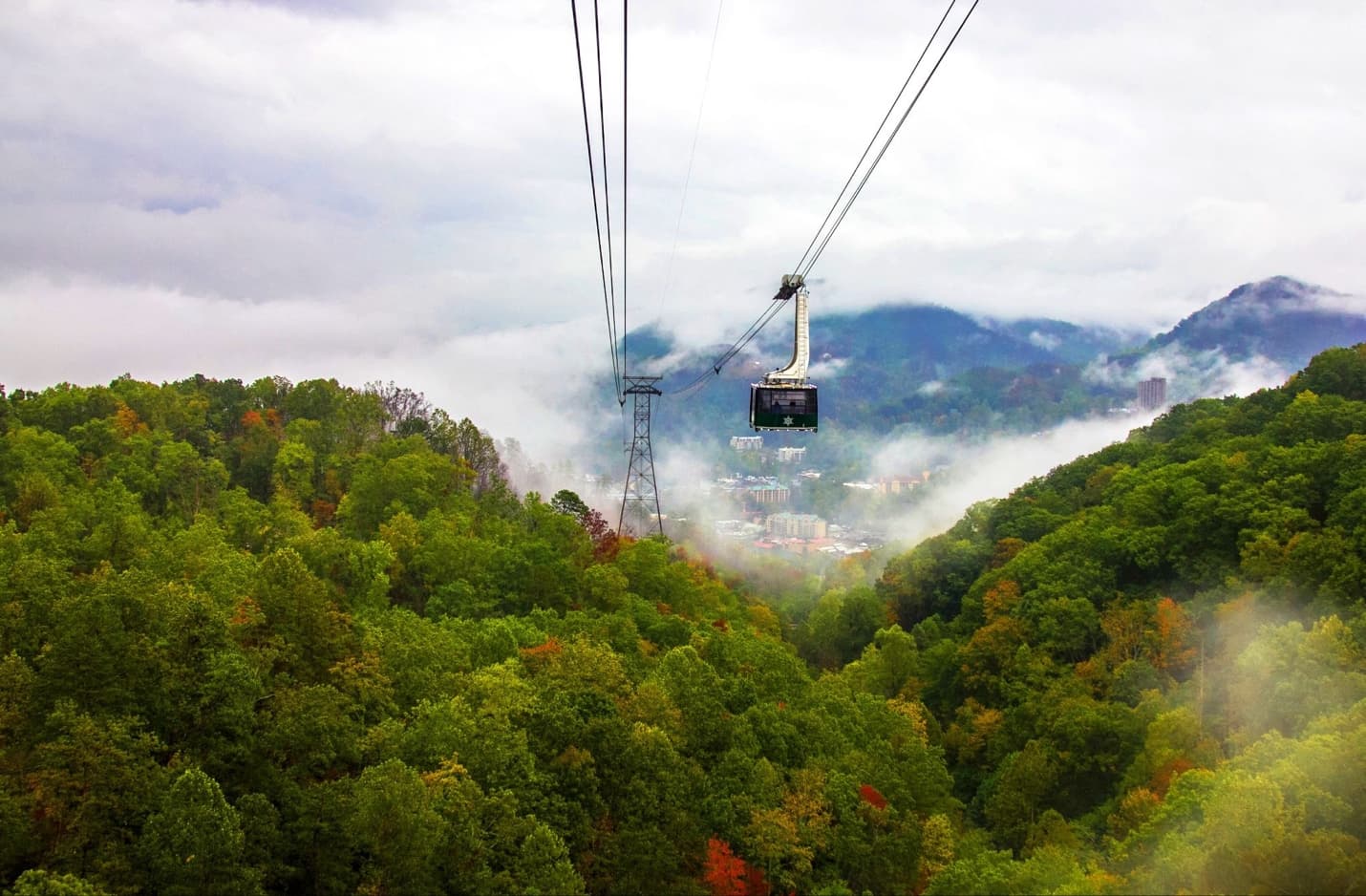
Gatlinburg itself sits right at the park entrance and has no shortage of places to eat, stay, and spend an evening. The town is loud and commercial by design, but that contrast with the quiet forest a mile up the road is part of the experience for many visitors.
On the North Carolina side, the town of Cherokee sits at the southern entrance and is home to the Museum of the Cherokee Indian, a serious cultural institution that provides useful context for the region's history before European settlement. The Blue Ridge Parkway begins at Cherokee and offers one of the most scenic drives in the eastern United States heading northeast toward Asheville.
Dollywood, the theme park in Pigeon Forge about 10 miles from the park entrance, is popular with families and tends to book up on the same fall weekends that the park sees its highest visitation. If you are doing both, plan them on separate days.
FAQ
Do I need a reservation to enter Great Smoky Mountains National Park?
The park itself has no entrance fee and no general reservation requirement, but specific trailhead parking areas require advance vehicle reservations during busy periods. Check the official park website for current requirements before you go.
Are dogs allowed on the trails?
Dogs are permitted in the park but only on two trails: the Gatlinburg Trail and the Oconaluftee River Trail. They are not allowed on any other hiking trails, in backcountry areas, or in park buildings. They must be on a leash no longer than six feet at all times.
How long does it take to drive through the park?
Newfound Gap Road from Gatlinburg to Cherokee is about 31 miles. Without stops, the drive takes roughly an hour. With stops at overlooks, the summit road to Clingmans Dome, and any wildlife slowdowns, plan for at least half a day.
Is the park accessible for visitors with mobility limitations?
Several areas are accessible, including portions of the Oconaluftee River Trail, the Clingmans Dome parking area (though the summit walk is steep and paved), and most visitor centers. The park's accessibility guide, available at visitor centers and online, gives specific information for each area.
Reviews
Sign in and mark this place visited to leave a review.
No reviews yet.
Free Trip Planner
Plan your Gatlinburg trip with our free planner
Build a day-by-day itinerary with AI suggestions, hand-picked places, and friends. Free forever — no credit card.
Related reading
Things to see near Great Smoky Mountains National Park


Places to eat or drink near Great Smoky Mountains National Park



More places in Gatlinburg

Ober Gatlinburg
Little Pigeon River

Tennessee Homemade Wines
