Holy Trinity Church
Old Town, Stratford-upon-Avon CV37 6BG, UKHoly Trinity Church, Stratford-upon-Avon: The Birthplace of Shakespeare's Final Rest
Holy Trinity Church sits at the southern end of Old Town in Stratford-upon-Avon, just a short walk from the bustle of the town centre, and it draws visitors from every corner of the world for one reason above all others: William Shakespeare is buried here. The church stands on the banks of the River Avon, surrounded by lime trees that line the approach path, and the combination of the setting and the weight of what lies inside makes it one of the most quietly affecting places in England. This is not a museum replica or a heritage reconstruction. It is a living parish church that has been in continuous use for centuries.
Even if Shakespeare had never been born, Holy Trinity would still be worth the walk down Old Town. The building itself is genuinely beautiful, and its history stretches back well before the 16th century.
Why Holy Trinity Church Matters
Shakespeare was baptised here on 26 April 1564, and the register recording that baptism is still held at the church. He died on 23 April 1616 and was buried in the chancel just days later. His wife Anne Hathaway, his daughter Susanna, and other members of his family are also interred nearby. The grave slab bearing the famous curse inscription warns anyone against moving his bones, and the proximity of the original baptism record to the burial site gives Holy Trinity a rare kind of completeness that no other Shakespeare site can offer.
The church is a working Anglican parish, not a visitor attraction that happens to have a famous grave. Sunday services continue as they always have. That distinction matters when you walk in.
Quick Facts
- Location: Old Town, Stratford-upon-Avon, roughly a 10-minute walk south from the Royal Shakespeare Theatre
- Type: Grade I listed Anglican parish church, Church of England
- Shakespeare connection: baptism (1564) and burial (1616) both recorded and located here
- Entry: the church itself is free to enter; a small fee applies to access the chancel and Shakespeare's grave
- Photography: permitted in most areas, including the chancel
- Accessibility: the main body of the church is accessible at ground level; the path from Old Town is flat
- Managed by: the local parish, not the Shakespeare Birthplace Trust
Getting There
From the centre of Stratford, walk south along Southern Lane or follow the riverside path along the Avon. Either route takes around 10 minutes on foot from the Royal Shakespeare Theatre. The lime tree avenue leading up to the church's north door is itself a pleasant approach and gives you a first sense of the building's scale before you reach the entrance.
There is limited parking nearby on Old Town, but most visitors arrive on foot from the town centre. If you are coming by bus or train, Stratford-upon-Avon railway station is roughly 15 minutes' walk away.
The Layout and Experience
The church is built in a cruciform plan and dates largely from the 13th and 15th centuries, with significant additions made in the perpendicular Gothic style. The nave is wide and light, with clear-story windows that give the interior a brightness unusual in medieval English churches. Carved misericords in the chancel survive from the 15th century and are worth examining if you have the patience to crouch down.
Shakespeare's grave lies in the chancel, set into the floor in front of the altar rail. The famous inscription reads: "Good friend, for Jesus' sake forbear, to dig the dust enclosed here." The bust mounted on the north wall of the chancel is considered one of the most authoritative likenesses of Shakespeare, installed within a few years of his death and likely approved by people who knew him. The original colours of the bust were restored in a 19th-century repainting, which remains a point of mild scholarly debate.
The baptism register, open to the page recording Shakespeare's baptism, is displayed nearby. Standing in front of it, you are looking at the actual document, not a reproduction. That tends to stop people in their tracks.
History and Background
The origins of a church on this site go back to Saxon times, though the earliest surviving stonework dates to around 1210. The tower was added in the 15th century, and the spire replaced an earlier timber structure. The chancel, which houses Shakespeare's grave, was rebuilt and extended during the medieval period and contains some of the finest medieval stonework in the building.
The church served as the parish church for Stratford throughout Shakespeare's lifetime. His father, John Shakespeare, held civic roles in the town, and the family's connection to Holy Trinity was therefore both religious and social. The register entry for William's baptism uses the Latin form "Gulielmus," a detail that catches many visitors off guard.
The churchyard itself contains graves dating back several centuries. The River Avon runs along the eastern boundary of the grounds, and on a calm day the reflections of the church spire in the water are exactly as good as they look in photographs.
Tickets and Entry
Entry to the main body of Holy Trinity Church is free. To access the chancel, where Shakespeare's grave and the memorial bust are located, there is a modest admission charge. The fee is collected near the chancel entrance and goes toward the upkeep of the building. Given what you are getting access to, most visitors find it entirely reasonable. Guided tours are available periodically, and the church shop near the entrance sells publications about the building's history and its Shakespeare connections.
Best Time to Visit
Holy Trinity is busiest in summer, particularly July and August, when Stratford draws the largest crowds. If you want the chancel to yourself for a few quiet minutes, arriving when the church opens in the morning tends to work well. Midweek visits are noticeably calmer than weekends.
The church is closed to general visitors during services, so it is worth checking the parish schedule before you go, especially on Sunday mornings. The building is also closed on Christmas Day and a handful of other religious observances. Spring and early autumn offer the most comfortable experience: the lime tree avenue looks particularly good when the leaves are out, and the light through the chancel windows is softer outside the height of summer.
Photography Tips
Photography is allowed throughout the church, including the chancel. The interior is relatively low-light, so if you are shooting without a flash, you will want to push your ISO or use a steady hand. The chancel windows throw coloured light across the stone floor in the late morning, which makes for a much more atmospheric shot than midday overhead light. The approach along the lime tree avenue is the classic exterior shot, best in soft morning light or on an overcast day when the sky does not bleach out.
The reflection of the spire in the Avon is visible from the riverbank to the east of the churchyard. It requires a short detour around the perimeter but is worth the five extra minutes.
Combining with Nearby Attractions
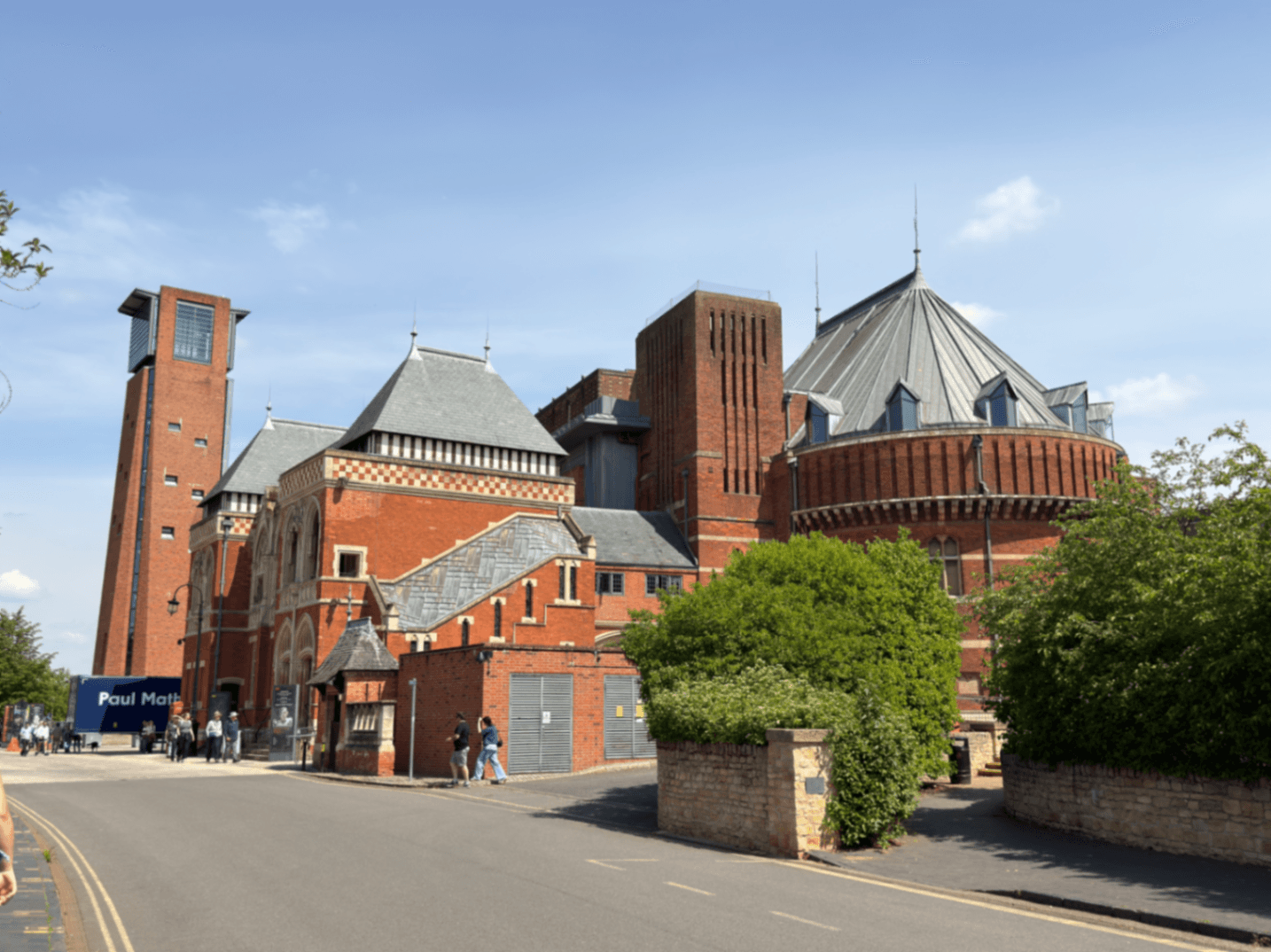
Holy Trinity sits at one end of a natural walking route through Stratford's Shakespeare sites. From here you can walk north along the river past the Royal Shakespeare Theatre and the Swan Theatre, then continue into the town centre toward Shakespeare's Birthplace on Henley Street, which is managed by the Shakespeare Birthplace Trust. Hall's Croft, the home of Shakespeare's daughter Susanna and her physician husband, is just a few minutes' walk from Holy Trinity on Old Town itself, making it an easy first stop before or after the church.
If you have a full day, the combination of Hall's Croft, Holy Trinity, and the riverside walk to the RSC covers the southern half of the town comfortably, leaving the Birthplace and Nash's House for the afternoon.
Practical Tips
- Check the parish website for service times before visiting, especially on Sundays and major religious holidays
- The chancel admission fee is typically cash or card; it is worth having both available
- The lime tree avenue approach from Old Town is the most atmospheric way to arrive on foot
- Give yourself at least 45 minutes inside; the building rewards slow looking
- Dress modestly as you would for any active place of worship
- The churchyard is open even when the church is not, and the riverside setting alone makes the walk worthwhile
- Guided tours of Stratford sometimes include Holy Trinity as a stop; if you are travelling solo, these can add useful context
FAQ
Is Shakespeare's grave actually inside the church?
Yes. The grave is set into the floor of the chancel, in front of the altar rail. It is marked with a stone slab bearing the well-known verse inscription. His wife and other family members are buried alongside him in the same chancel area.
Do I need to book in advance?
No advance booking is required for general visits. You pay the chancel admission fee on arrival. During peak summer months the chancel can get crowded, but there is no timed entry system in place.
Can I attend a service?
Yes. Holy Trinity is an active parish church and regular services are open to all. The schedule is published on the church's own website and tends to follow a standard Anglican pattern with Sunday morning services as the main weekly gathering.
Is the baptism register the original document?
The register on display is the original parish record, not a replica. The entry for Shakespeare's baptism on 26 April 1564 is visible to visitors viewing the display in the chancel area.
How long does a visit take?
Most visitors spend between 30 and 60 minutes inside the church. If you also walk the churchyard and the riverside path, allow closer to 90 minutes for the full stop.
Reviews
Sign in and mark this place visited to leave a review.
No reviews yet.
Free Trip Planner
Plan your Stratford-upon-Avon trip with our free planner
Build a day-by-day itinerary with AI suggestions, hand-picked places, and friends. Free forever — no credit card.
Things to see near Holy Trinity Church

Diddly Squat Farm Shop

St Edward's Church

Stratford-upon-Avon Racecourse