
 Posted by Brandon B.Admin
Il Cenacolo: Leonardo's Last Supper in Milan
Il Cenacolo, the refectory of the former Dominican convent attached to the church of Santa Maria delle Grazie, contains what is arguably the most studied painting in the world. Leonardo da Vinci's Last Supper covers the north wall of this modest dining hall, and if you have even a passing interest in Renaissance art, a visit here will stay with you for a long time. The work is not a fresco in the traditional sense, which is part of why its survival across more than five centuries has been so precarious and so remarkable.
People often assume the experience will feel crowded and rushed, a box to tick before moving on to the Duomo. In practice, the controlled entry system makes it genuinely intimate. You will not be standing shoulder to shoulder with a hundred strangers.
Why Il Cenacolo Matters
Leonardo began the painting around 1495 and completed it by 1498, working on commission for Ludovico Sforza, Duke of Milan. Rather than applying pigment to wet plaster the way fresco painters did, he used tempera and oil on a dry plaster wall. The technique gave him time to revise and layer, something fresco would not allow. The trade-off was durability. By the early 1500s, the paint was already beginning to flake.
What you see today is the product of multiple restoration campaigns, the most thorough of which ran from 1978 to 1999. Restorers removed overpainting from earlier, less careful interventions and stabilized what remained of the original pigment. Roughly a fifth of what you see is original Leonardo. That fraction is still extraordinary.
The composition itself changed how Western painting depicted narrative. The moment Leonardo chose, the instant Christ announces that one of the twelve will betray him, sets each apostle into a distinct emotional reaction. Groupings of three ripple outward from the central figure. The vanishing point aligns precisely with Christ's right temple, so the architecture of the room draws your eye whether you intend it or not.
Quick Facts
- Location: Piazza Santa Maria delle Grazie, in the Magenta neighborhood of central Milan
- The painting measures roughly 9 meters wide by 4.6 meters tall
- Visit slots are timed and limited to groups of about 25 people at a time
- Each visit lasts approximately 15 minutes inside the refectory
- Booking in advance is essential, often weeks or months ahead
- The church of Santa Maria delle Grazie next door is a UNESCO World Heritage Site, designated in 1980 along with the Cenacolo itself
- Photography without flash is permitted inside
Getting There
The refectory sits on Piazza Santa Maria delle Grazie in the Magenta district, about a 15-minute walk west from the Duomo. The nearest metro stop is Cadorna on the M1 (red) and M2 (green) lines, from which the piazza is roughly a 10-minute walk. Tram line 16 stops very close to the church if you prefer surface transport. There is limited street parking nearby, and driving into this part of Milan generally creates more frustration than it saves.
Tickets and Entry
This is the part that catches visitors off guard. You cannot simply show up and walk in. Entry is by advance reservation only, with timed slots available through the official booking system. Demand consistently outpaces availability, especially between April and October, so booking several weeks ahead is standard practice. Last-minute tickets occasionally surface through authorized resellers, but at a notable premium.
General admission includes entry to the refectory. Guided tours are also available and can be booked through the same system or via licensed tour operators in Milan. A guided visit is worth considering if this is your first time, since the 15 minutes inside pass quickly and having context before you enter helps considerably.
The adjacent church of Santa Maria delle Grazie is free to enter and well worth a few minutes on its own. Bramante's tribune at the rear of the church is one of the cleaner examples of early Renaissance architecture in the city.
The Experience Itself
Groups pass through a series of climate-controlled antechambers before entering the refectory. The humidity and temperature controls exist to protect the painting, not to inconvenience visitors, though the brief waiting periods between chambers do build a kind of anticipation.
When the door opens and you step into the refectory, the scale is the first thing that registers. The painting fills the entire end wall. Leonardo designed the architectural perspective in the mural to extend the actual room, so for a moment the illusion works and the painted space feels continuous with the physical one you are standing in.
Fifteen minutes is genuinely short. Most people spend the first few minutes simply adjusting to being in the room, and then the guide (if you have one) begins pointing out details you would otherwise miss: the position of Judas reaching for the bread, the way Thomas raises a finger, the barely-there landscape visible through the painted windows behind Christ. Come with a mental image of the painting already in your head, because you will want to spend your time looking rather than orienting.
On the opposite wall hangs Giovanni Donato Montorfano's Crucifixion, painted in 1495. It receives almost no attention from visitors, which is understandable given the competition, but it is a substantial work in its own right.
Best Time to Visit
The refectory is open most days except Mondays. Morning slots tend to be slightly less hectic in the antechambers, though the experience inside is identical regardless of when you go. Summer brings the heaviest tourist traffic to Milan overall, so if you are visiting between June and August, book as early as possible. Late autumn and winter visits, particularly November through early February, tend to come with shorter lead times for reservations and a noticeably quieter atmosphere on the piazza outside.
Photography Tips
Flash photography is not allowed, and the lighting inside the refectory is deliberately subdued. A smartphone on a recent iOS or Android system will handle the conditions reasonably well if you keep it steady. Dedicated cameras with good low-light performance will do better. You will have limited time to compose shots, so decide in advance whether you want a wide image of the full painting, a detail of the central group, or a shot that includes the room itself to convey scale. Trying to get all three in 15 minutes is possible but only just.
Combining with Nearby Attractions
The Magenta neighborhood is one of Milan's more pleasant areas to walk, and a visit to Il Cenacolo pairs naturally with a few other stops. The Museo Nazionale della Scienza e della Tecnologia Leonardo da Vinci is about a 10-minute walk south and houses wooden models reconstructed from Leonardo's own engineering drawings, which gives the visit an unexpected continuity. The Basilica di Sant'Ambrogio, one of the oldest churches in Milan, is roughly the same distance to the southeast and takes no more than 30 minutes to see properly.
If you are building a full day in this part of the city, the Corso Magenta street itself has good cafes and a handful of small food shops worth stopping at for lunch. The neighborhood feels considerably less tourist-oriented than the blocks around the Duomo.
Practical Tips
- Book directly through the official Cenacolo Vinciano website or through the phone reservation line to avoid third-party markups
- Arrive at least 10 minutes before your slot; late arrivals may not be admitted
- Large bags must be left in the cloakroom before entry
- The refectory is not air-conditioned in the conventional sense; dress in layers since the climate control keeps the space cool year-round
- Read about the painting before you go. Knowing which figure is which saves precious time inside
- The church next door is free and usually open in the mornings; budget an extra 20 minutes for it
- If your reservation is through a tour group, confirm exactly how much time you will have inside the refectory before booking
FAQ
Can I visit without a reservation?
No. Walk-in entry is not available. Every visitor needs a timed reservation, and the site does not sell tickets at the door.
How far in advance should I book?
During peak season, two to three months ahead is not unusual. In quieter months, two to four weeks is often enough, but earlier is always safer.
Is the visit worth it given the short time inside?
Most people say yes, sometimes emphatically. The controlled format means you are never fighting for a clear view, and 15 minutes in front of the actual painting is a different experience from any reproduction, however good.
Is Il Cenacolo accessible for visitors with mobility limitations?
The refectory is on the ground floor and the site is generally accessible. Contact the venue directly when booking if you have specific requirements, as the antechamber system involves some movement between spaces.
Can children visit?
Yes, and the visit can work well for older children who have some context for what they are seeing. For very young children, the 15-minute format and the quiet required inside the refectory may be challenging depending on the child.
Reviews
Sign in and mark this place visited to leave a review.
No reviews yet.
Free Trip Planner
Plan your Italy trip with our free planner
Build a day-by-day itinerary with AI suggestions, hand-picked places, and friends. Free forever — no credit card.
Things to see near Il Cenacolo
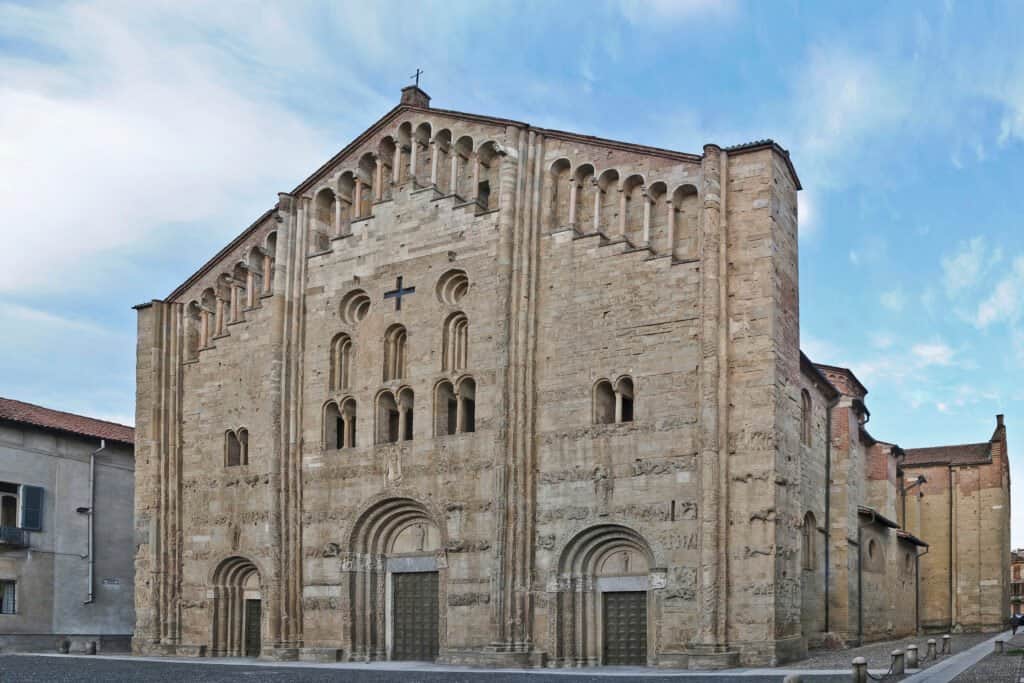
San Michele Maggiore Church
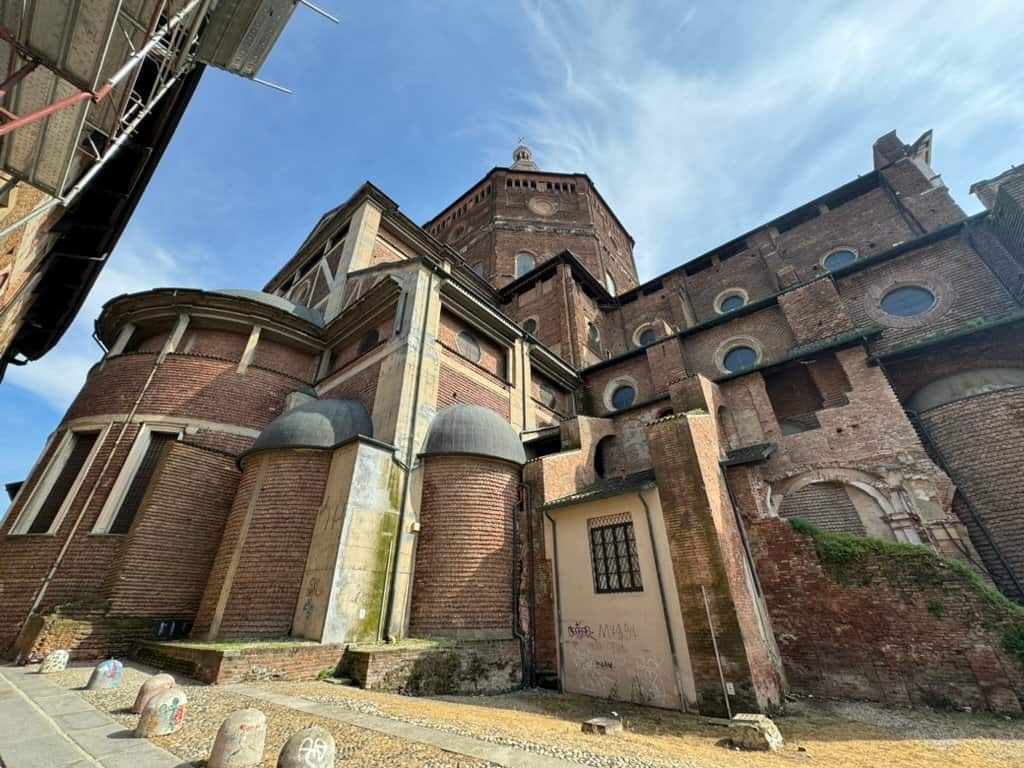
Cathedral of Pavia
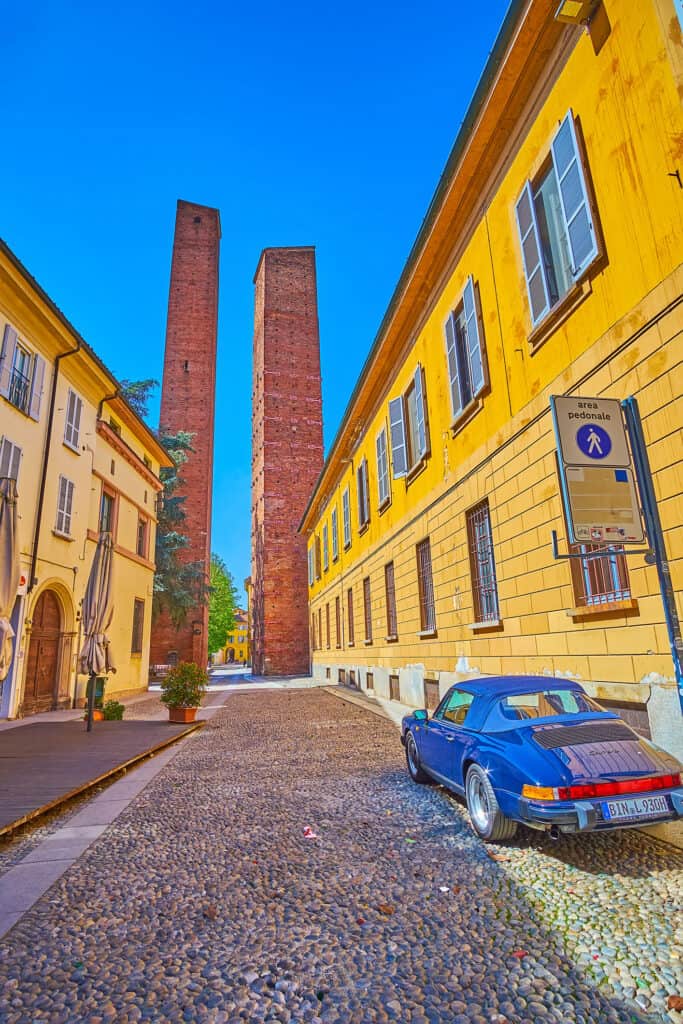
Towers of Pavia (Torri di Pavia)
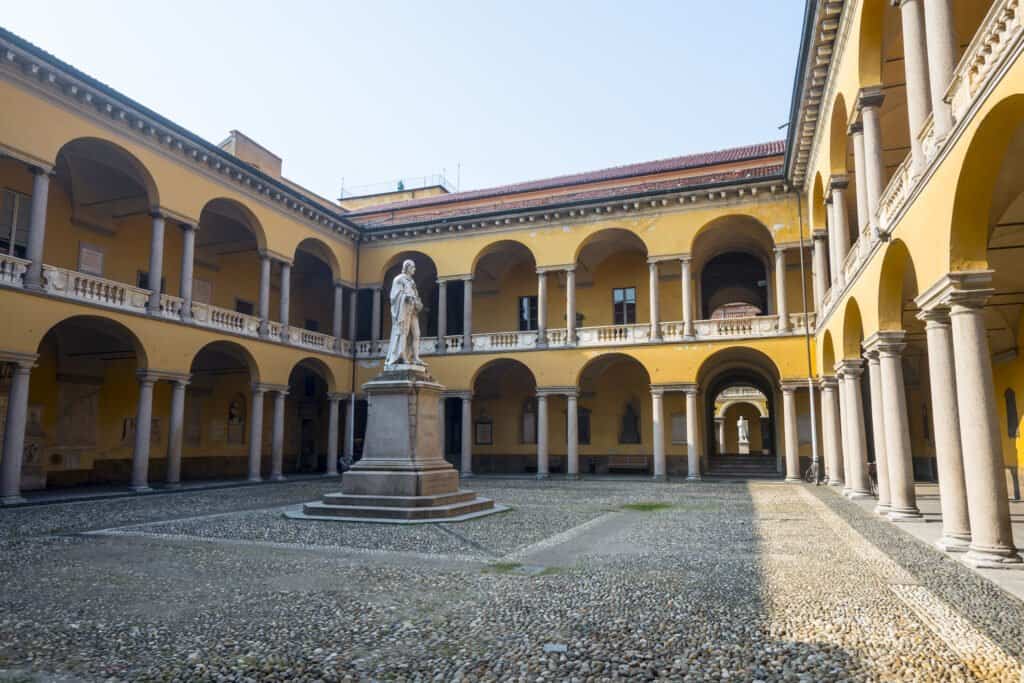
The University of Pavia
Places to eat or drink near Il Cenacolo

Pasticceria Vigoni

Pizza e Mozzarella
![[LA] Gelateria della Musica](https://lh3.googleusercontent.com/grass-cs/AABkmLezQ1aahZ3Sj4IKvguuB34dH27jVTId85hNXzYEv9WG7GfBYHmI1cwHUPQVisLeNLAKCNmd1glh0QlkPrqj2oRaVJ7D4jkdmWOq7BbYLzAtEceYr8t1MxXkfmk96U5ezHE2vYUBkvyeVynx=s4800-w1600-h1600)
[LA] Gelateria della Musica

Officina Milano
More places in Milan

miscusi Milano Centrale

Brera District
Reminisce The Good Ol’ Days At La Scala
