
Inchcolm
Inchcolm KY3 0XR, UKOverview
Inchcolm is a small island in the Firth of Forth, roughly halfway between Edinburgh and the Kingdom of Fife. When you approach by ferry, the ruins of its medieval abbey emerge from the rocky shore, their honey-coloured stone catching the light across the water. The island covers just 5 hectares but holds nearly nine centuries of Scottish religious and maritime history. Most visitors spend two to three hours here, wandering the abbey grounds, climbing to the top of the island, and absorbing the quiet that comes from being surrounded by water.
Why this place matters
Inchcolm Abbey was founded in 1123 and became one of Scotland's most important monastic communities until the Reformation stripped it of its power and wealth. The ruins you walk through today are substantially more intact than many other Scottish abbeys. The cloisters, chapter house, kitchen, and dormitory remain recognizable enough that you can reconstruct the rhythm of monastic life.
Beyond the abbey, Inchcolm matters to military history. During World War II, the island housed a naval fort and anti-aircraft battery. You can still see traces of these defenses scattered across the island, creating an unexpected layer of 20th-century archaeology beneath the medieval stones.
Quick facts
- Island size: 5 hectares
- Abbey founded: 1123
- Ferry crossing time: approximately 15 minutes from South Queensferry
- Visitor season: typically April through September, though open most days year-round
- Managed by Historic Environment Scotland
Getting there
You reach Inchcolm only by ferry. Ferries depart from South Queensferry, a coastal village roughly 10 miles west of Edinburgh city centre. By car from Edinburgh, take the A90 heading south across the Forth Road Bridge, then follow signs for South Queensferry. Parking is available in the village, though spaces fill quickly on weekends and school holidays.
If you're using public transport, take a train from Edinburgh Waverley to Dalmeny station (approximately 12 minutes), then walk down to South Queensferry waterfront (about 20 minutes downhill). From there, the ferry terminal is signposted.
Ferry schedules vary by season. In summer, multiple daily sailings usually run. Winter schedules are reduced, and services sometimes close due to weather. Check the ferry operator's website before you travel.
The layout and experience
The ferry lands on a small pier on the southern shore. From there, a short path leads uphill to the abbey complex. The ruins sit on relatively flat ground, arranged around what would have been the cloistered courtyard. You approach through what remains of the gatehouse and into the open air of the cloister.
The abbey church is the largest structure. Its walls still stand to a considerable height, and you can see the shape of the nave, transepts, and choir. The chapter house adjoins the cloister to the east, with stone benches still visible along the walls where monks would have gathered for daily readings. The kitchen, dormitory, and abbot's lodging are identifiable as foundations and partial walls.
Beyond the abbey, paths lead to the highest point of the island (about 30 metres elevation), from which you get unobstructed views across the Firth of Forth toward the Forth Bridge and the Fife coastline. On clear days, the view extends well into Fife. The western side of the island has rocky shores and small beaches; this is where many of the World War II fortifications are most visible.
There is no visitor centre, café, or facilities on the island itself. Bring water and any food you want. The walk around the island is gentle and takes roughly an hour at a leisurely pace, though you can spend as long as you wish in the abbey ruins themselves.
Main highlights
The cloisters are the heart of the visit. Standing in the courtyard, you can read the physical layout of monastic life. The chapter house is particularly striking because enough of its structure survives that you can imagine the abbot reading from the lectern while monks sat on stone benches listening.
The abbey church's eastern end still shows the outline of the choir and presbytery. Look for the decorative stonework and the bases of pillars that supported the roof. This is where the monks would have sung the offices eight times a day, marking the rhythm of their lives.
If you're interested in World War II history, the gun emplacements and concrete foundations scattered across the island tell a different story. The anti-aircraft battery was positioned to defend the Forth Bridge, a critical strategic target. The contrast between these austere concrete structures and the carved medieval stones is stark.
History and background
Inchcolm Abbey was established by Augustinian canons in 1123, though a hermit may have lived on the island before that. The abbey grew wealthy through fishing rights and donations from Scottish nobility. By the late medieval period, it was one of the most prosperous religious houses in the Lothians region.
The Reformation of the 1560s ended monastic life at Inchcolm. The abbey was dissolved, its lands seized, and most of its moveable wealth stripped away. The buildings were left to decay, though locals continued to use the stones for other purposes over subsequent centuries, which is why many structures are only partial ruins today.
During World War II, the island was militarized as part of the air defense network protecting the Forth Bridge and the approaches to the Firth. The naval fort and anti-aircraft battery remained operational until the end of the war. After 1945, the island gradually returned to civilian use, and the ruins were eventually placed in the care of what is now Historic Environment Scotland.
Tickets and entry
Entry to Inchcolm Abbey is included with your ferry ticket. There is a general admission charge for the ferry, which covers both the crossing and access to the island and ruins. Guided tours are sometimes available through the ferry operator. Check in advance if a guided tour interests you, as availability depends on staffing and season.
Best time to visit
Summer (May through August) offers the most reliable weather and the most frequent ferry sailings. The light is excellent for photography during these months, and the island is at its most accessible. Spring and autumn are quieter, with fewer tourists but still reasonable ferry schedules and generally pleasant conditions.
Winter crossings are possible but less frequent, and the Firth can be rough. If you're visiting between November and March, check ferry schedules carefully and be prepared for wind and cold. The island is beautiful in winter light, but the experience is more austere.
Photography tips
The abbey ruins photograph best in morning light from the southwest, when the sun illuminates the honey-coloured stone. The cloisters courtyard is a natural composition, with the chapter house making a strong foreground.
For wider landscape shots, climb to the island's highest point and shoot back toward the ruins with the Forth Bridge in the distance. This layering of historical periods works well in photographs.
The World War II fortifications are easier to photograph in afternoon light, when shadows give them more definition. Concrete and erosion tell their own story if you look closely at the detail.
Facilities and preparation
Bring water and any snacks or lunch you want. There are no shops, cafés, or vending machines on the island. The nearest facilities are in South Queensferry village, a short walk from the ferry terminal.
Wear sturdy shoes with good grip. The paths around the island are mostly clear, but the stone ruins are uneven, and the shoreline is rocky. In wet weather, the ground becomes slippery.
There are no toilets on the island. Use the facilities at the ferry terminal or in South Queensferry before you board.
The island is exposed to wind and rain. Even on warm days, bring a windproof layer. In summer, sun protection is essential, as there is very little shade once you're on the island.
Combining with nearby attractions
South Queensferry itself is worth an hour of exploration. The village has a long history as a crossing point on the Firth, and there are good views of the Forth Bridge from the waterfront. A few pubs and restaurants line the main street if you want to eat after your island visit.
The Forth Bridge visitor experience is located on the north side of the bridge (in Fife) and offers a different perspective on this engineering landmark. It's accessible by car or train.
If you have more time, the Kingdom of Fife has numerous castles, fishing villages, and coastal walks within an hour's drive. Culross, a village with 16th and 17th-century architecture, is about 30 minutes north of the ferry terminal.
Sample visit plan
Arrive at South Queensferry at least 30 minutes before your ferry departure to allow time for parking and ticket purchase. Check the ferry schedule the day before, as times vary by season.
Once on the island, spend your first 45 minutes walking the abbey ruins systematically, starting at the gatehouse and moving clockwise around the cloisters. Read the information boards to understand the layout. The second 45 minutes can be spent either exploring the island's perimeter or sitting quietly in the cloister courtyard.
If you have a third hour, walk to the highest point of the island and then explore the western shore where the World War II fortifications are most visible. Return to the ferry landing 10 minutes before your scheduled departure.
Practical tips
- Ferry schedules change with the season. Check before you travel.
- The crossing can be rough in windy conditions. If you're prone to seasickness, take precautions before boarding.
- Visit early in the day if possible. The ferry is busier in afternoon, especially on weekends.
- There is no guarantee of a return ferry if you miss yours. Plan your time on the island accordingly.
- The island is quiet and peaceful. Expect few other visitors outside summer peak season.
- Mobile phone signal is weak or absent on the island. This is not a place for connectivity.
FAQ
How long should I spend on Inchcolm? Most visitors spend two to three hours on the island. You can do it in 90 minutes if you move quickly, but the place rewards lingering.
Is the island accessible for people with reduced mobility? The main abbey complex is on relatively flat ground, but the paths are uneven, and there are no ramps or adapted facilities. The island is not easily accessible for wheelchair users or those with significant mobility challenges.
Can I bring dogs to Inchcolm? Dogs are permitted on the island but must be kept under control at all times. There are no designated dog facilities.
What should I do if the weather turns bad while I'm on the island? The abbey ruins offer some shelter, but there is no enclosed building to retreat to. If conditions deteriorate significantly, return to the ferry landing and contact the ferry operator.
Is there camping or overnight accommodation on the island? No. Inchcolm is a day-visit destination only. Accommodation is available in South Queensferry and surrounding towns.
Reviews
Sign in and mark this place visited to leave a review.
No reviews yet.
Free Trip Planner
Plan your Scotland trip with our free planner
Build a day-by-day itinerary with AI suggestions, hand-picked places, and friends. Free forever — no credit card.
Things to see near Inchcolm
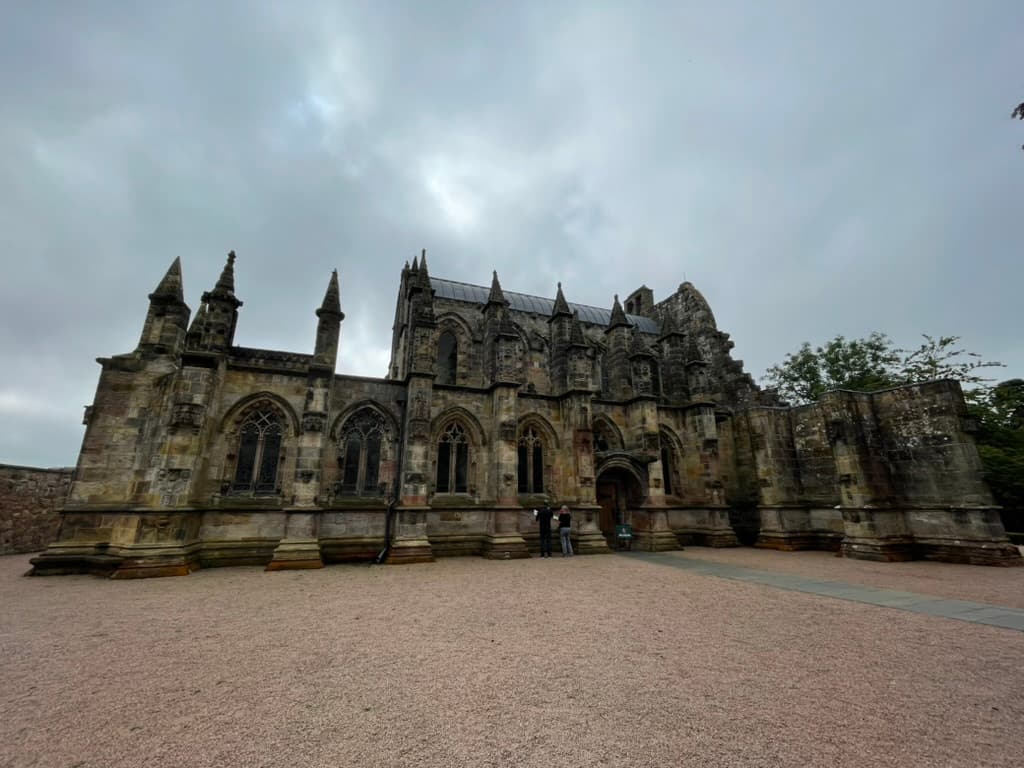
Rosslyn Chapel

Jupiter Artland

Kirkbrae House

Liberton Kirk
Places to eat or drink near Inchcolm


More places in Scotland

Ardverikie House Viewpoint

Dunrobin Castle & Gardens

St James Quarter
