
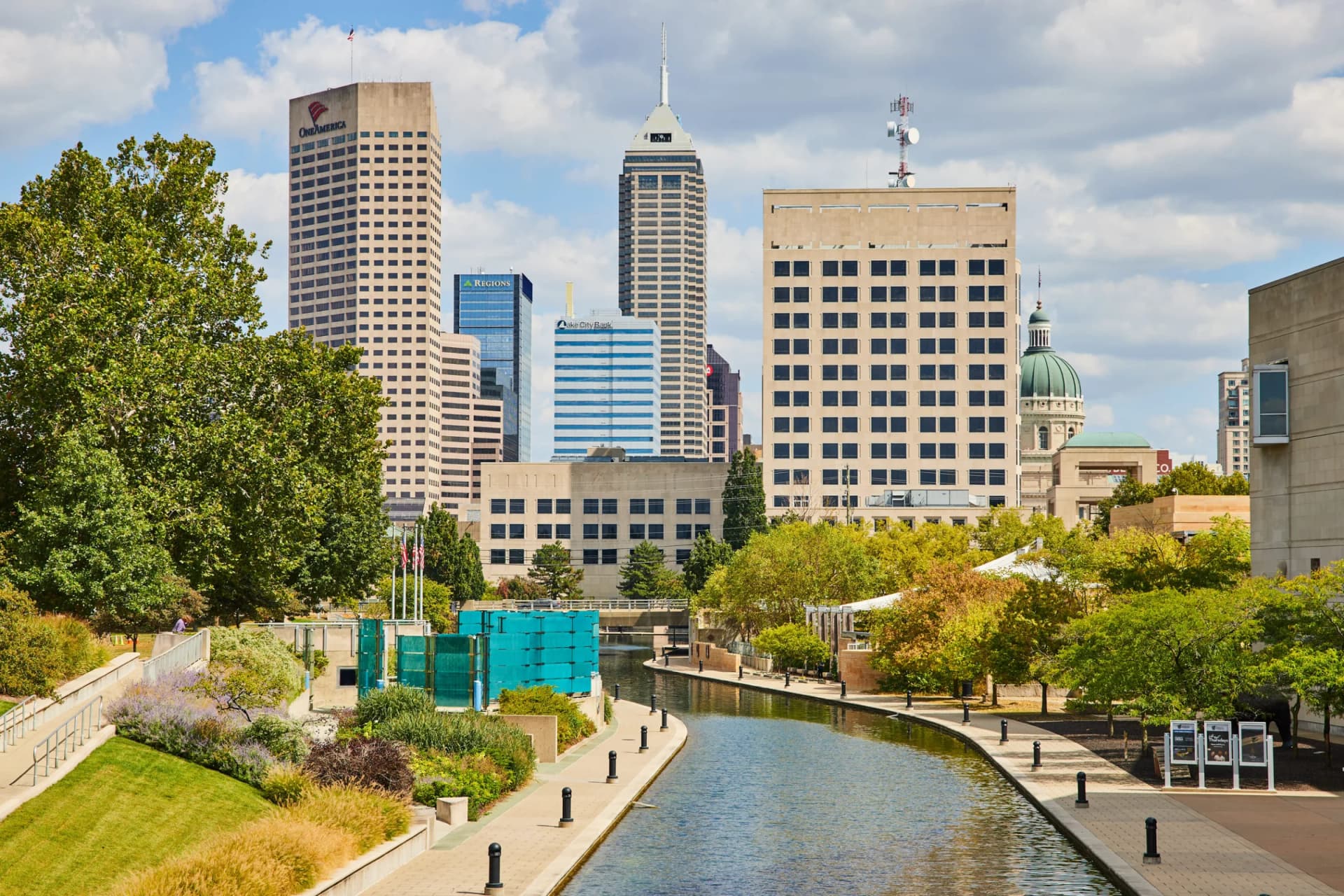
Indianapolis Travel Guide
Overview
The Indianapolis travel guide you actually need starts with one honest admission: most people pass through Indiana's capital on their way somewhere else, and that's a mistake. Indianapolis rewards the traveler who slows down. It's a city that has spent the last two decades quietly rebuilding itself around walkable neighborhoods, a serious food scene, and enough motorsport history to fill several lifetimes of curiosity.
The city sits at the geographic center of Indiana, roughly equidistant from Chicago, Cincinnati, and Louisville. That central position made it a natural crossroads, and the downtown core reflects that legacy in its grid of wide avenues radiating out from the Soldiers and Sailors Monument at Monument Circle. The Circle, completed in 1902, still anchors the city visually and physically. Everything else organizes itself around it.
What surprises most visitors is the scale of the cultural infrastructure. The Indianapolis Museum of Art at Newfields sits on 152 acres and houses a permanent collection spanning 5,000 years. The Children's Museum of Indianapolis is consistently ranked among the largest of its kind in the world. The Indiana Convention Center connects directly to Lucas Oil Stadium via climate-controlled walkways, which matters more than you'd think when February arrives.
The city's reputation, fairly or not, lives and dies by the Indianapolis 500. The race has run at Indianapolis Motor Speedway every May since 1911, with a gap only for World War II. But Indy is more than one event. The Pacers, the Colts, and a thriving amateur sports scene have turned the city into a year-round destination for sports tourism in a way that few mid-sized American cities can match.
When to Visit
May is the peak month, and the Indianapolis 500 is the reason. Race day falls on the Sunday before or on Memorial Day, and the weeks surrounding it fill hotels across the metro area. If you want to attend, book accommodations at least several months in advance and expect prices to reflect the demand. If you'd rather avoid the crowds, skip the last two weeks of May entirely.
Late April and early October offer the most pleasant weather without the full surge of summer visitors. Temperatures in those windows tend to stay in the 60s Fahrenheit, the trees along the Central Canal are at their best in fall color, and the restaurant scene runs at full speed without race-week pressure. The Broad Ripple neighborhood in particular comes alive in October with food and arts events.
Summer runs hot and humid, typically July and August, but the city stays active. The Indiana State Fair, one of the largest in the country, runs through most of August at the fairgrounds on East 38th Street. Outdoor concerts, farmers markets, and evening events along the White River State Park corridor fill the calendar.
Winter is the honest answer for budget travelers. December through February sees significantly lower hotel rates, and the downtown core remains functional thanks to the indoor skywalk system connecting major hotels, the convention center, and the mall. January is the quietest month. If cold weather doesn't bother you, it's worth considering.
Where to Stay
Downtown is the obvious base, and for most visitors it makes the most logistical sense. You can walk to Monument Circle, Lucas Oil Stadium, the Indiana Convention Center, and the White River State Park attractions without a car. The hotel density here is high, ranging from budget chains to upscale properties. The area around Georgia Street, which was pedestrianized for the 2012 Super Bowl, has become a pleasant corridor connecting the stadium to the broader downtown grid.
Mass Ave, short for Massachusetts Avenue, is the neighborhood that tends to convert skeptics. Running northeast from downtown, it's roughly a 10-minute walk from Monument Circle and lined with independent restaurants, cocktail bars, galleries, and a working theater scene. Staying near Mass Ave puts you within range of both the downtown core and the neighborhood's own nightlife without needing to drive. Several boutique hotels have opened in the corridor over the past decade.
Broad Ripple sits about 6 miles north of downtown along the Monon Trail, a converted rail corridor that doubles as a cycling and running path connecting the two areas. The neighborhood has a slightly younger, more residential feel, with coffee shops, casual restaurants, and the White River running along its western edge. It suits travelers who want a quieter base and don't mind a short drive or ride-share into the city center.
Fountain Square, southeast of downtown, has gone through a visible transformation. It now has independent bars, a boutique hotel in a converted historic building, a vintage bowling alley, and a diner culture that runs late. It's quieter than Mass Ave but has more local character than the convention-center corridor.
How to Reach Indianapolis
Indianapolis International Airport sits about 15 miles southwest of downtown, and most visitors fly in. The airport opened its current terminal in 2008 and has been consistently well-reviewed for its size and ease of navigation. Non-stop flights connect Indianapolis to most major U.S. hubs, and the drive or ride-share from the airport to downtown takes roughly 20 to 25 minutes depending on traffic.
Amtrak's Cardinal line stops at Union Station in downtown Indianapolis, connecting the city to Chicago to the west and Cincinnati and Washington D.C. to the east. The frequency is limited, typically three days per week in each direction, so it works better as a scenic option than a primary transit strategy for most travelers. Union Station itself is worth a look even if you're not taking the train.
By car, Indianapolis is well-connected. Interstates 65, 70, and 74 all converge in or near the city. The drive from Chicago takes roughly three hours under normal conditions, from Cincinnati about two hours, and from Louisville around two hours as well. Parking downtown is available in surface lots and garages, with rates that are generally reasonable by major-city standards.
International visitors should verify current visa and ESTA requirements before travel. Entry rules can change, and U.S. Customs and Border Protection is the authoritative source.
Getting Around Indianapolis
Indianapolis is a driving city at its core. The street grid is easy to navigate and most of the metro area outside downtown assumes you have a car. That said, within the central neighborhoods, you can cover a lot of ground on foot or by bike.
IndyGo is the city's public bus network. The Red Line, which opened in 2019, runs along College Avenue from Broad Ripple south through the University of Indianapolis campus and offers a genuine alternative to driving that corridor. Bus Rapid Transit-style stations and frequent service make it more usable than a traditional bus route. Other routes cover the broader metro but require some patience.
The Pacers Bikeshare system has docking stations throughout downtown, Mass Ave, Broad Ripple, and Fountain Square. For short trips between neighborhoods, it's one of the faster options and cheaper than a ride-share. The Monon Trail connects several neighborhoods on a car-free path, making cycling a practical choice if the weather cooperates.
Ride-sharing through Uber and Lyft is reliable across the city. For most visitors who aren't staying exclusively in the downtown core, having a car or relying on ride-shares is the realistic approach. Parking at most neighborhood destinations is free or low-cost.
Top Indianapolis Travel Tips
Book anything related to the Indianapolis 500 extraordinarily early. Hotels, rental cars, and even parking sell out months before race weekend. If you're not attending the race, that last weekend of May is simply a good time to be elsewhere.
The downtown skywalk system connects several major hotels, the convention center, Circle Centre Mall, and Lucas Oil Stadium. In winter, it's genuinely useful for getting between downtown attractions without stepping outside.
Tipping norms follow standard American practice: 18 to 20 percent at sit-down restaurants, a few dollars for bartenders per round, and a few dollars per bag for hotel porters. Service workers in Indiana rely on tips as part of their income structure.
The electrical standard is 120V with Type A and Type B outlets, the same as the rest of the United States. European and international visitors will need a plug adapter and possibly a voltage converter for some devices.
Cell coverage is strong throughout the city and most of Indiana. Major U.S. carriers all have solid service downtown and along the main corridors. International visitors can pick up a prepaid SIM at the airport or in major electronics retailers downtown.
Monument Circle has been the site of occasional large public gatherings and protests. If you see a crowd forming downtown, it's worth checking local news quickly to understand context before walking into it.
The Central Canal walk between the Indiana State Museum and the Eiteljorg Museum of American Indians and Western Art is one of the most pleasant 30-minute walks in the city. It's free, flat, and often overlooked by first-time visitors who head straight for indoor attractions.
Typical Costs in Indianapolis
The local currency is the U.S. dollar. Indianapolis is meaningfully cheaper than most coastal American cities, and that gap shows up most clearly in accommodation and dining. A mid-range hotel downtown on a non-event weekend typically runs less than equivalent properties in Chicago or Nashville. During race week in May, those same hotels can multiply in price significantly.
Casual dining in the Mass Ave and Fountain Square neighborhoods sits in the budget to mid-range tier. A full dinner with drinks at a neighborhood restaurant usually lands in a range that feels comfortable compared to what you'd pay in larger markets. Upscale options exist, particularly in the downtown hotel corridor and along Mass Ave, but fine dining at the highest level is a smaller part of the scene than in some comparable cities.
Museum admissions vary. The Children's Museum charges a general admission fee that reflects its scale and programming. Newfields has tiered admission depending on what you want to see, including the outdoor grounds. The Indiana State Museum and several smaller attractions in White River State Park are lower cost or free on certain days.
Getting around by ride-share within the central neighborhoods is inexpensive. Short trips between downtown and Mass Ave or Fountain Square typically cost a few dollars. Longer trips to the suburbs or the airport reflect normal ride-share pricing for a mid-sized U.S. city.
Must Try Food and Drinks
Indiana has a food identity that doesn't always get the attention it deserves. A few dishes and drinks are specific enough to the state that skipping them would be a genuine miss.
Pork tenderloin sandwich: The defining Indiana dish. A thin-pounded, breaded pork cutlet fried until golden and served on a bun that it dramatically overhangs. The ratio of sandwich to bun is the point. You'll find versions across the city, but the debate over who makes the best one is a genuinely contested local argument.
Sugar cream pie: Indiana's official state pie, and one worth seeking out. A simple custard filling in a flaky shell, often with a dusting of cinnamon on top. It reads as straightforward but is harder to get right than it looks.
Indiana craft beer: The state's brewing scene has grown substantially over the past 15 years. Sun King Brewing, founded in Indianapolis in 2009, is one of the anchors of that scene and widely distributed locally. Several taprooms in Fountain Square and Broad Ripple have opened since.
Corn-based sides and soups: Indiana's agricultural identity shows up in seasonal menus across the city. Sweet corn in summer, often as a chowder or a simple roasted side, appears regularly at farm-to-table spots and is worth ordering when it's in season.
Biscuits and gravy: A Midwestern breakfast staple done particularly well at several Fountain Square diners. The gravy is sausage-heavy and thick, served over split buttermilk biscuits. It's not subtle, and it's not trying to be.
Indiana wine: The state has a growing wine trail, and a few bottles from southeastern Indiana's limestone-ridge vineyards make their way onto Indianapolis restaurant lists. Worth trying alongside something local if you're curious about what the Midwest produces.
Fried chicken: Several spots in the city have built serious reputations around it. The Mass Ave corridor and the Eastside neighborhoods both have contenders. Order it with a side of something from the season and you'll understand why locals are particular about it.
This Indianapolis travel guide only scratches the surface of what the city offers across a long weekend or a full week. The neighborhoods change character quickly from block to block, the food scene moves faster than most guides can track, and the event calendar gives almost every month a reason to visit. Come with low expectations if you must, just be prepared to revise them.
FAQ
How many days do you need in Indianapolis?
Two to three days is enough to cover the main sights in Indianapolis. That gives you time for Monument Circle, the Central Canal walk, one major museum such as Newfields or the Children's Museum, and an evening each on Mass Ave and in Fountain Square. Add a day if you want to visit Indianapolis Motor Speedway or explore Broad Ripple.
Is Indianapolis walkable?
Downtown Indianapolis is walkable, but the metro area as a whole is not. From a downtown hotel you can reach Monument Circle, Lucas Oil Stadium, the convention center and White River State Park on foot, and Mass Ave is about a 10-minute walk from the Circle. Broad Ripple and the suburbs are better reached by bike, bus, ride-share or car.
Is Indianapolis safe for tourists?
Generally yes, the main visitor areas of Indianapolis are comfortable for tourists, though as in any large U.S. city you should use ordinary urban awareness. Stick to well-trafficked areas at night, and check local news if you see a crowd forming on Monument Circle. Conditions vary block to block, so ask your hotel which areas to avoid and confirm current advice before you travel.
Is Indianapolis a good weekend trip?
Yes, Indianapolis suits a long weekend well, particularly if you base yourself downtown or near Mass Ave. Most of the central sights are close together, and the city's cultural attractions, restaurants and sports calendar fill a few days easily. It is also about two to three hours by car from Chicago, Cincinnati and Louisville, which makes it an easy drive-in break.
Is Indianapolis worth visiting if you're not into racing?
Yes, Indianapolis has plenty to offer beyond the Indy 500. Newfields has a 5,000-year art collection on 152 acres, the Children's Museum is among the largest of its kind, and Mass Ave and Fountain Square have independent restaurants, bars and galleries. The city also hosts Pacers and Colts games through the sports calendar, so there is a reason to come in almost any month.
Indianapolis on the map
22 places from this guide. Tap a pin to open the listing.
Top Places to Visit in Indianapolis
View all See & Do
 See & Do
 See & Do
Indianapolis Motor Speedway
 See & Do
Crown Hill Funeral Home & Cemetery
 See & DoModerate · $$
 See & Do
The Children's Museum of Indianapolis
 See & Do
 See & Do
Indiana Medical History Museum
Top Places to Eat in Indianapolis
View all Eat & DrinkModerate · $$
 Eat & DrinkModerate · $$
 Eat & Drink
Bottleworks District
 Eat & DrinkLuxury · $$$$
 Eat & DrinkModerate · $$