
Islamic Culturale Center di Milano
Via Cassanese 3, 20090 Segrate Italy Posted by Brandon B.Admin
The Islamic Cultural Center of Milan: What to Expect Before You Go
The Islamic Cultural Center of Milan, officially known as the Centro Islamico Culturale d'Italia, sits just outside the city proper in Segrate, a short drive from Milan's eastern edge. It is one of the largest mosques in Europe, and arriving for the first time, you'll understand why it draws visitors who aren't there to pray. The sheer scale of the complex along Via Cassanese 3 makes it worth the trip on its own terms.
Construction finished in 1988 after more than a decade of planning, and the building was inaugurated in the presence of Italian and international dignitaries. The project received significant backing from the Kingdom of Saudi Arabia, which helps explain the architectural ambition on display.
Why the Islamic Cultural Center of Milan Matters
Italy has a complicated relationship with Islam as a public institution, so a mosque of this size and permanence carries weight that goes beyond the building itself. This is not a converted space or a low-profile community hall. The center was purpose-built, and the architecture makes a deliberate statement about presence and belonging.
For travelers interested in comparative religious architecture, modern Islamic design, or the cultural geography of contemporary Italy, the complex offers something most European cities simply don't have at this scale.
Quick Facts
- Address: Via Cassanese 3, 20090 Segrate, Milan
- One of the largest mosques in Western Europe
- Inaugurated in 1988
- The minaret stands roughly 35 meters tall
- The main dome is a prominent feature of the skyline along that stretch of road
- Open to worshippers for daily prayers; visitor access varies, so confirming in advance is wise
- Dress code applies: modest clothing, head covering for women inside the prayer hall
Getting There
Segrate sits east of Milan, and the easiest approach from the city center is by car or taxi. If you're coming from central Milan, the drive typically takes around 20 to 25 minutes depending on traffic. The A51 tangenziale est passes nearby, and Via Cassanese is a well-marked road once you're in the area.
Public transport is possible but less straightforward. Metro Line 2 (the green line) runs out toward the eastern suburbs, and from certain stops you can connect via bus toward Segrate. That said, the area around the complex is oriented toward car traffic, and walking from a bus stop takes additional time. If you're visiting without a car, a taxi or rideshare from Piazzale Loreto or Lambrate station is the practical choice.
Parking is generally available on site, which makes this one of the easier large-scale attractions in the Milan area to visit by car without stress.
The Layout and Experience
The complex is larger than it first appears from the road. Beyond the main mosque building with its dome and minaret, the site includes spaces for cultural events, education, and community activities. The architecture draws on classical Islamic geometric traditions while using materials and construction methods of its era.
The interior of the prayer hall is striking. The main space can accommodate a significant number of worshippers, with the dome creating a sense of volume that feels genuinely monumental. Geometric tilework, calligraphy, and the organization of the space toward Mecca all reward careful attention if you're given the opportunity to look around.
Visitors who are not there for prayer should approach with some care. This is an active place of worship, not a museum. If you arrive during prayer times, you'll want to wait respectfully and follow any guidance from staff or community members on site.
History and Background
Planning for a mosque of this scale in Milan began in the 1970s, a period when Italy's Muslim population was growing due to immigration from North Africa and South Asia. The project took years to move from concept to reality, navigating Italian urban planning regulations, community concerns, and the logistics of funding a building of this ambition.
The center was designed by Paolo Portoghesi, an Italian architect, along with Vittorio Gigliotti and Sami Mousawi. Portoghesi was already known for his work in postmodern architecture, and his design for the mosque reflects that sensibility: it references Islamic tradition without being a literal copy of historical forms. The forest of columns supporting the roof structure inside is one of the most discussed elements of the design, echoing the hypostyle halls of early Islamic architecture while reading as clearly contemporary.
The inauguration in 1988 was a significant moment. Italy had no mosque of comparable scale, and the opening drew attention from across Europe.
Best Time to Visit
Friday midday is the busiest period of the week, when the community gathers for Jumu'ah prayers. If your interest is architectural or cultural rather than devotional, a weekday morning or mid-afternoon tends to be quieter and more conducive to a calm look around.
During Ramadan, the center becomes especially active in the evenings after iftar, and the atmosphere is worth experiencing if you're in Milan during that period. Just be aware that the space will be full and the focus will be on the community rather than visiting tourists.
Photography Tips
The exterior is freely photographable from the street and the surrounding open areas. The dome and minaret together make for a strong composition, especially in morning light when the facade catches the sun from the east.
Inside, always ask before taking photographs. This rule applies even in quieter moments. Some visitors have been allowed to photograph the interior architecture with permission, but assuming it's fine without asking is disrespectful and will likely get you asked to leave.
The geometric tilework and the column arrangement near the entrance area photograph well with a standard wide-angle lens. If you're visiting on a clear day, the exterior shot from across the approach road, with the minaret against sky, is the one most visitors try to capture.
Combining with Nearby Attractions
Segrate itself doesn't have an extensive tourist infrastructure, but the location makes it a reasonable stop if you're already exploring Milan's eastern side. The Idroscalo, a large artificial lake just a few kilometers away, is popular with locals for walking and outdoor activities. If you're driving, combining the two in a half-day is straightforward.
For those interested in architecture more broadly, Milan's city center is close enough that you could pair a morning visit to the Islamic Cultural Center with an afternoon in the Brera or Navigli neighborhoods. The contrast between the modernist mosque in Segrate and the medieval and Renaissance fabric of central Milan tells you something useful about how the city has grown and changed.
Practical Tips
- Dress modestly before arriving: covered shoulders and knees at minimum, and bring a headscarf if you're a woman planning to enter the prayer hall
- Remove shoes before entering the prayer area
- If you want a guided visit or have specific questions, contacting the center in advance is the most reliable approach
- Avoid scheduling your visit during the Friday midday prayer if you want a quieter experience
- The surrounding area has limited cafes and restaurants, so plan meals before or after rather than expecting options nearby
- Italian is the working language at the center alongside Arabic; English is spoken by some staff but not universally
- The site is accessible by car with on-site parking, which is the most convenient option
FAQ
Can non-Muslims visit the Islamic Cultural Center of Milan?
Generally yes, though access to certain areas depends on timing and whether prayers are in progress. Contacting the center ahead of your visit is the best way to confirm what's open and when.
Is there an entry fee?
There is no standard admission charge for visiting. The center functions as a place of worship and cultural institution rather than a ticketed attraction.
How long does a visit typically take?
Most architectural visits take between 30 minutes and an hour. If you're attending an event or want to spend more time in the grounds, allow longer.
Is it easy to reach without a car?
It's possible but takes more planning. A taxi or rideshare from east Milan is the simplest option if you don't have a car. The drive from central Milan is around 20 to 25 minutes.
What should I know about the dress code?
Modest dress is expected for everyone. Women should bring a headscarf to cover their hair before entering the prayer hall. Shoes come off before stepping into the main prayer space.
Opening hours
Reviews
Sign in and mark this place visited to leave a review.
No reviews yet.
Free Trip Planner
Plan your Italy trip with our free planner
Build a day-by-day itinerary with AI suggestions, hand-picked places, and friends. Free forever — no credit card.
Related reading
Things to see near Islamic Culturale Center di Milano
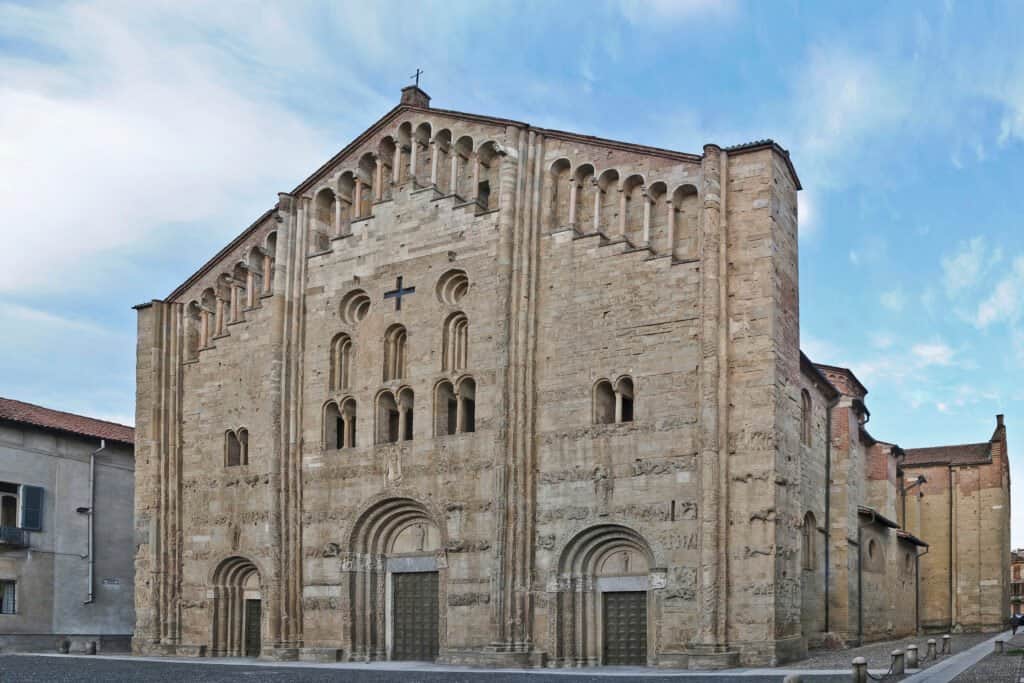
San Michele Maggiore Church
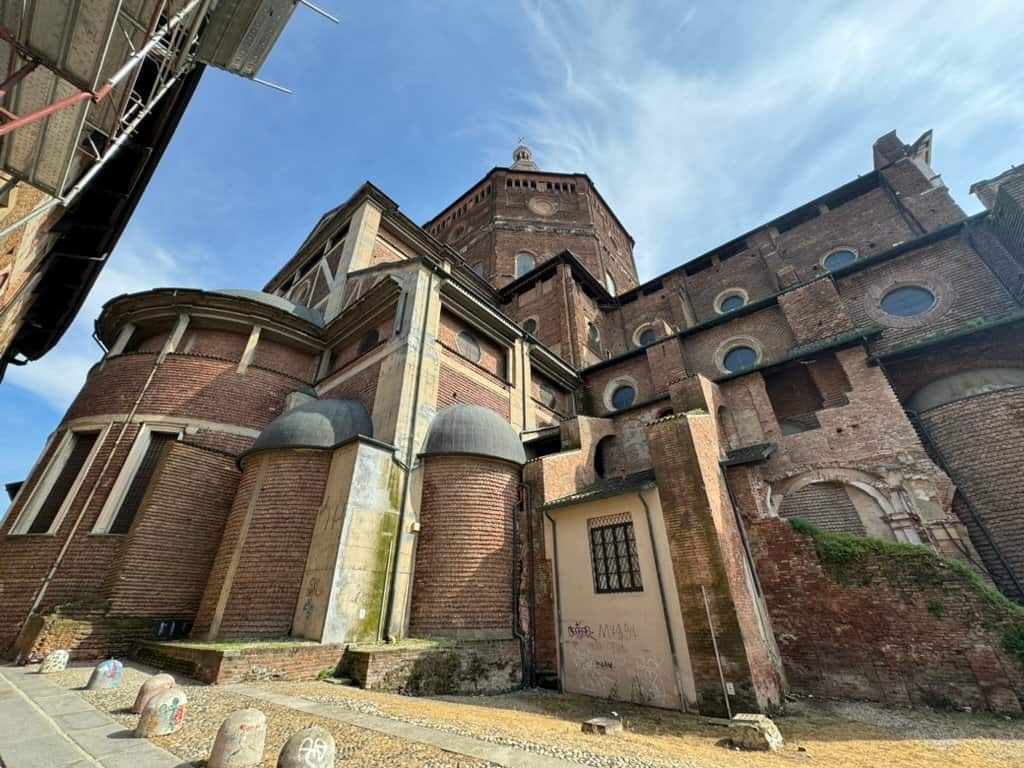
Cathedral of Pavia
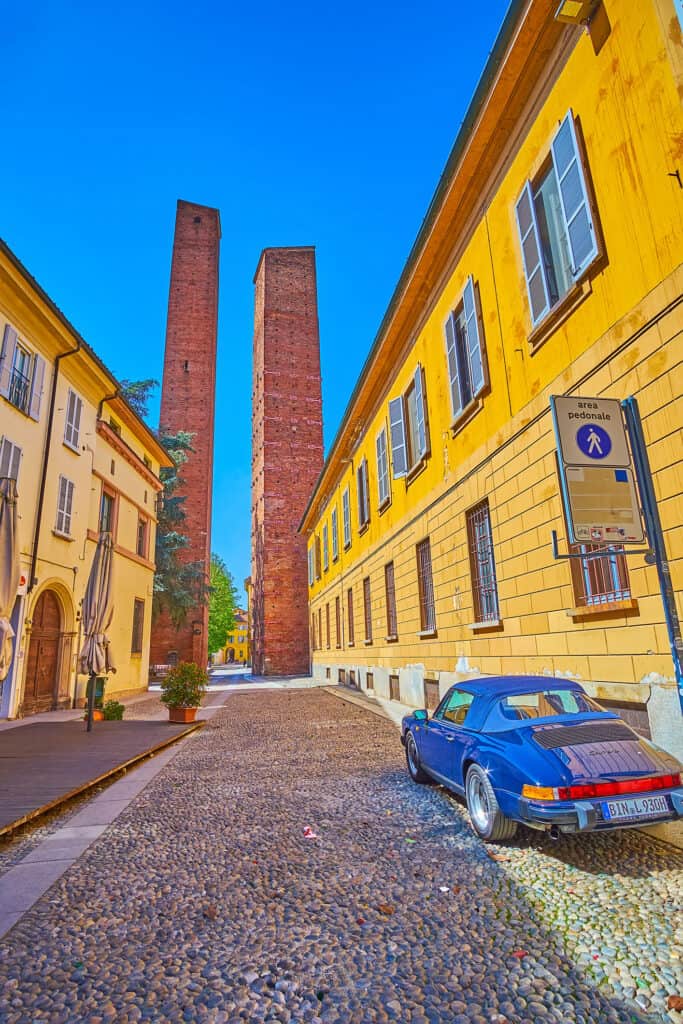
Towers of Pavia (Torri di Pavia)
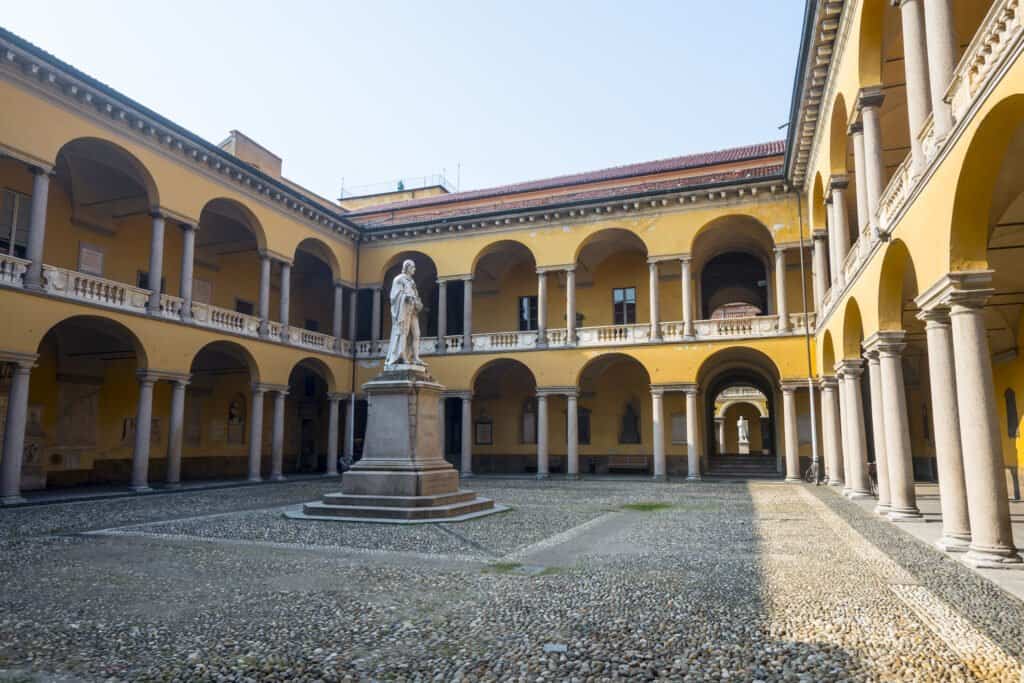
The University of Pavia
Places to eat or drink near Islamic Culturale Center di Milano

Pasticceria Vigoni

Pizza e Mozzarella
![[LA] Gelateria della Musica](https://lh3.googleusercontent.com/grass-cs/AABkmLezQ1aahZ3Sj4IKvguuB34dH27jVTId85hNXzYEv9WG7GfBYHmI1cwHUPQVisLeNLAKCNmd1glh0QlkPrqj2oRaVJ7D4jkdmWOq7BbYLzAtEceYr8t1MxXkfmk96U5ezHE2vYUBkvyeVynx=w576-h576)
[LA] Gelateria della Musica
