
Kaş Hellenistic theatre
Andifli, 07580 Kaş/Antalya, TürkiyeA 2,000-Year-Old Theatre Carved Into a Hillside Above Kaş
The Kaş Hellenistic theatre sits on a rocky slope just above the town center, small enough to feel intimate but old enough to stop you in your tracks. Built during the Hellenistic period, it is one of the best-preserved ancient theatres along Turkey's Lycian coast, and one of the few you can walk into without a ticket, a tour guide, or much planning at all. Most visitors stumble across it during a morning wander through Kaş and end up staying far longer than they expected.
Kaş itself occupies the site of ancient Antiphellos, a Lycian port town that grew into a modest but prosperous settlement. The theatre is one of the most visible reminders of that past, perched where it can be spotted from the streets below.
Why the Kaş Hellenistic Theatre Matters
Along the Lycian Way and across the broader Antalya region, ancient theatres are not exactly rare. What makes this one worth the short climb is its scale and condition. The cavea, the curved seating area, is cut directly into the natural rock of the hillside. That's a Hellenistic construction technique that the later Romans often skipped in favor of freestanding structures, and seeing it here gives you a tangible sense of how old this place actually is.
The theatre seats roughly 4,000 people. That's a significant capacity for a town the size of ancient Antiphellos, suggesting the settlement punched above its weight culturally. Performances, civic assemblies, and public gatherings all happened here. Standing on the orchestra level and looking up at the rows of stone seats, it's not hard to imagine the noise.
The view from the upper rows is another reason people linger. The Mediterranean stretches out below, with the Greek island of Meis (Kastellorizo) visible on clear days, sitting just a few kilometers offshore. You'd be hard pressed to find a better-framed sea view from any ancient ruin on this coast.
Quick Facts
- Location: Andifli neighborhood, a short walk uphill from the main square in Kaş
- Period: Hellenistic, likely constructed in the 1st or 2nd century BC
- Capacity: approximately 4,000 spectators
- Entry: free, open-air site with no ticket booth
- Walking time from Kaş harbor: around 10 minutes on foot
- Nearest landmark: the Dorian tomb carved into rock just a few hundred meters away
Getting There
From the main square in Kaş, head uphill along the streets that wind into the Andifli neighborhood. The theatre is signposted, though the signs are modest and easy to miss if you're moving quickly. Most people follow the slope instinctively and find it within 10 minutes of leaving the waterfront.
There is no dedicated parking lot at the site itself. If you're arriving by car or scooter, park near the town center and walk up. The path is paved for most of the way but does get steep in the final stretch, so wear shoes you'd actually walk in.
The Layout and Experience
The theatre follows the standard Hellenistic plan: a semicircular cavea of tiered stone seating, a flat orchestra circle at the base, and the remains of a stage building behind it. The seating rows are in remarkably good condition, and you can climb all the way to the top tier without any barriers in the way.
Spend a few minutes at the orchestra level first. Look up at the seats, then turn around and look out toward the sea. Then climb. Each row you ascend opens up the view a little more. By the time you reach the top, you have the town below you, the harbor curving out to the left, and the water spreading south toward Meis.
The site is open-air and unshaded. In summer, the stone holds heat well into the evening, which makes morning visits genuinely more comfortable. That said, arriving around sunset produces light that turns the limestone a warm amber color and keeps the temperature manageable.
History and Background
Antiphellos was the coastal port for the larger inland Lycian city of Phellos, and over time it grew to eclipse its parent settlement in importance. The name means roughly "before Phellos" in Greek, and the town's position on a protected harbor made it a natural trading hub.
The Lycians had a distinct culture that blended local Anatolian traditions with Greek influence, and their architecture reflects that mix. The theatre here is Greek in its fundamental form but built in a place with a firmly Lycian identity. Kaş is also home to several Lycian rock tombs, including a prominent sarcophagus that sits right in the middle of a modern street a few hundred meters from the theatre. Walking between these sites in a single morning gives you a compressed picture of how layered this small town's history actually is.
The site passed through Roman hands after the Hellenistic period, and some modifications from that era are visible if you look closely at the stage area. But the essential structure, the rock-cut seating and the orientation toward the sea, is Hellenistic through and through.
Best Time to Visit
Early morning is the practical answer for most of the year. In July and August, Kaş gets genuinely hot by mid-morning, and the theatre's exposed stone amplifies that. Arriving before 9am means you'll have the place almost to yourself and the light comes in from the east at an angle that makes the stonework look especially sharp.
Late afternoon works well in shoulder season, roughly April through June and September through October. The crowds thin out after about 4pm and the temperature drops to something pleasant. Sunset visits are atmospheric but you'll want to leave before full dark since there's no lighting on the path back down.
Winter visits are possible and occasionally magical. Kaş stays mild compared to inland Turkey, and the theatre in January or February with no other visitors and a clear sky over the sea is a very different experience from the summer rush.
Photography Tips
The shot most people take is from the upper rows looking down toward the orchestra and out to sea. It's a classic for a reason. Try it early when the light comes from the side rather than directly overhead.
For something less expected, position yourself at orchestra level and shoot upward along the curve of the seating rows. The geometry of Hellenistic theatre design is genuinely beautiful and this angle makes that clear. A wide lens helps here.
The view of the theatre from the road below, with the hillside behind it and the town in the foreground, is worth capturing on the way up before you arrive at the site itself.
Combining with Nearby Attractions
The theatre pairs naturally with the other ancient remnants scattered through Kaş. The Lycian sarcophagus on Uzun Çarşı street is only a few minutes' walk away and is a genuinely strange sight, a centuries-old tomb sitting casually on a modern pedestrian lane. The rock-cut tombs carved into the cliffs on the western edge of town are another 10 to 15 minutes on foot.
After the ancient sites, the harbor area and the small streets around the main square offer good spots for lunch. Kaş has a solid concentration of seafood restaurants and small cafes, and the town has enough character to justify spending the rest of the afternoon wandering rather than rushing to the next destination.
If you're making a longer day of it, the boat tours that depart from Kaş harbor visit several sunken city ruins and sea caves along the coast, including Kekova, which is roughly 30 kilometers to the east.
Practical Tips
- No ticket is required. The site is freely accessible during daylight hours.
- Wear closed-toe shoes or anything with a solid sole. The stone steps are uneven in places.
- Bring water, especially in summer. There are no facilities at the site itself.
- The path up is walkable but involves a noticeable incline. Allow a bit more time if you're traveling with young children or anyone with mobility considerations.
- The site is small enough that an hour is usually plenty, though the view can extend that considerably.
- Combine the visit with the nearby Lycian tombs and sarcophagus to make a proper half-morning out of the ancient sites.
Frequently Asked Questions
Is there an entrance fee?
No. The Kaş Hellenistic theatre is an open-air site with free access. There is no ticket booth or barrier at the entrance.
How long does a visit typically take?
Most people spend between 30 minutes and an hour at the theatre itself. If you're combining it with the other ancient sites in town, budget two to three hours for the full loop.
Can you visit after dark?
The site has no lighting and the path back down is unlit, so visiting after dark is not recommended. Late afternoon or early evening in the hour before sunset is the practical limit.
Is it accessible for visitors with limited mobility?
The path to the theatre involves a steep uphill section and the seating rows are irregular stone steps. The lower orchestra area is reachable with effort, but climbing the full cavea is difficult without good mobility.
Is Meis Island really visible from the theatre?
On clear days, yes. Kastellorizo sits only a few kilometers offshore from Kaş, and from the upper rows of the theatre it appears as a distinct mass just above the waterline. It's one of the more quietly striking things about the view.
Reviews
Sign in and mark this place visited to leave a review.
No reviews yet.
Free Trip Planner
Plan your Kaş trip with our free planner
Build a day-by-day itinerary with AI suggestions, hand-picked places, and friends. Free forever — no credit card.
Things to see near Kaş Hellenistic theatre

St. Nicholas Church
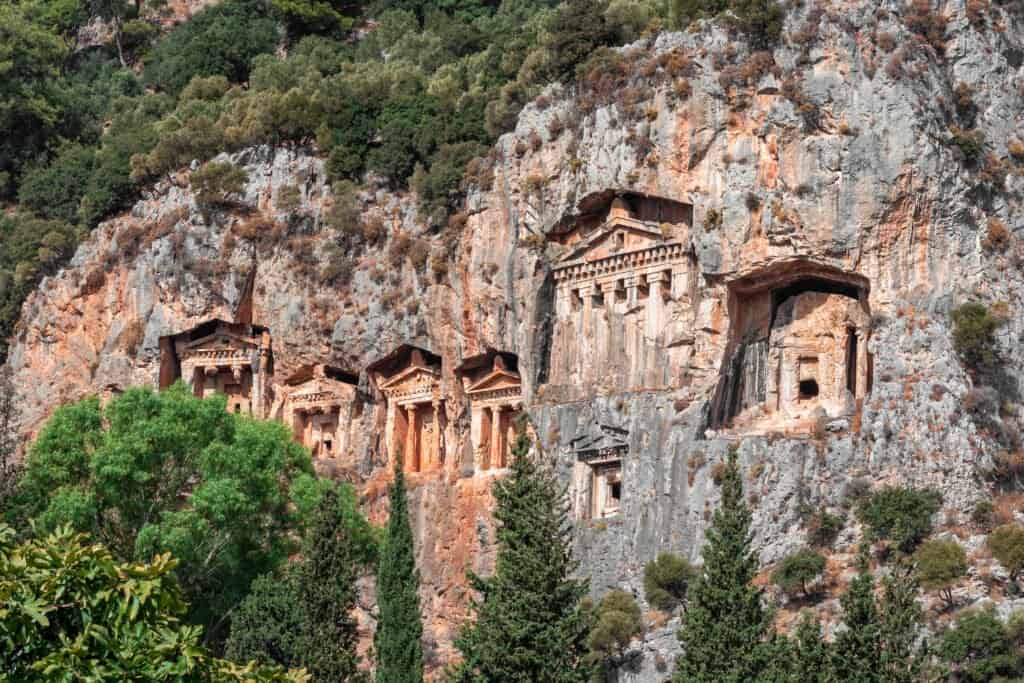
Lycian Rock-Cut Tombs of Myra
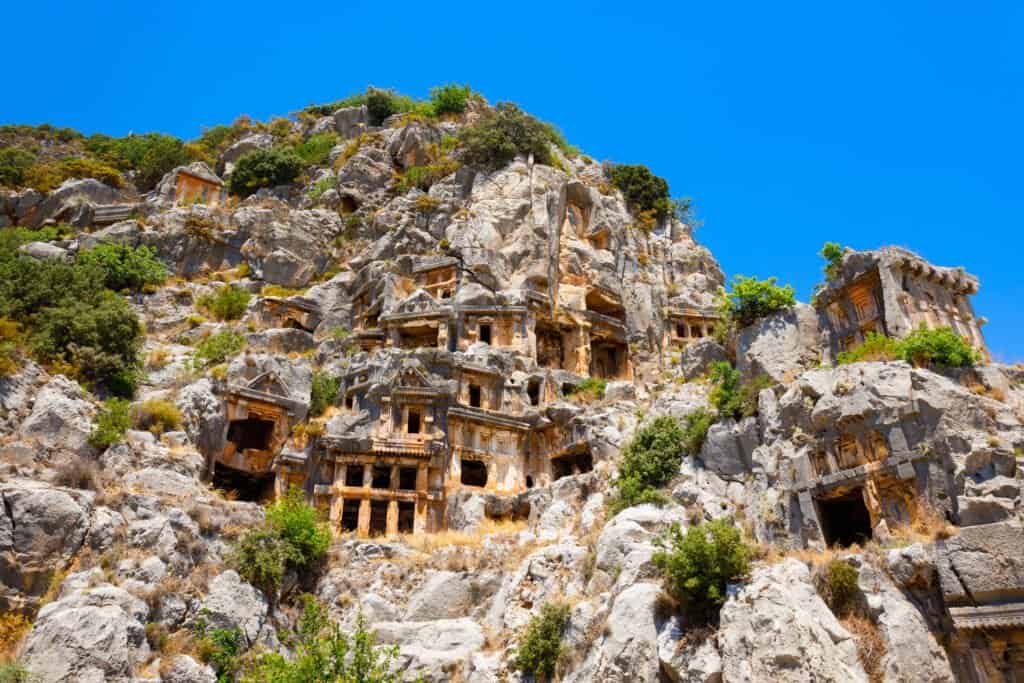
Myra Ancient City
