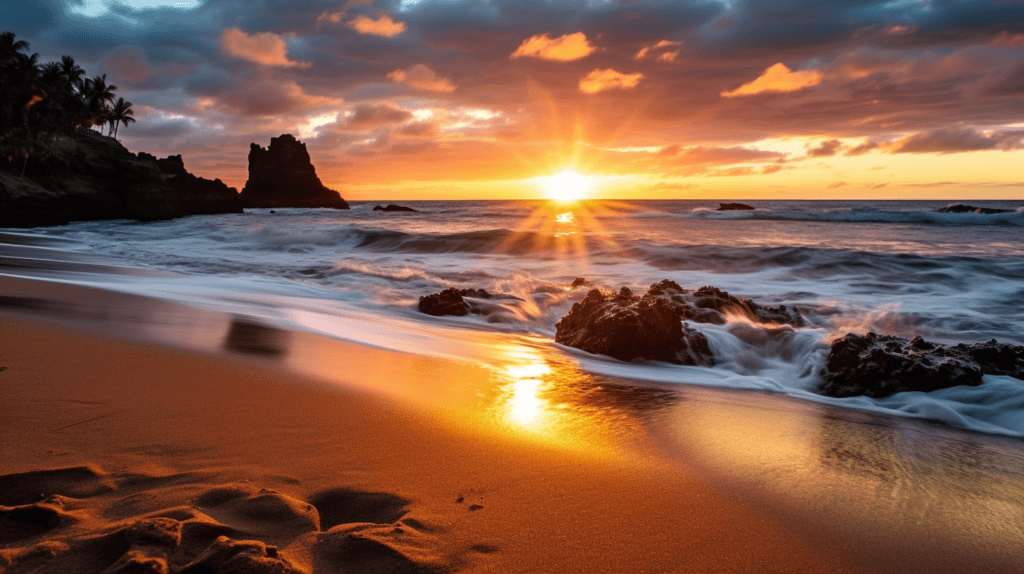
Kaihalulu Red Sand Beach
Hana, HI 96713, USAKaihalulu Red Sand Beach Overview
Kaihalulu Red Sand Beach sits on Maui's eastern coast near Hana, accessible only by a short but steep hiking trail through private land. The beach's distinctive rust-red sand comes from volcanic cinder eroded from the cliff face behind it, creating one of Hawaii's most visually striking coastal spots. The color intensity varies depending on light and weather, shifting from deep burgundy in shadow to bright orange-red in direct sun. Getting here requires commitment: the trail is narrow, muddy when wet, and involves scrambling down a steep final section. But the payoff is a relatively secluded beach that feels removed from Maui's more crowded southern shores.
Why This Place Matters
Red sand beaches exist in only a handful of places worldwide, and Kaihalulu is one of Hawaii's most accessible examples. The geological story matters here as much as the scenery. The cinder cone that created this beach was formed by volcanic activity, and the ongoing erosion that feeds the red sand into the beach is a visible reminder of how Hawaii's islands continue to change. For hikers and photographers, the beach represents a destination that still requires effort to reach, which keeps crowds manageable compared to Maui's resort-area beaches.
Quick Facts
- Trail length: approximately 0.75 miles round trip from parking area
- Elevation gain: roughly 200 feet on the descent, same on return
- Hiking time: 15 to 25 minutes down, 20 to 30 minutes back up
- Beach composition: volcanic cinder (red sand) mixed with black sand
- Water conditions: can be rough and choppy, especially on the north-facing side
- Best light: late afternoon, when the red sand glows
- Parking: small unpaved lot near trailhead, fills quickly on weekends
Getting There
Kaihalulu lies about 10 miles past the town of Hana on the Hana Highway. If you're coming from central Maui, allow 2 to 2.5 hours of driving time from Kahului or Kihei, depending on traffic and your starting point. The Hana Highway itself is winding and narrow, with many hairpin turns and one-lane bridges. Drive slowly and be prepared to yield to oncoming traffic.
Once in Hana, continue past the main town on the Hana Highway heading toward Kipahulu. You'll pass several scenic pullouts and waterfalls. Look for a small unpaved parking area on the right side of the road. There's no sign marking Kaihalulu directly, but locals and hikers know the spot. The parking area fits roughly 8 to 10 vehicles, and it does fill up on weekends or afternoons. If the lot is full, you may need to park along the shoulder of the highway a short distance away.
The Layout and Experience
The trail begins near the parking area and immediately becomes steep and muddy. It descends through dense vegetation including hau trees and native Hawaiian plants. The path is well-worn but narrow in places, and tree roots and loose volcanic rock are common underfoot. During wet weather, which is frequent on Maui's windward side, the trail becomes very slippery. Wear proper footwear with good grip.
The final 20 feet or so involves scrambling down a steep section of cinder. You'll use your hands and feet to navigate this last push. Once on the beach, you're standing on a crescent of red sand backed by a tall cliff face. The cinder continues to erode visibly, especially after heavy rains. The water is typically rough and choppy, with strong currents. Local knowledge suggests swimming is risky here, and many visitors come primarily for photography and exploring rather than swimming.
The beach itself is small, roughly 150 yards across at its widest. The sand is warm and fine, though it stains clothing and skin temporarily. The red color comes from iron oxide in the cinder, not from any chemical treatment. As waves and rain move the sand, it darkens and mixes with black volcanic material.
Main Highlights
The visual impact of the red sand against the blue ocean is the primary draw. Photographers often find the best light in late afternoon, when the sun angles across the cliff and makes the red glow. The isolation and effort required to reach the beach mean fewer people than you'd find at Maui's resort beaches, even during peak season.
The geological story adds depth to a visit. You can see the erosion happening in real time. The cliff face shows layers of cinder deposits, and fresh red sand continuously spills down. This is an active, changing landscape, not a static attraction.
The surrounding coastline offers additional interest. From the beach, you can see native Hawaiian sea cliffs and coastal vegetation. On clear days, the view along the coast toward Kipahulu is striking. Locals sometimes spot green sea turtles in the water, though they should be observed from a distance.
History and Background
Kaihalulu means "the roaring sea" in Hawaiian, a name that reflects the water conditions common here. The cinder cone that created the beach formed during one of Maui's volcanic periods, though the exact date is less documented than other Hawaiian volcanic features. What's clear is that the beach is geologically young and continues to evolve. The erosion that feeds the red sand into the ocean is an ongoing process, meaning the beach changes year to year.
The area around Hana was historically significant in Hawaiian culture, with fishing communities and agricultural terraces. The Hana Highway itself was only completed as a fully paved road in the 1960s, which means Kaihalulu remained difficult to access until relatively recently. Even now, the effort required to reach it has kept it from becoming as heavily visited as other Maui beaches.
Tickets and Entry
There is no entrance fee for Kaihalulu Red Sand Beach. The trailhead is on private land, but it has been traditionally accessible to hikers. No permits are required. However, conditions and access can change, so it's worth asking locally in Hana if you have any questions about current status.
Best Time to Visit
Late afternoon offers the best light for photography, typically between 3 and 5 pm depending on the season. The red sand appears most vibrant in direct sunlight. Avoid the heat of midday, when the sand becomes uncomfortably hot and the light is harsh.
Seasonally, the windward side of Maui receives more rainfall, especially between November and March. During these months, the trail is often muddy and slippery. Dry season (May through September) offers better hiking conditions, though weather can be unpredictable. Early morning visits mean fewer people but less optimal light for photos.
Weekdays are noticeably quieter than weekends. If you want solitude, plan your visit for a weekday morning or late afternoon. Avoid mid-afternoon on weekends, when day-trippers from resort areas are most likely to be present.
Photography Tips
The red sand demands attention to exposure. The bright red color can fool your camera's metering system, leading to underexposed images. If you're shooting with a smartphone, use exposure compensation to brighten the overall image slightly. For DSLR or mirrorless cameras, shoot in manual mode or use exposure bracketing to capture the full range of tones.
Polarizing filters help reduce glare and deepen the color of the sand and sky. A wide-angle lens captures the scale of the cliff and beach together. If you want to isolate the red sand detail, a longer focal length works well. Bring a cloth to wipe sand off your lens frequently.
The cliff face is best photographed from the water's edge looking back toward land. Wade carefully into the shallow water to get this angle, but be aware of the current and only go in if you're a strong swimmer. The safest approach is to shoot from the dry sand, positioning the cliff and red sand as your main subjects.
Facilities and Preparation
There are no facilities at the beach or trailhead. No restrooms, water, or shade structures exist. Bring all water you'll need, and consider a lightweight backpack. Sun protection is essential: bring sunscreen, a hat, and sunglasses. The sun reflects intensely off the sand and water.
Wear sturdy hiking shoes or boots with good ankle support and traction. The descent is steep and the cinder can be unstable. Avoid flip-flops or sandals. Bring a small towel or cloth to wipe your hands, as the red sand gets everywhere. If you plan to wade, bring water shoes or neoprene booties to protect your feet from sharp volcanic rock.
The hike is short but intense. Even if you're fit, the scramble down and back up can be challenging. Bring electrolyte-enhanced water if you're hiking in hot weather. A small first aid kit is sensible given the rocky terrain and the potential for scrapes.
How It Compares to Similar Places
Maui has other red and black sand beaches, including Waianapanapa State Park near Hana, which also features black sand created by volcanic activity. Waianapanapa is more developed, with facilities, official parking, and a longer, more established trail system. It sees higher visitor numbers. Kaihalulu requires more effort and offers more solitude, but lacks the amenities.
Nationally, red sand beaches are rare. Vik Beach in Iceland and Punalu'u Black Sand Beach in Hawaii's Big Island are comparable in terms of geological interest. Kaihalulu stands out for being accessible without a significant time investment, yet still remote enough to feel special.
Combining with Nearby Attractions
The Hana area is rich with natural attractions. If you're making the drive to Kaihalulu, plan to spend time exploring the broader region. Waianapanapa State Park is about 5 to 10 minutes back toward Hana and includes lava tube caves, a black sand beach, and coastal trails. Several waterfalls and swimming holes dot the Hana Highway, including Wailua Falls and Twin Falls.
The town of Hana itself is small but has a few local restaurants and shops. Hana Bay offers calm water for swimming, a contrast to the rough conditions at Kaihalulu. If you drive further toward Kipahulu, you'll reach Oheo Gulch, part of Haleakala National Park, with additional hiking trails and freshwater pools.
Sample Visit Plan
Start from central Maui early morning if possible. Allow 2.5 hours for driving to Hana. Stop at one or two waterfalls along the way if you have time. Arrive at Kaihalulu parking area by early afternoon. Hike down to the beach, spend 30 to 45 minutes photographing and exploring. Hike back up. If you're not too tired, visit Waianapanapa State Park on the way back or explore Hana town. Plan to leave the Hana area by late afternoon to avoid driving the winding highway in darkness.
Practical Tips
- The parking area fills quickly on weekends and afternoons. Arrive early or plan to visit on a weekday.
- Bring more water than you think you'll need. The trail is short but the sun is intense and there's no shade.
- The trail is muddy almost immediately after rain. Check weather before committing to the hike.
- Wear shoes with excellent grip. The descent is steep and scrambling down loose cinder is risky in inadequate footwear.
- Don't swim unless you're experienced in rough water. The currents are strong and the bottom is rocky.
- Red sand stains skin and clothing. Wear clothes you don't mind getting stained, or bring a change.
- The drive from Kahului to Hana takes longer than GPS estimates. Budget extra time and don't rush the winding highway.
- Ask locals in Hana about current trail conditions if you have concerns. Weather can change accessibility quickly.
FAQ
Is the hike difficult? The hike itself is short and not technically challenging, but the steep descent and scramble at the end require decent fitness and sure footing. The muddy, root-covered trail can be slippery. Most people in reasonable shape can manage it, but it's not a casual stroll.
Can you swim at Kaihalulu Red Sand Beach? Swimming is possible but risky. The water is often rough, with strong currents and a rocky bottom. Many visitors come for the scenery and photos without entering the water. If you do swim, do so cautiously and only if you're a strong swimmer comfortable with rough conditions.
How long should I plan to spend here? Budget 1 to 1.5 hours total, including the hike down, time on the beach, and the hike back up. If you're a serious photographer or want to relax, add 30 to 45 minutes.
Is there parking at the trailhead? Yes, there's a small unpaved lot that fits roughly 8 to 10 vehicles. It fills quickly on weekends and afternoons. Arrive early or visit on a weekday. If the lot is full, you can park along the highway shoulder a short distance away.
What's the best time of day to visit? Late afternoon (3 to 5 pm) offers the best light for photography, with warm sun making the red sand glow. For fewer crowds, visit on a weekday morning or late afternoon.
Reviews
Sign in and mark this place visited to leave a review.
No reviews yet.
Free Trip Planner
Plan your Hana trip with our free planner
Build a day-by-day itinerary with AI suggestions, hand-picked places, and friends. Free forever — no credit card.