Mystic Hot Springs
475 E 100 N, Monroe, UT 84754, USAMystic Hot Springs sits at the edge of Monroe, a small town in Utah's Sevier County that most drivers pass without slowing down. That's a mistake. This place is genuinely unlike anything else on the Colorado Plateau, a combination of geothermal soaking pools, outdoor concert venue, vintage bus accommodations, and a sculpture garden that has been accumulating character for decades. If you're driving between Capitol Reef and Zion, or cutting through on US-89, it's worth planning your route around. The springs themselves are the draw, but what keeps people talking is the atmosphere. Mineral-heavy water spills down terraced hillside formations, coating everything in pale travertine over time. The effect is somewhere between a natural wonder and an art installation nobody planned.
Why Mystic Hot Springs Matters
Utah has no shortage of hot springs, but most fall into one of two categories: heavily managed resorts with spa pricing, or unmarked roadside pools that come with liability and uncertainty about water quality. Mystic sits in its own category. It has infrastructure and amenities without feeling corporate. The owners have leaned into the counterculture history of the place rather than sanding it down for mass tourism, which is part of why the soaking experience here feels different from a standard spa day.
The travertine formations that have built up around the pools are the result of years of mineral-rich water flowing over the hillside and depositing calcium carbonate layer by layer. You can see fresh white deposits forming right next to older rust-orange and grey sections that have had more time to oxidize. It's geology happening in real time, something you don't often get to watch from inside a soaking tub. For anyone interested in relaxation that comes with a side of actual natural process, rather than a manufactured spa environment, that combination is hard to find elsewhere.
Quick Facts
- Location: 475 E 100 N, Monroe, UT 84754, about three hours south of Salt Lake City
- Type: Geothermal hot springs with soaking tubs, pools, camping, and lodging
- Water temperature: Varies by pool, source water runs very hot and is cooled before entering soaking areas
- Accommodations: Vintage buses converted into sleeping quarters, plus tent camping and RV spots
- Pet policy: Check directly with the property, as this changes seasonally
- Swimwear: Required in all soaking areas
- Altitude: Monroe sits at roughly 5,400 feet, so the air is noticeably thin if you're coming from sea level
Getting There
Monroe is about 15 minutes off Interstate 70 via UT-118, or accessible from the south via US-89 through Richfield. From Richfield, the county seat, it's a short drive of about 10 minutes east. The address on 100 North puts you at the base of the foothills, and the springs are visible from the road once you know what you're looking at.
There's no reliable public transportation to Monroe. You'll need a car. The roads are paved and accessible for standard vehicles year-round, though winter visits mean cold air alongside the hot water, which many regulars consider the ideal combination.
The Layout and Experience
The property climbs a hillside. At the base you'll find the main office, check-in area, and some of the more accessible soaking tubs. As you move up the slope, the travertine formations become more dramatic and the pools more varied. Some tubs are set directly into the hillside, fed by pipes that bring the geothermal water down from higher up, so the temperature and mineral content shift slightly depending on which pool you choose and how close it sits to the source.
The converted vintage buses are parked on the property and function as quirky private rooms. Each one has been decorated differently, some with murals on the exterior, others fitted out with mismatched furniture inside that leans into the roadside-Americana feel rather than against it. Staying overnight means you can soak after most day visitors leave, which changes the experience considerably. Soaking at night, under a dark sky with steam rising around you, is a different kind of relaxation than a midday visit with other families nearby.
The concert area hosts live music events, particularly during warmer months, and the property has a reputation as a gathering spot for musicians passing through southern Utah. Bring sandals or water shoes. The travertine formations are beautiful but uneven underfoot, and some paths between pools are slippery when wet. A towel and a change of clothes are obvious things to pack, but also consider bringing water to drink, since the soaking itself is dehydrating, especially at this altitude.
Main Highlights
The Travertine Formations
These are the visual signature of the place. Mineral deposits have built up over years into pale, layered terraces that catch light differently depending on the time of day. Morning visits, when the steam is visible against cool air, tend to produce the most striking views. The formations continue to grow, so what you see now is different from what was there five years ago. Travertine of this kind forms when calcium carbonate dissolved in hot groundwater comes out of solution as the water cools and loses pressure at the surface. It's the same basic process that built Mammoth Hot Springs in Yellowstone and Pamukkale in Turkey, just on a much smaller and more intimate scale here in Sevier County.
The Pioneer Tubs
Several large cast-iron pioneer-era bathtubs have been installed on the hillside and plumbed with geothermal water. They're fed individually, which means you can adjust the temperature by letting water flow in or stopping it. This level of control is unusual for a natural hot springs operation and makes the soak more comfortable for people who find communal pools too hot or too crowded. There's something fitting about soaking in an old cast-iron tub on a hillside that's been producing hot water for longer than anyone's kept records.
The Art and Music Culture
Mystic has been a gathering point for artists and musicians for years. Murals, sculptures, and found-object art appear throughout the property, scattered in a way that feels accumulated rather than curated. The outdoor concert space hosts events that draw crowds from well beyond Sevier County. If you're visiting in summer, check whether there's a music event scheduled since those nights have a completely different energy than a quiet weekday soak. Expect strangers trading guitar licks by the pools and a loose, unhurried pace that matches the setting.
History and Background
The geothermal activity in this part of Utah is part of a broader volcanic and tectonic zone that runs through the region, tied to the same geology that produces hot springs and fault lines across the Basin and Range province. Monroe's hot springs were known to Indigenous peoples long before any commercial development reached the valley. The modern property has operated in various forms for decades, with its current incarnation emphasizing the arts-and-community identity that distinguishes it from more conventional spa operations.
The vintage bus accommodations became a defining feature over time, part practical solution for housing visitors on a limited budget and part aesthetic choice that fit the property's countercultural identity. Over the years they've become something of a calling card for the place among road-trippers who seek out unusual lodging rather than another chain motel off the interstate. If you ask three locals in Richfield about Mystic, you'll likely get three different versions of its backstory, which tells you something about how long it's been woven into the region's folklore.
Best Time to Visit
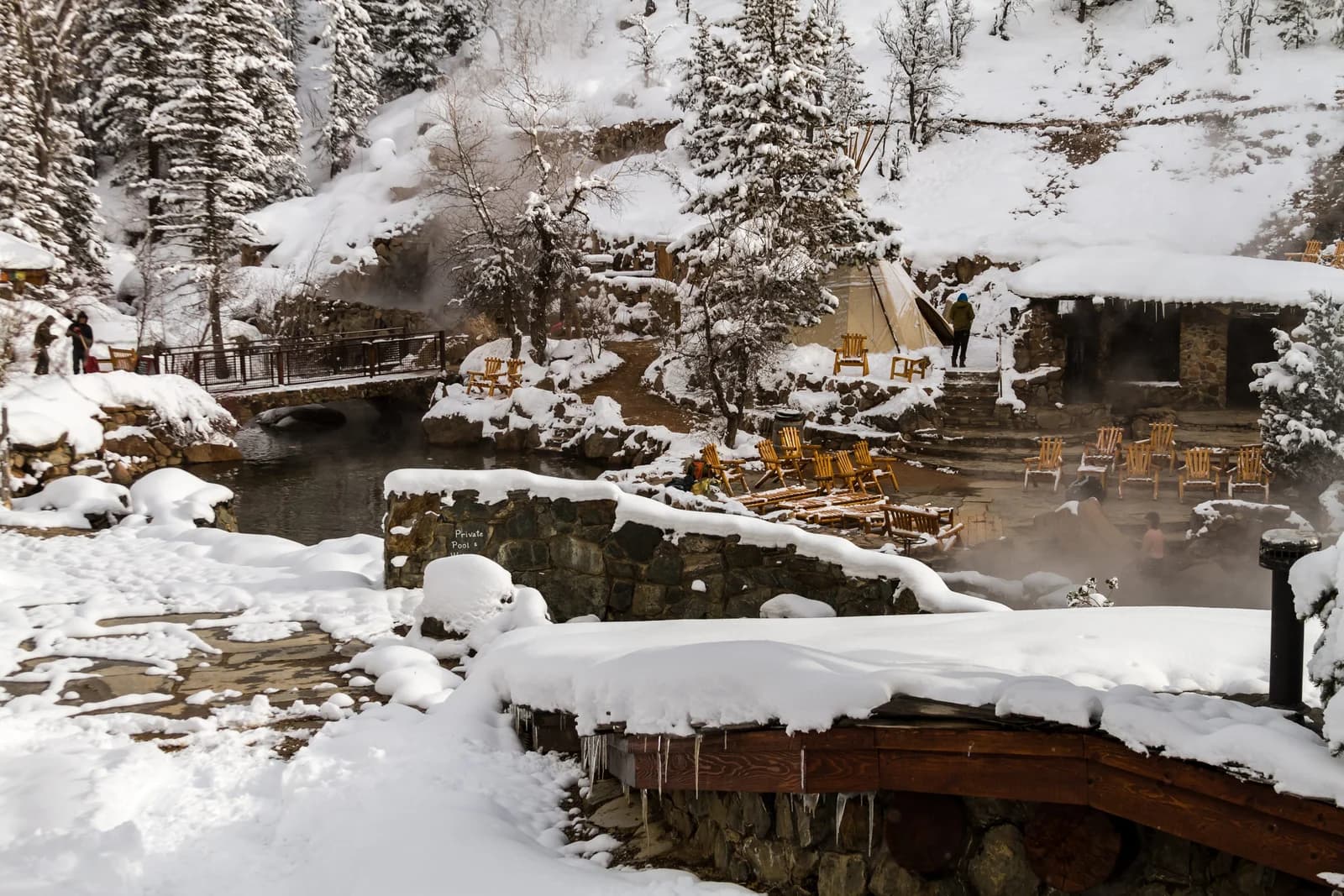
Winter soaking is genuinely excellent here. Cold air and hot water is a combination that feels much more dramatic than summer soaking, and the crowds thin out considerably. Snow on the travertine formations makes for striking scenery, with steam rising off white terraces that look almost otherworldly against a dusting of snow. That said, the access road and hillside paths can be icy, so move carefully and wear shoes with real grip.
Summer brings the music events and warmer nights, which makes the outdoor experience more sociable but also busier. Spring and fall tend to offer comfortable daytime temperatures and moderate crowds, which makes them a good middle ground if you want quiet soaking without winter's ice hazards. Avoid arriving on holiday weekends without a reservation if you're planning to stay overnight, since the bus accommodations book out.
Photography Tips
The steam rising off the pools photographs best in cold weather or early morning, when the temperature differential between water and air is greatest. Wide shots work well for capturing the travertine terraces against the hillside behind them. The vintage buses are photogenic in late afternoon light, when the warm tones hit the painted exteriors. If you're there during a music event, the combination of string lights, steam, and performers makes for unusual low-light photography opportunities.
Be respectful of other soakers. Most people are there to relax, and pointing a camera at strangers in a hot spring setting requires explicit permission.
Combining with Nearby Attractions
Monroe sits roughly midway between Capitol Reef National Park to the northeast and Zion National Park to the south, which makes it a natural stopping point on a southern Utah road trip. Fishlake National Forest is less than an hour north and offers hiking, camping, and fall foliage that draws visitors in October. Richfield, about 10 minutes west, has grocery stores, gas stations, and a handful of restaurants if you need to resupply before or after your visit.
The town of Monroe itself is quiet and small. Most amenities are in Richfield, so plan your meals and shopping around that stop rather than expecting much in Monroe proper.
Sample Visit Plan
If you're passing through on a longer road trip, a half-day stop works for most travelers. Arrive in the late morning, soak for an hour or two, walk the hillside to look at the travertine up close, and grab lunch in Richfield before continuing toward Capitol Reef or Zion. If you can build in an overnight at one of the vintage buses, do it. The evening and early morning soaks, once the day-use crowd has cleared out, are a different experience entirely and worth rearranging a road trip schedule around.
Practical Tips
- Book overnight accommodations well in advance, especially for summer weekends and music events
- Bring your own towels and toiletries since the property is not a full-service spa resort
- Wear footwear with grip on the hillside paths, particularly after rain or in winter
- Drink water before and after soaking, especially if you're arriving after a long drive
- Check the property's website or call ahead for current hours since they vary seasonally
- Cash may be useful, though payment options are worth confirming when you book
- The altitude affects how quickly you dehydrate and how the heat feels, so shorter initial soaks are wise if you're not acclimated
FAQ
Do I need a reservation to soak during the day?
Day use is often available without a reservation, but calling ahead is smart during busy periods. The property can reach capacity on weekends and during events.
Are children allowed?
The property tends to be adult-oriented, especially in the evenings. Check directly with Mystic Hot Springs about their current policy for families with young children before making the drive.
How hot are the pools?
The source water is very hot and gets cooled before entering the soaking areas. Individual tubs can often be adjusted by the bather. Temperatures vary across the different pools, so you can move between them to find what's comfortable.
Is there food available on site?
The property is not a full restaurant operation. Bring your own snacks and drinks, and plan meals in Richfield before or after your visit.
What makes Mystic Hot Springs different from other Utah hot springs?
The combination of active travertine formations, arts culture, vintage bus lodging, and live music programming is genuinely unusual. Most Utah hot springs lean either toward resort luxury or backcountry roughness. Mystic Hot Springs occupies a stranger, more interesting space between those two poles, and that in-between quality is exactly why it's worth the detour off US-89.
Opening hours
Reviews
Sign in and mark this place visited to leave a review.
No reviews yet.
Free Trip Planner
Plan your Monroe trip with our free planner
Build a day-by-day itinerary with AI suggestions, hand-picked places, and friends. Free forever — no credit card.