Posted by bazartravelsAdmin
Overview
Petra is an ancient city carved into rose-colored sandstone cliffs in southern Jordan, about 240 kilometers south of Amman. Built by the Nabataeans around 2,000 years ago, this UNESCO World Heritage Site ranks among the most remarkable archaeological sites on Earth. The entire city exists not as freestanding buildings but as structures carved directly from the rock face, creating a haunting landscape where architecture and geology merge. When you first see the Treasury emerging from the canyon, the scale and craftsmanship become almost overwhelming.
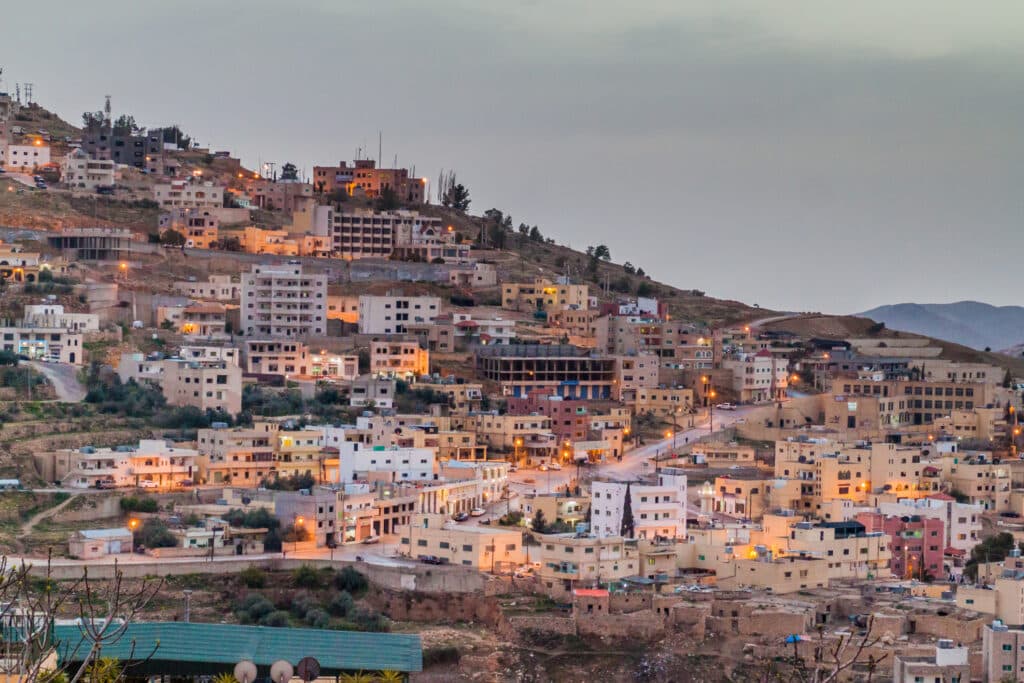
The site sprawls across a vast area in Wadi Musa, a valley town that serves as the gateway to Petra. Most visitors spend at least a full day here, though the site rewards longer stays with deeper exploration and fewer crowds on secondary trails.
Why this place matters
Petra was a crucial trade hub connecting Arabia, the Mediterranean, Egypt, and India. The Nabataeans engineered sophisticated water management systems and carved monumental facades that still astonish engineers and architects today. The city prospered for several centuries before declining as sea routes supplanted land-based trade. What makes Petra extraordinary is not just its age but the sheer ambition of creating an entire city by carving into stone rather than building atop it.
The site remained largely hidden from Western knowledge until Swiss explorer Johann Ludwig Burckhardt rediscovered it in 1812. It was designated a UNESCO World Heritage Site in 1985 and named one of the New Seven Wonders of the World in 2007.
Quick facts
- Established by the Nabataeans around the 4th century BCE, flourishing until Roman annexation in 106 CE
- Carved into Nubian sandstone cliffs over 260 square kilometers
- The Treasury facade stands approximately 40 meters tall
- Best visited October through April when temperatures are moderate
- Most visitors require 4 to 6 hours to see main highlights
- Entry requires purchasing a ticket at the visitor center outside the site
Getting there
Petra lies in the town of Wadi Musa, roughly 3 hours by car south of Amman. If you're flying into Jordan, you'll land at Queen Alia International Airport near Amman. From there, you can rent a car (the most flexible option), book a guided tour that includes transportation, or hire a driver for the day.
The drive south passes through desert landscape. Direct buses run from Amman, though they take longer and offer less flexibility for departure times. Once in Wadi Musa, the visitor center is on the town's edge, about 2 kilometers from the main accommodations and restaurants.
The walk from the visitor center to the Treasury takes roughly 15 to 20 minutes. If you prefer not to walk the full distance, horse-drawn carriages and donkeys are available for hire, though their use remains controversial among conservation advocates.
The layout and experience
Petra's geography demands preparation. You enter through a narrow gorge called the Siq, a 1.2-kilometer passage with walls rising 80 meters on either side. The Siq itself is a wonder, with carved channels that once carried water and strategic widening where defenders could control access. Walking through, you're aware of being inside a landscape rather than viewing one from outside.
The Treasury appears suddenly at the Siq's end, a moment that rarely disappoints. Beyond that, the main circuit leads to the Theater, a Roman-style amphitheater carved into the rock. From here, trails branch into the broader valley, leading to the Monastery, the High Place of Sacrifice, and numerous smaller tombs and shrines.
Distances are deceptive. The walk to the Monastery adds 3 kilometers round trip and involves serious elevation gain. The High Place of Sacrifice requires scrambling and takes roughly 2 hours from the Treasury. If you want to see multiple sites without exhaustion, prioritize carefully based on your fitness level and available time.
The site has no shade beyond what the canyon walls provide. Bring water, hat, and sunscreen even if you plan a short visit. The rock underfoot is uneven and can be slippery after rain, which is rare but does occur.
Main highlights
The Treasury (Al-Khazneh) is the most photographed monument at Petra. Its Hellenistic facade features a central urn flanked by carved figures, columns, and ornamental details. Scholars debate whether it served as an actual treasury, tomb, or temple. The facade's color shifts throughout the day as light hits the sandstone at different angles, so revisiting it morning and afternoon yields different photographs and impressions.
The Theater was carved in the 1st century CE and once seated roughly 8,500 spectators. Climbing to its highest rows offers a view across the valley and demonstrates how the Nabataeans treated rock excavation as a practical craft rather than purely decorative art. Tombs of the Nabataean nobility sit directly above and behind the theater.
The Monastery (Ad-Deir) is the largest monument at Petra, with a facade 50 meters wide and 45 meters tall. The hike there is substantial, but the remoteness creates a quieter experience. A Bedouin settlement near the Monastery sells basic refreshments, a useful waypoint if you're carrying minimal supplies.
The High Place of Sacrifice sits on a ridge with views across the valley. The site includes ritual altars and a channel cut into the stone. The climb involves a steep, narrow staircase and some scrambling, making it less crowded than major sites but also more physically demanding.
Beyond these, dozens of smaller tombs, chambers, and facades dot the valley. The Street of Facades contains rows of carved doorways. The Temple complex and sacrificial platforms reveal how Petra's residents integrated religion and daily life into their carved environment.
History and background
The Nabataeans were Arab traders who established Petra as a commercial center around the 4th century BCE, though settlement may have begun earlier. They controlled trade routes carrying frankincense, myrrh, spices, and other luxury goods. Petra's location at the intersection of routes between the Arabian Peninsula, the Mediterranean, and Egypt made it immensely wealthy.
The city's carved architecture served practical purposes. Facades marked tombs of important families and merchants, establishing lineage and status. The elaborate water management system, including cisterns and channels, allowed the city to thrive in an arid region. The Nabataeans became skilled hydraulic engineers, a less visible but equally important achievement.
When Rome annexed the Nabataean Kingdom in 106 CE, Petra's importance declined. Trade routes shifted, and the city was gradually abandoned. By the medieval period, it was known only to local Bedouin populations. Burckhardt's rediscovery in 1812 reintroduced Petra to the wider world, though systematic excavation and study began only in the late 20th century.
Earthquakes damaged much of the site over the centuries. The Treasury's interior contains fragmentary frescoes and architectural details that hint at decoration once more elaborate than what survives today.
Tickets and entry
Entrance is by ticket only, purchased at the visitor center. The site operates as a national park with managed access. Ticket tiers typically include a single-day pass and multi-day options for those wishing to explore more thoroughly on subsequent days. Children and certain nationalities may qualify for reduced rates, though you'll need to verify current policies.
Tickets grant access to the main valley and its primary monuments. Some secondary trails may have additional restrictions depending on safety or preservation concerns. The visitor center includes a museum with artifacts and explanatory displays, worth a brief visit before or after exploring the site itself.
Guided tours are available through operators in Wadi Musa or arranged at the visitor center. These range from standard group tours to private guides who can tailor a route to your interests and pace.
Best time to visit
October through April offers the most comfortable conditions. Daytime temperatures range from cool to mild, and rainfall, though infrequent, is most likely during these months. November through February can be cold, especially at higher elevations where some trails lead, but the site is never crowded due to weather.
May through September brings intense heat, often exceeding 35 degrees Celsius. Most visitors avoid these months, but those who do encounter far fewer crowds and can explore at a slower pace if they start early and carry substantial water supplies.
April and October sit at the sweet spot: pleasant temperatures and lower crowds than peak season (December to February). Sunrise and sunset create the most dramatic light for photography, worth planning your day around if photography is a priority.
Photography tips
The Treasury is most photographed from the Siq's exit, but this angle is also the most crowded. If you arrive early, you can secure a less-obstructed view. The facade changes color dramatically between dawn and mid-morning as the sun climbs, so plan multiple visits if time allows.
The Monastery benefits from afternoon light when its facade glows. The approach offers several vantage points at different distances, allowing you to frame it against the surrounding landscape or isolate the facade itself.
Secondary sites like the High Place of Sacrifice and the Theater offer stronger compositions when human figures are minimal. Visiting these in early morning or late afternoon increases the chance of solitude and better light.
The sandstone's natural color variations create depth. Polarizing filters help separate the stone's layers and reduce glare. Bring more water than you think necessary; dehydration clouds judgment about composition and safety.
Facilities and preparation
The visitor center has restrooms, a museum, and a gift shop. Restaurants and basic supplies are available in Wadi Musa town. Within the site itself, the only refreshment option is the Bedouin settlement near the Monastery, where you can purchase bottled water and simple snacks at marked-up prices.
The site has no formal accommodations. Wadi Musa offers hotels ranging from budget guesthouses to mid-range properties. Book in advance during peak season (December to February), as rooms fill quickly.
Wear sturdy hiking boots or shoes with good ankle support. The rock is uneven, and some trails involve scrambling. Sun protection is non-negotiable: bring a hat, sunscreen, and sunglasses. A small backpack to carry water and layers is essential. The Siq and canyons can be windy and surprisingly cool even on warm days.
How it compares to similar places
Petra stands apart because the entire city is carved rather than built. Compare this to Machu Picchu in Peru, which combines stone architecture with the surrounding landscape, or Angkor Wat in Cambodia, which uses freestanding temples. Petra's carved facades, tombs, and passages create an immersive experience where you walk through the city's literal skeleton.
The site's scale also distinguishes it. While single carved monuments exist elsewhere, Petra's concentration of elaborate facades across a vast valley is unique. The level of detail in decoration, the sophistication of water management, and the integration of religious, commercial, and residential spaces all within carved stone make Petra archaeologically significant in ways that isolated monuments cannot match.
Combining with nearby attractions
Wadi Rum, a desert landscape of sandstone and granite mountains, lies about 70 kilometers south. Many visitors combine a day at Petra with an overnight or multi-day experience in Wadi Rum, often including Bedouin camps and jeep tours. The contrast between Petra's carved architecture and Wadi Rum's raw desert landscape appeals to travelers wanting varied experiences.
The Dead Sea is roughly 100 kilometers west of Wadi Musa, a 2-hour drive. Some visitors include a day floating in the mineral-rich water, though the drive adds time to an itinerary.
Smaller sites like the Byzantine church at Umm ar-Rasas and various desert castles lie scattered across the region. These require dedicated planning and a car, but they reward curious travelers with solitude and insight into post-Nabataean history.
Sample visit plan
A single full day at Petra allows you to see the Treasury, Theater, and either the Monastery or the High Place of Sacrifice, but not both comfortably. Arrive as early as possible to beat crowds and maximize daylight for photography.
Start by walking the Siq to the Treasury. Spend 30 to 45 minutes photographing and absorbing the site. Proceed to the Theater, taking 30 minutes to explore. From there, choose based on energy and interest. The Monastery requires roughly 3 hours round trip from the Theater, including the hike. The High Place of Sacrifice takes 2 hours round trip and is more physically demanding. If you're energized, you could attempt both with an early start and a full 8-hour day.
Two days allow exploration of major sites without rushing. Day one covers the Treasury, Theater, and one major secondary site. Day two focuses on trails you missed, smaller tombs, and the Street of Facades, with less urgency and greater enjoyment.
Practical tips
- Arrive at the visitor center at least 30 minutes before official opening to secure early entry and beat crowds
- Bring at least 2 liters of water per person and refill if you encounter the Bedouin settlement near the Monastery
- Wear layers. The Siq can be cool and windy even on hot days, and higher elevations are noticeably colder
- If hiking the Monastery or High Place, start by mid-morning to avoid returning in fading light
- Avoid guided groups if possible by visiting early or taking less-traveled trails like the High Place of Sacrifice
- Download a map or use offline maps if your phone signal is unreliable
- Horses and donkeys are available but not necessary unless mobility is limited or time is very short
- Respect site rules and closed areas. Some sections are restricted for preservation or safety reasons
FAQ
How long does a typical visit to Petra last? Most visitors spend 4 to 6 hours seeing major sites. A full day allows deeper exploration. Those with 2 to 3 days can take a more leisurely pace and explore secondary trails.
Is Petra safe for solo travelers? Yes. The site is well-managed, and solo travelers are common. Wadi Musa town is generally safe, though standard travel precautions apply. Avoid hiking remote trails alone if possible, and let someone know your plans.
Can you visit Petra in winter? Yes. Winter (December to February) offers mild daytime temperatures and fewer crowds. Nights are cold, and rain can occur, making waterproof layers useful. The site remains fully accessible.
Is the walk to the Monastery difficult? It's a sustained uphill hike with elevation gain. If you're reasonably fit, it's manageable. Those with significant mobility issues or very young children may find it challenging, though slower pacing makes it achievable for most adults.
Can you take photos at Petra? Personal photography is permitted throughout the site. Professional photography requiring equipment beyond a handheld camera may require permits. Check with the visitor center if you're carrying tripods or specialized gear.
Reviews
Sign in and mark this place visited to leave a review.
No reviews yet.
Free Trip Planner
Plan your Jordan trip with our free planner
Build a day-by-day itinerary with AI suggestions, hand-picked places, and friends. Free forever — no credit card.