
 Posted by Molly Kelsey
Piazza Manzoni, Lugano: A Square Worth Slowing Down For
Piazza Manzoni sits in central Lugano, just a short walk from the lake and close enough to the old town that you can reach Piazza della Riforma in under five minutes on foot. It's not the city's flashiest address, but that's precisely the point. Where the main waterfront promenade draws the crowds, this square tends to reward the kind of traveller who wanders off the obvious route and finds something that feels genuinely local.
The square takes its name from Alessandro Manzoni, the nineteenth-century Italian novelist whose work shaped the modern Italian language. That literary connection gives the space a quiet dignity. You won't find a carnival of souvenir stalls here.
Why Piazza Manzoni Matters
Lugano sits in Ticino, the Italian-speaking canton of Switzerland, and the city has a particular talent for blending Swiss organisation with Italian ease. Piazza Manzoni reflects that balance. It functions as a genuine neighbourhood square rather than a tourist set piece, which means the rhythm of daily life plays out here in a way that's harder to observe on the more polished lakefront.
The surrounding streets connect to Via Massimiliano Magatti, and the wider Lugano city centre grid means you're always within comfortable walking distance of the main sights without being in the thick of them. That positioning makes the square a useful orientation point as much as a destination in itself.
Getting There
Lugano's compact centre is genuinely walkable. From Lugano railway station, the square is reachable in roughly ten to fifteen minutes on foot, heading downhill toward the lake and then cutting through the old town. The funicular from the station to the waterfront area runs frequently and drops you close to the pedestrian zone, from which the square is only a few minutes' walk.
If you arrive by car, parking in central Lugano can be tight, especially on weekdays. The Parking Maghetti structure nearby is one of the more convenient options. By bus, several routes serve the central area and stop within easy walking distance.
Quick Facts
- Location: Central Lugano, canton of Ticino, Switzerland
- Address reference: Via Massimiliano Magatti 2, 6900 Lugano
- Named after: Alessandro Manzoni, Italian novelist (1785 to 1873)
- Walking distance from Piazza della Riforma: under five minutes
- Walking distance from the lakefront: roughly five to eight minutes
- Access: open public square, no entry fee
- Language of the surrounding area: Italian (Ticino canton)
The Layout and Experience
The square itself is modest in scale, which is part of its appeal. Rather than a grand ceremonial piazza designed to impress, it feels like a space that grew organically from the surrounding street pattern. The buildings framing it reflect the layered architectural character of Lugano's city centre, where older facades sit alongside mid-twentieth century structures without much fuss.
On most days you'll find a mix of people passing through on errands, sitting at a nearby café, or simply cutting across on their way somewhere else. That ordinary quality is easy to underestimate. It's how you get a sense of what Lugano is actually like, beyond the curated lakeside views.
The square connects naturally to the pedestrian shopping streets that run through central Lugano, so a visit here tends to fold into a broader wander rather than standing alone as an itinerary item. Morning tends to be quieter. By midday the foot traffic picks up as the surrounding streets fill with lunchtime movement.
History and Background
Alessandro Manzoni, for whom the square is named, wrote "I Promessi Sposi" (The Betrothed), published in its final revised form in 1842. The novel is widely considered the foundation of modern standard Italian prose, and naming a public space after him in Ticino is a statement about the region's deep cultural ties to the Italian literary tradition, even within the Swiss federal context.
Ticino itself became part of the Swiss Confederation in 1803, and Lugano grew significantly through the nineteenth and twentieth centuries as a financial and cultural centre. The street grid around Piazza Manzoni reflects that period of urban consolidation, when the city built out its core with the kind of solid, functional architecture that still defines much of the centre today.
Best Time to Visit
Lugano's climate leans Mediterranean compared to most of Switzerland. Spring and early autumn are generally the most comfortable for walking the city on foot, with temperatures that make exploring the streets genuinely pleasant rather than something to endure. Summer brings more visitors to the lake and the main piazzas, which makes quieter spots like this one relatively more appealing by contrast.
If you want the square at its most local, a weekday morning in spring or September tends to deliver exactly that. Weekends in summer shift the balance somewhat as more tourists explore beyond the waterfront.
Combining with Nearby Attractions
The square's real value is as part of a longer walk through central Lugano rather than as a standalone stop. From here, Piazza della Riforma is just a few minutes away and hosts the main civic life of the city, including seasonal markets and the outdoor café culture that defines Lugano's social rhythm. The Cathedral of San Lorenzo, dating back to the ninth century with a Renaissance facade added in the early 1500s, is also within easy walking distance and worth the short climb.
The lakefront promenade along Riva Giocondo Albertolli is the obvious next stop after exploring the centre. From there you can look across Lago di Lugano toward Monte San Salvatore to the south and Monte Brè to the northeast. Both mountains are accessible by funicular or cable car and take roughly twenty to thirty minutes to reach from the city centre depending on your starting point.
The Lugano Arte e Cultura (LAC) cultural centre, opened in 2015, sits close to the lake and brings together a concert hall, art museum, and public spaces in a single contemporary building. It's one of the more architecturally significant additions to the city in recent decades and pairs naturally with a walk that starts or passes through the older parts of the centre.
Sample Visit Plan
A half-day in central Lugano fits comfortably around the square. Start at the railway station and take the funicular down to the lake level. Walk east along the waterfront for fifteen minutes to get your bearings, then cut up into the old town toward the Cathedral of San Lorenzo. From there, work your way through the pedestrian streets toward Piazza della Riforma for a coffee at one of the outdoor tables. Piazza Manzoni is only a few minutes further on foot, and from there you can loop back toward the lake via Via Massimiliano Magatti or continue exploring the surrounding streets at whatever pace suits you.
Practical Tips
- Lugano's centre is hilly. Comfortable shoes make a significant difference, especially if you plan to visit the cathedral or continue up toward the old town.
- Most locals speak Italian here. Basic Italian courtesies go a long way, though German, French, and English are widely understood in the city centre.
- The square itself has no dedicated facilities. The nearest public toilets are typically near the main piazzas or inside nearby commercial buildings.
- If you're visiting in July or August, midday heat in the city can be intense. Morning and late afternoon are more comfortable for walking.
- Lugano is expensive by southern European standards, in line with Switzerland generally. Budget accordingly for food and drink in the surrounding cafés and restaurants.
- The funicular between the station and the city centre runs on the standard Lugano transport network, and a day pass covers it along with buses if you plan to move around the city.
FAQ
Is there an entry fee for Piazza Manzoni?
No. It's a public square and free to visit at any time.
How long should I plan to spend here?
The square itself warrants fifteen to thirty minutes as part of a broader walk. Most visitors fold it into a half-day exploration of central Lugano rather than treating it as a standalone destination.
Is it suitable for children?
Yes. It's a calm, traffic-free area that works well as a rest stop during a family walk through the city centre.
What language will I encounter here?
Italian is the dominant language in Lugano and throughout Ticino. Signs, menus, and most everyday interactions will be in Italian, though English is widely spoken in tourist-facing contexts.
Can I reach Piazza Manzoni without a car?
Easily. The train to Lugano station followed by the funicular or a short walk puts you in the city centre, and the square is within comfortable walking distance of all the main arrival points.
Reviews
Sign in and mark this place visited to leave a review.
No reviews yet.
Free Trip Planner
Plan your Lugano trip with our free planner
Build a day-by-day itinerary with AI suggestions, hand-picked places, and friends. Free forever — no credit card.
Related reading
Things to see near Piazza Manzoni

Basilica of Saint Abundius
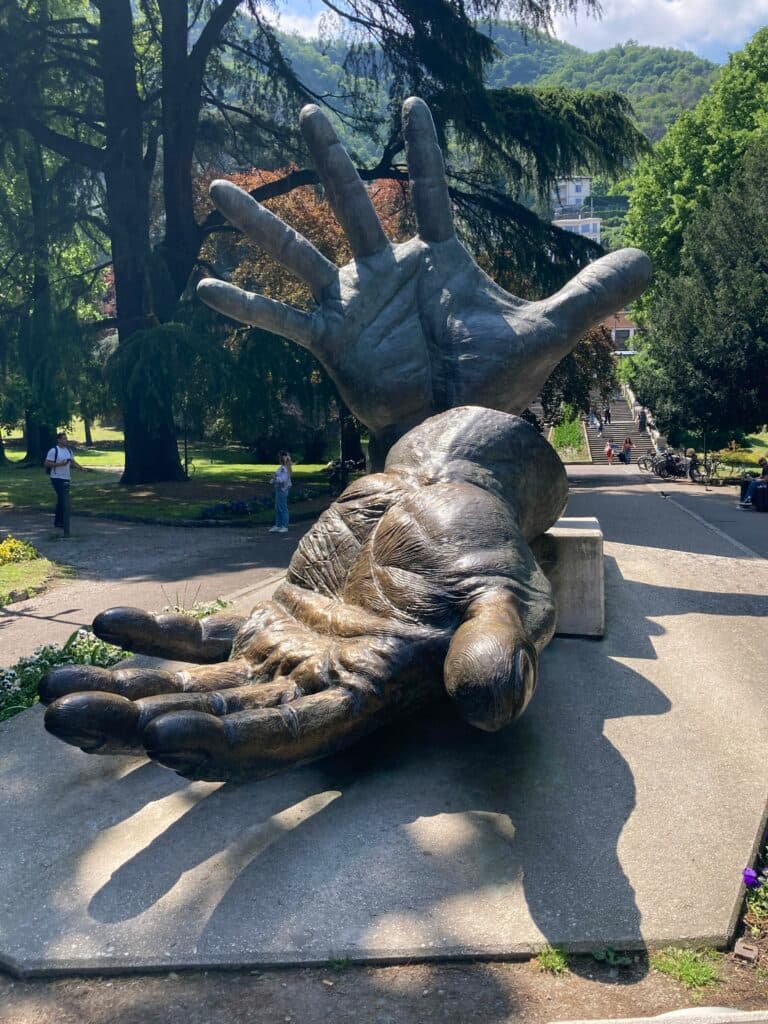
Monumento Le Mani – Como

Cattedrale di Santa Maria Assunta – Duomo di Como

Villa Olmo
Places to eat or drink near Piazza Manzoni


More places in Lugano

Monte San Salvatore

Parco Ciani

Chiesa di Santa Maria degli Angioli
