Sullivan's Island
Sullivan's Island, SC, USASullivan's Island Overview
Sullivan's Island sits three miles off the Charleston coast, accessible by a single causeway that connects it to the mainland. This narrow barrier island, roughly two miles long and half a mile wide, feels removed from the bustle of downtown Charleston despite being just 20 minutes away by car. The island has a distinct character: quiet residential streets lined with historic homes, a working lighthouse, Civil War fortifications, and beaches that attract fewer crowds than you'll find across the harbor at Folly Beach.
What makes Sullivan's Island different is its layers. You're not here for nightlife or resort amenities. You're here because the island itself is the attraction. The history soaks into the sand. The pace slows the moment you cross the causeway.
Why This Place Matters
Sullivan's Island played a crucial role in American military history. Fort Sumter, though technically located on a man-made island just offshore, is reached via ferry from Sullivan's Island and marks the place where the Civil War began in 1861. The island itself hosted Fort Moultrie, built in 1809, which defended Charleston's harbor for nearly 150 years and held Confederate prisoners during the war.
The island also holds significance in the early history of African Americans. Between 1700 and 1775, tens of thousands of enslaved Africans arrived at Sullivan's Island before being sold into bondage throughout the American colonies. A memorial and educational site now acknowledges this dark history.
Beyond the historical markers, Sullivan's Island represents a particular version of Lowcountry life that hasn't been entirely erased. The island remains largely undeveloped, with strict building codes protecting its character. You won't find chain restaurants or sprawling resort hotels here.
Quick Facts
- Located three miles east of Charleston, South Carolina
- Fort Sumter National Monument ferry departs from the island
- Lighthouse built in 1962 (replacing the original from 1962)
- Island population around 1,500 residents
- Accessible via SC-703 causeway, approximately 20 minutes from downtown Charleston
- Free public beach access along the eastern and southern shores
- Fort Moultrie visitor center open daily with general admission
Getting There
From downtown Charleston, take US-17 East toward Mount Pleasant, then follow signs to SC-703. The causeway is the only road in and out of Sullivan's Island. You'll cross a bridge over marshland before reaching the island proper. Parking is available throughout the island, including at Fort Moultrie and near the lighthouse. During summer weekends, arrive early to secure a spot near the beach or attractions.
If you're using rideshare or arriving without a car, note that taxi services operate from Charleston but the island itself has limited public transportation. Once you're there, everything is within a short drive or a 15 to 20 minute walk.
The Layout and Experience
The island is organized simply. The main road, Medalist Avenue, runs the length of the island north to south. Fort Moultrie sits on the western shore overlooking the harbor, with its visitor center, museum, and grounds. The lighthouse and keeper's house stand near the north end. The eastern and southern beaches are open to the public. Residential streets branch off from the main avenue, leading to quiet neighborhoods where locals live year-round.
Walking is the best way to experience the island. The pace forces you to notice things: the way moss hangs from live oak trees, the architecture of 19th-century homes, the sound of waves from different angles depending on where you stand.
Main Highlights
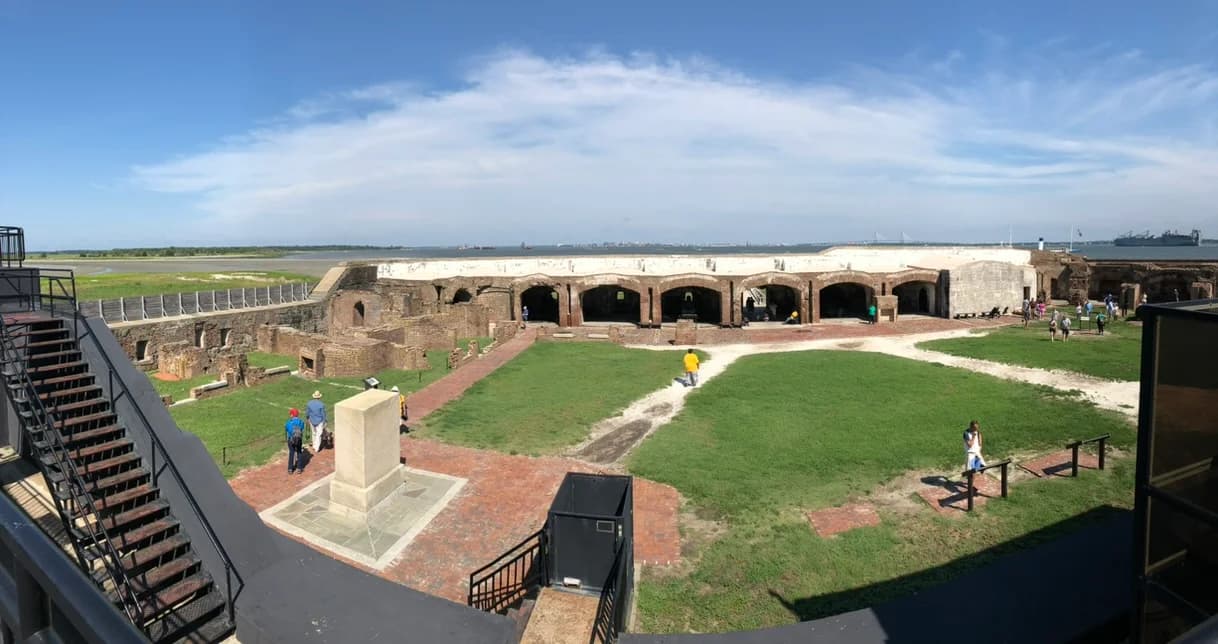
Fort Moultrie is the primary draw. The fort itself dates to 1809, though the current structure was built in 1829 after the original was damaged. Inside, the visitor center provides context through exhibits about the island's military and social history. You can walk the ramparts, see the gun emplacements, and understand how this place defended Charleston for generations. The surrounding grounds include cannons, barracks reconstructions, and interpretive markers.
The lighthouse is visible from most of the island. Built in 1962 in its current form, it replaced an earlier structure and stands as the second-oldest continuously operating lighthouse in the United States. The keeper's house next to it is also historic, though public access to the lighthouse interior varies.
The beaches along the eastern shore are narrow and rocky in places, with patches of sand suitable for swimming. The water is warmer from June through September. You'll find fewer umbrellas and beach vendors than at nearby Folly Beach, which suits many visitors fine.
The African Diaspora Memorial marks an often-overlooked chapter of American history. The site commemorates the estimated 40 percent of all enslaved Africans who arrived in North America through Sullivan's Island between the early 1700s and the Civil War. The memorial sits on the eastern end of the island near the beach.
History and Background
Sullivan's Island was named after Florence Sullivan, an Irish privateer granted the land in 1697. The island remained largely undeveloped until American independence, when its strategic location made it valuable for coastal defense. Fort Moultrie, named after William Moultrie who defended Charleston during the Revolutionary War, became the linchpin of the harbor's defenses.
The fort's history mirrors the island's transformation. During the War of 1812, the fort was strengthened. By the Civil War era, it was one of the most heavily fortified positions in the South. Confederate forces held it until February 1865. After the war, the fort continued operating as a military installation until 1947.
The arrival of African captives at Sullivan's Island happened largely out of public view. Ships would anchor offshore, enslaved people would be held in detention facilities on the island, and within days or weeks they'd be moved inland to be sold. Few records exist, and fewer still acknowledge this reality until recent decades.
Tickets and Entry
Fort Moultrie charges a general admission fee for entry to the visitor center and grounds. Tickets are purchased at the entrance. The lighthouse grounds are free to walk around, though interior access may require a separate ticket or tour depending on current hours. The beaches are free and open to the public.
If you plan to visit Fort Sumter as well, you'll need a separate ferry ticket purchased at the Fort Sumter visitor center, which is located near Fort Moultrie on the island. The ferry ride takes about 15 minutes each way.
Best Time to Visit
Sullivan's Island is pleasant year-round, but conditions vary by season. Spring (March through May) and fall (September through November) offer mild weather and lower humidity. Summer brings warm water for swimming but also heat, humidity, and occasional afternoon thunderstorms. Winter is quiet and uncrowded, though the water is cold and afternoon light fades by 5pm.
Weekdays are noticeably less crowded than weekends. If you prefer solitude, visit on a Tuesday or Wednesday. Summer weekends, especially July and August, bring the most visitors, though the island still feels relatively calm compared to other Charleston attractions.
Photography Tips
The lighthouse is the most photographed subject on the island, especially during golden hour when the light hits the white tower at an angle. The best vantage point is from the road leading to it, where you can capture the lighthouse with the keeper's house in the foreground and water beyond.
Fort Moultrie's ramparts offer views back toward the Charleston skyline. If you photograph during sunrise, the light comes from behind the city, creating silhouettes. The gun emplacements and brick fortifications are photogenic when lit from the side.
The beaches work best photographed during the golden hour, either early morning or late afternoon. The rocks and sand create texture, and the light at these times adds color and dimension.
Facilities and Preparation
Fort Moultrie has restrooms, a visitor center with interpretive exhibits, and shaded seating areas. There is no food service on the island, so bring water and snacks if you plan to spend several hours. The nearest restaurants and shops are on the mainland in Mount Pleasant or back in Charleston proper.
Wear sunscreen and bring a hat, especially if you'll be on the beach or walking the fort grounds. The island has no tree cover in many areas, and the sun reflects off sand and water. Comfortable walking shoes are essential if you plan to explore the fort or lighthouse grounds, as surfaces are uneven.
During summer, bring insect repellent. Mosquitoes can be active, particularly near sunset.
How It Compares to Similar Places
Fort Sumter, located offshore and accessible only by ferry, is more dramatic visually but offers less context than Fort Moultrie. Fort Moultrie provides more extensive exhibits and allows you to walk the full fortification. If you visit both, you'll get a more complete picture of how the two forts worked together to defend Charleston.
Folly Beach, the neighboring barrier island to the south, is developed and crowded by comparison. It has restaurants, bars, shops, and a boardwalk. Sullivan's Island has none of this. If you want resort-style beach amenities, Folly is better. If you want to experience Lowcountry character with historical depth, Sullivan's Island is the choice.
Combining with Nearby Attractions
Fort Sumter National Monument is the logical next stop. The ferry departs from the Fort Sumter visitor center, which is located on Sullivan's Island near Fort Moultrie. Plan for 90 minutes to two hours total, including ferry time and exploration of the fort.
Mount Pleasant, directly across the harbor, has restaurants, shops, and the Boone Hall Plantation if you want to extend your day. It's a 10 minute drive via the causeway and US-17.
Downtown Charleston is 20 minutes away and offers museums, restaurants, galleries, and historic neighborhoods. If you're spending a full day, you could visit Sullivan's Island in the morning, then head to Charleston for lunch and afternoon exploration.
Sample Visit Plan
Arrive on the island by 9am. Park near Fort Moultrie. Spend two hours exploring the fort, the visitor center, and the surrounding grounds. Walk to the lighthouse and photograph it from multiple angles. Grab lunch at a restaurant across the causeway in Mount Pleasant (bring a cooler with snacks if you prefer to eat on the island). Return to the island and spend time on the beach or visiting the African Diaspora Memorial. If time allows, take the ferry to Fort Sumter. Depart the island by 5pm.
This plan assumes you're spending one day on the island. If you have more time, add a sunrise visit to the lighthouse or a sunset walk along the beach.
Practical Tips
- Bring plenty of water, especially if visiting in warm months
- Arrive early on weekends to secure parking near the beach or Fort Moultrie
- The island has one gas station and limited shopping; bring supplies from the mainland
- Check Fort Moultrie hours before arriving; hours change seasonally
- The ferry to Fort Sumter runs on a schedule; check departure times in advance
- Swimming is best from June through September when water temperature is warmest
- The causeway can have tidal flooding during storms; check weather before heading out
- Bicycles are a good way to explore the island if you don't want to drive
FAQ
Is Sullivan's Island worth visiting if I only have a few hours in Charleston? Yes, if you're interested in Civil War history or lighthouses. If you want beaches and nightlife, Folly Beach is closer to downtown and better equipped for a short visit.
Can you swim at Sullivan's Island? Yes, the eastern and southern beaches allow swimming. Water temperature is warmest from June through September. Check conditions and any posted warnings before entering the water.
Do you need a car to get around Sullivan's Island? A car is helpful but not essential. The island is walkable, though distances between attractions are manageable. Rideshare availability is limited; plan accordingly.
What is the best time of year to visit? Spring and fall offer the most comfortable weather. Summer is warm and humid with occasional storms. Winter is quiet but cooler, with shorter daylight hours.
How long does it take to see everything on Sullivan's Island? You can cover the main attractions in four to five hours. If you include Fort Sumter, plan for a full day.
Reviews
Sign in and mark this place visited to leave a review.
No reviews yet.
Free Trip Planner
Plan your Sullivan's Island trip with our free planner
Build a day-by-day itinerary with AI suggestions, hand-picked places, and friends. Free forever — no credit card.