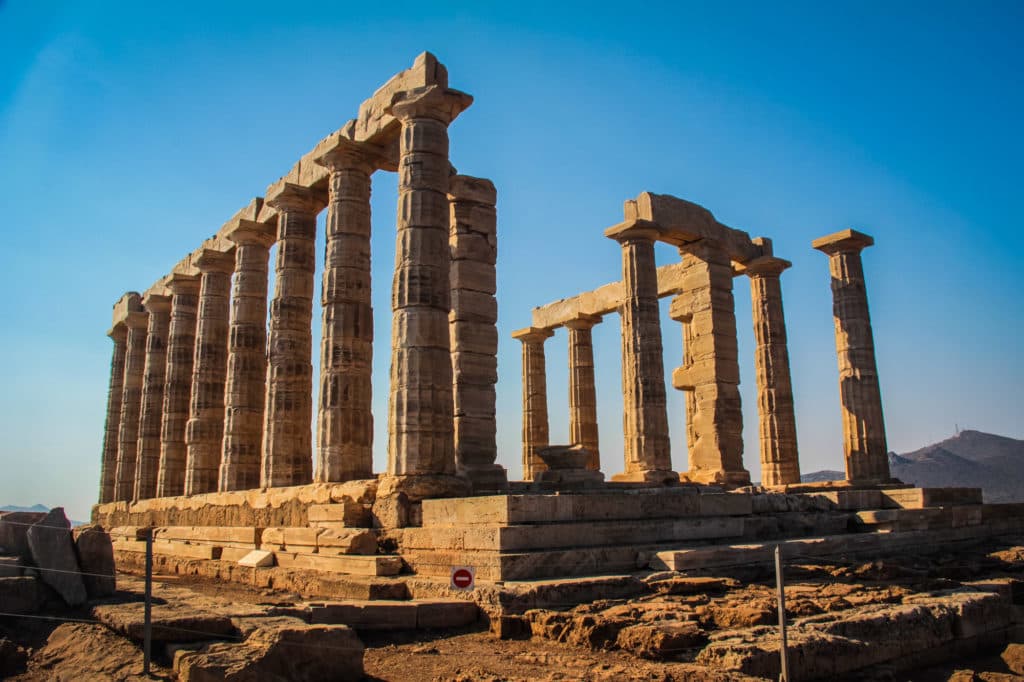
Temple Of Zeus
Temple Of Zeus
Ολυμπία (Olympia), Αρχαιολογικός Χώρος Ολυμπίας, Archea Olybia, West Greece 270 65, Greece Posted by Brandon B.Admin
The Temple of Zeus at Ancient Olympia
The Temple of Zeus at Olympia is one of the most consequential ruins in Greece. Not just because of its size, though the scale is genuinely staggering, but because of what once stood inside it: the Chryselephantine statue of Zeus, considered one of the Seven Wonders of the Ancient World. What remains today is largely a field of enormous fallen drums, toppled by earthquakes over the centuries, yet the ruin communicates something that polished restorations rarely do. You feel the weight of the thing.
The site sits within the broader Archaeological Site of Ancient Olympia, in the Peloponnese region of West Greece, roughly 340 kilometers southwest of Athens. Olympia itself is a small modern town, but the ancient site is the reason anyone comes here at all.
Why This Place Matters
The temple was completed around 457 BC, making it one of the earliest and largest examples of the Doric order in the Greek world. The architect, Libon of Elis, designed it on a monumental scale: the stylobate alone measured roughly 64 meters by 28 meters. Thirteen columns ran along each long side, six across each short end.
The statue of Zeus that once occupied the interior was the work of the sculptor Pheidias, the same man responsible for the Athena Parthenos inside the Parthenon. It was made of ivory and gold panels over a wooden frame, and ancient sources described it as so tall that if Zeus were to stand, his head would pierce the roof. Pheidias's workshop, where the statue was assembled, still exists nearby on the site and has been identified through archaeological finds including tools and ivory fragments.
The temple also held the Olympic Games in its cultural orbit. Athletes competed not just for glory but in honor of Zeus, and the games themselves were bound to the sanctuary. That religious and athletic combination is almost impossible to replicate in any modern context.
Quick Facts
- Completed approximately 457 BC, in the Doric order
- Located within the Archaeological Site of Ancient Olympia, near the modern village of Archea Olympia
- The original cult statue of Zeus was one of the Seven Wonders of the Ancient World
- The temple was largely destroyed by earthquakes, likely in the 5th and 6th centuries AD
- One column was re-erected in 2004 ahead of the Athens Olympics
- The site is a UNESCO World Heritage Site, designated in 1989
- The Archaeological Museum of Olympia, a short walk from the ruins, houses the original pediment sculptures
Getting There
From Athens, the most practical route is by car or bus. The drive takes roughly three and a half hours along the E65 and E55, passing through Corinth and Patras before heading south into Elis. If you prefer public transport, KTEL buses run from Athens's Kifissos terminal to the town of Pyrgos, where you can transfer to a local bus toward Olympia. The journey by bus tends to take around five to six hours in total, depending on connections.
There is no train that reaches Olympia directly. The nearest functioning rail connection is limited, and most visitors find the bus or a rental car far more convenient. If you are coming from Patras, the drive is closer to 90 minutes on clear roads.
Parking is available near the site entrance in Archea Olympia. The village is small and walkable, and the archaeological site is signposted clearly from the main road.
The Layout and Experience
The Temple of Zeus sits within the Altis, the sacred precinct of ancient Olympia. You enter the broader archaeological site through a ticketed gate, and from there the temple is visible almost immediately to the south of the Sacred Way. The approach gives you a sense of the original topography, low hills to the north, open ground spreading toward the stadium.
What you see when you reach the temple is a horizontal landscape of massive column drums, each one lying where it fell. The drums are made of local shell-limestone, originally coated in fine white stucco to mimic marble. Up close, the scale becomes real in a way photographs rarely capture. Some drums stand nearly as tall as a person.
One column was partially re-erected on the southeast corner, giving you a vertical reference point. It helps enormously in reading the ruin. Standing beside it and imagining 34 more columns at full height, plus the pediments and the roof, you start to understand why ancient writers treated this building as something close to divine.
Main Highlights
The Fallen Column Drums
The rows of drums, arranged roughly in the sequence they fell, are the defining visual of the site. Earthquakes in the 5th and 6th centuries AD brought the columns down in sections, and the pattern of their collapse has been studied to understand the seismic history of the region. Walk slowly among them rather than rushing past.
The Workshop of Pheidias
A short walk west of the temple, a Byzantine church was built on the foundations of Pheidias's original workshop. Excavations in the 20th century uncovered tools, clay molds, and ivory scraps consistent with the production of a large chryselephantine statue. The dimensions of the workshop match the interior of the temple's cella almost exactly, which archaeologists believe was intentional so Pheidias could verify the proportions of the statue before it was installed.
The Pediment Sculptures at the Museum
The original sculptural decoration from the east and west pediments is now housed in the Archaeological Museum of Olympia, about a five-minute walk from the temple. The east pediment depicted the chariot race between Pelops and Oenomaus, the mythological origin story of the Olympic Games. The west pediment showed the battle of the Lapiths and Centaurs. These are among the finest examples of early Classical Greek sculpture anywhere in the world, and visiting the museum after the temple site makes the ruins significantly easier to read.
Tickets and Entry
Entry to the Temple of Zeus is included in the general admission ticket for the Archaeological Site of Ancient Olympia. A combined ticket is available that covers both the archaeological site and the Archaeological Museum of Olympia, and this is almost always the better choice. Timed entry is not typically required, though the site can become crowded during the peak summer months, particularly late morning when tour groups arrive.
The site is managed by the Greek Ministry of Culture and Sports. Opening hours vary by season, with longer hours in summer and reduced hours in winter. Check current hours before you go, as they shift between October and March.
Best Time to Visit
Spring (April to early June) is widely considered the best window. The site is green, temperatures are comfortable for walking, and the crowds are manageable. Autumn, from September into October, offers similar conditions.
July and August bring serious heat to the Peloponnese. The site offers almost no shade, and by midday in summer the fallen limestone drums radiate warmth back at you. If you visit in summer, aim to arrive at opening time, typically around 8am, and plan to leave before noon.
Winter visits are quiet and atmospheric, but some facilities may be reduced and the museum occasionally has shorter hours.
Photography Tips
The re-erected column on the southeast corner is the natural focal point and works well in the early morning when low light hits it from the east. For context shots, climb the slight rise toward the Heraion (the older Temple of Hera to the north) and shoot back toward the Zeus temple with the column drums spreading across the frame.
The museum is low-lit in places, so a camera that handles available light well is worth bringing. The pediment sculptures are displayed dramatically and reward wide shots as much as close detail work.
Combining with Nearby Attractions
The archaeological site contains several other significant structures beyond the Temple of Zeus. The Stadium, where the ancient footraces were held, is a short walk east through the original tunnel entrance. The Philippeion, a circular monument commissioned by Philip II of Macedon after 338 BC, sits in the northwest corner of the Altis. The Temple of Hera, older than the Zeus temple by roughly two centuries, is directly to the north and still has standing columns.
If you have a full day, the Archaeological Museum of Olympia is essential. The museum holds the Nike of Paionios, the Hermes of Praxiteles (if authentic, one of the only surviving original works by a named Classical sculptor), and the complete pediment groups from the Temple of Zeus.
Practical Tips
- Wear shoes with grip. The site is uneven, with loose gravel and stone surfaces throughout.
- Bring water. There is very limited shade and no reliable water source once you're inside the site.
- A hat and sunscreen are necessary from May through September, not optional.
- Buy the combined site-and-museum ticket at the entrance. Doing both in one day is entirely manageable.
- Audio guides and printed site plans are usually available at the ticket office and help orient you quickly.
- The village of Archea Olympia has several tavernas and cafes within a few minutes of the site exit, useful for a post-visit meal.
- If you are driving from Athens, breaking the journey in Corinth or near Patras makes the day more comfortable.
FAQ
Is the statue of Zeus still at Olympia?
No. The statue was removed in late antiquity, probably to Constantinople, and was eventually destroyed by fire. Nothing of it survives.
Can you go inside the temple ruins?
The interior foundations are accessible on foot, though there is no enclosed structure remaining. You can walk among the column drums and stand where the cella once was.
How long should I allow for the full site?
Most visitors spend two to three hours on the archaeological site alone. Add another hour to ninety minutes for the museum. A half-day minimum is realistic if you want to do it properly.
Is the site accessible for visitors with mobility limitations?
Parts of the site have been improved for accessibility, but the terrain is uneven in many areas. The museum is more fully accessible than the open-air ruins. It is worth contacting the site administration in advance if this is a concern.
Reviews
Sign in and mark this place visited to leave a review.
No reviews yet.
Free Trip Planner
Plan your Athens trip with our free planner
Build a day-by-day itinerary with AI suggestions, hand-picked places, and friends. Free forever — no credit card.