Terrasse des Paresseux
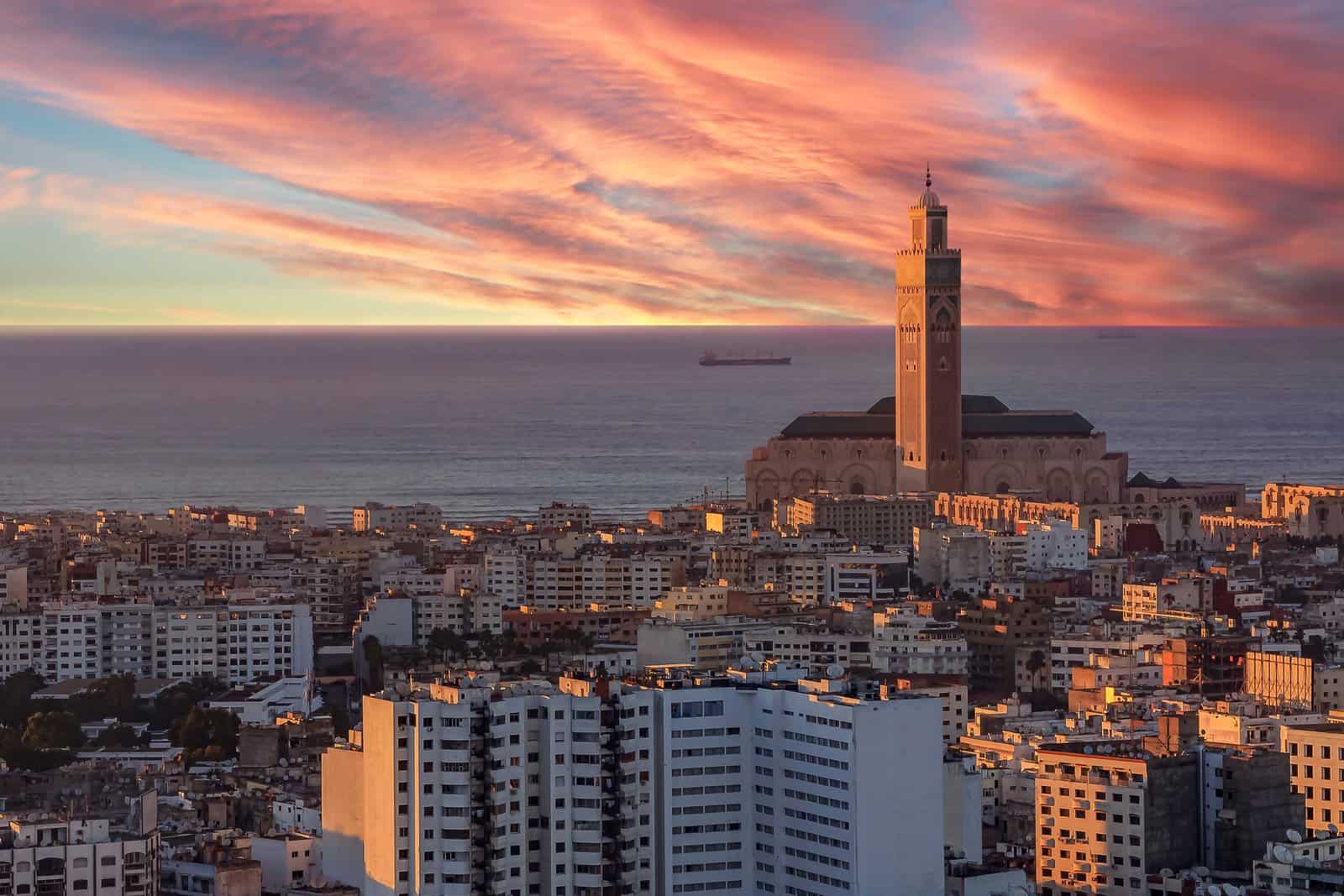
Q5JQ+97P, Bd Pasteur, Tanger, MoroccoThe Terrasse des Paresseux sits exactly where Boulevard Pasteur needs it, a wide balustraded ledge built into the street where the ground drops away toward the port. You come across it almost by accident, mid-stroll, and then you don't want to leave. Old bronze cannon line the railing, pointed out toward the water, and below you the harbor of Tangier spreads out in full, with the hills of Spain visible across the Strait of Gibraltar on a clear day. The name translates roughly as "the terrace of the idlers" or "the lazy ones' terrace," and it is not an ironic name. This is a place built for standing still.
It functions less as a sight to tick off and more as a punctuation mark in a longer walk, the spot where Boulevard Pasteur stops being just a shopping street and starts being a balcony over the city.
Why the Terrasse des Paresseux matters
Tangier is a city that keeps reminding you it sits at a strait, not just a coast. The Terrasse des Paresseux is one of the few points in the city center where that geography becomes immediate and visual rather than abstract. You get the working port directly below, ferries and fishing boats moving in and out, and then the water opens up toward Europe. It is a short walk from the medina but a completely different register of experience: open, breezy, horizontal, after the compressed vertical alleys you've likely just come from.
It also matters as an orientation point. Tangier's old city can turn visitors around fast, lanes doubling back on themselves, and the terrace is one of the few fixed, legible landmarks on the edge of it. Locals use it the same way: as a meeting point, a place to catch your breath, a bench with a view when the actual benches are full.
Quick facts
- Location: Boulevard Pasteur, central Tangier, on the edge above the port
- Type: free, open-air public viewpoint and terrace, not a ticketed site
- Name meaning: roughly "the idlers' terrace" or "the lazy ones' terrace"
- Main feature: a row of old bronze cannon set along the balustrade
- View: over the port of Tangier and across the Strait of Gibraltar toward Spain
- Typical visit length: ten to twenty minutes, longer at sunset
Getting there
The terrace sits directly on Boulevard Pasteur, Tangier's main colonial-era avenue, a short walk from Place de France and the Grand Socco. If you're coming from the medina, head out through one of the gates near the Grand Socco and follow Boulevard Pasteur west for a few minutes. If you're coming from the newer part of town around Place de France, it's an easy five-minute walk downhill. There's no admission gate or staffed entrance. You simply arrive at a break in the street-side buildings, and the balustrade is there.
Taxis can drop you at either Place de France or along Boulevard Pasteur itself, since the street runs with traffic on one side and the terrace sits on the other, built into the embankment.
The layout and experience
The terrace itself is not large. It's a paved ledge, maybe the width of a generous sidewalk, running along the edge of the boulevard with a low stone balustrade separating you from the drop to the port road below. The old cannon, dark bronze and mounted on their carriages, face outward toward the water, more decorative now than functional, though they're a genuine reminder that this stretch of coastline mattered militarily for centuries. People lean on the railing, lean on each other, take photos of the ferries, and generally do nothing in particular, which is the entire point of the design.
There are no facilities on the terrace itself, no ticket booth, no signage beyond what tells you where you are. It's a civic space in the plainest sense, maintained by the city rather than run by anyone, and it reads that way: a little worn at the edges, well used, unpretentious.
History and background
Boulevard Pasteur was laid out during Tangier's period as an International Zone, between 1912 and 1956, when the city was administered jointly by multiple foreign powers rather than falling under the French or Spanish protectorates that governed the rest of Morocco. That unusual status gave Tangier a cosmopolitan, slightly freewheeling character, and Boulevard Pasteur became its spine, lined with cafés, cinemas, and consulates built in a European style. The Terrasse des Paresseux, with its French name, almost certainly dates from this same colonial-era shaping of the boulevard, when European residents and administrators were giving names and amenities to the city in their own language.
The cannon along the balustrade point to an older layer of history. Tangier's harbor has been fought over and fortified for centuries, by Portuguese, Spanish, English, and Moroccan powers at different points, and old artillery pieces turn up around the city as relics of that defensive past, repurposed now as street furniture rather than weapons. Exactly which period or power these particular cannon belong to isn't something posted on site, and it's best treated as an open question rather than a settled fact.
Best time to visit
Sunset is when the terrace earns its name most fully. The light drops behind the hills across the strait, the port lights start coming on below, and the crowd of idlers along the railing is at its thickest. Café tables nearby fill up around the same hour. Earlier in the day the terrace is quieter and the views are clearer, useful if you want an unobstructed look across to Spain rather than a golden-hour scene. Avoid the middle of a hot afternoon if you can, since there's little shade and the open balustrade gets full sun.
Combining with nearby attractions
The terrace works naturally into a walk that also takes in Place de France, a few minutes up Boulevard Pasteur, with its café terraces and the old Cinema Rif facing the square. Going the other direction, you're close to the Grand Socco and the main entrances into the medina, so this makes a sensible last stop after a morning spent getting lost in the old city, or a first stop before heading in. The American Legation Museum, tucked in the medina's edge, is also within easy walking distance for anyone interested in Tangier's international history, which the terrace itself quietly reflects.
Practical tips
- There's no entry fee or set hours, so you can visit any time of day, though the view is best in daylight or at sunset
- Bring a light jacket in the evening, since the open terrace catches the sea breeze off the strait
- Watch your footing near the balustrade if you're visiting with young children, as the drop to the road below is real
- Street vendors sometimes work the area, so keep bags close as you would anywhere busy in central Tangier
- Pair the visit with a coffee at one of the cafés on Boulevard Pasteur rather than rushing through
FAQ
Is there an entrance fee for the Terrasse des Paresseux?
No. It's an open public terrace built into Boulevard Pasteur, with free access at all times.
Can you actually see Spain from here?
On a clear day, yes. The terrace looks out across the Strait of Gibraltar, and the Spanish coastline is visible in good visibility, though haze can hide it on many afternoons.
How long should I plan to spend here?
Most visitors stay ten to twenty minutes, though it's the kind of spot that's easy to linger at over a sunset, especially if you grab a seat at a nearby café first.
Is the Terrasse des Paresseux easy to find from the medina?
Yes. It sits on Boulevard Pasteur, a short walk from the Grand Socco and the main medina gates, and makes a reliable landmark if you've lost your bearings inside the old city.
Reviews
Sign in and mark this place visited to leave a review.
No reviews yet.
Free Trip Planner
Plan your Morocco trip with our free planner
Build a day-by-day itinerary with AI suggestions, hand-picked places, and friends. Free forever — no credit card.