The Hemingway Home and Museum
907 Whitehead St, Key West, FL 33040, USAOverview
The moment you push through the gate at 907 Whitehead Street in Key West, you're standing in Ernest Hemingway's actual house. The place has the feel of a home someone just stepped out of, not a museum that's been staged for visitors. Tropical plants crowd the courtyard. The furniture is worn and lived-in. Upstairs in his study, the typewriter sits on the desk where he wrote some of his best work, with the floorboards worn smooth from his pacing.
This is the Hemingway Home and Museum, and it's one of the most direct encounters with a major American writer's life you can have. Hemingway lived and worked here from 1931 to 1939 and again from 1939 to 1961. The house preserves the rooms where he wrote, the gardens he tended, and the studio where he developed his voice as a novelist. Unlike many literary sites that feel like shrines, this one feels inhabited.
Why this place matters
Hemingway wrote some of his most celebrated work in this house. He finished "Death in the Afternoon" here. He drafted "For Whom the Bell Tolls" in the studio overlooking the gardens. The physical spaces where he worked are still there: the desk, the light, the view of the street below. For readers of his novels, standing in these rooms adds a layer to understanding how his work came together.
The house also captures a specific moment in Key West's history. In the 1930s, the island was recovering from economic collapse and was becoming a refuge for artists, writers, and people seeking a different kind of life. Hemingway's presence here, along with painters, photographers, and other writers, helped establish Key West as a cultural outpost. The house is a physical record of that era.
Quick facts
- Built in 1851 in Spanish Colonial Revival style, thirty years before Hemingway arrived
- Hemingway purchased it in 1931 for $12,500
- The property spans one and a half acres with the main house, guest cottage, and writing studio
- Over 200 six-toed cats live on the grounds, descended from Hemingway's own cats
- General admission includes a guided tour; self-guided options are available
- Open daily from 9 AM to 5 PM, with extended hours seasonally
- About 15 minutes walking from downtown Key West on Whitehead Street
Getting there
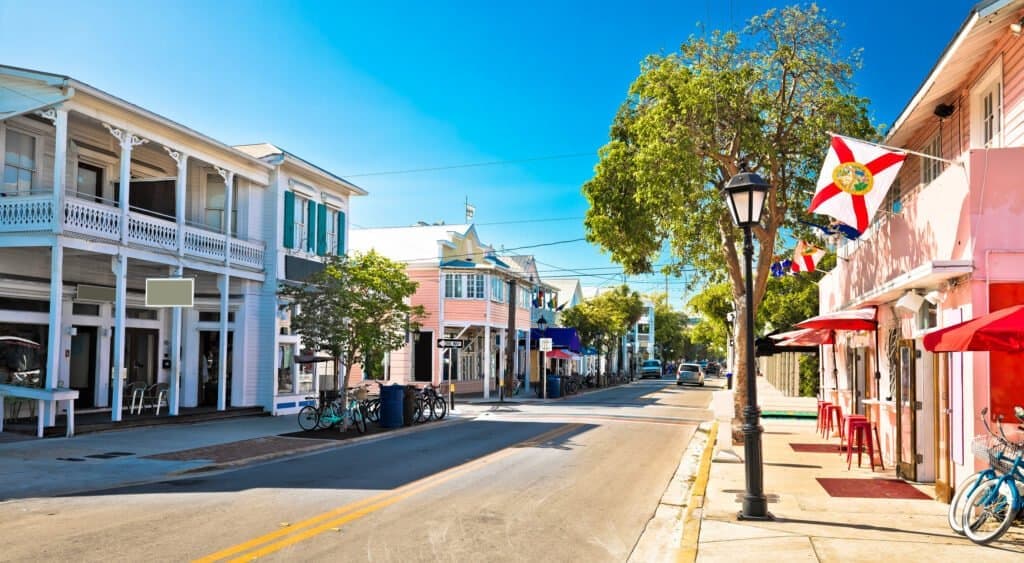
The Hemingway Home sits on Whitehead Street, the main north-south corridor through Key West. If you're staying downtown, it's a walkable journey of roughly 15 to 20 minutes depending on your starting point. The street is lined with shops and other attractions, so you'll pass a lot on the way.
By car, Whitehead Street is straightforward to navigate. There's parking on the surrounding streets, though it can be tight during peak season. A few blocks south of the museum, you'll find a municipal parking area. Ride-share services operate in Key West and can drop you directly outside the gate.
The layout and experience
The property opens directly from Whitehead Street through a gate. You enter into a shaded courtyard thick with tropical vegetation. The main house rises two stories, with the original structure built in the Spanish Colonial style typical of the era. Off to one side is a guest cottage. Further back, separated by gardens and pathways, is the writing studio where Hemingway spent much of his working day.
Tours are guided, and your guide will walk you through the ground floor of the main house first. You'll see the dining room, the living spaces, and the kitchen. The furnishings are original or period-appropriate. The walls display photographs, manuscripts, and memorabilia. Upstairs, you reach Hemingway's bedroom and his study. The study is small and sparse. The desk faces a window that looks out toward the street. The typewriter, the chair, the worn floor from his pacing back and forth as he worked.
The guest cottage is part of the tour route. This is where various visitors stayed during Hemingway's time. The writing studio comes last. It's a standalone building with tall windows and an open layout designed for work and concentration. By the time you've finished, you've walked through most of the property and spent roughly 90 minutes to two hours on site.
The cats are everywhere. They're descended from Hemingway's own cats, including a famous polydactyl named Snow White. Many of the current generation are also six-toed. They roam the grounds freely, sleep in corners, and are accustomed to visitors. Some guides will point out individual cats and the stories behind them. Others focus more on the house itself. The experience varies depending on your guide and what you're most interested in.
Main highlights
The writing studio is the single most significant room. Standing there, you can see exactly where Hemingway positioned himself to work, the view he had, the light quality at different times of day. It's a small space, almost monastic in its simplicity. The typewriter is visible. The desk is uncluttered. This is where "For Whom the Bell Tolls" took shape.
Hemingway's study in the main house upstairs is equally powerful in a different way. It's more intimate, less formal than the studio. The bedroom is modest. The furnishings are simple. There are no grand gestures in any of these spaces. What strikes most visitors is the ordinariness of it all, the fact that the work happened in such plain rooms.
The courtyard itself is worth lingering in. It's one of the most peaceful spots in Key West. The tropical plants create shade and quiet. Benches are scattered throughout. You can sit and absorb the space without rushing. Many visitors find this courtyard as memorable as the interior rooms.
The collection of manuscripts, first editions, and photographs throughout the house provides context for the work. You'll see editions of his books in multiple languages, photographs of Hemingway at various ages, images of fishing trips and social gatherings. The wall displays tell the story of his career and his time in Key West.
History and background
The house itself predates Hemingway by 80 years. It was built in 1851 when Key West was one of the wealthiest cities per capita in the United States, driven by the wrecking industry. Shipwrecks along the Keys were salvaged and sold. The money flowed into building grand homes, and this house reflects that era of prosperity. By the time Hemingway bought it in 1931, Key West had declined economically but had developed a reputation as a bohemian refuge.
Hemingway came to Key West in 1928 and initially rented. He was drawn by the fishing, the isolation, and the distance from his life in other places. The house purchase in 1931 marked a commitment to staying. He lived here through the 1930s, one of his most productive periods. "Death in the Afternoon," a nonfiction work about bullfighting, was finished here. "For Whom the Bell Tolls," his novel about the Spanish Civil War, was written here. "The Snows of Kilimanjaro" and other short stories came from this period.
The house was also a social center. Hemingway entertained writers, artists, and friends. Photographs show crowded rooms and gatherings. The property included the guest cottage specifically to accommodate the constant stream of visitors. Fishing trips were a regular part of his Key West life, and many of his companions and rivals in literary circles passed through.
Hemingway left Key West in 1939 and moved back to the mainland, though he returned periodically. The house remained in his possession until his death in 1961. It was later converted into a museum and has operated as one since 1964. It's now one of the most visited literary sites in the United States.
Tickets and entry
Admission is by guided tour or self-guided tour. Guided tours are the primary option and last approximately 90 minutes to two hours. Your guide provides context for the rooms, the house's history, and Hemingway's work. Self-guided options are available if you prefer to move at your own pace, though many visitors find the guided format more enriching given the density of literary and historical detail.
There are different admission tiers depending on whether you're an adult, student, senior, or child. Children under a certain age may have reduced admission or free entry. Groups can arrange advance reservations. The museum is open daily from 9 AM to 5 PM, though hours may extend seasonally or be affected by weather.
Tickets are purchased at the gate. During peak season, afternoon visits can draw significant crowds. Arriving early in the day, particularly before 11 AM, tends to mean shorter waits and smaller tour groups. If you're visiting during winter or shoulder seasons, crowds are lighter throughout the day.
Best time to visit
Key West's climate is warm year-round, but the most comfortable season runs from late October through April. Temperatures are mild, humidity is lower, and rainfall is minimal. This period coincides with high tourism season, so the museum will be busier. If you go in early morning, you'll still have a manageable experience.
Summer months are hot and humid. Afternoon thunderstorms are common. Tourist numbers drop significantly, so the museum is quieter. If you can tolerate heat and don't mind the possibility of rain, summer offers a more intimate experience with smaller tour groups and shorter waits.
Hurricane season runs from June through November, with peak activity in September and October. The museum remains open unless a storm is imminent, but it's worth checking weather before planning a visit during these months.
Photography tips
Photography is permitted throughout the house and grounds. The interior rooms have varied lighting, with some areas quite dim. A camera that performs well in low light will serve you better than one that requires a flash. Windows in the study and studio provide natural light for photographs, particularly in morning hours.
The courtyard offers excellent photo opportunities, especially in late afternoon when the light becomes warm and the shadows define the tropical vegetation. The writing studio's windows frame interesting shots of the garden beyond.
If you're interested in the cats, bring a longer shutter speed and be patient. They move unpredictably, and the best shots come from waiting for them to settle or interact with their environment rather than trying to capture them in motion.
Some guides will ask that you not photograph specific items or that you turn off your flash in certain rooms. Follow these requests. They exist to protect the collections and ensure other visitors aren't disrupted.
Facilities and preparation
The house has basic facilities. There are restrooms on the grounds. Water is available, though bringing your own bottle is practical, especially on hot days. The tour involves climbing stairs, and the grounds require walking over uneven surfaces and steps. If you have mobility limitations, mention this when you arrive so your guide can adjust the route as much as possible.
The courtyard and some interior spaces can be warm, particularly in afternoon hours. Bring sunscreen and wear a hat if you're sensitive to sun exposure. Insect repellent is useful, especially during summer months when mosquitoes are active.
Wear comfortable walking shoes. The tour covers significant ground, and you'll be on your feet for the entire duration. The pathways are irregular, and some areas have steps or level changes.
How it compares to similar places
Literary homes and museums exist throughout the United States and Europe. The Hemingway Home differs from many in that it preserves not just the residence but also the working spaces. The writing studio is particularly distinctive. Many literary sites focus on bedrooms or general living areas. This one gives you direct access to where the actual writing happened.
The scale is also different from larger, more formal house museums. It's intimate and personal rather than grand. The furnishings are simple. The rooms are modest. This authenticity appeals to visitors who want to understand how a writer actually lived and worked, rather than how they were perceived or what their public image was.
The inclusion of the cats adds an element not found at most comparable sites. It brings a living quality to the museum, a sense that the place isn't entirely a static historical artifact.
Combining with nearby attractions
Whitehead Street itself is lined with attractions. The Key West Butterfly Conservatory is a short walk north. Fort Zachary Taylor State Park, the southernmost point marker, and other sites are within walking distance or a brief drive. Downtown Key West's shops, restaurants, and galleries are all accessible from the museum's location.
If you're interested in Hemingway's life beyond the house, Sloppy Joe's Bar is where he drank and socialized. It's a few blocks from the museum and remains an active bar with historical photographs and memorabilia. The Green Parrot Bar, another Hemingway-era establishment, is also nearby.
A walking tour of Key West's historic district gives you context for the era in which Hemingway lived. The architecture, the street layout, and the other preserved buildings from the 1930s help you understand the place as he experienced it.
Sample visit plan
Arrive at the museum by 9:30 AM if possible. Purchase your ticket and join the first or second guided tour of the day. Plan for approximately two hours for the tour itself. This gets you through the house, studio, and grounds in the cooler part of the morning.
After the tour, spend 20 to 30 minutes in the courtyard if you'd like. Sit on a bench, observe the cats, absorb the space without the structure of a tour. Have water and a snack.
Walk north on Whitehead Street to explore other attractions or grab lunch. Return to downtown Key West for the afternoon. Save the evening for dinner and exploring the waterfront or Mallory Square.
Practical tips
- Arrive early to avoid afternoon crowds, particularly from November through April
- Wear comfortable shoes with good grip, as the pathways have uneven surfaces
- Bring sunscreen and a hat for the courtyard and outdoor portions
- If you're a serious Hemingway reader, you'll get more from the experience. Having read at least one of his novels provides useful context
- Ask your guide about specific works if you're interested. Guides vary in their depth of literary knowledge, and engagement invites more detailed conversation
- The gift shop has books, reproductions, and merchandise related to Hemingway and the house. It's small but thoughtfully curated
- Parking on surrounding streets is usually available, though during peak season you may need to circle a few blocks
- The museum is closed on Christmas Day only. It operates every other day of the year
FAQ
Can you visit without taking a guided tour? Self-guided admission is available for visitors who prefer to move through the house at their own pace. You'll still have access to all rooms and the grounds. The guided tour provides more context and historical detail, but self-guided is a valid option if you prefer independence.
Are the cats safe to pet or feed? The cats are accustomed to visitors and generally friendly. Petting is fine. Do not feed them. They're cared for by the museum staff and have a specific diet. Feeding them human food or treats can cause health issues.
How long does the entire visit typically take? Plan for two to two and a half hours if you're doing the guided tour and spending time in the courtyard afterward. If you're self-guided and move quickly, you can complete it in 60 to 90 minutes. Most visitors spend closer to two hours.
Is the house air-conditioned? The main house has air conditioning in some areas, though not all rooms are heavily cooled. The studio and some rooms are open-air or partially shaded. Expect it to be warm, particularly upstairs in Hemingway's study. The courtyard is shaded but not air-conditioned.
What if I'm not a Hemingway fan? The house is worth visiting for its architecture, the cats, and the insight into 1930s Key West life, even if you haven't read his work. The guide will provide historical context beyond just Hemingway's literary output. The space itself, the gardens, and the courtyard are compelling regardless of your relationship to his novels.
Opening hours
Reviews
Sign in and mark this place visited to leave a review.
No reviews yet.
Free Trip Planner
Plan your Key West trip with our free planner
Build a day-by-day itinerary with AI suggestions, hand-picked places, and friends. Free forever — no credit card.