Overview
Walking into Tudor World on Sheep Street, the smell of old timber hits you first. The building itself is a half-timbered structure from the early 1500s, and the narrow doorway forces you to duck slightly as you cross the threshold. Inside, the floors creak, the ceilings slope, and the rooms are arranged in a way that feels genuinely unplanned, as if you're moving through someone's actual Tudor home rather than a museum designed for foot traffic. That sense of authenticity, combined with interactive displays and period-dressed interpreters, is what sets Tudor World apart from the typical heritage attraction in Stratford-upon-Avon.
This is a museum dedicated to life during the Tudor period, roughly 1485 to 1603. The building dates to around 1540 and has been preserved with considerable care. Rather than displaying objects behind glass, Tudor World uses the building itself as the primary artifact. You move through rooms that have been fitted out as they might have been during the era: a Tudor kitchen complete with period cooking equipment, bedrooms with heavy wooden furniture, a merchant's shop, and spaces dedicated to the lives of ordinary people rather than just the royalty you read about in textbooks.
Why this place matters
Stratford-upon-Avon draws millions of visitors annually, most of them heading directly to the Shakespeare properties. Tudor World occupies a different niche. It's one of the few places in the town where you can stand inside an actual Tudor building and get a sense of domestic life without the weight of literary celebrity. The museum fills a real gap: it shows you how people actually lived, what they ate, how they slept, and what their homes looked like when they were new.
The building itself is the argument. It proves that Tudor construction was real, that the timber framing you see in Stratford's High Street was built to last, and that the proportions and layouts you observe have survived nearly 500 years.
Quick facts
- Built around 1540, making it one of Stratford's oldest surviving buildings
- Located on Sheep Street, a five-minute walk from the town center
- Offers general admission tickets and family packages
- Average visit takes 45 minutes to an hour
- Period-dressed interpreters are usually present during opening hours
- Accessible to ground floor only; upper floors have narrow stairs
Getting there
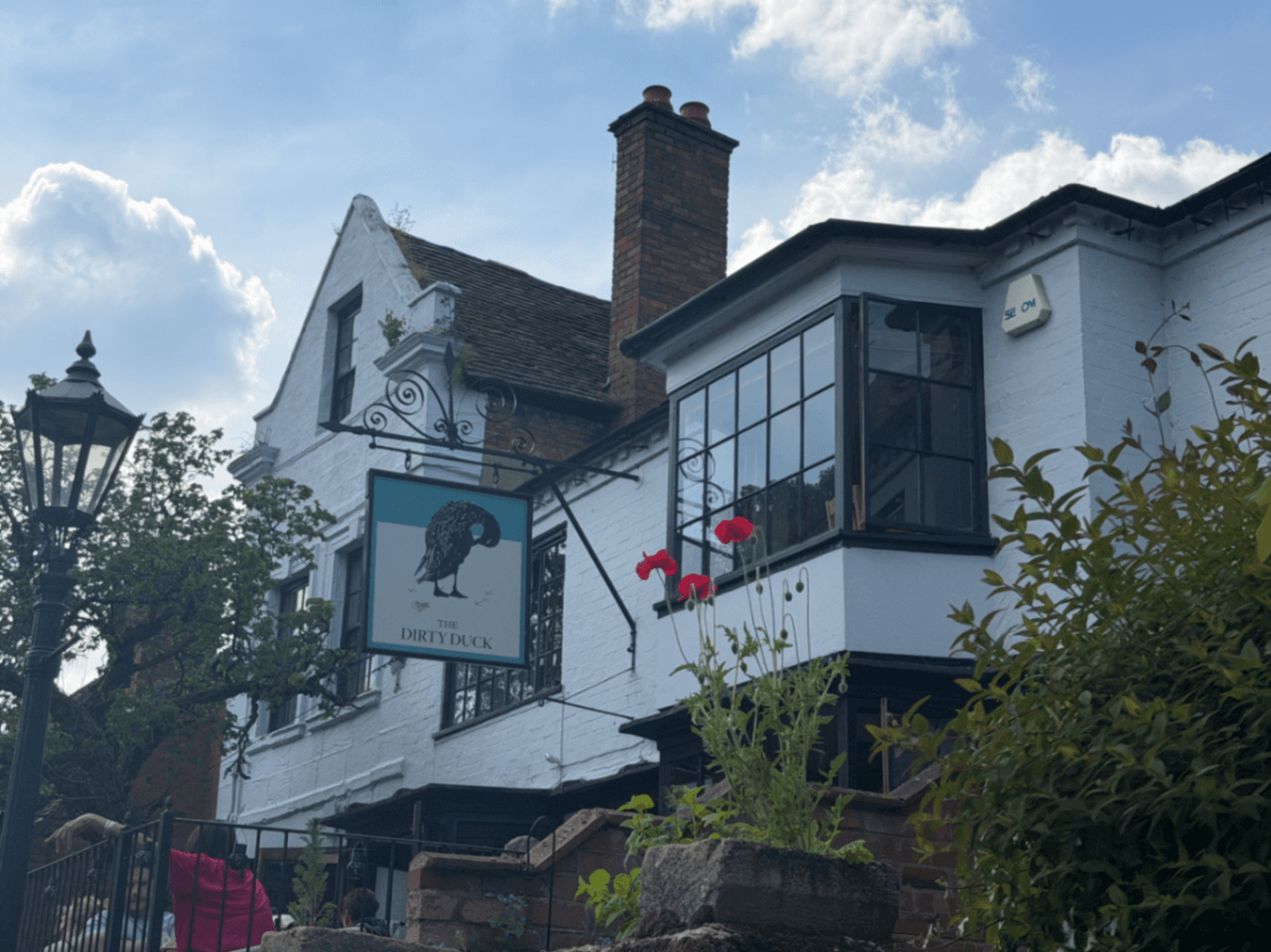
Sheep Street runs off Bridge Street in the heart of Stratford. If you're coming from the town center, head toward the bridge over the Avon and turn left. The building is unmistakable: it's the half-timbered structure with white panels and dark oak framing, typical of high-status Tudor homes. There's no dedicated parking on Sheep Street itself, but the town car parks are a short walk away. The nearest public car park is the Bridge Street car park, less than a two-minute walk from the museum entrance.
If you're arriving by bus, Stratford's main bus station is about ten minutes' walk away. The town is compact enough that walking from any central location is realistic. The street can be wet and slippery after rain; the cobblestones are original and uneven.
The layout and experience
The building is arranged over three floors, though Tudor World's main exhibitions occupy the ground and first floors. The rooms are small and interconnected, which means you move through them in sequence rather than choosing your own route. This isn't a drawback. It mimics the way Tudor houses actually worked: living spaces flowed into one another, and privacy was a luxury for the wealthy.
On the ground floor, you'll find the kitchen and dining areas. The kitchen display includes a large fireplace, the kind that would have been the warmest room in winter and the center of household activity. Cooking equipment, utensils, and explanatory panels show what people ate and how they prepared it. The dining room next door is set up to show a formal meal layout.
The first floor contains bedrooms and a merchant's shop. The beds are lower than modern beds and appear cramped by contemporary standards. Interpreters explain that sleeping positions and room sharing were entirely different from today. The merchant's shop is designed to show how goods were bought and sold in a Tudor market town. This isn't a re-creation of a separate building; it's incorporated into the home itself, reflecting the reality that merchant-class homes and businesses were often combined.
Throughout the building, the original timber framing is visible. You can see where the wood has shifted and settled over centuries, where repairs have been made, and where the structure has adapted to age. It's this detail that makes the place valuable beyond the interpretive content.
Main highlights
The kitchen is the most visceral space. Standing in front of a working fireplace that's been in use for nearly 500 years changes your sense of scale and time. The cooking displays explain medieval and Tudor eating patterns, which differ significantly from modern assumptions.
The Tudor bedroom setup is genuinely revealing. Most people are surprised by the size and arrangement of beds, by the lack of windows in some rooms, and by the way families would have shared sleeping spaces. Seeing a bed frame from the period, with its rope supports and basic mattress structure, makes written descriptions suddenly concrete.
The merchant's shop section is engaging because it's interactive. Interpreters often demonstrate how goods were priced, sold, and handled. If you arrive when an interpreter is present, ask them about apprenticeships or daily routines. These conversations tend to be more informative than the panels alone.
History and background
The building dates to around 1540, placing it squarely in the reign of Henry VIII's later years and into the reign of Edward VI. Stratford was a market town of some importance, and this building appears to have housed a prosperous merchant family. The structure reflects typical high-status construction of the era: solid timber framing, multiple rooms, and a size that indicated wealth without being palatial.
The building survived the Georgian and Victorian periods relatively intact, which is unusual. Many Tudor buildings in England were either demolished, heavily modified, or covered with later facades. This one retained its original exterior and internal layout, making it a genuine artifact rather than a reconstruction.
The museum was established to preserve the building and to educate visitors about Tudor domestic life. Unlike the Shakespeare properties in town, which are primarily literary attractions, Tudor World focuses on material culture and daily existence. The choice to furnish the rooms with period-appropriate items and to employ interpreters reflects a shift in how heritage museums approach their work: showing rather than simply telling.
Tickets and entry
General admission is available at the door. The museum offers family tickets that represent better value than purchasing individual adult and child tickets separately. Timed entry is not required; you enter whenever you arrive during opening hours, though busy periods in summer can mean brief waits.
The ground floor is fully accessible to visitors with mobility limitations. The first floor is accessible via a staircase with a handrail. The stairs are steep and narrow by modern standards. If you have significant mobility concerns, it's worth calling ahead to ask about what's accessible to you specifically.
Best time to visit
Summer months bring the most visitors, particularly June through August. Mornings before 11 AM tend to be quieter, especially on weekdays. If you're visiting in July or August, expect the building to feel crowded during midday hours. The narrow rooms amplify the sense of crowding, so an early or late visit is more pleasant.
Winter visits are less busy, and the building feels more intimate. However, it's also colder and darker, which affects the experience. Spring and autumn offer a middle ground: fewer visitors than summer, better light than winter.
Avoid visiting immediately after school holidays begin or during major bank holidays, when family visits spike.
Photography tips
The interior is dark because the building has small windows appropriate to the Tudor era. Low light makes photography challenging. If you're taking pictures, use a higher ISO setting or enable night mode on your phone camera. Wide-angle lenses or phone cameras set to wide mode work better than standard or telephoto settings given the tight spaces.
The original timber framing is the most photogenic element. Shoot the exposed beams, the wall panels, and the way light falls through the small windows. These details are more visually interesting than the display objects themselves.
Overhead shots of the kitchen fireplace and the period beds work well. Ask an interpreter if you're unsure whether photography is permitted in a particular area.
Facilities and preparation
There's no cafe inside Tudor World itself, though Stratford's High Street is a short walk away and has numerous tea shops and restaurants. Toilets are available in the building. The museum shop sells books about Tudor life and period-themed gifts, though the selection is modest.
The building is not heated, so winter visits require warm clothing. In summer, the thick stone walls keep the interior cool, which is actually pleasant. Wear comfortable walking shoes with good grip, as the floors are uneven and can be slippery.
If you're planning to visit multiple heritage sites in Stratford, check whether a combined ticket or pass offers savings. Many visitors do Tudor World, Shakespeare's Birthplace, and one or two other properties in a single day.
How it compares to similar places
Stratford has several Shakespeare-related museums and heritage properties. Shakespeare's Birthplace is larger and more heavily visited. Mary Arden's Farm, just outside town, focuses on rural Tudor life rather than town life. Anne Hathaway's Cottage is more picturesque but less focused on interpretation. Tudor World is smaller than all of these and more intimate. It's also more affordable and less crowded, making it a better choice if you want to spend time in a single space without rushing.
Compared to purpose-built museums, Tudor World has an advantage: it's not a reconstruction or a modern building designed to look old. You're standing inside an actual 500-year-old structure. This authenticity is something no replica can fully replicate.
Combining with nearby attractions
Sheep Street connects to Bridge Street, where you'll find the Avon and access to the riverside walks. A short stroll along the river is pleasant and gives you a different perspective on Stratford. The town center, with its half-timbered buildings and shops, is a five-minute walk uphill from Tudor World.
Shakespeare's Birthplace is about a ten-minute walk away on Henley Street. If you're planning to visit multiple Shakespeare properties, you could combine Tudor World with one or two of them in a half-day. The Holy Trinity Church, where Shakespeare was buried, is a similar distance away.
For something completely different, Stratford's Butterfly Farm is about a fifteen-minute walk. The town's market square hosts events and has cafes around its perimeter.
Sample visit plan
Arrive at opening time or mid-morning to avoid crowds. Budget 45 minutes for a thorough visit, longer if you want to have extended conversations with interpreters. Start on the ground floor in the kitchen and work your way through the rooms in sequence. If an interpreter is present, ask them a specific question about daily life or a detail you've noticed. This tends to lead to a richer experience than simply reading the panels.
After leaving, walk down to the Avon for a few minutes, then head to the town center for lunch. If you have time and energy, visit one of the other heritage properties or explore the half-timbered streets. Most visitors spend two to three hours in central Stratford total, so Tudor World fits easily into a morning visit before moving on to Shakespeare attractions or lunch.
Practical tips
- Arrive before 10 AM or after 3 PM for the quietest experience
- Ask interpreters about specific details or routines; they're knowledgeable and less hurried than the panels suggest
- Wear layers. The building is cool year-round and unheated in winter
- The stairs are steep and narrow. If you have knee or balance issues, check ground-floor access beforehand
- The building is genuinely fragile. Don't lean on walls or touch the timber framing unnecessarily
- Bring a camera if you want good interior shots; the light is low
- Allow extra time if you're visiting with children; they often want to spend longer examining the beds and kitchen equipment
FAQ
How long does a visit take? Most people spend 45 minutes to an hour inside. You can do it in 30 minutes if you move quickly, or take two hours if you engage deeply with interpreters and read everything.
Is it suitable for children? Yes, though children under five may find the narrow stairs and small spaces frustrating. Older children interested in history or material culture tend to engage well with the displays and interpreters.
Can I visit the upper floor? Yes, but access is via narrow stairs. The upper floor is accessible but not comfortable for people with significant mobility limitations.
Is Tudor World worth visiting if I'm mainly interested in Shakespeare? It depends. If you want to understand the Stratford that Shakespeare lived in, yes. If you're only interested in his life and works, the Shakespeare properties are more directly relevant. However, Tudor World gives valuable context for the town itself.
What makes this building different from other Tudor buildings in Stratford? It's one of the oldest surviving buildings and one of the few where the interior arrangement and original timber framing have been preserved with minimal alteration. Many other old buildings in town have been heavily modified or reconstructed internally.
Opening hours
Reviews
Sign in and mark this place visited to leave a review.
No reviews yet.
Free Trip Planner
Plan your Stratford-upon-Avon trip with our free planner
Build a day-by-day itinerary with AI suggestions, hand-picked places, and friends. Free forever — no credit card.
Things to see near Tudor World

The Hall

Diddly Squat Farm Shop

St Edward's Church