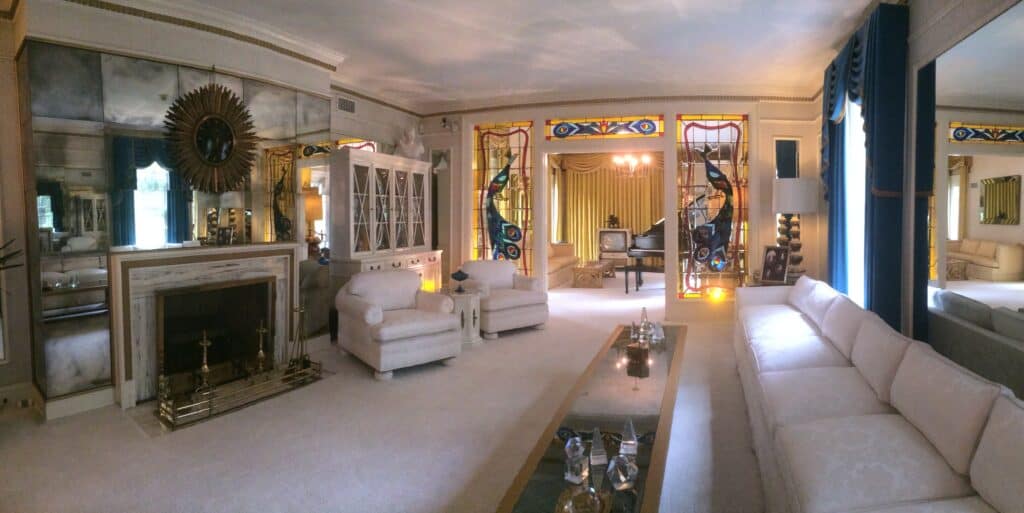
Walk through the front door of the Woodruff-Fontaine House and you step into 1870. The parlor smells like old wood and dust and possibility. Gaslight fixtures hang from the ceiling. The furniture sits at angles that suggest people just left the room. Upstairs, bedrooms hold four-poster beds with their original linens, and the light through tall windows lands on floral wallpaper that has faded to something between rose and rust. This Victorian mansion in the Cooper-Young neighborhood of Memphis is one of the South's best-preserved examples of Second Empire architecture, and it feels less like a museum and more like a house where time stopped.
Why this place matters
The Woodruff-Fontaine House is a rare thing: a period home from the Gilded Age that hasn't been stripped down to bare walls and interpretive signage. You're walking through actual rooms where actual people lived, with their actual things still in them. The house was built in 1870 and belonged to several prominent Memphis families across the decades. It survived urban renewal, flood risk, and decades of neglect before being restored and opened to the public in 1981.
For anyone interested in American domestic life, Victorian taste, or the material culture of the late 19th century, this house is essential. The level of detail is staggering. Look at the wallpaper patterns, the way closets are organized, the china in the dining room hutch. These are the things that tell you how people actually lived, not just how they wanted to be seen.
Quick facts
- Built in 1870 as a private residence for wealthy Memphis family
- Second Empire architectural style with mansard roof and ornamental ironwork
- Located at 680 Adams Avenue in the Cooper-Young neighborhood
- Guided tours only; docent-led experience lasts roughly 45 minutes to an hour
- Limited to small groups to protect the fragile interior and furnishings
- Closed certain days, so check ahead before visiting
Getting there
The house sits on Adams Avenue in Cooper-Young, a neighborhood roughly 2 miles east of downtown Memphis. If you're driving, parking is available on the street in front or nearby. From downtown, take Main Street north, then turn east on Adams. The address is 680 Adams Avenue.
If you're relying on public transit, the MATA bus system serves the area, but service is infrequent. You might get there more easily from a hotel downtown by car or rideshare, which typically takes 10 to 15 minutes depending on traffic.
The house sits in a residential block with other period homes and local businesses. If you arrive early, you can walk the neighborhood before your tour starts.
The layout and experience
You don't explore the Woodruff-Fontaine House on your own. A docent leads you through the rooms in a set sequence, and that's intentional. These people know the house's history, the families who lived here, and the stories behind specific objects. They'll point out things you'd miss: the way the servants' staircase is narrower and less decorated than the main stairs, or the hand-painted details on the ceiling. They answer questions and let you linger on things that interest you.
The main floor includes the parlor, dining room, library, and kitchen. Each room is furnished and decorated in period style, with many original or period-appropriate pieces. The parlor is where formal visitors were received, and it's all elaborate carpet, heavy drapery, and gilt-framed paintings. The dining room has a long table set as if a meal is about to be served. The kitchen is downstairs and shows the working side of the house, with a large iron stove and the practical tools of 19th-century cooking.
Upstairs, you see bedrooms and private spaces where the family actually lived. There's a nursery, a dressing room, a master bedroom. The bathrooms show how plumbing and hygiene evolved during the period. Look at the fixtures, the water closets, the hand basins. These details reveal how people thought about privacy, cleanliness, and comfort in the 1870s and 1880s.
Main highlights
The parlor is the showstopper. It's ornate in a way that feels almost overwhelming. The wallpaper, the gas lighting, the furniture arrangement, the artwork on the walls. This is a room designed to impress. Spending a few minutes here gives you a visceral sense of Victorian excess and the importance of display in wealthy households.
The dining room table is set with period china and linens. Your docent will explain the rituals of dining, the hierarchy of servants and family, the formality that governed even private meals. It's a small detail but it changes how you understand the house.
The servant's quarters and service spaces upstairs show the infrastructure that kept the house running. Most museum houses downplay or hide this side. The Woodruff-Fontaine House doesn't. You see how the people who did the work lived and moved through the house, which is a more honest picture of daily life.
The dressing room is worth lingering over if your docent allows. The clothing, the mirrors, the personal grooming items. It's intimate in a way that other rooms aren't.
History and background
The house was built in 1870 by James C. Woodruff, a prominent Memphis businessman and cotton trader. The Second Empire style was fashionable among wealthy Americans in the post-Civil War era. The mansard roof with its distinctive curved slope and dormer windows is the signature of the style. The ironwork and decorative details reflect the taste of the Gilded Age, a period when wealthy families displayed their status through elaborate domestic architecture and furnishings.
After the Woodruff family, the house passed to the Fontaine family, from whom it takes its current name. It remained a private residence well into the 20th century. By the mid-1900s, the neighborhood had changed, and the house fell into disrepair. It was rescued from demolition in the 1970s and restored by the Memphis Heritage Foundation. The restoration effort was meticulous, trying to return the house to its appearance in the 1870s and 1880s.
Today it operates as a museum under the direction of the Memphis Heritage Foundation and is one of the few Gilded Age houses in the South where you can see an intact domestic interior.
Tickets and entry
Admission is by guided tour only. Tours are led by trained docents and typically last 45 minutes to an hour. Group size is limited to preserve the house and allow for a real experience rather than a cattle-call museum visit.
You'll pay a modest admission fee. Children and seniors typically qualify for reduced rates. Some museums offer combination tickets if you're planning to visit multiple attractions in Memphis, so it's worth asking.
Tours run on a schedule. Call ahead or check the website to confirm hours and book your spot, especially if you're visiting on a weekend or during peak season.
Best time to visit
The house is most comfortable in spring and fall when Memphis weather is mild. Summer heat is intense, and while the house has no air conditioning, the thick walls and high ceilings keep it relatively cool even in warm months. Winter is fine too, though days are shorter.
Weekday mornings tend to be quieter than weekends. If you prefer a more intimate tour with fewer other visitors, aim for a weekday if you can.
The house is closed on certain days, so check before you go. Major holidays often affect hours.
Photography tips
Ask your docent about photography policies before you start the tour. Many historic houses restrict or prohibit flash photography to protect textiles and finishes. If photography is allowed, the parlor and dining room are visually rich and photograph well. Natural light from the tall windows is often enough, even without flash.
The exterior is also photogenic, especially in afternoon light when the mansard roof and ironwork cast interesting shadows.
Facilities and preparation
The house has stairs, and you'll be walking for the duration of the tour. If stairs are difficult for you, mention this when you call ahead. The docent may be able to adjust the tour or provide information about accessibility.
The interior is narrow in places and some doorways are low by modern standards. Be mindful of your head in certain passages, especially on the servant's stairs.
The house is not climate-controlled in the modern sense. In summer it can be warm, and in winter it can be cool. Dress in layers if you're visiting in shoulder seasons.
There is no gift shop or cafe inside the house. The Cooper-Young neighborhood has restaurants and shops nearby if you want to grab coffee or lunch before or after your visit.
Combining with nearby attractions
The Cooper-Young neighborhood itself is worth exploring. The area has independent shops, galleries, and restaurants. Young Avenue has a bohemian feel and hosts events and live music venues.
Overton Park is a short drive north and includes the Memphis Zoo and the Brooks Museum of Art. If you're spending a full day in the area, you could combine the Woodruff-Fontaine House with a walk through the park or a visit to one of those institutions.
The National Civil Rights Museum is downtown, about 2 miles away. It's a major draw for Memphis visitors and can be combined with a downtown walking tour or a visit to nearby attractions.
Sample visit plan
Arrive in the Cooper-Young neighborhood 15 minutes before your scheduled tour to find parking and get oriented. Browse a nearby shop or grab coffee if there's time. Check in for your tour a few minutes early.
Plan for the tour itself to take 45 minutes to an hour, depending on your group's pace and your docent's depth. After the tour, spend 10 to 15 minutes exploring the exterior and taking photos if you wish.
If you have more time, walk Young Avenue to see the neighborhood's character. Grab lunch at a nearby restaurant. The whole outing easily fills a half day.
Practical tips
- Call ahead to book your tour slot. Hours and availability vary, and showing up without a reservation risks disappointment
- Wear comfortable shoes. You'll be on your feet for an hour and navigating uneven floors
- Ask your docent questions. They're knowledgeable and enjoy sharing details about specific objects and family history
- If you're interested in period furnishings or Victorian design, mention that to your docent. They may spend extra time on those aspects
- The house is a real home, not a sterile museum. Respect the furnishings and don't touch things unless invited
- Visit on a weekday if possible for a quieter, more personalized experience
FAQ
Can I visit the house without a guided tour? No. Tours are docent-led only, which is actually a strength. You get real expertise and context rather than a self-guided audio tour.
How long does a tour take? Plan for 45 minutes to an hour, depending on the group and how much your docent elaborates on certain rooms.
Is the house wheelchair accessible? The house has multiple levels and stairs. Accessibility is limited. Call ahead to discuss your needs with the staff.
Can I bring children? Yes, but be aware that the tour involves standing and walking for the full duration, and the pace is set for adults. Older children who can focus for an hour will get more from the experience.
Is photography allowed? Policies vary. Ask your docent when you arrive. Flash photography is often restricted to protect the interior.
Opening hours
Reviews
Sign in and mark this place visited to leave a review.
No reviews yet.
Free Trip Planner
Plan your Memphis trip with our free planner
Build a day-by-day itinerary with AI suggestions, hand-picked places, and friends. Free forever — no credit card.