Planning Unforgettable Tanzania Safari Tours
By
Iconic Destinations: Top National Parks and Reserves
Tanzania's vast wilderness is a mosaic of protected areas, each offering a distinct safari experience and unique wildlife encounters. With 22 national parks, 29 game reserves, and 40 controlled conservation areas covering over 38% of the country's land, the choices are abundant.

The Northern Circuit: A Safari Classic
The Northern Circuit is Tanzania's most famous safari route, renowned for its incredible wildlife density and accessibility.
Serengeti National Park: An icon of African wilderness, the Serengeti is synonymous with boundless plains and the awe-inspiring Great Migration. Beyond the migration, it boasts an incredible concentration of predators – lions, leopards, and cheetahs – alongside elephants, giraffes, and countless antelopes. It's a year-round destination, offering exceptional wildlife viewing even outside the migration peaks.
Ngorongoro Conservation Area (NCA): A UNESCO World Heritage Site, the Ngorongoro Crater is often hailed as a "Garden of Eden." This caldera, formed by a collapsed volcano, hosts an estimated 25,000 large animals within its 260 sq km floor, including the highest density of wildlife in Africa. It's one of the most reliable places to spot the "Big Five" (lion, leopard, elephant, rhino, buffalo) in a single day, particularly the endangered black rhino.
Tarangire National Park: Known for its massive elephant herds, ancient baobab trees, and tree-climbing lions, Tarangire offers a distinct atmosphere, especially during the dry season (June-October) when the Tarangire River becomes the primary water source, drawing thousands of animals.
Lake Manyara National Park: A smaller, scenic park famous for its flamingos, diverse birdlife, and a unique population of tree-climbing lions. Its varied habitats, from groundwater forests to acacia woodlands, support a surprising array of wildlife.
Witnessing the Great Migration across the Serengeti Ecosystem
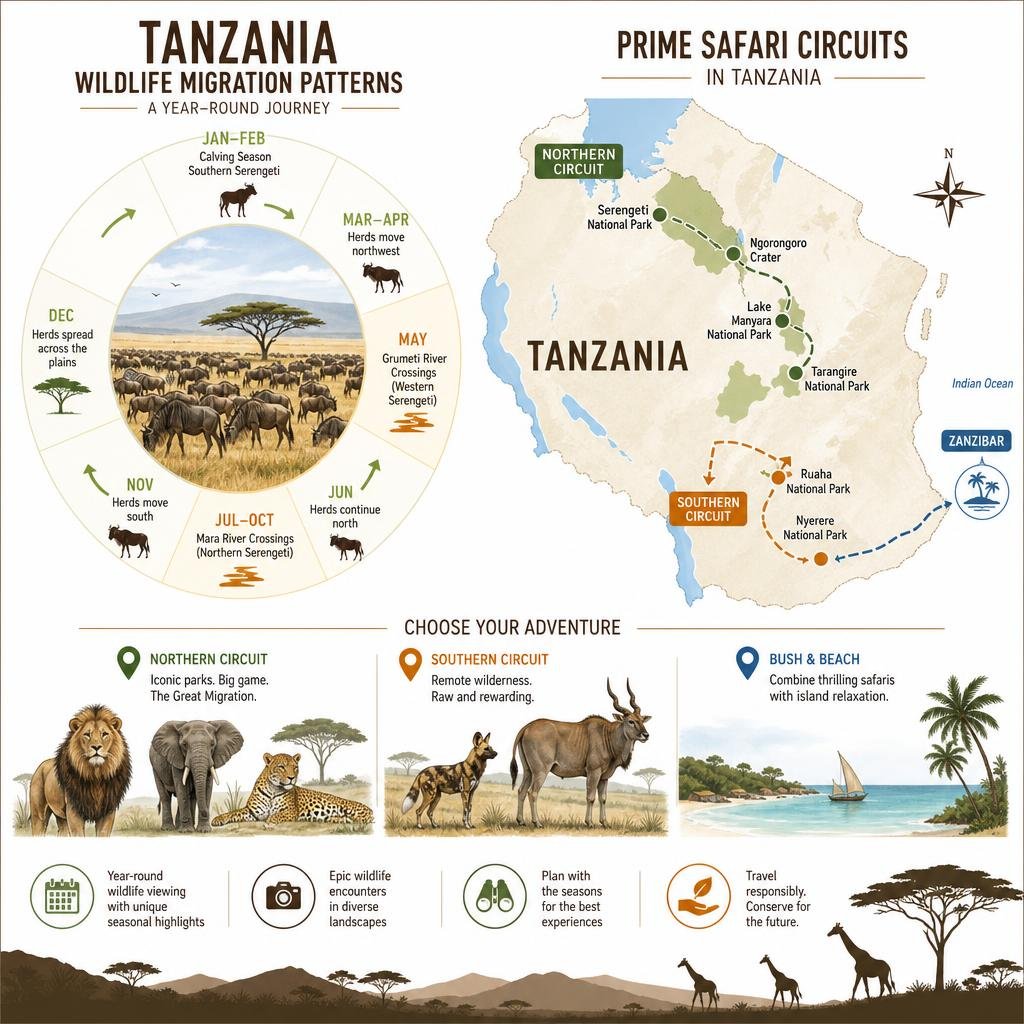
The Great Migration is the world's largest terrestrial mammal migration, involving over 1.5 million wildebeest, 200,000 zebras, and 300,000 Thomson's gazelles moving annually in a continuous search for fresh grazing and water. This epic journey through the Serengeti and into Kenya's Maasai Mara is a spectacle of life and death, dominated by predator-prey dynamics.
Calving Season (January-March): The southern Serengeti and Ndutu plains become a nursery for hundreds of thousands of wildebeest calves, attracting an abundance of predators.
River Crossings (May-July & August-October): The dramatic crossings of the Grumeti River (western Serengeti) and the Mara River (northern Serengeti) are iconic, as herds brave crocodile-infested waters and lurking predators. Mobile tented camps are strategically positioned to follow the herds, offering unparalleled access to this natural wonder. Even outside these specific events, the Serengeti's resident wildlife ensures thrilling sightings throughout the year.
Southern and Western Wilderness Circuits
For those seeking a more exclusive, off-the-beaten-path experience, Tanzania's Southern and Western circuits offer pristine wilderness and fewer crowds.
Nyerere National Park (formerly Selous Game Reserve): One of Africa's largest protected areas, Nyerere offers diverse landscapes, including savannah, woodlands, and the Rufiji River. It's renowned for boat safaris, walking safaris, and excellent opportunities to see wild dogs, elephants, and hippos. The low-density tourism here ensures a truly immersive experience.
Ruaha National Park: Tanzania's largest national park, Ruaha is a rugged, remote gem known for its dramatic landscapes, huge elephant herds, and a high concentration of predators, including lions, leopards, and cheetahs. It's an excellent choice for a more adventurous safari.
Katavi National Park: One of Tanzania's most remote parks, Katavi is a true wilderness frontier. During the dry season, the Katuma River becomes a lifeline, attracting thousands of hippos and crocodiles to shrinking pools, offering incredible viewing opportunities.
Mahale Mountains National Park: Located on the shores of Lake Tanganyika, Mahale is famous for its chimpanzee tracking experiences. This pristine forest environment offers a unique opportunity to observe these primates in their natural habitat, making it a perfect addition for those interested in combining wildlife with primate encounters.
Choosing the Best Tanzania Safari Tours for Your Travel Style
Tanzania offers a diverse range of safari options to suit every preference and budget, from rustic camping under the stars to ultra-luxurious fly-in experiences. Understanding these differences is key to planning your perfect adventure.
Budget Camping Safaris: These are the most economical option, involving dome tents, sleeping bags, and shared ablution facilities at designated campsites. Meals are prepared by a safari cook. While basic, they offer an authentic connection to nature and are often led by experienced guides in private pop-up 4x4 vehicles.
Mid-Range Safaris: This popular choice balances comfort and cost. Accommodation typically includes comfortable tented camps or lodges with en-suite bathrooms, often in prime locations near wildlife. Game drives are usually conducted in private 4x4s, and services are more personalized than budget options.
Luxury Safaris: For those seeking unparalleled comfort and exclusivity, luxury safaris offer exquisite tented lodges or boutique hotels with world-class amenities, gourmet dining, and often private plunge pools or butler service. These can include private vehicles, expert guides, and exclusive activities.
Fly-in Safaris: This option maximizes time in the bush by flying between parks, reducing long road transfers. It's often combined with luxury lodges or remote tented camps, offering access to more secluded areas. While more expensive due to flight costs and premium accommodation, it provides a seamless and comfortable safari experience.
When selecting a tour, it's crucial to choose a licensed safari operator with a proven track record. Look for companies that prioritize safety, employ knowledgeable guides, and offer customized Tanzania travel experiences. Many reputable operators specialize in crafting unique itineraries, ensuring you get truly personalized safari travel experiences.
Designing Tailored Tanzania Safari Tours for First-Timers
For first-time visitors, the Northern Circuit is often recommended due to its iconic parks and excellent infrastructure. A well-planned itinerary ensures a comprehensive and memorable experience.
Recommended Durations:
7-day Classic Northern Circuit: This is a popular choice, typically covering Tarangire, Lake Manyara, Ngorongoro Crater, and 2-3 days in the Serengeti. It offers a fantastic overview of Tanzania's diverse wildlife.
10-day Extended Bush-and-Beach: Combining the Northern Circuit with a few days on the pristine beaches of Zanzibar or Mafia Island offers a perfect blend of adventure and relaxation. This allows for deeper exploration of the Serengeti or adding a cultural element.
Family Safaris: When traveling with children, consider pacing. Shorter game drives, lodges with family-friendly amenities, and activities like cultural visits or walking safaris can enhance the experience.
Integrating Authentic Cultural Encounters
A Tanzanian safari is not just about wildlife; it's also an opportunity to engage with rich local cultures. Ethical community visits provide valuable insights and support local livelihoods.
Maasai Bomas: Visiting a Maasai village offers a glimpse into their traditional pastoralist way of life, vibrant customs, and iconic dress. Ensure your visit supports the community directly.
Hadzabe Hunter-Gatherers: In the Lake Eyasi region, you can spend time with the Hadzabe, one of the last true hunter-gatherer tribes in Africa, learning about their ancient survival techniques.
Datoga Craftsmen: Nearby, the Datoga are renowned for their metalworking skills, creating intricate jewelry and tools.
Cultural Immersion: Many lodges and operators facilitate respectful interactions, ensuring that these encounters are mutually beneficial and contribute to localized tourism benefits.
Optimal Seasons for Wildlife Viewing and Weather Conditions
Choosing the right time of year for your Tanzania safari can significantly impact your wildlife viewing opportunities and overall experience. Tanzania generally experiences two main seasons: the dry season and the green (wet) season.

Dry Season (June to October): This is widely considered the best time for wildlife viewing. The vegetation is sparse, making animals easier to spot as they congregate around dwindling water sources like rivers and waterholes. The weather is generally sunny and cool in the mornings and evenings, warming up during the day. This period also coincides with the dramatic Mara River crossings of the Great Migration in the northern Serengeti (August-October). While excellent for wildlife, it's also peak tourist season, meaning more crowds and higher prices.
Green Season (November to May): Also known as the wet season, this period brings lush landscapes, fewer tourists, and lower prices.
Short Rains (November-December): Brief, localized showers transform the parched plains into vibrant green. This is an excellent time for birdwatching as migratory species arrive, and the Great Migration is typically in the southern Serengeti for calving.
Long Rains (March-May): Heavier, more consistent rainfall can make some roads challenging, but it also brings incredible photographic opportunities with dramatic skies and vibrant scenery. Wildlife is dispersed, but the calving season (Jan-March) in the Ndutu plains is a highlight. Birdwatching is exceptional.
Season Months Weather Conditions Wildlife Highlights Crowd Levels Dry Season June - October Sunny, cool mornings/evenings, warm days. Low humidity. Excellent general wildlife viewing. Great Migration river crossings (Aug-Oct). Animals congregate at waterholes. High Green Season November - May Warm, humid. Short rains (Nov-Dec), long rains (Mar-May). Lush landscapes. Calving season (Jan-Mar) in southern Serengeti. Exceptional birdwatching. Animals dispersed. Low to Medium Essential Preparation: Logistics, Health, and Packing Guidelines
Thorough preparation is crucial for a smooth and enjoyable Tanzanian safari. From entry requirements to health precautions and packing, understanding the logistics beforehand will enhance your adventure.
Entry Requirements and Health Precautions
Visa Requirements: Most non-African nationalities require a Tanzanian e-visa, which can be obtained online in advance. It's recommended to apply several weeks before your departure.
Yellow Fever Certificates: If you are arriving from a country with a risk of yellow fever transmission, or if you have transited through such a country for more than 12 hours, a yellow fever vaccination certificate is mandatory.
Malaria Prevention: Tanzania is a malaria-risk area. Consult your doctor about appropriate malaria prophylaxis (anti-malarial medication) before your trip. Additionally, use insect repellent containing DEET, wear long sleeves and pants at dawn and dusk, and sleep under mosquito nets (provided by most accommodations).
Other Vaccinations: Ensure your routine vaccinations (e.g., Tetanus, Diphtheria, Polio, Measles, Mumps, Rubella) are up to date. Hepatitis A & B, Typhoid, and Rabies vaccinations are often recommended; consult your travel clinic.
Travel Insurance: Comprehensive travel insurance covering medical emergencies, evacuation, trip cancellations, and lost luggage is highly recommended.
Packing Essentials
Packing smart for a safari means prioritizing comfort, practicality, and protection from the elements.
Clothing:
Neutral Colors: Khaki, olive, brown, and grey are ideal as they blend with the environment and are less likely to attract insects. Avoid bright colors, dark blue (attracts tsetse flies), and camouflage patterns (reserved for military).
Layers: Days can be hot, but mornings and evenings are cool. Pack light, breathable long-sleeved shirts and trousers for sun and insect protection, along with a warm fleece or jacket.
Comfortable Shoes: Closed-toe shoes for walking, and sandals for relaxing at camp.
Hat: Wide-brimmed hat for sun protection.
Gear:
Sunscreen, Sunglasses, Lip Balm: Essential for protection against the strong African sun.
Insect Repellent: With DEET or a natural alternative.
Binoculars: Absolutely crucial for enhancing wildlife viewing.
Camera Gear: A good camera with a telephoto lens, extra batteries, and plenty of memory cards.
Small Backpack: For day trips and carrying essentials.
Medications: Any personal prescriptions, plus a basic first-aid kit (painkillers, anti-diarrhea, antihistamines, antiseptic wipes).
Power Bank/Adapter: Tanzania uses Type D and Type G sockets.
Luggage Restrictions: If your itinerary includes internal bush flights, be aware of strict luggage weight limits (often 15-20 kg/33-44 lbs) and soft-sided bag requirements. Hard-shell suitcases are generally not permitted on these flights.
For more detailed advice on preparing for your adventure, exploring various safari travel experiences can offer additional insights and practical tips.
Tanzania Safari Tours Cost Breakdown and Budgeting
The cost of a Tanzania safari can vary significantly based on the type of accommodation, duration, number of parks visited, and level of luxury. It's important to understand the components of the total cost.
Park Conservation Fees: These are a significant portion of the cost, ranging from $60-$80 USD per person per day for national parks (e.g., Serengeti, Tarangire) and higher for special conservation areas like Ngorongoro Crater (around $70 USD park fee + $60 USD crater service fee per person per day). These fees contribute to conservation efforts.
Accommodation Tiers:
Budget (Camping): $200 - $400 USD per person per day. This includes basic dome tents, food, and shared facilities.
Mid-Range (Comfortable Lodges/Tented Camps): $400 - $800 USD per person per day. Offers en-suite rooms, better amenities, and often swimming pools.
Luxury (High-End Lodges/Tented Camps): $800 - $1500+ USD per person per day. Features exquisite service, gourmet dining, private plunge pools, and exclusive locations.
Transportation:
Private 4x4 Vehicle with Driver-Guide: Included in most safari packages. Fuel and vehicle maintenance are factored in.
Internal Flights: Add $200 - $500+ USD per person per flight leg for fly-in safaris.
Guide Services: A professional, knowledgeable guide is essential. Their salary and expertise are included in the package price. Gratuities for guides and camp staff are customary and should be budgeted for (typically $20-$30 USD per day for the guide, $10-$15 USD per day for camp staff).
Meals and Drinks: Most safari packages are full-board (all meals included). Alcoholic beverages and some soft drinks may be extra, especially at luxury lodges.
Activities: Special activities like hot air balloon safaris ($600-$700 USD per person), walking safaris, or cultural visits may incur additional costs.
International Flights: Not included in safari package costs.
Visa and Vaccinations: Separate costs to consider.
For a 7-day Northern Circuit safari, a rough estimate could be:
Budget: $1,800 - $2,800 USD per person
Mid-Range: $2,800 - $5,600 USD per person
Luxury: $5,600 - $10,500+ USD per person
These estimates are for the safari portion only and exclude international flights. Prices can fluctuate based on seasonality and specific operators.
Tanzania vs Kenya: Key Differences for Safari Travelers
While both Tanzania and Kenya offer incredible safari experiences, they each have distinct characteristics that might influence your choice.

Wildlife Density and Diversity: Both countries boast incredible wildlife. Tanzania, however, is home to approximately 20% of Africa's large mammal population and hosts the vast majority of the Great Migration within its Serengeti ecosystem for about 8-9 months of the year. The Ngorongoro Crater offers an unparalleled density of animals. Kenya's Maasai Mara is famous for its high concentration of big cats and is where the migration spends about 2-3 months.
Landscape and Scenery: Tanzania's landscapes are often described as more varied and dramatic, from the vast plains of the Serengeti to the unique caldera of Ngorongoro and the baobab-studded plains of Tarangire. Kenya offers iconic savannahs but generally has less topographical diversity within its main safari parks.
Crowd Levels and Vehicle Congestion: Generally, Tanzania's parks, especially the Serengeti and Ngorongoro, can experience high visitor numbers, particularly during peak migration season. However, Tanzania's parks are significantly larger, allowing for better dispersal of vehicles. Kenya's Maasai Mara, while spectacular, can sometimes experience higher vehicle congestion around popular sightings due to its smaller size and higher number of operators. Tanzania also offers more remote landscapes in its Southern and Western circuits (Nyerere, Ruaha, Katavi) for those seeking true wilderness and fewer tourists.
Safari Style and Infrastructure: Both countries offer a range of safari styles. Tanzania is often associated with more exclusive, high-end lodges and fly-in safaris, particularly in its remote parks. Kenya is well-established with a broader range of mid-range options and is known for its conservancies adjacent to the Mara, which offer private game viewing and walking safaris.
UNESCO World Heritage Site Depth: Tanzania boasts more UNESCO World Heritage Sites directly related to its safari offerings, including the Serengeti, Ngorongoro Conservation Area, and Selous Game Reserve (now Nyerere National Park), highlighting its global significance in conservation.
Both countries offer world-class safaris. Tanzania often appeals to those seeking vast, unspoiled wilderness, the full Great Migration experience, and a broader range of unique ecosystems.
Frequently Asked Questions about Tanzania Safari Tours
How many days are ideal for a first-time Tanzania safari?
For a first-time Tanzania safari focused on the Northern Circuit, we generally recommend a minimum duration of 5 to 7 days. This allows sufficient time to explore the iconic parks like Tarangire, Ngorongoro Crater, and the Serengeti without feeling rushed. A 7-day itinerary often provides 2-3 full days in the Serengeti, which is crucial for maximizing wildlife viewing opportunities and experiencing its vastness. If you wish to include more remote parks, primate trekking, or a beach extension to Zanzibar, a 10 to 14-day trip would be more suitable. Remember to factor in transit days between parks when planning your multi-park itineraries.
When is the best time to see the Great Migration river crossings?
The most famous and dramatic river crossings of the Great Migration typically occur during the dry season:
Grumeti River Crossings (Western Serengeti): Usually take place from late May to early July, as the herds move north from the central Serengeti.
Mara River Crossings (Northern Serengeti): The most iconic crossings happen in the northern Serengeti, particularly from late July/early August through October, as the wildebeest attempt to cross into Kenya's Maasai Mara and then back south.
The migration is a natural phenomenon driven by rainfall and grazing, so exact timings can vary year to year. Mobile tented camps in the northern Serengeti are strategically positioned to track the herds during these months, offering the best chance to witness this spectacle.
What health precautions and vaccinations are required for Tanzania?
For a Tanzania safari in August 2026, several health precautions are essential:
Mandatory Entry Vaccines: A Yellow Fever vaccination certificate is mandatory if you are arriving from a country with a risk of yellow fever transmission or if you have transited through such a country for more than 12 hours.
Recommended Immunizations: Consult your doctor or a travel clinic well in advance (at least 6-8 weeks before departure) for recommended vaccinations. These often include:
Routine vaccinations (Measles, Mumps, Rubella, Diphtheria, Tetanus, Pertussis, Polio)
Hepatitis A and B
Typhoid
Rabies (especially if you plan to be in close contact with animals or are visiting remote areas)
Malaria Prevention: Tanzania is a malaria-risk area. Your doctor will likely recommend malaria prophylaxis (anti-malarial medication). Additionally, practice rigorous insect bite prevention: use insect repellent (containing DEET), wear long sleeves and pants at dawn and dusk, and sleep under mosquito nets.
Travel Health Insurance: Comprehensive travel health insurance that covers medical emergencies, including emergency evacuation, is highly advisable.
Personal Medications: Carry any prescription medications in their original packaging, along with a copy of your prescription. A basic first-aid kit with over-the-counter remedies is also recommended.
Conclusion
Embarking on Tanzania safari tours is an unparalleled journey into the heart of African wilderness, offering a tapestry of breathtaking landscapes, incredible wildlife, and rich cultural encounters. From the thundering hooves of the Great Migration in the Serengeti to the dense wildlife haven of the Ngorongoro Crater and the serene beauty of the Southern Circuit, Tanzania promises an adventure that lingers long in the memory.
By understanding the diverse national parks, optimal seasons, and various safari styles, you can craft an itinerary that perfectly aligns with your interests and budget. Whether you opt for a classic Northern Circuit adventure, a remote wilderness escape, or a blend of bush and beach, prioritizing responsible and sustainable safari travel ensures that these magnificent ecosystems and cultures thrive for generations to come. With careful planning and the right guidance, your Tanzanian safari will undoubtedly be one of the most memorable wilderness adventures of your lifetime.